Washington is compact enough that almost anywhere near a Metro station will do, and spread out enough that the wrong choice costs you an hour a day. The difference between a good base and a frustrating one is rarely the hotel. It’s the walk to the station, the line you’re on, and whether you can get back to your room at 3 p.m. to drop off a bag and reset. Get where to stay in Washington DC right and the city feels small; get it wrong and you’ll spend your trip on buses and rideshares, wondering why the monuments felt so far away.
Quick answer: For a first visit, stay in Penn Quarter or Downtown, a 10-minute walk from the National Mall with several Metro lines at your door. Capitol Hill suits families and anyone wanting quieter streets near the museums. Dupont Circle, Logan Circle and Georgetown are better for food and nightlife. Arlington, just across the river, usually costs less and still puts you minutes from the Mall by Metro.
Last updated September 24, 2026. Hotel operations, taxes and transit details were checked that day against the hotels’, agencies’ and transit operators’ own websites. We describe price tiers rather than nightly rates, because rates change daily.
- Best overall base: Penn Quarter and Downtown, for Metro access and walking distance to the Mall.
- Taxes: DC adds a 15.95% hotel tax to room rates (the rate in effect through September 30, 2027), and general sales tax rises from 6% to 7% on October 1, 2026.
- Timing: DC is a business-travel city, so downtown rooms are often cheaper on weekends than on weekdays, and cherry blossom season is the priciest stretch of the year.
- Getting around: the DC Circulator buses ended on December 31, 2024, so pick a hotel within about 10 minutes’ walk of a Metro station.
On this page: At a glance | How to choose | The best areas, ranked | Hotels by budget | What drives prices | Hotel features | Booking tips | By type of trip | Safety | Honest warnings | FAQ
Once you’ve picked a base, our guide to things to do in Washington DC will help you plan the days around it.
Where to Stay in Washington DC at a Glance
Price levels run from $ (budget) to $$$$ (luxury) and describe typical weekday rates relative to each other, not fixed prices. Walk times are to the nearest point of the National Mall.
| Area | Best for | Metro | Walk to the Mall | Price |
|---|---|---|---|---|
| Penn Quarter and Downtown | First-timers, museums, no car | Red, Blue, Orange, Silver, Green, Yellow | 5-15 min | $$-$$$$ |
| Capitol Hill | Families, quiet streets, train arrivals | Red, Blue, Orange, Silver | 10-20 min | $$-$$$ |
| The Wharf and Southwest | Waterfront, families, couples | Green, plus L’Enfant Plaza (all lines but Red) | 10-20 min | $$$-$$$$ |
| Dupont Circle | Restaurants, bars, walkable streets | Red | 25-30 min | $$-$$$ |
| Foggy Bottom and West End | Lincoln Memorial end, quieter nights | Blue, Orange, Silver | 10-20 min | $-$$$ |
| Georgetown | Couples, shopping, historic streets | None (nearest 15-20 min walk) | 35+ min | $$$-$$$$ |
| Logan Circle, 14th St, U St and Shaw | Dining, nightlife | Green (U St, Shaw); Yellow ends at Mt Vernon Sq | 25-35 min | $$-$$$ |
| Navy Yard | Baseball, newer hotels, riverfront | Green | 20-25 min | $$-$$$ |
| Woodley Park and Adams Morgan | The zoo, residential feel | Red | Metro ride | $$-$$$ |
| Arlington, Virginia | Value, drivers, airport access | Blue, Orange, Silver, Yellow | Metro ride (or 30+ min walk from Rosslyn) | $-$$$ |
| Old Town Alexandria | Historic small-town feel, longer stays | Blue, Yellow | Metro ride | $$-$$$ |
| National Harbor, Maryland | Resorts, events, drivers | None | Drive or water taxi | $$-$$$ |
How to Choose an Area
Rule one: stay within 10 minutes’ walk of a Metro station. It matters more than the neighborhood’s name. A hotel in Arlington next to a station is better placed for sightseeing than a hotel in DC that’s a 20-minute walk from one. Metro runs until midnight Monday to Thursday and on Sundays, and until 2 a.m. on Friday and Saturday nights, as of September 2026.
Rule two: check the line. Stations on the Blue, Orange and Silver lines run straight under the Mall (Smithsonian, Federal Triangle, L’Enfant Plaza). The Red line doesn’t touch the Mall, but it serves Union Station, Metro Center, Dupont Circle and Woodley Park. And since 2023, Yellow line trains end at Mt Vernon Square, so U Street, Shaw-Howard, Waterfront and Navy Yard are Green line only.
Rule three: decide what your evenings look like. If you’ll be asleep by 10, stay close to the Mall and walk. If dinner and bars matter, Dupont, Logan Circle, 14th Street or the Wharf will keep you happier than the office blocks of the central business district, which go quiet after 7 p.m.
Rule four: price in the extras. Hotel tax, daily destination or amenity fees and overnight parking can add a lot to the headline rate. A cheaper room in Arlington with reasonable parking can beat a pricier one downtown, and a downtown hotel you can walk from can beat both once you count rideshares.
The Best Areas to Stay in Washington DC, Ranked
The ranking assumes a first or second trip focused on sightseeing. The Plan it line under each area gives the nearest stations and who it suits best.
1. Penn Quarter and Downtown
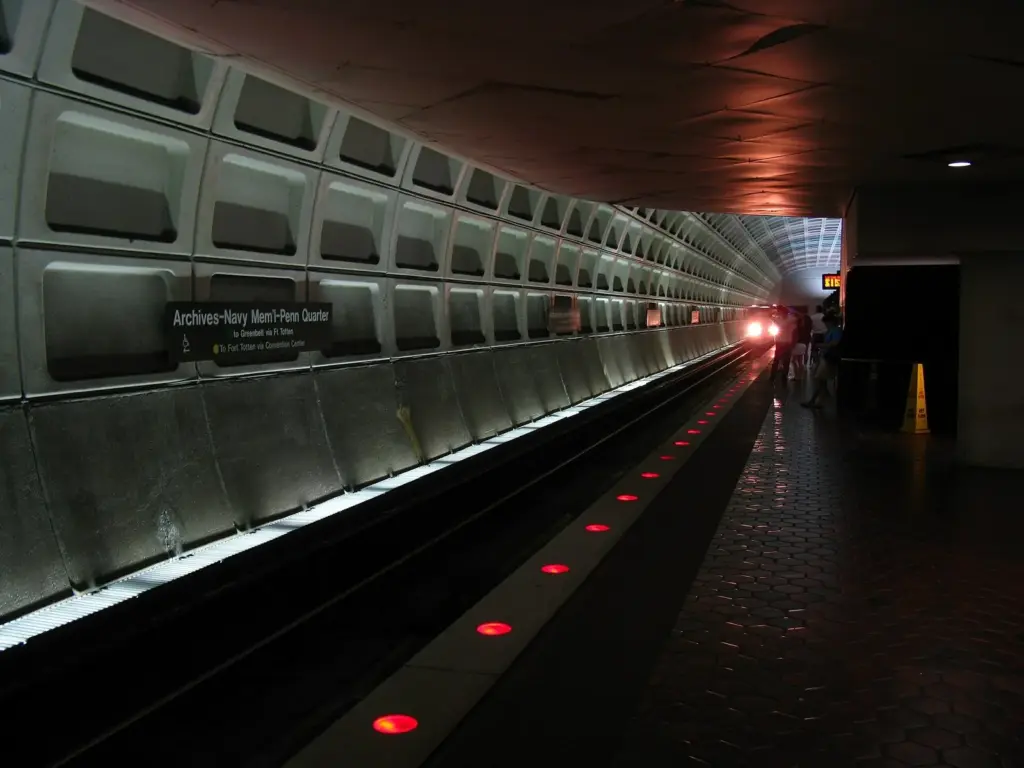
The best all-round base for first-timers. Between the White House and Capitol Hill, north of the Mall, Penn Quarter and the Downtown blocks around it put you within a 10- to 15-minute walk of the Smithsonian museums and within a few minutes of Metro Center, Gallery Place-Chinatown and Archives, which between them serve every line. The Portrait Gallery and American Art Museum are here, open until 7 p.m., along with Capital One Arena, Chinatown, Ford’s Theatre and a thick spread of restaurants from quick lunch counters to chef-driven dining rooms.
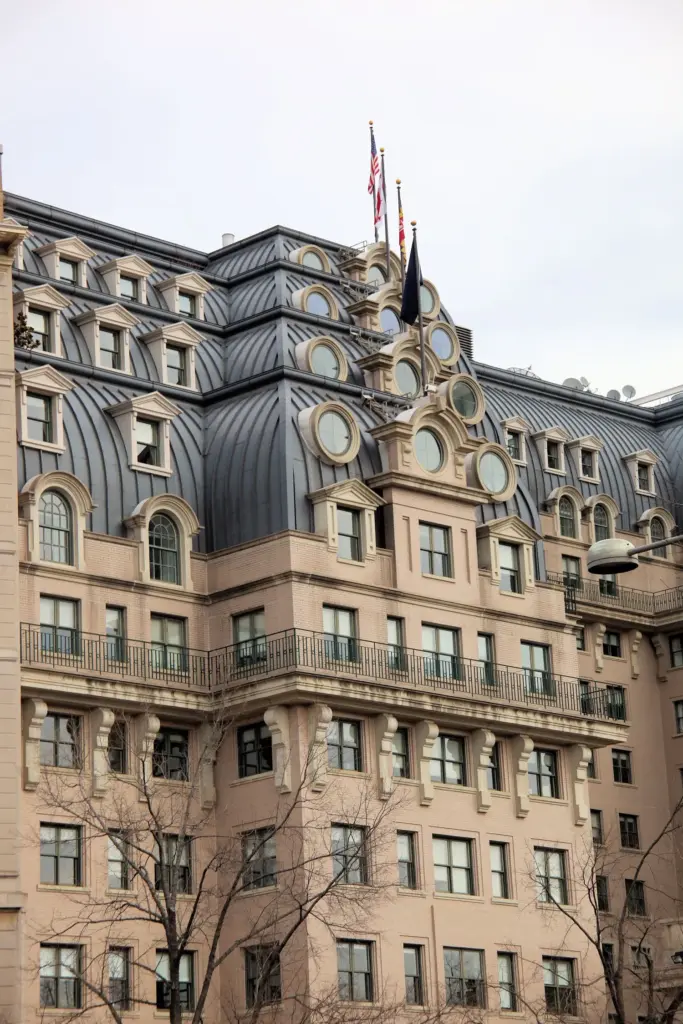
The hotel stock is the city’s deepest, from big convention hotels to boutiques in historic buildings. Kimpton Hotel Monaco Washington DC fills the city’s original General Post Office, built in 1839, across F Street from the Portrait Gallery, with its own restaurant, Dirty Habit. Closer to the White House, the Willard InterContinental on Pennsylvania Avenue has hosted presidents and heads of state since the 19th century, and it completed a full restoration of its 335 rooms and 69 suites in 2026 for the country’s 250th anniversary.
The catch: parts of the business district between K Street and the White House empty out after office hours, and hotel rates peak on weekdays when conferences and government business fill rooms. The convention center on the area’s north side can push prices up during big conventions, so check the convention calendar before you book.
Plan it: Metro: Metro Center (Red, Blue, Orange, Silver lines), Gallery Place-Chinatown (Red, Green, Yellow lines) and Archives (Green, Yellow lines). Walk to the Mall: 5-15 minutes. Price: $$ to $$$$, often cheaper on weekends. Best for: first-timers, museum trips, no car, short stays.
2. Capitol Hill
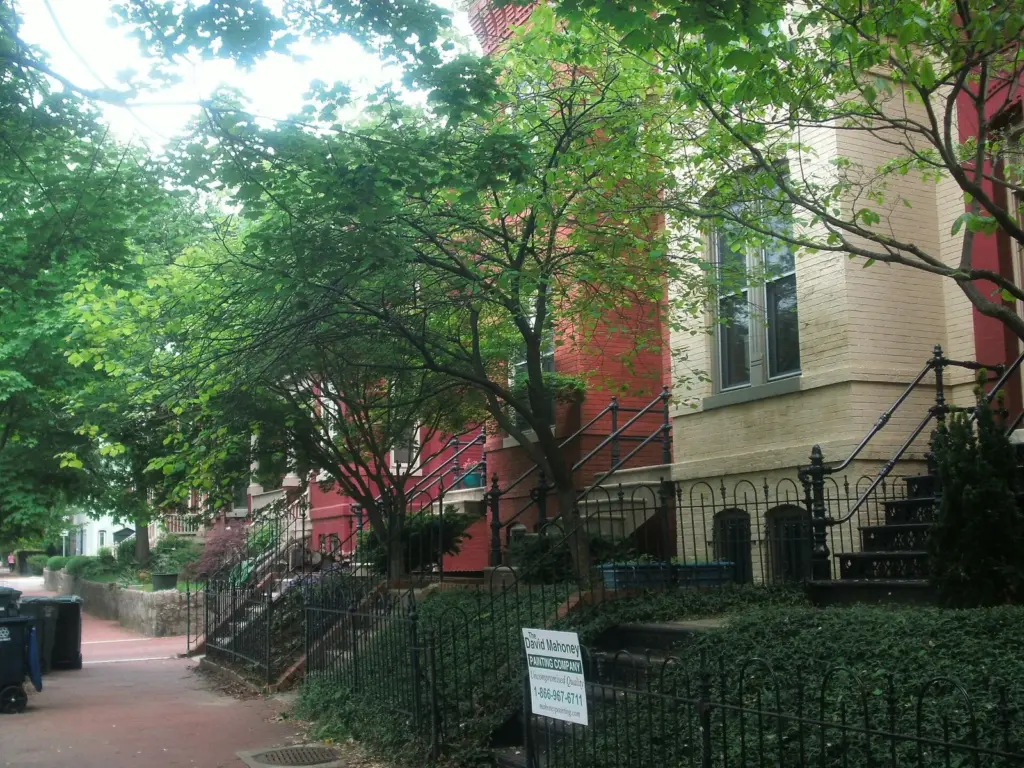
Quiet streets, close to the museums, and easy for trains. Capitol Hill is two places. Right around the Capitol and Union Station, it’s hotels, government buildings and the Library of Congress. A few blocks east, it turns into one of the loveliest residential neighborhoods in the city: tree-lined streets of Victorian rowhouses, Eastern Market with its weekend stalls, and Barracks Row’s restaurants on 8th Street SE. It’s a good base for families, because evenings are calm and the Mall’s eastern museums, including Air and Space and the American Indian museum, are within a 15-minute walk.
The Kimpton George Hotel, a block from Union Station, is the standout pick: 139 rooms, a free grab-and-go breakfast, an evening wine hour and a location that makes an Amtrak arrival or departure painless. Several larger chain hotels cluster around the Capitol and along New Jersey Avenue, where rates tend to dip when Congress is out of session.
Plan it: Metro: Union Station (Red line), Capitol South and Eastern Market (Blue, Orange, Silver lines). Walk to the Mall: 10-20 minutes. Price: $$ to $$$. Best for: families, train travelers, anyone who wants quiet nights.
3. The Wharf and Southwest Waterfront
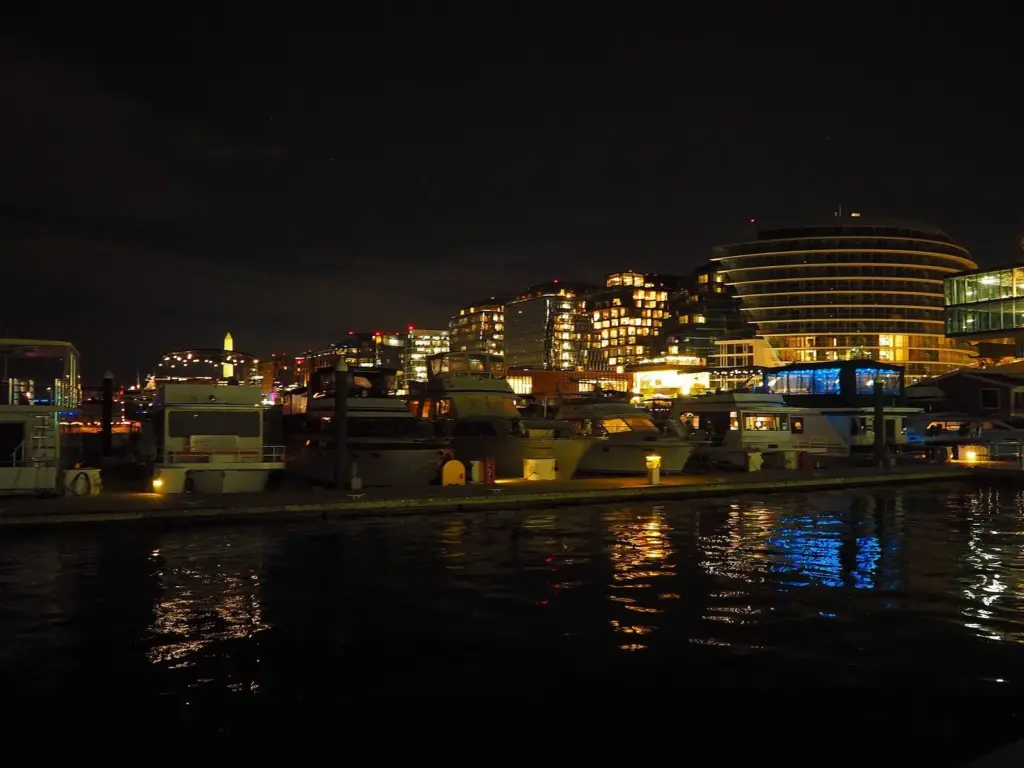
The waterfront option, and the closest thing DC has to a resort neighborhood. The Wharf, which opened in 2017 along the Washington Channel, is a mile of restaurants, music venues, piers and marinas, with the Municipal Fish Market, which traces its history to 1805, at its northwest end. The International Spy Museum is a short walk away at L’Enfant Plaza. Summer brings free Friday concerts at 7 p.m. on the Transit Pier. The hotels here are newer upscale and upper-midscale properties, many with water views and rooftop bars.
It’s a 10- to 20-minute walk to the Tidal Basin and the southern side of the Mall, and it’s the base for the Potomac Water Taxi, which runs to Georgetown and Old Town Alexandria in about 30 minutes and to National Harbor in about 45 (about $22 one way, March to December, as of September 2026). The drawback is Metro: Waterfront station is on the Green line only, though L’Enfant Plaza, a 10-minute walk, serves every line except Red.
Plan it: Metro: Waterfront (Green line) or L’Enfant Plaza (Blue, Orange, Silver, Green, Yellow lines). Walk to the Mall: 10-20 minutes. Price: $$$ to $$$$. Best for: couples, families who want space to roam in the evening, waterfront dining.
4. Dupont Circle
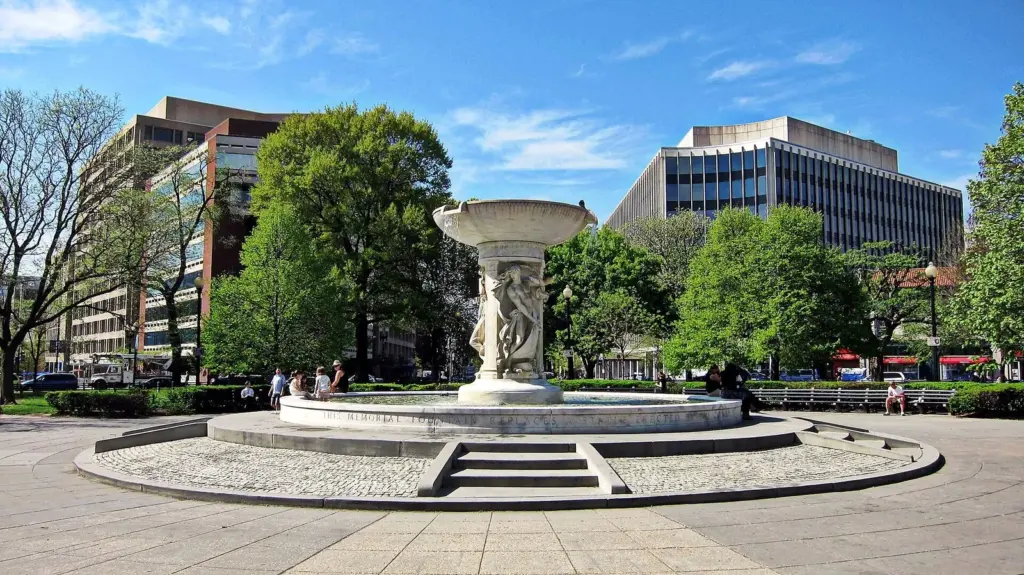
Walkable, lively and full of restaurants. Dupont Circle is where a lot of DC’s social life happens: rowhouse streets lined with cafes, bookstores, bars and what has long been the heart of the city’s LGBTQ+ life, with Embassy Row running northwest along Massachusetts Avenue. The circle itself, with its fountain and chess players, is a meeting point. It’s a 25- to 30-minute walk to the Mall, but the Red line gets you to Metro Center in a couple of stops.
The Dupont Circle Hotel sits right on the circle, and the surrounding blocks hold a mix of boutique and chain hotels, many in converted older buildings. Rooms tend to be a little cheaper than the equivalent downtown, and you get far more to do after dark.
Plan it: Metro: Dupont Circle (Red line); Farragut North (Red line) at the southern edge. Walk to the Mall: 25-30 minutes. Price: $$ to $$$. Best for: couples, food and nightlife, repeat visitors.
5. Foggy Bottom and the West End
Close to the Lincoln end of the Mall, and one of the better-value central areas. Home to George Washington University and the State Department, Foggy Bottom sits between the White House and Georgetown, a 10- to 20-minute walk from the Lincoln Memorial and the western memorials. It’s quieter than Dupont and less corporate than Downtown, with a good mix of apartment-style suite hotels popular with longer stays and families.
For budget travelers, Hotel Hive on F Street is the pick: a micro-hotel with rooms of roughly 125 to 250-plus square feet, a rooftop lounge with views toward the Lincoln Memorial, pizza on the ground floor and the Foggy Bottom-GWU station about five minutes away. One caveat for this area in particular: the Kennedy Center, its biggest evening draw, closed its main building after a board vote on September 15, 2026, and its future is in court.
Plan it: Metro: Foggy Bottom-GWU (Blue, Orange, Silver lines). Walk to the Mall: 10-20 minutes to the Lincoln Memorial end. Price: $ to $$$. Best for: budget travelers, longer stays, walkers who start with the memorials.
6. Georgetown
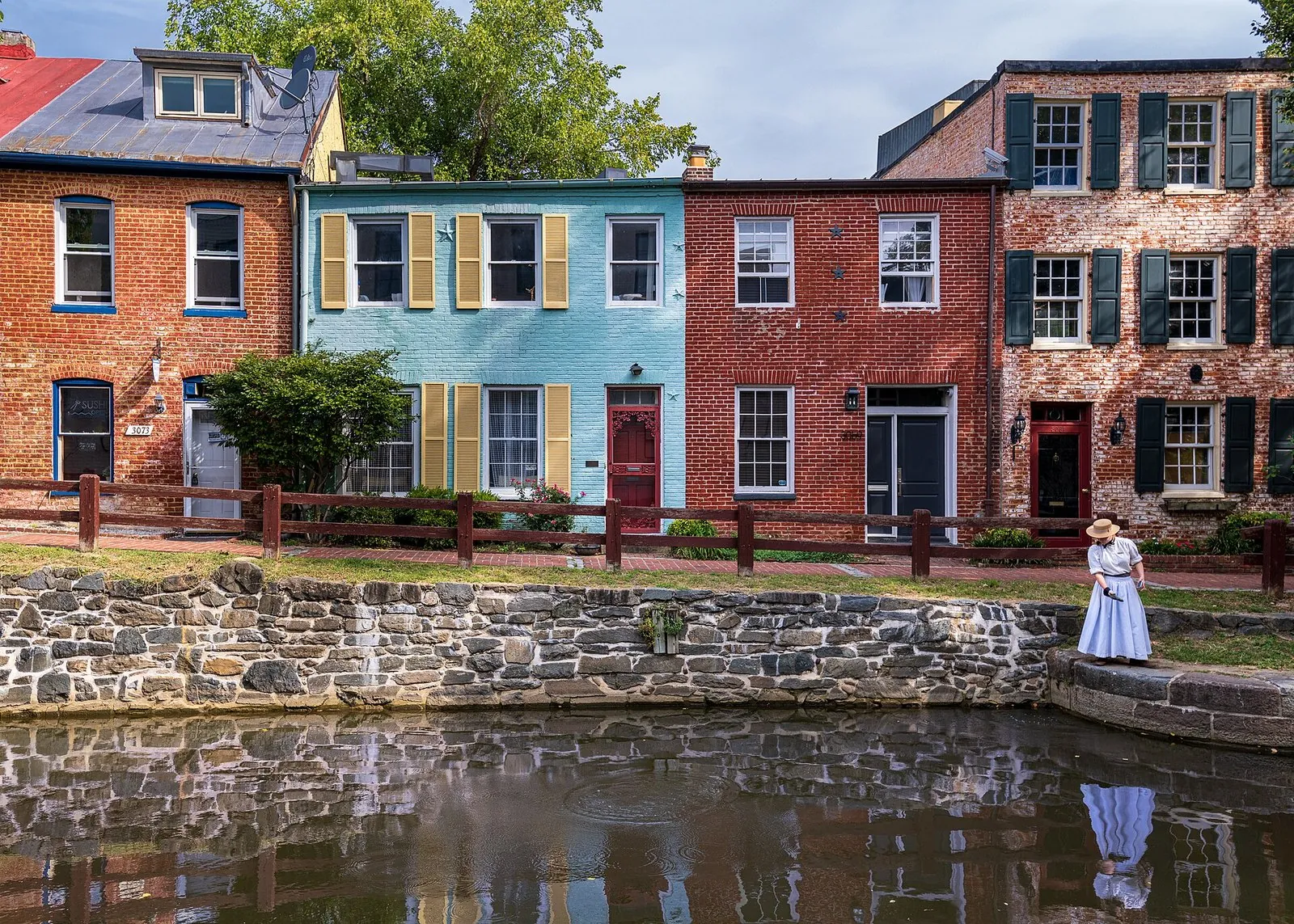
The prettiest neighborhood in the city, with one big drawback. Georgetown is older than Washington itself: Federal-style townhouses, cobbled side streets, the C&O Canal towpath, the waterfront park and the shops of M Street and Wisconsin Avenue. It’s the most romantic base in DC and a good one for couples who plan to split time between sightseeing and wandering. It also has the city’s most polished luxury hotels. The Rosewood Washington DC sits beside the canal, with a rooftop pool and bar looking out over the Potomac toward the Washington Monument, and the Four Seasons Hotel Washington, DC, at the neighborhood’s eastern edge by Rock Creek, has 211 rooms, including 26 suites.
The drawback is transit. Georgetown has no Metro station. The nearest are Foggy Bottom-GWU and Rosslyn, across Key Bridge, each a 15- to 20-minute walk from the center of M Street, and the DC Circulator bus that once connected Georgetown to the rest of the city ended on December 31, 2024. Buses still run, and the water taxi docks at the waterfront, but most visitors staying here end up using rideshares more than they planned. Budget for it.
Plan it: Metro: none; Foggy Bottom-GWU (Blue, Orange, Silver lines) or Rosslyn, 15-20 minutes on foot. Walk to the Mall: 35 minutes or more. Price: $$$ to $$$$. Best for: couples, shoppers, return visitors who’ve done the Mall.
7. Logan Circle, 14th Street, U Street and Shaw
The best area for dinner and a night out. The corridor along 14th Street from Thomas Circle north to U Street, with Logan Circle and Shaw alongside, is where much of DC’s restaurant scene lives, along with live music venues on U Street and plenty of cocktail bars. It’s mostly residential, with a smaller number of boutique and chain hotels, especially toward the southern end near Thomas Circle and the convention center.
Check transit carefully. U Street and Shaw-Howard stations are Green line only now that Yellow trains end at Mt Vernon Square, and Logan Circle itself sits between stations, so you’ll often walk 10 to 15 minutes to the nearest one. For a food-focused trip, it’s worth it.
Plan it: Metro: U Street and Shaw-Howard (Green line), Mt Vernon Square (Green, Yellow lines), McPherson Square (Blue, Orange, Silver lines) at the southern end. Walk to the Mall: 25-35 minutes. Price: $$ to $$$. Best for: food lovers, nightlife, couples, groups of friends.
8. Navy Yard and Capitol Riverfront
New, riverside and built around the ballpark. In the past two decades, the blocks around Nationals Park have become a neighborhood of apartment towers, breweries, restaurants and the Anacostia Riverwalk, with Yards Park’s fountains and boardwalk on the water. The hotels are mostly recent chain and lifestyle brands, which makes them reliable and sometimes good value outside baseball season. It’s a 20- to 25-minute walk to the Capitol and the Mall’s eastern end, or a quick Metro ride.
Game days change the area completely: from spring into September, Nationals home games fill the streets and push up hotel rates. Transit is Green line only.
Plan it: Metro: Navy Yard-Ballpark (Green line). Walk to the Mall: 20-25 minutes. Price: $$ to $$$. Best for: baseball fans, families wanting a riverfront, value outside game days.
9. Woodley Park and Adams Morgan
Residential, green and next to the zoo. Woodley Park is a quiet, leafy neighborhood on the Red line, a short walk from the National Zoo and Rock Creek Park. Next door, Adams Morgan is its opposite: a strip of late-night bars and global restaurants along 18th Street. Staying here means a Metro ride to the Mall, about 10 minutes to Metro Center, but a more neighborhood feel and easy access to the zoo, which is free with a timed entry pass.
Plan it: Metro: Woodley Park (Red line); Adams Morgan is a 10- to 15-minute walk from Woodley Park or Columbia Heights (Green line). Price: $$ to $$$. Best for: families visiting the zoo, repeat visitors, longer stays.
10. Arlington, Virginia
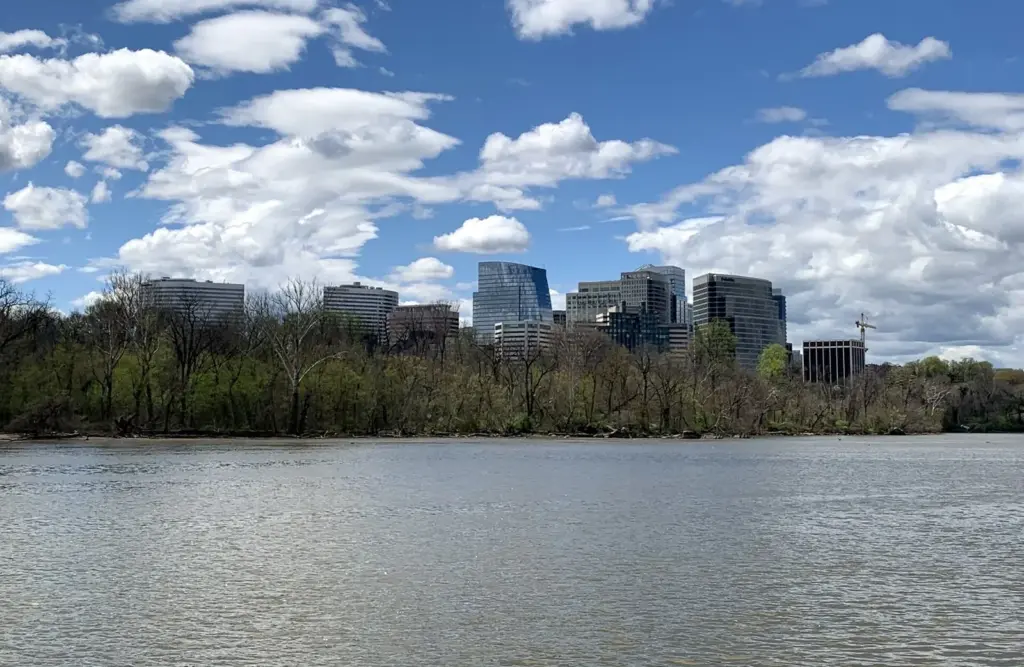
The value pick, and often the smartest choice for drivers. Across the Potomac, Arlington is a string of Metro-served neighborhoods, each with its own character. Rosslyn is a cluster of high-rise hotels and offices directly across Key Bridge from Georgetown, one Metro stop from Foggy Bottom. Crystal City and Pentagon City, now branded National Landing and home to Amazon’s second headquarters, sit next to Reagan National Airport, with Yellow line trains to L’Enfant Plaza in under 10 minutes. Clarendon and Ballston, farther out on the Orange and Silver lines, are dining and nightlife strips.
Arlington’s hotels are mostly large chain properties, and rooms and parking are usually cheaper than in central DC. You’re also close to Arlington National Cemetery, the Pentagon Memorial and the Marine Corps War Memorial. The trade-off is evenings: unless you’re in Clarendon, you’ll come back into DC for dinner, or eat in a hotel district that goes quiet at night.
Plan it: Metro: Rosslyn (Blue, Orange, Silver lines), Crystal City and Pentagon City (Blue, Yellow lines), Clarendon and Ballston (Orange, Silver lines). Price: $ to $$$. Best for: drivers, budget-conscious families, early flights from Reagan National.
11. Old Town Alexandria

A historic small town with a Metro line to the capital. Old Town is 18th-century brick sidewalks, independent shops and restaurants along King Street, and a busy waterfront on the Potomac. It’s a lovely base for a longer stay or a return trip, especially if you want evenings that feel unhurried. A free King Street Trolley runs every 15 minutes from 11 a.m. to 11 p.m. daily between the King Street-Old Town Metro station and the waterfront, and the Torpedo Factory Art Center is free and open daily, as of September 2026.
Hotels here range from boutique properties in historic buildings near the river to chain hotels around the Metro station. The catch is distance: it’s about a 20- to 25-minute Metro ride to the Mall, plus the trolley or a walk at the Old Town end. The water taxi to the Wharf is the scenic alternative in season.
Plan it: Metro: King Street-Old Town (Blue, Yellow lines), then the free trolley. Time to the Mall: about 30-40 minutes door to door. Price: $$ to $$$. Best for: couples, longer stays, repeat visitors, travelers who want a quieter base.
12. National Harbor, Maryland
A resort destination, not a sightseeing base. National Harbor, on the Maryland side of the Potomac south of the city, is a purpose-built waterfront development with a large convention resort, a casino resort, chain hotels and restaurants. It’s popular for conventions, weekend getaways and holiday events. For seeing Washington, though, it’s awkward: there’s no Metro, so you’ll drive, take a bus or rideshare, or use the water taxi to the Wharf and Old Town in season. Choose it for the resort, not for the monuments.
Plan it: Metro: none; buses, rideshares or the seasonal water taxi (about 45 minutes to the Wharf). Price: $$ to $$$, plus parking. Best for: conventions, drivers, resort-style weekends.
Washington DC Hotels by Budget
Here’s what each price tier typically gets you and where to look. We don’t quote nightly rates, because DC’s swing wildly by day of the week and season; use these as relative guides.
| Tier | Where to look | What you get | Examples |
|---|---|---|---|
| Budget ($) | Foggy Bottom micro-hotels, hostels, Arlington and suburban chains | Small rooms or shared dorms, few extras, good locations if you choose well | Hotel Hive (Foggy Bottom) |
| Mid-range ($$) | Capitol Hill, Navy Yard, Dupont, Arlington, Downtown on weekends | Chain and boutique hotels, often with breakfast or perks | Chain hotels near Metro stations in every area above |
| Upscale ($$$) | Penn Quarter, the Wharf, Capitol Hill, Dupont | Boutique hotels with character, rooftop bars, good restaurants | Kimpton Hotel Monaco, Kimpton George Hotel, The Dupont Circle Hotel |
| Luxury ($$$$) | Near the White House, Georgetown, the Wharf | Historic grand hotels and five-star service | Willard InterContinental, Rosewood Washington DC, Four Seasons Hotel Washington, DC |
Two money-saving moves work better than any booking trick. Stay downtown on a weekend, when business travelers leave and rates often fall. Or stay in Arlington next to a Metro station on weekdays, when downtown prices peak. Whatever you book, read the fine print for daily destination or amenity fees, which some DC hotels add on top of the room rate and tax.
What Drives Hotel Prices in Washington DC
The working week. DC’s hotels are filled by government business, lobbying, conferences and conventions from Monday to Thursday, especially when Congress is in session. Weekends downtown can be noticeably cheaper, while leisure areas such as Georgetown and the Wharf hold their prices better.
The seasons. The most expensive stretch is late March and early April, when cherry blossom crowds arrive; the 2027 National Cherry Blossom Festival runs March 20 to April 11. May brings university graduations and school groups, and the Fourth of July and big event weekends fill rooms too. Midwinter, especially January and February outside holiday weekends, and the late-summer weeks when Congress is in recess tend to bring the lowest rates.
Big events. Large conventions at the Walter E. Washington Convention Center, Nationals home games near Navy Yard, the Marine Corps Marathon in late October, Pride weekend in June and, every four years, the presidential inauguration all push prices up. Check the calendar for your dates before you book anything.
Taxes, fees and parking. DC’s hotel tax is 15.95%, the rate in effect through September 30, 2027. Some hotels add daily destination or amenity fees, and overnight parking at downtown hotels is expensive, often one of the biggest extras on the bill. Hotels in Arlington and Alexandria typically charge less for parking, and a few suburban properties include it.
Hotel Features That Matter in Washington DC
Views are rarer than you’d think. A 1910 federal law caps building heights in the city, so there are no skyscraper hotels and few rooms with sweeping skyline views. The views people come for, of the Washington Monument, the Capitol dome or the river, come from rooftop bars, pools and upper floors facing the Mall or the water. The Rosewood’s rooftop pool in Georgetown and Hotel Hive’s rooftop lounge in Foggy Bottom are two examples; if a view matters to you, ask for it when you book rather than hoping for it at check-in.
Rooms can be small. Many downtown hotels occupy older buildings, and standard rooms can feel tight, especially for families. Look for rooms with two queen beds, suites or apartment-style hotels with kitchens, which are common in Foggy Bottom and Arlington. Micro-hotels trade space for price and location, which works well for solo travelers and couples who’ll be out all day.
Parking is valet, and it’s pricey. Downtown hotels rarely have self-parking, and overnight valet can be one of the biggest charges on your bill. If you’re driving in, compare a Virginia hotel with cheaper parking plus Metro against a central hotel with valet. Many visitors find the car sits unused for the whole stay anyway.
City noise is real. Central DC has sirens, motorcades and late-night street life. Light sleepers should ask for a room on a higher floor or facing an interior courtyard, especially in Penn Quarter, Dupont and along 14th Street.
Bag storage saves your last day. Most hotels will hold luggage after checkout, which lets you spend a final afternoon at a museum before a late train from Union Station or an evening flight. Ask at check-in rather than on the way out.
Accessibility varies by building. Newer hotels at the Wharf, Navy Yard and in Arlington tend to have the most accessible rooms and entrances. In historic buildings, ask specifically about roll-in showers, elevator access to every floor and step-free entrances.
How to Book a DC Hotel Without Overpaying
Book early for the peaks, late for the lulls. For cherry blossom season, the Fourth of July and big event weekends, book months ahead on a refundable rate, then keep checking prices as the date nears. For midwinter and late-summer weekends, last-minute rates can be good.
Check two calendars. The convention center’s schedule and Congress’s session calendar both move DC hotel prices. A week with a huge convention can push rates far above normal, while a congressional recess week can bring them down.
Split the stay. On a longer trip, spending weekdays in Arlington near a Metro station and the weekend downtown, when business travelers leave, can save real money without adding much travel time.
Compare the total, not the rate. Add the 15.95% hotel tax, any daily destination fee and parking to every option before you decide. The cheapest-looking rate isn’t always the cheapest stay.
Watch cancellation terms. DC’s rates move fast, and events, weather and even government schedules can change a plan. A slightly higher refundable rate often beats a nonrefundable deal.
Hostels, Apartments and Extended Stays
Hotels aren’t the only option. Hostels with dorm beds and private rooms suit solo travelers and tight budgets, and the best of them are in central, Metro-served neighborhoods; our hostels guide covers them. Vacation rentals, from Capitol Hill rowhouses to apartments near the Wharf, can work well for families and longer stays, but the city regulates short-term rentals, so book through a reputable platform, confirm the listing is licensed and check the exact location against a Metro map; our vacation rental guide goes into the details. For stays of a week or more, the extended-stay and suite hotels in Foggy Bottom and Arlington, with kitchens and more space, are often the best value of all.
Staying Near the Airports
Washington has three airports, and only one of them is close. Reagan National sits just across the river in Arlington, with its own Metro station on the Blue and Yellow lines, so the hotels of Crystal City and Pentagon City work as both an airport base and a sightseeing base. Dulles, out in Virginia, is on the Silver line but a long ride from downtown, and BWI is near Baltimore, linked to Union Station by commuter and Amtrak trains. Stay near Dulles or BWI only for a very early departure or a late arrival; otherwise, sleep in the city and travel out on the day. Our airport guides compare the options.
Where to Stay for Your Kind of Trip
First-time visitors
Penn Quarter or Downtown, full stop. You can walk to the Mall, get anywhere on Metro and eat well without planning. If rates are high for your dates, Capitol Hill near Union Station or Foggy Bottom are the next-best options.
Families with kids
Capitol Hill for quiet evenings and a short walk to the museums; the Wharf for space to run around after dinner; Arlington for suite hotels, pools and cheaper parking. Look for rooms with two queens or suites, and prioritize a short walk to a Metro station over everything else, because tired kids and long walks don’t mix.
Without a car
Anywhere within 10 minutes of a Metro station on the Blue, Orange, Silver or Red lines, with Penn Quarter and Capitol Hill at the top of the list. Avoid Georgetown and National Harbor unless you’re happy to use rideshares.
Museums and the Smithsonian
Penn Quarter for the Mall museums plus the Portrait Gallery and American Art Museum, which stay open until 7 p.m.; Capitol Hill or the Wharf for the eastern and southern museums. From any of these, you can walk back to your room in the middle of the day.
Cherry blossom season
The Wharf and Southwest are closest to the Tidal Basin, and Foggy Bottom and Downtown are close behind. Book as early as possible, choose a refundable rate, and consider Arlington or Old Town near a Metro station if central prices are too steep. The bloom date isn’t forecast until late winter, so flexibility matters.
Food and nightlife
Logan Circle and 14th Street, Dupont Circle or U Street. The Wharf is the pick for waterfront bars, and Clarendon in Arlington if you’re staying across the river.
Arriving by train or plane
Union Station serves Amtrak and commuter trains, so Capitol Hill and the hotels around the station make arrivals easy. For an early flight from Reagan National, Crystal City and Pentagon City are minutes away on the Blue and Yellow lines. Dulles is on the Silver line but far from the city, so staying there only makes sense for a very early departure; our airport guides go into the details.
Is It Safe to Stay in Washington DC?
The areas covered here are busy, well-traveled parts of the city and its suburbs, and most visitors have no trouble. Use normal big-city sense: stick to busy, lit streets at night, keep an eye on phones and bags on crowded trains and in nightlife areas, and use a rideshare if a late walk back feels too long or too quiet. National Guard members have patrolled parts of central Washington, including tourist areas, since August 2025, a deployment that has been extended to January 2029. If you want a specific neighborhood’s recent crime picture, the city’s police department publishes crime maps by area.
Where Not to Stay, and Other Honest Warnings
Don’t stay near Dulles to save money. The rooms may be cheaper, but the trip into the city on the Silver line takes a big bite out of every day. Unless you have a dawn flight, it’s a false economy.
Don’t pick Georgetown for a short first trip. It’s beautiful, but with no Metro station and no Circulator, you’ll spend more time and money getting to the Mall than anywhere else on this list. Save it for a return visit, or a trip that’s more about strolling than sightseeing.
Don’t treat National Harbor as a DC base. It’s a resort across the river in Maryland with no Metro. Great for a convention or a getaway, poor for the monuments.
Don’t book downtown during a giant convention without checking. When the convention center is full, rates across Penn Quarter and Downtown jump and restaurants fill up.
Don’t ignore the fine print. Hotel tax is 15.95%, and daily fees and parking can add more. Compare the total, not the headline rate.
Don’t assume “near the Mall” means walkable. Some hotels advertise proximity to the Mall when they mean a 25-minute walk. Check the map for the walk to the nearest Metro station and to the museums you care about.
Where to Stay in Washington DC FAQ
Where should I stay when visiting Washington DC for the first time?
Penn Quarter or Downtown. You’ll be a 10- to 15-minute walk from the Smithsonian museums on the National Mall, with Metro Center, Gallery Place and Archives stations covering every line. If prices are high, Capitol Hill, Foggy Bottom or a Metro-side hotel in Arlington are the best alternatives.
Where is the best place to stay in DC with kids?
Capitol Hill, for quiet evenings and a short walk to Air and Space and the other eastern museums, or the Wharf, for waterfront space and easy access to the Tidal Basin. Arlington suits families with a car, with suite hotels and cheaper parking. Wherever you choose, stay close to a Metro station.
Where should I stay in DC without a car?
Choose a hotel within 10 minutes’ walk of a Metro station, ideally on the Blue, Orange or Silver lines, which run under the Mall. Penn Quarter, Capitol Hill, Foggy Bottom and the Metro-side parts of Arlington all work well. Georgetown and National Harbor have no Metro station, so avoid them for a car-free trip.
Is it cheaper to stay in Virginia or DC?
Usually Virginia. Hotels in Arlington and Alexandria tend to charge less for rooms and much less for parking than central DC, and stations like Rosslyn, Crystal City and Pentagon City are minutes from the Mall by Metro. Downtown DC on a weekend can close the gap, so compare both for your dates.
Where should I stay in DC for the cherry blossoms?
The Wharf and Southwest Waterfront are the closest neighborhoods to the Tidal Basin, with Foggy Bottom and Downtown next. Book early and refundably, because the 2027 festival runs March 20 to April 11 and the peak bloom date isn’t forecast until late winter. Metro-side hotels in Arlington are the budget fallback.
What is the safest area to stay in Washington DC?
The main visitor areas, including Penn Quarter, Capitol Hill, Foggy Bottom, Dupont Circle, Georgetown and the Metro-side parts of Arlington, are busy and well-traveled. Use normal city precautions at night: stay on lit, busy streets and use a rideshare for long late walks. DC’s police department publishes crime maps if you want neighborhood detail.
How many nights do you need in Washington DC?
Three nights is a good minimum for a first visit: enough for the major memorials, two or three big museums and one neighborhood evening. Four or five lets you add Arlington, a day trip to Mount Vernon or Old Town Alexandria, and a slower pace. Weekend stays often get better downtown rates.
Is Georgetown a good place to stay in DC?
It’s a lovely place to stay, with historic streets, the canal, the waterfront and luxury hotels, but it has no Metro station, and the Circulator bus ended in 2024. It suits couples and return visitors who don’t mind rideshares. For a short first trip focused on the Mall, Penn Quarter is more practical.
Related Washington DC Guides
- Things to Do in Washington DC: what to see once you’ve settled on a base.
Sources and How We Checked
This guide was checked on September 24, 2026, against the official sites below and compiled from them; we don’t claim first-hand visits or hotel stays.
- DC Office of Tax and Revenue: sales and hotel tax rates
- WMATA: Metro lines, fares and hours
- Willard InterContinental
- Kimpton Hotel Monaco Washington DC
- Kimpton George Hotel
- Hotel Hive
We also used the Rosewood Washington DC, Four Seasons Hotel Washington, DC and Dupont Circle Hotel listings, the City of Alexandria’s King Street Trolley information, the Potomac Water Taxi schedule and news of record (NPR and WTOP) on the Kennedy Center and the National Guard deployment.
Washington DC Tourism Guide is an independent publication. We are not affiliated with Destination DC, the National Park Service, the Smithsonian Institution or any hotel or attraction listed here, and no one paid to be included.
Photo Credits
- Rowhouses along the C&O Canal in Georgetown: photo by Daniel M Horowitz, via Wikimedia Commons (CC BY-SA 4.0)
- Archives-Navy Memorial-Penn Quarter Metro station: photo by thisisbossi, via Wikimedia Commons (CC BY-SA 2.0)
- The Willard hotel on Pennsylvania Avenue: photo by Tim1965, via Wikimedia Commons (CC BY-SA 3.0)
- Capitol Hill rowhouses: photo by self, via Wikimedia Commons (CC BY 3.0)
- The Wharf at night: photo by Frypie, via Wikimedia Commons (CC BY-SA 4.0)
- The Dupont Circle fountain: photo by AgnosticPreachersKid, via Wikimedia Commons (CC BY-SA 3.0)
- The Rosslyn skyline, Arlington: photo by APK, via Wikimedia Commons (CC BY-SA 4.0)
- The Potomac Water Taxi at Old Town Alexandria: photo by Beyond My Ken, via Wikimedia Commons (CC BY-SA 4.0)