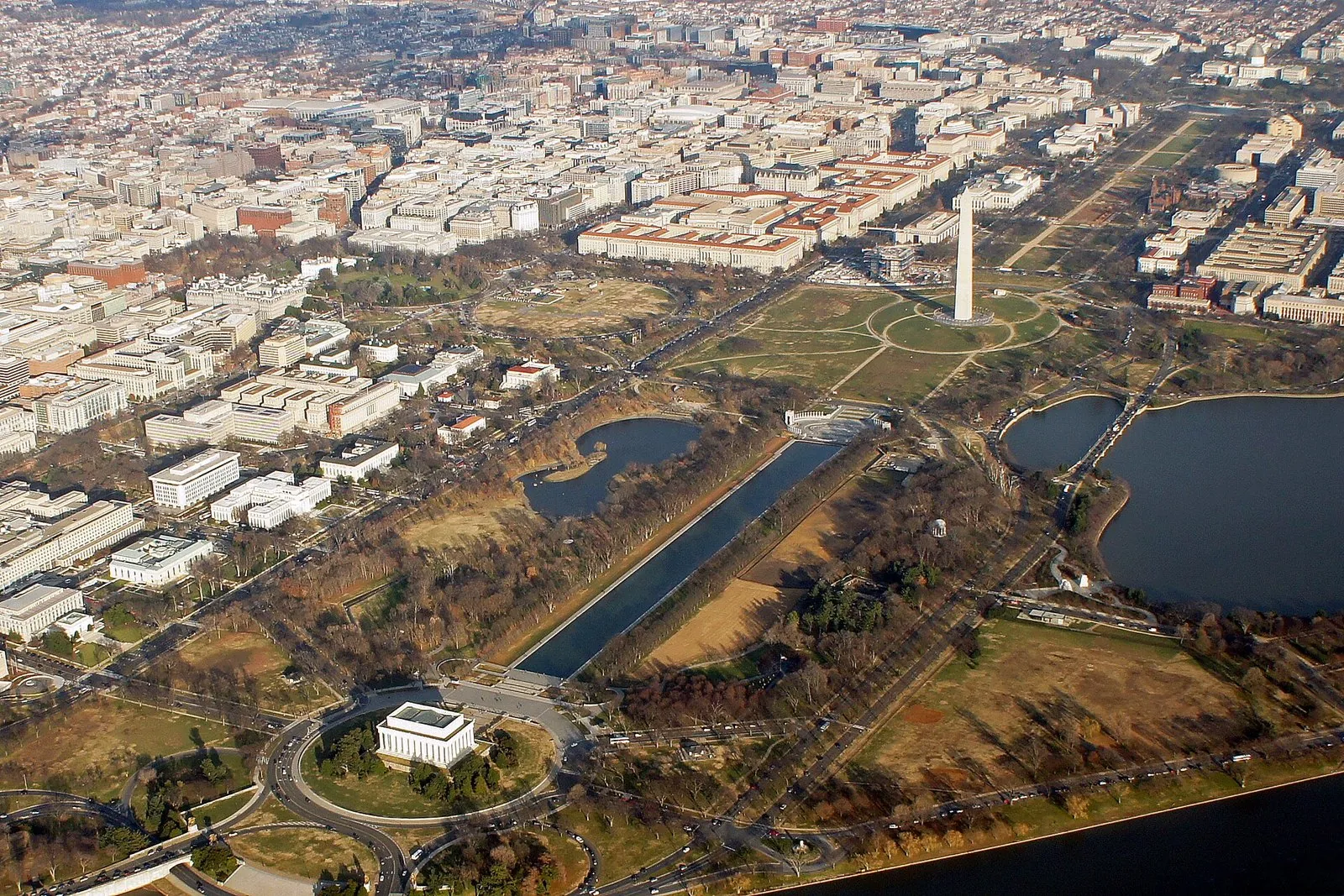
Most of the best things to do in Washington DC cost nothing, and a good share of them line up along a single two-mile lawn between the Lincoln Memorial and the Capitol. That’s the easy part. The harder part is that free in Washington often means a timed pass, a security line or a closure notice, and those rules change faster than most guides get updated. This list covers 75 places, from the headline memorials and Smithsonian museums to river paddles and late-night half-smokes, with what each one costs, whether you need a pass, the nearest Metro stop and how long to allow.
Quick answer: With one or two days, see the Lincoln Memorial (ideally at dusk), the National Museum of African American History and Culture, the National Air and Space Museum, a Capitol tour paired with the Library of Congress, the Natural History Museum and Arlington National Cemetery. Book the free timed passes for the African American history museum, Air and Space and the Library of Congress before you leave home, and don’t expect to walk into the Washington Monument without a ticket.
Last updated September 23, 2026. Hours, prices and pass rules were checked that day against the attractions’ and agencies’ own websites.
- Free, walk right in: every memorial on the Mall, the Natural History and American History museums, the National Gallery of Art, the Botanic Garden and most other Smithsonian museums.
- Free, but book a timed pass: the African American history museum, Air and Space, the National Zoo, the Library of Congress and the Holocaust Museum. Washington Monument tickets carry a $1 booking fee.
- Book weeks ahead: White House tours (through your member of Congress, at least 21 days out) and Pentagon tours (14 to 90 days out).
- No shutdown risk this fall: federal funding runs through December 11, 2026, so the Smithsonian and the zoo stay open until at least then.
- Just changed: the Kennedy Center’s board voted on September 15, 2026 to close its main building, and DC’s sales tax rises from 6% to 7% on October 1, 2026.
On this page: Best for your trip | Passes and security | Top 10 | Memorials | Free museums | Paid museums | Government buildings | Historic sites | Neighborhoods | Parks and the river | Food and nights out | Beyond DC | All 75 at a glance | When to go | Getting around | What to skip | FAQ
The best things to do in Washington DC for your kind of trip
The top 10 below are ranked for a first visit. After that, the list is grouped by type and area so you can plan a day around one part of town, and within each group the strongest picks come first. If you’d rather start from who’s traveling, use this:
| If you’re… | Start with |
|---|---|
| A first-timer | 1 Lincoln Memorial, 2 African American history museum, 4 Capitol, 6 Library of Congress, 7 Washington Monument, 8 Arlington |
| Traveling with kids | 5 Natural History, 3 Air and Space, 20 National Zoo, 29 Udvar-Hazy Center, 28 Postal Museum, 19 the Einstein statue you can climb on |
| A couple | 72 the memorials at night, 51 Georgetown, 35 Phillips Collection, 68 a rooftop drink, 65 the water taxi, 73 Old Town Alexandria |
| On a tight budget | Everything in the top 10 is free apart from the Arlington tram and the $1 monument fee. Add 21 American History, 24 Portrait Gallery, 59 Botanic Garden and 52 the Wharf |
| Dodging rain | 2, 5, 10 National Gallery, 24 Portrait Gallery (open until 7 p.m.), 38 Building Museum, 42 National Archives |
| Out after dark | 72 memorials at night, 68 rooftops, 69 theater, 70 live music, 71 a Capitals or Wizards game |
A few patterns are worth knowing. The free things to do in DC are not a consolation prize: the memorials, the Smithsonian museums and the National Gallery are the main event, and the paid attractions are extras. The best things to do in DC when it rains are the big museums on the Mall, several of them a short walk from a Metro station, and any one of them can fill an afternoon. Romantic things to do in DC tend to happen after dark, when the memorials are lit and the crowds have gone home. And the hidden gems here are mostly small, free and a short Metro ride from the Mall: the Renwick Gallery, the Einstein statue, Kenilworth’s lotus ponds and the Anacostia Community Museum.
Before you go: passes, security lines and shutdowns
Every entry below opens with a bold line saying what it costs and whether you need a pass or a booking, and ends with a Plan it line: hours, the nearest Metro station, the time to allow and who it suits best. The labels mean:
- Free, no pass: walk in. At museums, expect a bag check at the door.
- Free, timed pass: admission costs nothing (or a $1 booking fee), but you need a pass for a set entry time.
- Reservation or request: a tour you book or request ahead, sometimes weeks ahead.
- Paid: an admission price, as of September 2026.
Which attractions need a pass, and when to book
| Attraction | What you need | How and when (September 2026) |
|---|---|---|
| Washington Monument | Timed ticket, $1 fee | Recreation.gov, 30 days ahead at 10 a.m.; a second release the day before at 3 p.m.; some free walk-ups from 8:45 a.m. |
| African American history museum | Free timed pass | Museum website, 30 days ahead; same-day passes online by 8:15 a.m. |
| Air and Space (Mall) | Free timed pass | Museum website |
| National Zoo | Free entry pass | Zoo website, 30 days ahead |
| Library of Congress | Free timed ticket | Library website, up to 30 days ahead; same-day tickets online at 9 a.m. |
| Holocaust Museum | Free timed ticket ($1 fee in advance) | Museum website; same-day tickets online at 7 a.m. |
| Bureau of Engraving and Printing | Free tour ticket | Online or by phone; same-day tickets online from 8 a.m. |
| U.S. Capitol tour | Reservation recommended | Capitol Visitor Center website; walk-ups should arrive by 2:30 p.m. |
| White House | Tour request | Through your member of Congress or your embassy, 21 days to 3 months ahead |
| Pentagon | Tour booking | Pentagon Tours website, 14 to 90 days ahead |
| Frederick Douglass house | Ranger tour, $1 fee | Recreation.gov, up to 6 months ahead |
Two tips. Passes released “30 days ahead” go out on a rolling basis, so the morning they open for your date is the time to book. And when your date is gone, the same-day releases are real and worth setting an alarm for. Passes are per person: the zoo and the African American history museum count babies too.
Security lines
The Smithsonian museums check bags at the door, and the Capitol, the Supreme Court, the Holocaust Museum and the Washington Monument run full airport-style screening. The Capitol bans all food and drink, bottled water included, and has nowhere to leave banned items. The Washington Monument turns away strollers and bags larger than 18 by 16 by 8 inches. In spring, when school groups arrive by the busload, the line outside a popular museum can take longer than the gallery you came for. Arrive at opening with a small bag and you’ll skip most of it.
Shutdowns and the National Guard
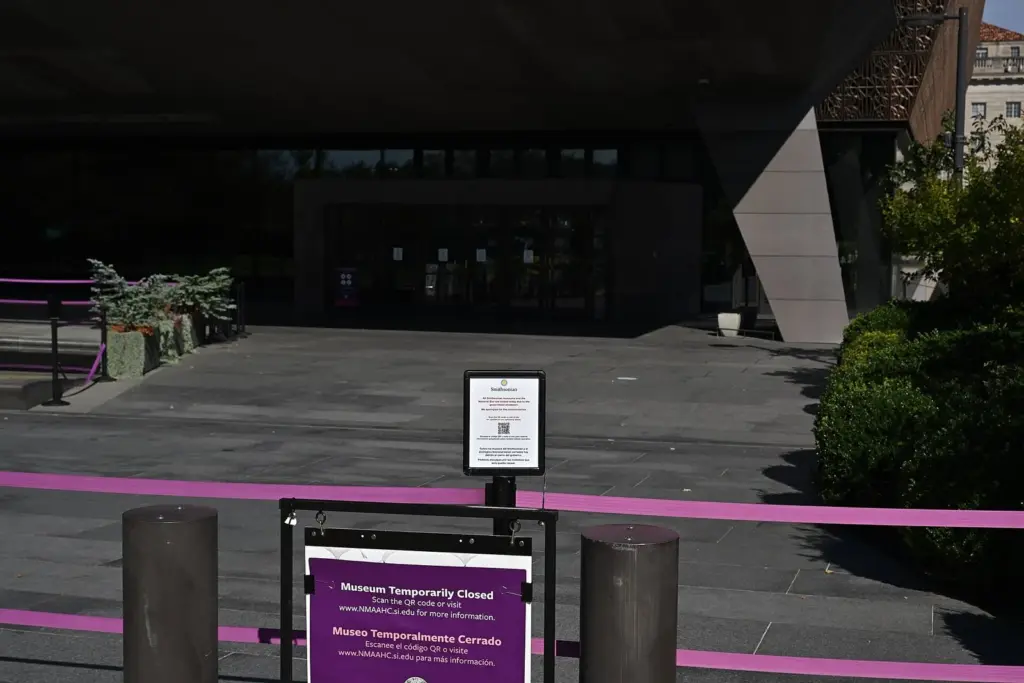
When Congress fails to fund the government, the Smithsonian’s museums and the National Zoo close once their carryover money runs out. In the fall 2025 shutdown they closed on October 12 and didn’t all reopen until November 17. The open-air memorials stayed accessible, though park services were cut back. For now, a stopgap funding law signed in early September 2026 keeps the government funded through December 11, 2026, so mid-December is the next date to watch.
You’ll also see armed National Guard members on patrol around the Mall and in busy neighborhoods. The deployment that began in August 2025 was extended in July 2026 until January 2029. Their presence doesn’t change any of the hours, passes or entry rules on this page.
Top 10 things to do in Washington DC
If this is your first trip, these ten carry the most weight. All of them are free or close to it, and all but Arlington are within walking distance of the Mall.
1. Lincoln Memorial
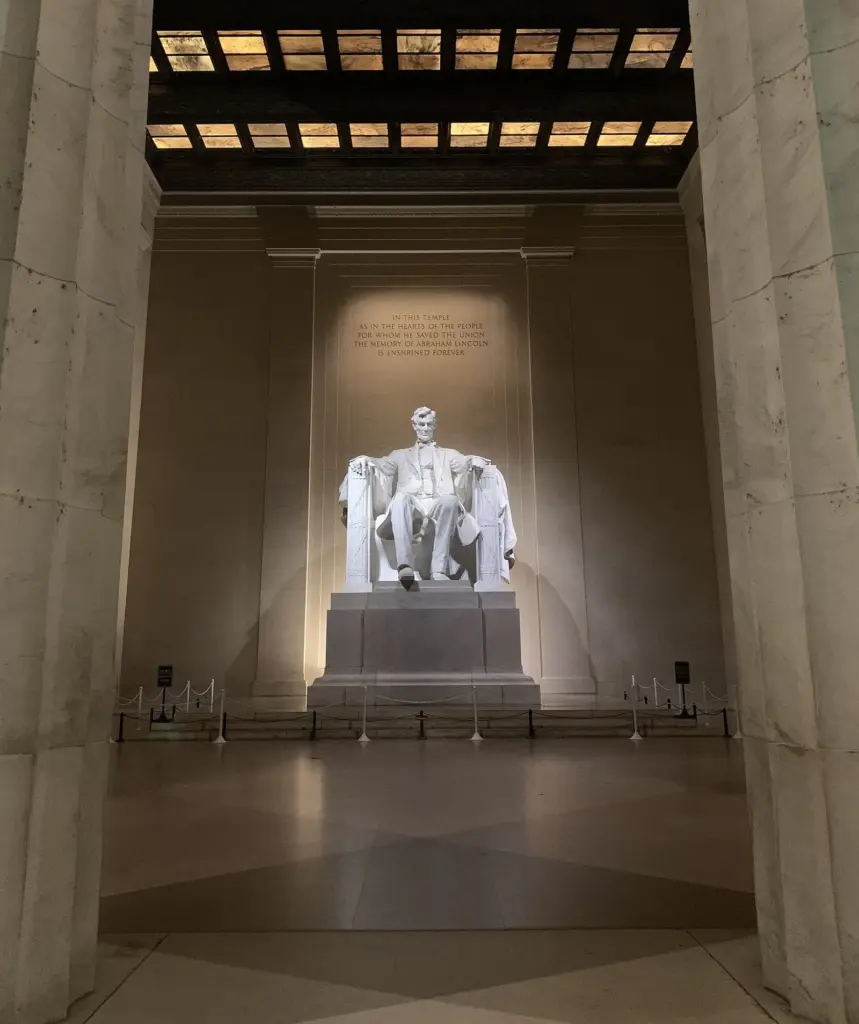
Free, no pass, open 24 hours. Start here, and if you can, come twice. By day you can read the Gettysburg Address and Lincoln’s Second Inaugural Address, carved into the walls on either side of Daniel Chester French’s 19-foot marble Lincoln. After dark the statue is lit from above, the tour groups are gone, and the view down the Mall to the Washington Monument and the Capitol is the best free show in town. On the steps, an inscription marks the spot where Martin Luther King Jr. stood to give his “I Have a Dream” speech in 1963. Most people walk right past it, so look down.
The Reflecting Pool below the steps was drained and fenced from April 2026 so the Park Service could clean it, repair its joints and put in a new lining. The last posted closure ran through September 10, 2026, so check the National Mall alerts page if the reflection shot is the point of your visit.
Plan it: Open 24 hours, with park rangers on duty through the day and into the evening. Metro: Foggy Bottom-GWU (Blue, Orange, Silver lines), about a 20-minute walk. Allow 30 to 45 minutes. Best for: first-timers, night.
2. National Museum of African American History and Culture
Free, timed pass required. If you see one museum in Washington, make it this one. The history galleries begin three levels below ground and climb, in order, from the transatlantic slave trade through Reconstruction, segregation and the civil rights movement to the present, so you rise through the story as you go. The upper floors turn to music, sports, food and culture, a welcome change of pace after the history levels. It’s heavy, full and very popular, and it marks its 10th anniversary on September 24, 2026.
Everyone needs a free timed-entry pass from the museum’s website, children included. Advance passes are released 30 days ahead on a rolling basis, and a batch of same-day passes goes online by 8:15 a.m. Eastern. Veterans, active-duty service members and first responders can skip the pass by showing ID. Your pass lets you enter any time from its start time until 4 p.m., so there’s no need to arrive on the minute.
Plan it: Opens daily at 10 a.m. (last entry 4 p.m.), closed December 25. Enter at 15th Street and Madison Drive or at 14th Street and Constitution Avenue. Metro: Federal Triangle or Smithsonian (Blue, Orange, Silver). Allow at least three hours, and do the history levels first while you’re fresh. Best for: first-timers, rainy days.
3. National Air and Space Museum
Free, timed pass required. The Mall building has spent most of a decade under a top-to-bottom renovation, and it’s nearly done. As of September 2026, 18 of its 20 renovated galleries are open, including the Boeing Milestones of Flight Hall, which reopened in July 2025, and five more that opened on July 1, 2026, the museum’s 50th birthday. The headliners are the Spirit of St. Louis, the X-15 rocket plane, John Glenn’s Friendship 7 capsule and a lunar module, and there’s a piece of the moon you’re allowed to touch. The last two galleries, At Home in Space and Modern Military Aviation, are due to open on October 30 and November 11, 2026.
Kids love it, but the really big aircraft, including the Space Shuttle Discovery, an SR-71 Blackbird and a Concorde, are out at the Udvar-Hazy Center near Dulles Airport (#29).
Plan it: Open daily 10 a.m. to 5:30 p.m., closed December 25. Everyone needs a free timed-entry pass from the museum’s website, and the only entrance is on Jefferson Drive. Metro: L’Enfant Plaza (Blue, Orange, Silver, Green, Yellow) or Smithsonian. Allow two to three hours. Best for: families, first-timers, rainy days.
4. U.S. Capitol
Free, reservation recommended. The free guided tour of the Capitol is better than it sounds. It takes you through the Crypt, the Rotunda beneath the dome and National Statuary Hall, where the House of Representatives met until 1857 and where part of the collection of two statues from every state now stands. Tours start in the Capitol Visitor Center, built underground on the east side, which also has an exhibition hall worth half an hour while you wait.
Book online through visitthecapitol.gov. Walk-ups are put on the next available tour, but arrive by 2:30 p.m. The tour doesn’t go into the House or Senate chambers; to watch Congress in session you need separate gallery passes (#43). A tunnel runs from the visitor center straight to the Library of Congress (#6), so pair the two.
Plan it: Visitor center open Monday to Saturday, 8:30 a.m. to 4:30 p.m.; last tour at 3:20 p.m. Closed Sundays, Thanksgiving, December 25, January 1 and Inauguration Day. No food or drink of any kind, water included, and nowhere to store it. Metro: Capitol South (Blue, Orange, Silver) or Union Station (Red). Allow two hours including security. Best for: first-timers.
5. National Museum of Natural History
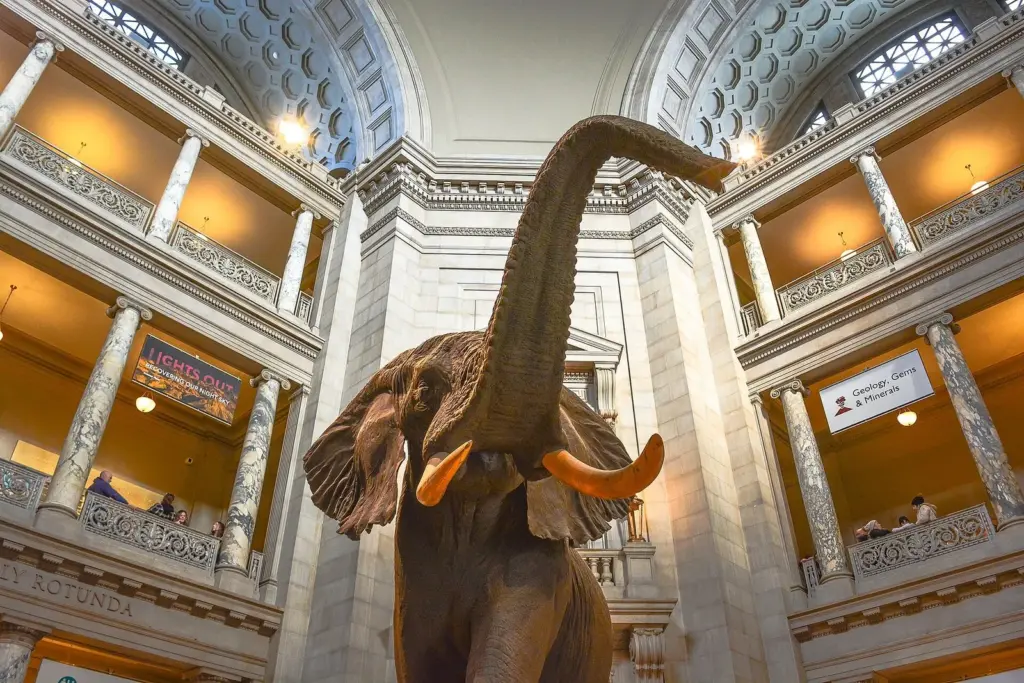
Free, no pass. The crowd-pleaser, and the first museum to pick if you’re traveling with children. The Hope Diamond, all 45.52 carats of it, sits in the Hall of Geology, Gems and Minerals on the second floor. The David H. Koch Hall of Fossils: Deep Time on the first floor holds about 700 fossils, including a Tyrannosaurus rex locked in a fight with a Triceratops. The African elephant in the rotunda has greeted visitors since 1959 and is still the easiest place in the building to regroup.
Plan it: Open daily 10 a.m. to 5:30 p.m., closed December 25. No pass needed. Enter from the Mall on Madison Drive or from Constitution Avenue at 10th Street. Metro: Federal Triangle (Blue, Orange, Silver), Archives (Green, Yellow) or Metro Center (Red). Allow two to three hours. Best for: families, rainy days, first-timers.
6. Library of Congress
Free, timed pass required. The Thomas Jefferson Building, opened in 1897, is the most beautiful interior in Washington, and it isn’t close. The Great Hall is marble, mosaics and gold leaf from floor to ceiling, and from an upstairs overlook you can look down into the domed Main Reading Room, where researchers still work. The David M. Rubenstein Treasures Gallery, opened in June 2024, rotates rare items from the collections, so it changes between visits.
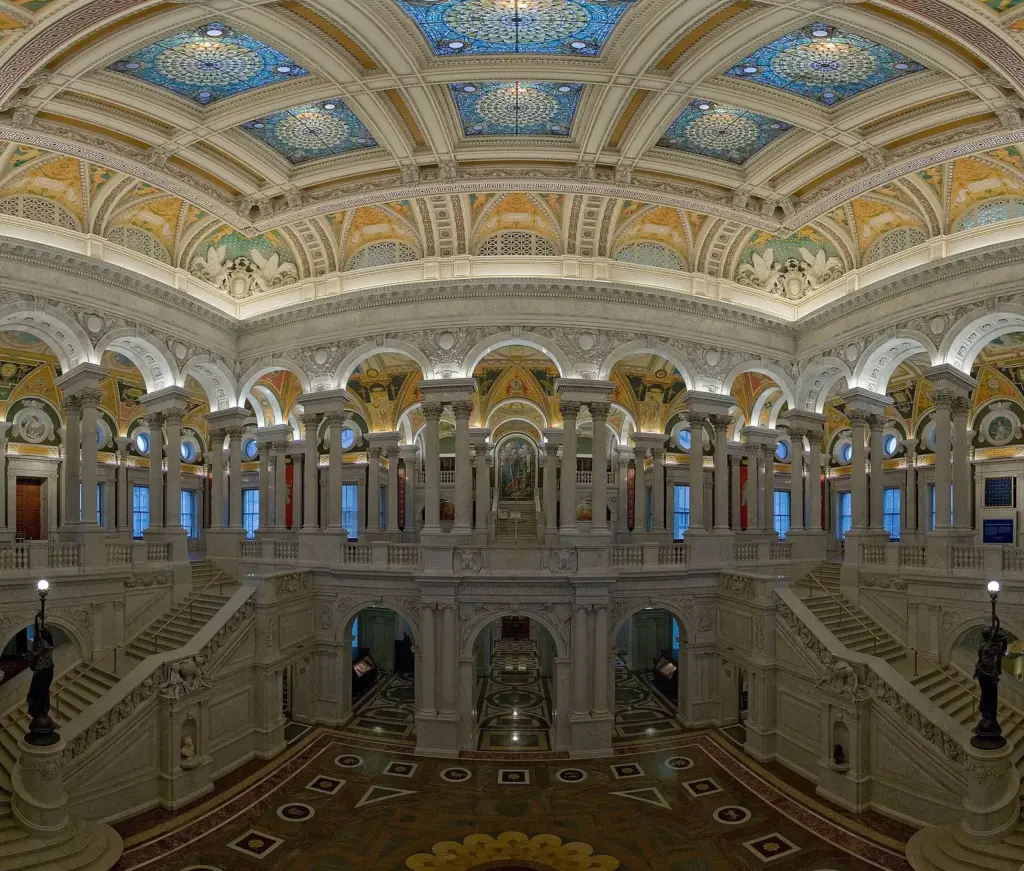
It’s closed on Sundays and Mondays, which catches out a lot of weekend visitors. Free timed-entry tickets are required: book up to 30 days ahead on the library’s website, or try for same-day tickets, released online at 9 a.m. Eastern.
Plan it: Open Tuesday to Saturday, 10 a.m. to 5 p.m. (last entry 4:30 p.m.). Walk over from the Capitol through the tunnel, or enter from First Street SE. Metro: Capitol South (Blue, Orange, Silver). Allow 60 to 90 minutes. Best for: first-timers, couples, rainy days.
7. Washington Monument
Free timed ticket, $1 booking fee. The 555-foot obelisk is the one sight on the Mall you can’t simply walk into. An elevator lifts you to the 500-foot observation level in about 70 seconds, and the windows on all four sides explain the city’s layout better than any map: the Capitol to the east, the Lincoln Memorial to the west, the White House to the north and the Jefferson Memorial across the Tidal Basin to the south. It’s one of the best views in DC for the price of a booking fee. Look at the outside before you go in. The stone changes color about a quarter of the way up, because construction stopped for more than two decades in the mid-1800s and the marble used when it restarted came from a different quarry.
Tickets go on sale on Recreation.gov 30 days ahead at 10 a.m. Eastern, with a second release at 3 p.m. the day before, and each carries a $1 non-refundable fee. A limited number of free same-day tickets are handed out at the Washington Monument Lodge on 15th Street from 8:45 a.m., first come, first served. The monument closes on July 4, December 25 and one maintenance day a month (for the rest of 2026: October 5, November 4 and December 8), and it can close with little notice. Recreation.gov listed it as closed on September 23 and 24, 2026.
Plan it: Open 9 a.m. to 5 p.m., last entry 4 p.m. Everyone is screened: no strollers, no bags larger than 18 by 16 by 8 inches and no food or unsealed drinks. Metro: Smithsonian (Blue, Orange, Silver), about a 10-minute walk. Allow an hour. Best for: first-timers, families, views.
8. Arlington National Cemetery
Free; the tram tour costs extra. More than 400,000 people are buried on these hills across the Potomac, and it’s still a working cemetery, with funerals most weekdays. The Changing of the Guard at the Tomb of the Unknown Soldier is the ceremony most visitors come for. From October 1 through March 31 it takes place on the hour, and from April through September every half hour. On the walk up you pass President John F. Kennedy’s grave and its eternal flame, and Arlington House, once the home of Robert E. Lee, looks down on both.
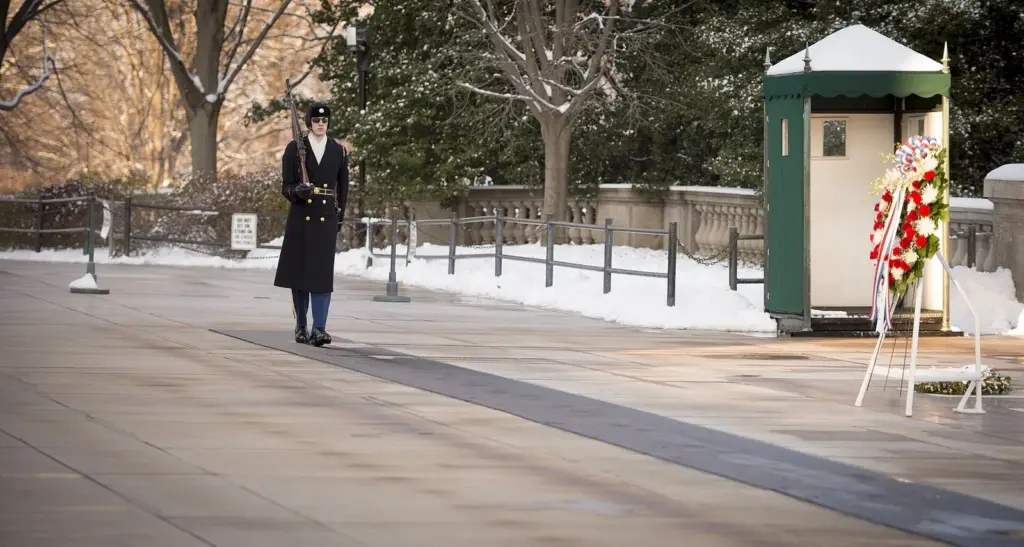
Behave as you would at any cemetery: keep your voice down, stay on the paths, and give funeral processions the right of way. The Marine Corps War Memorial, the Iwo Jima flag-raising statue, stands just north of the cemetery.
Plan it: Open daily 8 a.m. to 7 p.m. from April to September and 8 a.m. to 5 p.m. from October 1 to March 31. The narrated tram, run by Arlington Tours, saves a lot of uphill walking; buy tickets at the Welcome Center. Metro: Arlington Cemetery (Blue), right at the entrance. Allow two to three hours. Best for: first-timers, history buffs.
9. The White House
Free; tour requests go through Congress or an embassy. You can see the north front from Pennsylvania Avenue by Lafayette Square and the south side across the Ellipse any day, but getting inside takes planning. Public tours are free and self-guided, with Secret Service officers along the route, and run Tuesday to Thursday from 7:30 to 11:30 a.m. and Friday and Saturday from 7:30 a.m. to 1:30 p.m. U.S. citizens request a tour through their member of Congress, and international visitors go through their country’s embassy in Washington. Put the request in up to three months ahead and no later than 21 days before your date, and know that tours can be canceled at the last minute.
The route listed on whitehouse.gov covers the State Floor: the Entrance Hall, the Cross Hall, the Blue, Red and Green Rooms and the State Dining Room. The East Wing, where tours traditionally began, was demolished in October 2025 to make way for a ballroom, and the official pages don’t say where tours now enter, so follow your confirmation. No tour? The Park Service’s White House Visitor Center at 1450 Pennsylvania Avenue NW has exhibits on the house and the people who have lived in it.
Plan it: Visitor Center open daily 7:30 a.m. to 4 p.m., except January 1, Thanksgiving and December 25. Metro: McPherson Square or Farragut West (Blue, Orange, Silver) for Lafayette Square; Federal Triangle for the Visitor Center. Allow 30 minutes outside, longer with a tour. Best for: first-timers.
10. National Gallery of Art
Free, no pass. It sits on the Mall and costs nothing, but it isn’t part of the Smithsonian, and it’s the best art museum in the city by a distance. The West Building holds the European and American old masters, including Ginevra de’ Benci, the only painting by Leonardo da Vinci in the Americas. An underground concourse links it to I. M. Pei’s East Building and the modern and contemporary collection. Next door, the Sculpture Garden hosts free Jazz in the Garden concerts on summer Friday evenings (passes by weekly online lottery) and turns into an ice rink in winter. The 2025-26 rink season ran from November 24 to March 1; check the Gallery’s site for the 2026-27 dates.
Plan it: Open daily 10 a.m. to 5 p.m. No pass needed. Metro: Archives (Green, Yellow), Judiciary Square (Red) or Smithsonian (Blue, Orange, Silver). Allow two hours for the highlights. Best for: couples, rainy days, art lovers.
Monuments and memorials on the National Mall
The Washington DC monuments and memorials are free, open 24 hours and run by the National Park Service, which posts rangers at the major ones through the day and into the evening. The Mall runs about two miles from the Lincoln Memorial to the Capitol, and the Tidal Basin memorials sit just south of it, so wear real shoes: the memorials below, plus the Lincoln and the Washington Monument, add up to four or five miles on foot.
11. World War II Memorial
Free, no pass, open 24 hours. Opened in 2004 at the east end of the Reflecting Pool, it’s a granite plaza of 56 pillars, one for each state and territory of the era plus the District, set around a fountain pool, with arches for the Atlantic and Pacific theaters. The Freedom Wall holds 4,048 gold stars, each representing 100 Americans who died in the war. It’s the most crowded memorial at midday, so come early in the morning or after dark.
Plan it: On 17th Street between Constitution and Independence Avenues. Metro: Smithsonian or Farragut West (Blue, Orange, Silver), about 15 minutes on foot. Allow 30 minutes. Best for: first-timers, families.
12. Vietnam Veterans Memorial
Free, no pass, open 24 hours. Maya Lin’s black granite wall, dedicated in 1982, cuts into the ground in a shallow V and lists more than 58,000 Americans who died or went missing in the war, in the order they were lost. Directories at each end help you find a name, and you can take a pencil rubbing of it. The Three Servicemen statue and the Vietnam Women’s Memorial stand nearby. It’s the quietest place on the Mall, and people treat it that way.
Plan it: Near Constitution Avenue and Henry Bacon Drive, a few minutes’ walk from the Lincoln Memorial. Metro: Foggy Bottom-GWU (Blue, Orange, Silver), about 15 minutes. Allow 30 minutes. Best for: first-timers, history buffs.
13. Korean War Veterans Memorial
Free, no pass, open 24 hours. Nineteen stainless-steel soldiers in rain ponchos advance through juniper and granite strips as if on patrol, and a polished granite wall beside them is etched with the faces of support troops. The Wall of Remembrance, added in 2022, lists more than 36,000 Americans and more than 7,000 Korean soldiers attached to U.S. units who died in the war. Come at night: lit from below, the patrol looks like it’s moving.
Plan it: Across the Reflecting Pool from the Vietnam memorial, near the Lincoln Memorial. Metro: Foggy Bottom-GWU or Smithsonian (Blue, Orange, Silver), 15 to 20 minutes. Allow 20 minutes. Best for: night, history buffs.
14. Martin Luther King Jr. Memorial
Free, no pass, open 24 hours. A 30-foot figure of King emerges from the Stone of Hope, a granite block split from the Mountain of Despair behind it, an image taken from the “I Have a Dream” speech. The curving Inscription Wall carries 14 quotations from his sermons and speeches. It opened in 2011, and its address, 1964 Independence Avenue SW, nods to the Civil Rights Act of 1964. King looks out across the Tidal Basin toward the Jefferson Memorial.
Plan it: On the northwest shore of the Tidal Basin. Metro: Smithsonian (Blue, Orange, Silver), about a 20-minute walk. Allow 20 to 30 minutes. Best for: first-timers, families.
15. Thomas Jefferson Memorial
Free, no pass, open 24 hours. The domed, colonnaded memorial on the south bank of the Tidal Basin was dedicated in 1943, and its 19-foot bronze Jefferson is ringed by passages from the Declaration of Independence and his other writings. It’s the farthest memorial from a Metro station, which keeps it calmer than the Lincoln. The Park Service finished rebuilding the Tidal Basin’s sinking seawall in December 2025, eight months early, and the new wall carries a wider, more accessible walkway. It planned to plant 426 trees, 269 of them cherries, in spring 2026 to replace the ones taken out for the work.
Plan it: The 2.1-mile Tidal Basin loop connects it with the MLK and FDR memorials. Metro: Smithsonian (Blue, Orange, Silver), about 25 minutes on foot. Allow 30 minutes, more at blossom time. Best for: couples, night.
16. Franklin Delano Roosevelt Memorial
Free, no pass, open 24 hours. Landscape architect Lawrence Halprin laid it out as four outdoor rooms, one for each of Roosevelt’s terms, built from red granite, waterfalls and bronze. You pass a Depression breadline, a fireside chat, Roosevelt with his dog Fala and Eleanor Roosevelt standing before the emblem of the United Nations. A statue of him in a wheelchair was added in 2001, and the whole memorial was designed to be accessible, which makes it one of the easiest on the Mall with a stroller or wheelchair. Kids like the waterfalls.
Plan it: On the west side of the Tidal Basin, between the MLK and Jefferson memorials. Metro: Smithsonian (Blue, Orange, Silver), about 25 minutes. Allow 30 to 45 minutes. Best for: families, history buffs.
17. Dwight D. Eisenhower Memorial
Free, no pass, open 24 hours. The newest presidential memorial in Washington, dedicated in 2020 and designed by Frank Gehry. A huge woven steel screen shows the Normandy cliffs at Pointe du Hoc in peacetime, framing statues of Eisenhower as a Kansas boy, as the D-Day commander with his paratroopers and as president. Most visitors miss it because it sits off the Mall in front of the Department of Education, which is a good reason to go.
Plan it: On Independence Avenue SW between 4th and 6th Streets. Metro: L’Enfant Plaza (Maryland Avenue exit) or Federal Center SW. Allow 20 minutes. Best for: history buffs.
18. National World War I Memorial
Free, no pass, open 24 hours. In Pershing Park, a block from the White House, sculptor Sabin Howard’s “A Soldier’s Journey” is a 58-foot bronze relief, installed in 2024, that follows one soldier from leaving his family, through the war and home again. It’s the most ambitious new sculpture in the city and still barely known. Pair it with the White House and the Willard hotel’s lobby across the street.
Plan it: Pennsylvania Avenue NW between 14th and 15th Streets. Metro: Federal Triangle (Blue, Orange, Silver) or Metro Center. Allow 15 to 20 minutes. Best for: history buffs.
19. Albert Einstein Memorial
Free, no pass. A 12-foot bronze Einstein lounges on a granite bench on the lawn of the National Academy of Sciences, holding papers covered with his equations, and he’s there to be climbed: generations of kids (and adults) have posed on his lap. It’s a two-minute detour across Constitution Avenue from the Vietnam Veterans Memorial and the most cheerful photo stop in this part of town.
Plan it: 2101 Constitution Avenue NW, outdoors; the Academy building itself is closed to the public except for events. Metro: Foggy Bottom-GWU (Blue, Orange, Silver), about 10 minutes. Allow 10 minutes. Best for: families.
Free museums: the Smithsonian and more
The Smithsonian museums are free, and most open daily from 10 a.m. to 5:30 p.m. and close only on December 25. As of September 2026, only three Smithsonian sites need a free timed pass: the African American history museum (#2), Air and Space on the Mall (#3) and the zoo (#20). Two changes to know about: the Smithsonian Castle, the red sandstone building on the Mall, is closed again for renovation after a summer 2026 reopening, and the Hirshhorn’s sculpture garden reopens on October 31, 2026.
20. Smithsonian’s National Zoo
Free, entry pass required; parking from $30. The zoo’s 163 acres in Rock Creek Park are free, but everyone, infants included, needs a free entry pass, released online 30 days ahead on a rolling basis. The giant pandas are back: Bao Li and Qing Bao went on public view in January 2025 in the panda habitat on Asia Trail, and on busy days you may be asked to keep your viewing to about 10 minutes. After the pandas, give yourself time for the Asian elephants and the rest of Asia Trail.

Hours change with the season. From September 15 to March 14, the grounds are open 8 a.m. to 4 p.m. (last entry 3 p.m.) and the animal buildings 9 a.m. to 4 p.m.; from March 15 to September 14, the grounds stay open until 6 p.m. Parking costs $30 per car if you buy at least a day ahead and $40 on the day, so take the Metro if you can.
Plan it: Metro: Cleveland Park or Woodley Park (Red), each about half a mile from the main entrance. The zoo recommends Cleveland Park, since the walk up from Woodley Park is uphill; leave downhill to Woodley Park when you’re done. Allow three to four hours. Best for: families.
21. National Museum of American History
Free, no pass. The nation’s attic. Its centerpiece is the Star-Spangled Banner, the 30-by-34-foot flag that flew over Fort McHenry in 1814 and inspired the national anthem, kept in a dim, climate-controlled gallery where photography isn’t allowed. Dorothy’s ruby slippers from The Wizard of Oz now sit at the entrance to the Entertainment Nation exhibition, the museum’s pop-culture floor. It’s big and uneven, so pick two or three galleries rather than trying to see it all.
Plan it: Open daily 10 a.m. to 5:30 p.m., closed December 25. Metro: Smithsonian or Federal Triangle (Blue, Orange, Silver). Allow two hours. Best for: families, first-timers.
22. United States Holocaust Memorial Museum
Free, timed pass required ($1 fee in advance). Not a Smithsonian museum, and not an easy one. The Permanent Exhibition tells the history of the Holocaust across three floors, through artifacts, film and survivor testimony, and is recommended for visitors 11 and older; Daniel’s Story, aimed at younger visitors, needs no ticket. Timed tickets for the Permanent Exhibition are now required all year, not only in spring and summer. The big news: the museum is building a new permanent exhibition, and once construction starts in January 2027, the current one won’t be open to the public. If it’s on your list, go before the end of 2026.
Plan it: Open 10 a.m. to 5:30 p.m. (last Permanent Exhibition entry 4:30 p.m.), closed on Yom Kippur and December 25. Advance tickets carry a $1 fee; a limited number of same-day tickets go online at 7 a.m. Eastern. Metro: Smithsonian (Blue, Orange, Silver). Allow two to three hours. Best for: adults, teens.
23. National Museum of the American Indian
Free, no pass. The curving limestone building, opened in 2004, is one of the handsomest on the Mall, and its exhibitions are developed with Native communities. Even if you only have an hour, come for lunch: the Mitsitam Native Foods Café builds its menu on Indigenous ingredients from across the Americas and serves the best food on the Mall.
Plan it: Open daily 10 a.m. to 5:30 p.m. (café 10 a.m. to 5 p.m.), closed December 25. Between the Air and Space Museum and the U.S. Botanic Garden. Metro: L’Enfant Plaza (Blue, Orange, Silver, Green, Yellow) or Federal Center SW (Blue, Orange, Silver). Allow 60 to 90 minutes. Best for: families, budget.
24. National Portrait Gallery and Smithsonian American Art Museum
Free, no pass. Two museums share the old Patent Office Building, a Greek Revival landmark that served as a hospital during the Civil War. The Portrait Gallery holds the nation’s collection of presidential portraits, and American Art covers everything from colonial painting to contemporary craft. Between them, the Kogod Courtyard, under a rippling glass roof, is the best free indoor place to sit down in Washington. They open late and close late, which makes them the natural last stop of a museum day.
Plan it: Open 11:30 a.m. to 7 p.m. Between F and G Streets at 8th Street NW. Metro: Gallery Place-Chinatown (Red, Green, Yellow), directly underneath. Allow 90 minutes. Best for: rainy days, night, couples.
25. Hirshhorn Museum and Sculpture Garden
Free, no pass. The Smithsonian’s modern and contemporary art museum lives in Gordon Bunshaft’s concrete drum from 1974, which people either love or compare to a parking garage. The news for fall 2026 is outside. After a four-year redesign by the artist Hiroshi Sugimoto, the sunken Sculpture Garden reopens on Saturday, October 31, 2026, with about 60 sculptures (half again as many as before), around 30,000 new trees and plants, and a restored passage under Jefferson Drive to the museum’s plaza. The museum plans a free opening weekend on October 31 and November 1.
Plan it: Museum open 10 a.m. to 5:30 p.m., like most Smithsonian museums, but confirm the hours on the Hirshhorn’s site before you go. Metro: L’Enfant Plaza or Smithsonian. Allow an hour. Best for: art lovers, couples.
26. National Museum of Asian Art
Free, no pass. The Freer Gallery and the Sackler Gallery, joined underground, make up the Smithsonian’s museum of Asian art, and they’re rarely crowded. The Freer’s showpiece is the Peacock Room, a London dining room that James McNeill Whistler covered in blue and gold peacocks in the 1870s, later shipped across the Atlantic and installed here. The collections of Chinese jades and bronzes, Japanese screens and Islamic manuscripts reward slow looking.
Plan it: Open daily 10 a.m. to 5:30 p.m., closed December 25. 1050 Independence Avenue SW. Metro: Smithsonian (Blue, Orange, Silver). Allow 60 to 90 minutes. Best for: couples, rainy days.
27. Renwick Gallery
Free, no pass. A block from the White House, the Smithsonian’s craft and decorative arts gallery fills an 1859 building by James Renwick Jr., the first in the country built expressly as an art museum. Its exhibitions change regularly, from furniture and glass to room-filling installations. It’s a 45-minute stop that most visitors walk straight past.
Plan it: Open daily 10 a.m. to 5:30 p.m. At Pennsylvania Avenue and 17th Street NW. Metro: Farragut West (Blue, Orange, Silver) or Farragut North (Red). Allow 45 minutes. Best for: art lovers, couples.
28. National Postal Museum
Free, no pass. Better than it sounds, especially with kids. It fills the grand old City Post Office next to Union Station, with vintage mail planes hanging in the atrium, a railway mail car to climb into and Owney, the scruffy terrier who rode with the mail bags across the country in the 1880s and 1890s and became the Railway Mail Service’s mascot. Stamp collectors lose hours in the stamp gallery.
Plan it: Open daily 10 a.m. to 5:30 p.m. 2 Massachusetts Avenue NE. Metro: Union Station (Red), across the street. Allow an hour. Best for: families, rainy days.
29. Steven F. Udvar-Hazy Center
Free, no pass; parking $15. Air and Space’s second site, in two enormous hangars beside Dulles Airport in Chantilly, Virginia, holds the aircraft too big for the Mall: the Space Shuttle Discovery, an SR-71 Blackbird, the B-29 Enola Gay and an Air France Concorde, among hundreds more. An observation tower looks out over Dulles’s runways. If anyone in your group loves planes, this beats the Mall museum.
Plan it: Open daily 10 a.m. to 5:30 p.m., closed December 25. 14390 Air and Space Museum Parkway, Chantilly, roughly 45 minutes’ drive from downtown without traffic. Without a car, take the Silver line to Innovation Center, then Fairfax Connector bus 983, which runs about every 25 minutes at peak times and hourly otherwise. Allow three hours plus travel. Best for: families, aviation fans.
30. National Museum of African Art
Free, no pass. The Smithsonian’s collection of traditional and contemporary art from across Africa, shown mostly underground beneath the gardens behind the Smithsonian Castle. It’s small, calm and almost never busy, which makes it a good reset between the big museums.
Plan it: Open daily 10 a.m. to 5:30 p.m. 950 Independence Avenue SW. Metro: Smithsonian or L’Enfant Plaza. Allow 45 to 60 minutes. Best for: art lovers, budget.
31. Planet Word
Free (donations welcome); timed passes offered. A museum of language in the restored 1869 Franklin School, where Alexander Graham Bell experimented with sending speech on a beam of light. Most of it is hands-on, and many exhibits respond to your voice. Kids who like words, and plenty of adults, stay longer than they planned. Reserving a free timed pass online is the safe move on weekends.
Plan it: Open Monday and Wednesday to Friday 10 a.m. to 5 p.m., Saturday and Sunday 10 a.m. to 6 p.m.; closed Tuesdays. 925 13th Street NW. Metro: McPherson Square (Blue, Orange, Silver) or Metro Center. Allow 90 minutes. Best for: families, rainy days.
32. Folger Shakespeare Library
Free; a pay-what-you-will timed pass is recommended. The Folger reopened in June 2024 after a major renovation that added exhibition halls and gardens, and it now shows all 82 of its Shakespeare First Folios together, the largest collection in the world. There’s a café and bar in the Great Hall, and on Fridays it stays open until 9 p.m. Walk-ins are welcome as space allows; a timed pass (suggested donation from $15, bookable up to three months ahead) guarantees entry to the exhibition halls.
Plan it: Open Tuesday to Sunday 11 a.m. to 6 p.m. (Fridays until 9 p.m.). 201 East Capitol Street SE, behind the Library of Congress. Metro: Capitol South (Blue, Orange, Silver) or Union Station (Red). Allow an hour. Best for: couples, rainy days.
33. Anacostia Community Museum
Free, no pass. Founded in 1967 east of the Anacostia River, it tells the story of Washington’s neighborhoods and the people who live in them rather than the federal city. It reopened on May 30, 2026 with a new exhibition, We Make History, which runs through January 2028. Pair it with Frederick Douglass’s house (#49), a short drive away.
Plan it: Open daily 10 a.m. to 5 p.m. 1901 Fort Place SE. Metro: Anacostia (Green), then a bus or a short rideshare up the hill. Allow an hour. Best for: budget, history buffs.
Museums worth paying for
With so much free, a paid museum has to earn its ticket. These seven do, for the right visitor.
34. International Spy Museum
Paid; timed tickets, priced by date. The most fun you can have indoors in Washington if you’re over about 10. The museum moved in 2019 to a glass-fronted building at L’Enfant Plaza, and it’s built around real tradecraft: gadgets, disguises, codes and the history of espionage, with plenty of interactive challenges. The current special exhibit is Camouflage: Designed to Deceive. Prices change by day and time, booking early saves up to 30%, and children 6 and under go free.
Plan it: From September to February, open Monday to Friday 10 a.m. to 6 p.m., Saturday 9 a.m. to 7 p.m. and Sunday 9 a.m. to 6 p.m., with longer hours in spring and summer; the last tickets are sold an hour before closing. 700 L’Enfant Plaza SW. Metro: L’Enfant Plaza. Allow 2.5 to 3 hours. Best for: families with older kids, rainy days.
35. The Phillips Collection
Paid: $20 adults. America’s first museum of modern art opened in 1921 in Duncan Phillips’s own Dupont Circle house, and it’s still one of the most personal museums anywhere. Its most famous painting is Renoir’s Luncheon of the Boating Party, and the small Rothko Room, hung with his paintings in a space the artist helped shape, is worth the ticket alone. Admission is $20 for adults, $15 for 62 and over and free for 18 and under. The first-floor galleries, courtyard, shop and café need no ticket, and entry is free from 5 to 8 p.m. on the third Thursday of each month.
Plan it: Open Tuesday to Saturday 10 a.m. to 5 p.m. and Sunday 11 a.m. to 5 p.m.; closed Mondays. 1600 21st Street NW. Metro: Dupont Circle (Red). Allow 90 minutes. Best for: couples, art lovers.
36. National Museum of Women in the Arts
Paid: $16 adults. The first major museum devoted to art by women, in a former Masonic temple near Metro Center, reopened in 2023 after a two-year renovation. The collection runs from the Renaissance to now, and the special exhibitions are often the best reason to come. Admission is $16 ($13 for 65 and over, students and DC residents) and free for anyone under 21, and everyone gets in free on the first Sunday and second Wednesday of each month.
Plan it: Open Tuesday to Sunday 10 a.m. to 5 p.m. (last entry 4:30 p.m.); closed Mondays. 1250 New York Avenue NW. Metro: Metro Center (Red, Blue, Orange, Silver), a four-minute walk. Allow 90 minutes. Best for: art lovers.
37. Museum of the Bible
Paid: $34.99 adults, free on Tuesdays. A large, privately funded museum a few blocks south of the Mall, with floors on the Bible’s history, its stories and its influence. Know its record: in 2020 the museum announced that all 16 of the Dead Sea Scroll fragments it had displayed were forgeries. At full price it’s steep, so go on a Tuesday, when general admission is free through May 18, 2027, or walk up after 3 p.m. Monday to Saturday (after 5 p.m. on Sunday) for half off. The first-floor Grand Hall is always free.
Plan it: Open Monday to Saturday 9 a.m. to 5 p.m. and Sunday 1 to 7 p.m. 400 4th Street SW. Metro: Federal Center SW (Blue, Orange, Silver). Allow two hours. Best for: faith travelers, budget on Tuesdays.
38. National Building Museum
Paid: $10 for exhibitions; the Great Hall is free. Walk in just to see the Great Hall of the old Pension Bureau building, finished in 1887, where Corinthian columns rise 75 feet, among the largest in the world, while a terra-cotta frieze of Civil War soldiers wraps the brick outside. Exhibitions on architecture and design cost $10 for adults and $7 for youth and seniors. It’s closed on Tuesdays and Wednesdays, which older guides miss.
Plan it: Open Thursday to Monday 10 a.m. to 5 p.m. 401 F Street NW. Metro: Judiciary Square (Red), F Street exit. Allow an hour. Best for: rainy days, families.
39. ARTECHOUSE
Paid; timed tickets, cheaper online. An immersive digital-art space on Maryland Avenue SW, a short walk from the Mall, where the walls and floors become the canvas. The current show, SUBMERGE Project with Beyond the Render, is a 45-minute experience across 14 artistic worlds and 18 interactive installations. It’s good fun for an hour, particularly on a wet evening, and the late weekend hours make it an easy date night.
Plan it: Open Thursday noon to 10 p.m., Friday and Saturday 10 a.m. to 10 p.m. and Sunday noon to 8 p.m.; Monday to Wednesday by group appointment only. Hours change with each show, so check before you go. Metro: L’Enfant Plaza (Maryland Avenue exit) or Smithsonian. Allow an hour. Best for: couples, night, rainy days.
40. Hillwood Estate, Museum and Gardens
Paid: $20 suggested donation. The Georgian-style mansion of cereal heiress Marjorie Merriweather Post holds the most comprehensive collection of Russian imperial art outside Russia, Fabergé eggs included, plus French decorative arts, all set in formal gardens with a Japanese garden. It feels a world away from the Mall, and for anyone who likes gardens or grand houses it’s the best half-day escape in the city. The suggested donation is $20 for adults, $17 for seniors, $10 for college students and $5 for ages 6 to 18.
Plan it: Open Tuesday to Sunday 10 a.m. to 5 p.m.; closed Mondays, national holidays and several weeks in January. Reservations can be made online. 4155 Linnean Avenue NW. Metro: Van Ness-UDC (Red), then about a 20-minute walk. Allow two to three hours. Best for: couples, garden lovers.
Government buildings you can go inside
No other city lets you walk into its working government buildings like this, but each has its own booking system. The Capitol (#4), the Library of Congress (#6) and the White House (#9) are in the top 10; these are the rest.
41. Supreme Court
Free, no pass. The marble temple across from the Capitol is open to the public on weekdays. On days the Court isn’t sitting, you can hear a free 25-minute lecture in the Courtroom itself at 10:30 and 11:30 a.m. and at 12:30, 1:30 and 2:30 p.m.; line up in the Great Hall at least 15 minutes ahead, and know that lectures are sometimes canceled at short notice. To hear an oral argument, join the line on the East Capitol Street sidewalk early (seating starts at 9:30 a.m.) or try the Court’s new online seat lottery. The new term opens on Monday, October 5, 2026, and arguments usually run from 10 a.m., Monday to Wednesday, from October through April.
Plan it: Open Monday to Friday 9 a.m. to 3 p.m., closed weekends and federal holidays. Metal detectors and bag X-rays at the door. Metro: Capitol South (Blue, Orange, Silver) or Union Station (Red). Allow an hour, or half a day for an argument. Best for: first-timers, history buffs.
42. National Archives Museum
Free; timed reservations optional. The Declaration of Independence, the Constitution and the Bill of Rights are displayed together in the Rotunda, under low light and a guard’s eye, and seeing the actual signatures is more moving than you’d expect. The museum also shows one of the four surviving 1297 copies of Magna Carta, and a special exhibition, Free and Independent: A Celebration of the Declaration, runs through July 5, 2027. Reservations aren’t required, but at peak times (March to May, July 4, Thanksgiving weekend and the week between Christmas and New Year’s) walk-in waits can top an hour; free general tickets or $1 timed-entry tickets are booked through Etix.
Plan it: Open daily 10 a.m. to 5:30 p.m. 701 Constitution Avenue NW. Metro: Archives (Green, Yellow). Allow an hour. Best for: first-timers, rainy days.
43. Watch Congress in session
Free; gallery pass required. The Capitol tour doesn’t include the chambers, but you can watch the House or Senate at work from the visitors’ galleries. U.S. citizens get House passes from their representative’s office and Senate passes from either of their senators’ offices. International visitors can ask at the House and Senate Appointment Desks in the Capitol Visitor Center with a valid ID. Passes can be reused. Check the floor schedules before you go: a flag flies over each chamber’s wing of the Capitol while it’s in session. When the House isn’t sitting, its gallery is usually open weekdays from 9 a.m. to 4 p.m., so you can still see the room.
Plan it: Enter through the Capitol Visitor Center. The galleries close during joint sessions and have extra screening. Metro: Capitol South (Blue, Orange, Silver) or Union Station (Red). Allow one to two hours. Best for: history buffs, adults.
44. Bureau of Engraving and Printing
Free; tour ticket required. Watch the country’s paper money being printed, cut and inspected from an enclosed walkway above the production floor. The 45-minute tour starts with a film and runs on weekdays only. Tickets are free but required all year: book on bep.gov or by phone at (855) 391-2990, or try for same-day tickets, released online at 8 a.m. The visitor center doesn’t need a ticket.
Plan it: Tours Monday to Friday 9 a.m. to 2 p.m. (last tour at 2 p.m.); closed federal holidays and from December 24, 2026 to January 2, 2027. 14th and C Streets SW. Metro: Smithsonian (Blue, Orange, Silver). Allow an hour. Best for: families, first-timers.
45. Pentagon tour and 9/11 Pentagon Memorial
Free; tours booked 14 to 90 days ahead. Guided tours of the Department of Defense headquarters must be booked through the Pentagon’s online system at least 14 and no more than 90 days ahead, and run Monday to Thursday 10 a.m. to 4 p.m. and Friday noon to 4 p.m. Bring a current photo ID if you’re 18 or over; foreign nationals can visit with a valid passport. The outdoor memorial to the 184 people killed when a hijacked plane struck the building on September 11, 2001 needs no booking: each victim has a bench cantilevered over a small pool of water, arranged by year of birth.
Plan it: The memorial is open 24 hours, subject to security levels. Metro: Pentagon (Blue, Yellow). Allow 90 minutes for a tour and 30 minutes for the memorial. Best for: history buffs.
Historic sites and sacred places
Washington’s history isn’t all on the Mall. These five are a Metro ride or a short drive away, and each needs a little planning.
46. Ford’s Theatre
Free same-day tickets; $5 fee to book online. The theater where John Wilkes Booth shot Abraham Lincoln on April 14, 1865 is still a working playhouse. A visit takes in a museum on the assassination, the restored theater with the presidential box and the Petersen House across the street, where Lincoln died the next morning. Free same-day tickets are handed out at the box office from 8:30 a.m., up to four per person. From March to June they’re often gone by 9 a.m., so book ahead online ($5 fee per ticket) in spring. Not every time slot includes the theater itself, because of rehearsals and matinees, so check what yours covers.
Plan it: Timed entry every half hour through the day. 511 10th Street NW. Metro: Metro Center (Red, Blue, Orange, Silver) or Gallery Place-Chinatown. Allow 90 minutes. Best for: history buffs, first-timers.
47. Washington National Cathedral
Paid: $15 adults for sightseeing; worship is free. A Gothic cathedral built in stone over 83 years, from 1907 to 1990, high on Mount St. Alban. Look for the Space Window, which holds a sliver of moon rock, and, if you have sharp eyes or binoculars, the Darth Vader grotesque on the northwest tower. Sightseeing tickets cost $15 for adults and $10 for youth, seniors, students and the military, while services and private prayer are always free. Tower climbs, when they run, cost $35 to $75 for ages 11 and up. Work on the central tower has closed the Garth garden for now.
Plan it: Hours vary day to day, so check the cathedral’s ticketing site. 3101 Wisconsin Avenue NW. No Metro station nearby: take a bus up Wisconsin Avenue or a rideshare. Allow 90 minutes. Best for: couples, architecture fans.
48. Basilica of the National Shrine of the Immaculate Conception
Free, no pass. The largest Catholic church in North America stands in Brookland, next to the Catholic University of America. The scale is the point: the Great Upper Church is lined with vast mosaics, the lower Crypt Church, built first, feels older and more intimate, and more than 80 chapels and oratories line the two levels. Visitors of any faith are welcome outside Mass times.
Plan it: Open daily 7 a.m. to 6 p.m. 400 Michigan Avenue NE. Metro: Brookland-CUA (Red), a 5- to 10-minute walk. Allow an hour. Best for: budget, architecture fans.
49. Frederick Douglass National Historic Site
Free; ranger tour booking ($1 fee). Cedar Hill, the Anacostia house where Frederick Douglass lived from 1877 until his death in 1895, sits on a hill with one of the best views of the Capitol in the city, and still holds many of his own belongings. You can only go inside on a ranger-led tour. Reserve on Recreation.gov up to six months ahead (free, plus a $1 reservation fee), or ask about walk-up space if your group is 10 or fewer.
Plan it: Tours run year-round; allow about 90 minutes. 1411 W Street SE. Metro: Anacostia (Green), about a 15- to 20-minute walk. Best for: history buffs.
50. President Lincoln’s Cottage
Paid; guided tours, book online. Lincoln spent a quarter of his presidency living in this cottage on a breezy hilltop, riding to the White House most mornings, and it’s where he worked on the Emancipation Proclamation. The hour-long tours, on the hour from 10 a.m. to 3 p.m., are about his ideas and decisions rather than furniture, which is refreshing. Book through Etix; a few walk-up tickets are sold on the day, but entry isn’t guaranteed without a reservation. It sits inside the grounds of the Armed Forces Retirement Home, so bring ID for the security gate.
Plan it: Open daily 9:30 a.m. to 4:30 p.m. Enter at Eagle Gate, Rock Creek Church Road and Upshur Street NW; there’s parking on site. Metro: Georgia Ave-Petworth (Green), about three-quarters of a mile. Allow 90 minutes. Best for: history buffs.
Neighborhoods and waterfronts
Spend at least one afternoon off the Mall. The neighborhoods are where Washingtonians actually live, eat and go out, and several of them are worth the trip on their own.
51. Georgetown
Free to wander. Older than Washington itself (it was founded in 1751), Georgetown has brick sidewalks, Federal-style rowhouses and the city’s busiest shopping streets along M Street and Wisconsin Avenue. Skip the chain stores, walk the quiet residential blocks north of M, then head down to the waterfront park at sunset. Movie fans can climb the 75 “Exorcist steps” at 36th and Prospect Streets, and the C&O Canal towpath starts here and runs 184.5 miles to Cumberland, Maryland.
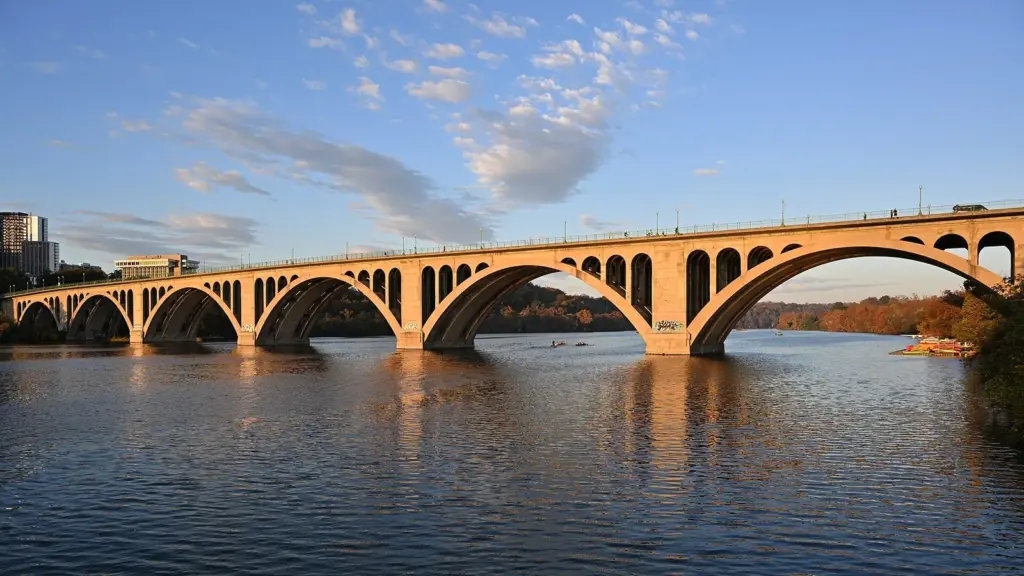
Plan it: There’s no Metro stop in Georgetown, and the DC Circulator no longer runs. Walk 20 minutes from Foggy Bottom-GWU (Blue, Orange, Silver), cross Key Bridge on foot from Rosslyn, or come by water taxi (#65). Allow half a day. Best for: couples, shoppers.
52. The Wharf
Free to wander. The redeveloped Southwest Waterfront, which opened in 2017, is a mile of piers, restaurants, hotels and music venues on the Washington Channel. It’s at its best on a warm evening, when the piers fill up and boats come and go. The Municipal Fish Market at the north end, dating to 1805, is the oldest continuously operating open-air fish market in the country: buy steamed crabs or fried fish and eat on the pier. In summer, free concerts start at 7 p.m. on Fridays on the Transit Pier.
Plan it: Open all day, with restaurants and bars running late. The fish market is at 1100 Maine Avenue SW. Metro: Waterfront (Green), or L’Enfant Plaza, about 10 minutes on foot. Allow an evening. Best for: couples, night, families.
53. Capitol Hill and Eastern Market
Free to wander. Behind the Capitol, blocks of 19th-century rowhouses stretch east to Eastern Market, a brick market hall that has fed the neighborhood since 1873. On weekends the plaza outside fills with farmers, artists and craft vendors, and it’s the best place in the city to buy a souvenir that wasn’t made for tourists. Walk down 8th Street SE, known as Barracks Row, for lunch.
Plan it: The South Hall is open Tuesday to Saturday 8 a.m. to 6 p.m. and Sunday 8 a.m. to 5 p.m. (closed Mondays); the outdoor farmers and arts market runs Saturday and Sunday 9 a.m. to 4 p.m. 225 7th Street SE. Metro: Eastern Market (Blue, Orange, Silver). Allow half a day. Best for: budget, weekends.
54. Dupont Circle and Embassy Row
Free to wander. The traffic circle’s marble fountain was designed by Daniel Chester French and Henry Bacon, the same pair behind the Lincoln Memorial. From the circle, Massachusetts Avenue heads northwest as Embassy Row, lined with embassies in Gilded Age mansions; look for Winston Churchill outside the British Embassy, one foot on embassy grounds and one on American soil. The Phillips Collection (#35) is three blocks away, and the FRESHFARM farmers market sets up just off the circle every Sunday morning.
Plan it: Farmers market Sundays 8:30 a.m. to 1:30 p.m., year-round, on 20th Street NW. Metro: Dupont Circle (Red). Allow two to three hours. Best for: couples, weekends.
55. U Street and Shaw
Free to wander. In the first half of the 20th century U Street was known as Black Broadway, the center of Black cultural life in Washington, and Duke Ellington grew up nearby. The Lincoln Theatre (1922) and the Howard Theatre (1910) still host shows, and the African American Civil War Memorial stands by the Metro exit. Today U Street and neighboring Shaw have some of the city’s best restaurants and bars, and the stretch of 9th Street near U has long been nicknamed Little Ethiopia, the place to try injera and wat.
Plan it: Best in the evening. Metro: U Street or Shaw-Howard University (both Green). Allow an evening. Best for: night, food lovers.
56. Navy Yard and the Capitol Riverfront
Free to wander. The city’s newest waterfront neighborhood grew up along the Anacostia River around Nationals Park. Yards Park has a riverside boardwalk and a shallow canal basin where kids wade in summer, and the Anacostia Riverwalk Trail runs along the water. On game days it’s packed; on other evenings it’s a relaxed place for a drink by the river.
Plan it: Metro: Navy Yard-Ballpark (Green). Allow two to three hours. Best for: night, families.
57. Adams Morgan
Free to wander. 18th Street NW is the city’s liveliest late-night strip, with bars, live music, murals and the “jumbo slice,” a pizza slice bigger than its paper plate that’s a rite of passage after midnight. Come by day for the global restaurants, or on a Sunday afternoon for the drum circle that has met for decades in Meridian Hill Park, also known as Malcolm X Park, a few blocks east, where a cascading fountain drops through 13 basins.
Plan it: Metro: Woodley Park (Red), about 15 minutes’ walk over the Duke Ellington Bridge, or Columbia Heights (Green). Allow an evening. Best for: night, adults.
58. Union Market
Free to browse; pay as you eat. A food hall of more than 50 vendors in a converted market building in Northeast DC, with a rooftop bar and a cinema in the district, and La Cosecha, a hall of Latin American vendors, next door. It’s where locals take visitors who want to eat well without booking a table. Go hungry and graze.
Plan it: Generally open 8 a.m. to 9 p.m. (8 p.m. on Sundays), though vendors set their own hours. 1309 5th Street NE. Metro: NoMa-Gallaudet U (Red), about a 15-minute walk. Allow two hours. Best for: food lovers, rainy days.
Parks, gardens and the river
Washington is one of the greenest cities in the country, with rivers on two sides. These are the best ways to use them, from a glass conservatory at the foot of the Capitol to a kayak under Key Bridge.
59. U.S. Botanic Garden
Free, no pass. The oldest continuously operating public garden in the country sits at the foot of Capitol Hill, and its glass Conservatory is the best free place in Washington to warm up in winter or dry off in a summer storm, with a jungle, desert plants, orchids and medicinal plants. Outside, the National Garden and Bartholdi Park, named for the fountain by the sculptor of the Statue of Liberty, stay open longer. This year the whole garden is showing America’s State Flowers, an exhibition for the country’s 250th anniversary.
Plan it: Conservatory open daily 10 a.m. to 5 p.m.; the National Garden 7:30 a.m. to 5 p.m. (until 7 p.m. from April 1 to September 15); Bartholdi Park dawn to dusk. Closed December 25. Metro: Federal Center SW (Blue, Orange, Silver), about three blocks. Allow an hour. Best for: rainy days, budget, families.
60. U.S. National Arboretum
Free, no pass. 446 acres of gardens and woods in Northeast DC, and the setting for one of the city’s best photos: the National Capitol Columns, sandstone columns that stood on the Capitol’s east front from 1828, now standing alone in a meadow. The Bonsai and Penjing Museum is one of the finest collections of its kind in the country, including a Japanese white pine that survived the atomic bombing of Hiroshima. Come in late April for the azaleas.
Plan it: Open daily 8 a.m. to 5 p.m. (last entry 4:30 p.m.), closed December 25; the bonsai museum is generally open 10 a.m. to 4 p.m. Visitor entrance at 2400 R Street NE. Metro: Stadium-Armory (Blue, Orange, Silver), then Metrobus C41, per the Arboretum’s directions; most visitors drive. Allow two to three hours. Best for: couples, garden lovers.
61. Rock Creek Park
Free, no pass. More than 1,700 acres of forested valley through the middle of the city, set aside in 1890 and more than twice the size of Central Park. Hike the ridge trails, or cycle and run on Upper Beach Drive, where the Park Service now keeps about 5 miles closed to cars all year, not just on weekends. The Nature Center has the only planetarium in the National Park Service; tickets are handed out 30 minutes before each show, first come, first served.
Plan it: Nature Center at 5200 Glover Road NW; the zoo (#20) sits at the park’s southern end. Metro: Woodley Park or Cleveland Park (Red) for the southern trails. Allow two hours to a day. Best for: budget, active travelers.
62. Theodore Roosevelt Island
Free, no pass. An 88-acre wooded island in the Potomac, reached by a footbridge from the Virginia shore, with easy trails, a boardwalk through the marsh and, in a clearing at its center, a memorial plaza with a large bronze Roosevelt. It’s a fitting tribute to the conservation president: no cars and no bikes on the island, just birds, trees and the sound of planes on their way into Reagan National. The restrooms close for winter, usually from October to April.
Plan it: The parking lot is reached only from the northbound George Washington Memorial Parkway, and it has had construction work, so check the park’s alerts; or walk about 15 minutes from Rosslyn Metro (Blue, Orange, Silver) via the Mount Vernon Trail. Allow 90 minutes. Best for: families, budget.
63. Kenilworth Park and Aquatic Gardens
Free, no pass. The only National Park Service site dedicated to water plants: ponds of lotus and water lilies beside the Anacostia River, with a boardwalk out into the marsh. The lotuses peak in July, when the park holds its free Lotus and Water Lily Festival, but the herons, turtles and quiet are there all year.
Plan it: Opens daily at 8 a.m.; in summer come early, when the blooms are open and the heat hasn’t arrived. 1550 Anacostia Avenue NE. Metro: Deanwood (Orange). Allow 90 minutes. Best for: budget, photographers.
64. Paddle the Potomac
Paid: kayaks from $22 an hour on weekdays. Seeing the city from the river is one of the best things to do on a fine day. The rental operator formerly called Boating in DC, now Adventures Unbound Capital Collection, rents kayaks, canoes and paddleboards from the Key Bridge Boathouse below Georgetown and from Thompson Boat Center at the mouth of Rock Creek, plus pedal boats and kayaks on the Tidal Basin. Paddle upriver from Key Bridge for wooded banks and quiet, or downstream past Theodore Roosevelt Island for the skyline. Single kayaks and paddleboards were $22 on weekdays and $24 on weekends in September 2026; Tidal Basin pedal boats were $38 and $40.
Plan it: Rentals are seasonal and weather-dependent. In late September 2026, Key Bridge was renting from noon on weekdays and 9 a.m. on weekends, and the last Tidal Basin boats went out at 5:45 p.m. The operator hadn’t posted its 2026 closing dates, so check before you go. Metro: Rosslyn for Key Bridge, Foggy Bottom-GWU for Thompson, Smithsonian for the Tidal Basin. Allow two hours. Best for: couples, active travelers.
65. Ride the Potomac water taxi
Paid: about $22 one way. The easiest way onto the river. City Cruises’ Potomac Water Taxi links the Wharf with Georgetown (about 30 minutes), Old Town Alexandria (about 30 minutes) and National Harbor (about 45 minutes), with views back to the city as you go. Take it one way to Old Town and the Metro back, and you’ve combined a river cruise with an afternoon out for the price of one boat ticket.
Plan it: Runs from March to December. The first boat leaves the Wharf at 11:45 a.m., then every 30 to 60 minutes. One-way adult fares are about $22, more on weekends, and day passes are sold. The Georgetown dock isn’t wheelchair accessible. Metro: Waterfront (Green) for the Wharf. Allow two to three hours for a round trip with a stop. Best for: couples, families.
66. Bike the Mall and the river trails
Paid: $1 to unlock, then by the minute; $10 day pass. Capital Bikeshare docks are all over the Mall, and a bike turns the two miles between the Lincoln Memorial and the Capitol, plus the Tidal Basin loop, into an easy hour. Riders who want more can follow the Mount Vernon Trail 18 miles down the Virginia shore to George Washington’s estate, or the C&O Canal towpath out of Georgetown.
Plan it: A single ride costs $1 to unlock plus 15 cents a minute on a classic bike or 35 cents on an e-bike. The $10 day pass covers unlimited 45-minute classic rides for 24 hours, with e-bikes at 15 cents a minute. Allow an hour or two. Best for: budget, active travelers, night.
Food, drinks and nights out
The best things to do in DC at night mix the free and the paid: the memorials after dark cost nothing, while a show, a game or a rooftop drink is where the money goes. These are also the best things to do in DC for adults who want a proper night out. Metro runs until midnight from Sunday to Thursday and until 2 a.m. on Friday and Saturday nights. One former default is off the list for now: the Kennedy Center closed its main building in September 2026 (see What to skip).
67. Eat a half-smoke at Ben’s Chili Bowl
Paid: cheap eats. Ben and Virginia Ali opened Ben’s on U Street in 1958, and the counter has served presidents, touring musicians and generations of late-night crowds since. Order the half-smoke, DC’s own smoky, peppery sausage, under chili, mustard and onions. The original shop closed in July 2025 for its first major renovation in 65 years and reopened on May 1, 2026, with the same menu out front and new wiring, plumbing and kitchen behind it.
Plan it: Open Sunday to Thursday 11 a.m. to 11 p.m. and Friday and Saturday 11 a.m. to 4 a.m. 1213 U Street NW. Metro: U Street (Green). Allow 45 minutes. Best for: night, budget.
68. A rooftop drink with a monument view
Paid: the price of a drink. The classic is VUE, the 11th-floor rooftop of the Hotel Washington at 15th Street and Pennsylvania Avenue, looking over the White House grounds toward the Washington Monument. Top of the Gate, on the roof of the Watergate Hotel, has 360-degree views of the Potomac, the bridges and the monument; it’s seasonal, open from spring to fall. At the Wharf, Moonraker on the roof of the Pendry hotel looks out over the Washington Channel. Go at sunset, and expect lines on warm weekends.
Plan it: Rooftops are weather-dependent and seasonal, so check hours on the day. Metro: Metro Center or McPherson Square for VUE, Foggy Bottom-GWU for Top of the Gate, Waterfront for Moonraker. Allow an evening. Best for: couples, night, views.
69. See a play
Paid; discounts for under-35s. Washington has one of the busiest theater scenes in the country outside New York. Arena Stage at the Southwest Waterfront focuses on American plays and musicals, the Shakespeare Theatre Company does the classics in Penn Quarter, and Woolly Mammoth is the place for new and provocative work. Ford’s Theatre (#46) stages full productions in the room where Lincoln was shot. Deals worth knowing: the Shakespeare Theatre sells $39 seats in some sections to anyone 35 and under, and Woolly has tickets from $25 for those 30 and under, plus pay-what-you-will performances at the start of each run.
Plan it: Book ahead for weekends. Metro: Waterfront (Green) for Arena Stage; Gallery Place-Chinatown or Archives for the Shakespeare Theatre and Woolly Mammoth. Allow an evening. Best for: night, couples.
70. Catch a show at the 9:30 Club or the Anthem
Paid; tickets vary. The 9:30 Club, on V Street near U Street, is one of the country’s best-loved rock clubs, small enough that there’s no bad spot on the floor. The Anthem at the Wharf is its bigger sibling, a flexible hall for several thousand people with a calendar booked through New Year’s Eve. Both sell out for big names, so buy early.
Plan it: The 9:30 Club is at 815 V Street NW (Metro: U Street, Green). The Anthem is at 901 Wharf Street SW (Metro: Waterfront, Green). Allow an evening. Best for: night, adults.
71. Catch a Capitals, Wizards or Nationals game
Paid; tickets vary. From October to April the Capitals (hockey) and the Wizards (basketball) play at Capital One Arena in Chinatown, which is in the middle of an $800 million renovation due to finish before the 2027-28 seasons. Games go on during the work, and a new main entrance at 7th and F Streets is due to open this fall. Baseball season at Nationals Park, on the river at Navy Yard, runs from spring to late September. The ballpark bans backpacks, clear ones included.
Plan it: Metro: Gallery Place-Chinatown (Red, Green, Yellow) for the arena; Navy Yard-Ballpark (Green) for the Nationals. Allow three hours. Best for: families, night.
72. See the memorials at night
Free, no pass. If you do one thing after dark, make it this. The memorials are open 24 hours and lit at night, the heat and the tour buses are gone, and you’ll often have a memorial nearly to yourself. A good route: start at the Lincoln Memorial, cross to the Korean War patrol, then the Vietnam wall, then walk the length of the Reflecting Pool to the World War II Memorial with the lit Washington Monument straight ahead. With energy left, carry on to the Tidal Basin for the MLK, FDR and Jefferson memorials; the loop around the water is 2.1 miles.
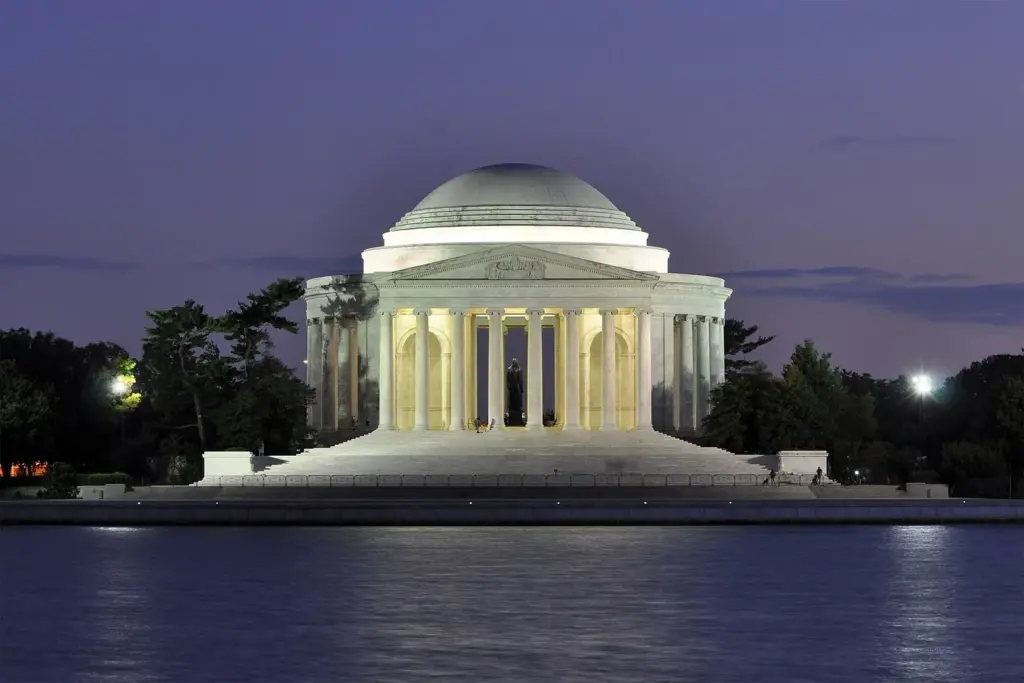
Plan it: Rangers are on duty at the main memorials into the evening. Paths are lit, but it’s a long walk, and a bikeshare bike (#66) makes the full circuit easy. Metro: start from Foggy Bottom-GWU and finish at Smithsonian (Blue, Orange, Silver). Allow two to three hours. Best for: couples, first-timers, night.
Worth the trip outside the city
These three are just across the river in Virginia and make easy half-day or day trips.
73. Old Town Alexandria
Free to wander. Founded in 1749, Alexandria’s old port is more than a mile of brick sidewalks, 18th- and 19th-century houses, shops and restaurants running down King Street to the Potomac. The Torpedo Factory Art Center on the waterfront, a former Navy torpedo plant turned into artists’ studios in 1974, is free and open daily. The free King Street Trolley saves your feet between the Metro and the water. Arrive by water taxi (#65) and leave by Metro for an easy afternoon.
Plan it: The King Street Trolley runs every 15 minutes from 11 a.m. to 11 p.m. daily between King St-Old Town station and City Hall at Market Square. The Torpedo Factory is open daily 10 a.m. to 6 p.m. at 105 North Union Street. Metro: King St-Old Town (Blue, Yellow). Allow half a day. Best for: couples, families.
74. George Washington’s Mount Vernon
Paid: adults from $30 online. George Washington’s plantation home on the Potomac, about 15 miles south of downtown, is the best historic house visit in the region. Beyond the mansion you’ll find the outbuildings, the gardens, the tomb where George and Martha Washington are buried, a museum, and exhibits on the enslaved people who lived and worked here. Adult tickets (ages 12 and up) start at $30 online, $2 less if you buy at least three days ahead, and you choose a timed Mansion entry at checkout; take the earliest you can.
Plan it: Open daily 9 a.m. to 5 p.m. Without a car, take the Yellow line to Huntington, then Fairfax Connector bus 101, about 20 minutes to the gate. By car it’s roughly half an hour down the George Washington Memorial Parkway. Allow half a day. Best for: history buffs, families.
75. Great Falls Park
Paid: $20 per vehicle. About 15 miles upriver from the city, the Potomac crashes through a series of jagged cascades into Mather Gorge, and the overlooks on the Virginia side put you right above the white water. The River Trail along the rim of the gorge is the best short hike near DC. It’s wild country less than an hour from the White House, so bring water and good shoes and stay back from the edge: the currents here are deadly, and swimming and wading are prohibited.
Plan it: Open every day from 7 a.m. until dark. The entrance fee is $20 per vehicle (annual park passes accepted), and the lots fill on fine weekends. There’s no public transit. 9200 Old Dominion Drive, McLean, Virginia. Allow half a day. Best for: families, active travelers.
All 75 at a glance: free, paid and pass-required
Every Washington DC tourist attraction on this list in one table, with costs and booking rules as of September 23, 2026.
| # | Place | Cost | Pass or booking | Best for |
|---|---|---|---|---|
| 1 | Lincoln Memorial | Free | None, open 24 hours | First-timers, night |
| 2 | African American history museum | Free | Timed pass | First-timers, rainy days |
| 3 | Air and Space Museum | Free | Timed pass | Families |
| 4 | U.S. Capitol | Free | Reservation recommended | First-timers |
| 5 | Natural History Museum | Free | None | Families, rainy days |
| 6 | Library of Congress | Free | Timed pass | First-timers, couples |
| 7 | Washington Monument | $1 booking fee | Timed ticket | Views, families |
| 8 | Arlington National Cemetery | Free (tram extra) | None | First-timers |
| 9 | The White House | Free | Request via Congress or embassy | First-timers |
| 10 | National Gallery of Art | Free | None | Couples, rainy days |
| 11 | World War II Memorial | Free | None | First-timers |
| 12 | Vietnam Veterans Memorial | Free | None | First-timers |
| 13 | Korean War Veterans Memorial | Free | None | Night |
| 14 | Martin Luther King Jr. Memorial | Free | None | First-timers |
| 15 | Jefferson Memorial | Free | None | Couples, night |
| 16 | FDR Memorial | Free | None | Families |
| 17 | Eisenhower Memorial | Free | None | History buffs |
| 18 | World War I Memorial | Free | None | History buffs |
| 19 | Albert Einstein Memorial | Free | None | Families |
| 20 | National Zoo | Free (parking $30 to $40) | Free entry pass | Families |
| 21 | American History Museum | Free | None | Families |
| 22 | Holocaust Memorial Museum | Free ($1 advance fee) | Timed pass | Adults, teens |
| 23 | American Indian Museum | Free | None | Families, lunch |
| 24 | Portrait Gallery and American Art Museum | Free | None | Rainy days, night |
| 25 | Hirshhorn Museum and Sculpture Garden | Free | None | Art lovers |
| 26 | National Museum of Asian Art | Free | None | Couples |
| 27 | Renwick Gallery | Free | None | Art lovers |
| 28 | National Postal Museum | Free | None | Families |
| 29 | Udvar-Hazy Center | Free (parking $15) | None | Families |
| 30 | National Museum of African Art | Free | None | Art lovers |
| 31 | Planet Word | Free | Optional timed pass | Families |
| 32 | Folger Shakespeare Library | Free (donation suggested) | Timed pass recommended | Couples |
| 33 | Anacostia Community Museum | Free | None | Budget |
| 34 | International Spy Museum | Paid, varies by date | Timed ticket | Families with older kids |
| 35 | The Phillips Collection | $20 | Booking encouraged | Couples |
| 36 | National Museum of Women in the Arts | $16 | Booking recommended | Art lovers |
| 37 | Museum of the Bible | $34.99 (free Tuesdays) | None | Faith travelers |
| 38 | National Building Museum | $10 (Great Hall free) | None | Rainy days |
| 39 | ARTECHOUSE | Paid, varies | Timed ticket | Couples, night |
| 40 | Hillwood Estate | $20 suggested | Reservations offered | Couples |
| 41 | Supreme Court | Free | None | History buffs |
| 42 | National Archives Museum | Free ($1 timed option) | Optional | Rainy days |
| 43 | Watch Congress in session | Free | Gallery pass | History buffs |
| 44 | Bureau of Engraving and Printing | Free | Tour ticket | Families |
| 45 | Pentagon tour and memorial | Free | Tour booked 14 to 90 days ahead | History buffs |
| 46 | Ford’s Theatre | Free same day ($5 online fee) | Timed ticket | History buffs |
| 47 | Washington National Cathedral | $15 | Sightseeing ticket | Couples |
| 48 | Basilica of the National Shrine | Free | None | Budget |
| 49 | Frederick Douglass house | Free ($1 fee) | Ranger tour | History buffs |
| 50 | President Lincoln’s Cottage | Paid | Guided tour | History buffs |
| 51 | Georgetown | Free to wander | None | Couples |
| 52 | The Wharf | Free to wander | None | Couples, night |
| 53 | Capitol Hill and Eastern Market | Free to wander | None | Budget |
| 54 | Dupont Circle and Embassy Row | Free to wander | None | Couples |
| 55 | U Street and Shaw | Free to wander | None | Night |
| 56 | Navy Yard | Free to wander | None | Night, families |
| 57 | Adams Morgan | Free to wander | None | Night |
| 58 | Union Market | Pay as you eat | None | Food lovers |
| 59 | U.S. Botanic Garden | Free | None | Rainy days, budget |
| 60 | U.S. National Arboretum | Free | None | Couples |
| 61 | Rock Creek Park | Free | None | Budget |
| 62 | Theodore Roosevelt Island | Free | None | Families |
| 63 | Kenilworth Aquatic Gardens | Free | None | Budget |
| 64 | Paddle the Potomac | From $22 an hour | Walk-up rental | Couples |
| 65 | Potomac water taxi | About $22 one way | None | Couples |
| 66 | Bike the Mall | $1 plus per minute; $10 day pass | None | Budget |
| 67 | Ben’s Chili Bowl | Cheap eats | None | Night |
| 68 | Rooftop drink with a view | Price of a drink | None | Couples, night |
| 69 | See a play | Varies; under-35 deals | Book ahead | Night |
| 70 | 9:30 Club or the Anthem | Varies | Book ahead | Night |
| 71 | Capitals, Wizards or Nationals game | Varies | Book ahead | Families, night |
| 72 | The memorials at night | Free | None | Couples, night |
| 73 | Old Town Alexandria | Free to wander | None | Couples |
| 74 | Mount Vernon | From $30 | Timed Mansion entry | History buffs |
| 75 | Great Falls Park | $20 per vehicle | None | Families |
When to go: seasons and big events
Washington is a year-round city, but the season changes what you’ll do and how crowded it feels.
| Season | What it’s like | Highlights |
|---|---|---|
| Spring (March to May) | Mild; the busiest season, with school groups | Cherry blossoms; the 2027 festival runs March 20 to April 11 |
| Summer (June to August) | Hot and humid, with afternoon storms | Folklife Festival, July 4 fireworks, free Friday concerts at the Wharf |
| Fall (September to November) | Warm days, cool evenings, thinner crowds | New Air and Space galleries; Hirshhorn garden reopens October 31, 2026 |
| Winter (December to February) | Cold and quiet | National Christmas Tree, ice skating, the best hotel deals |
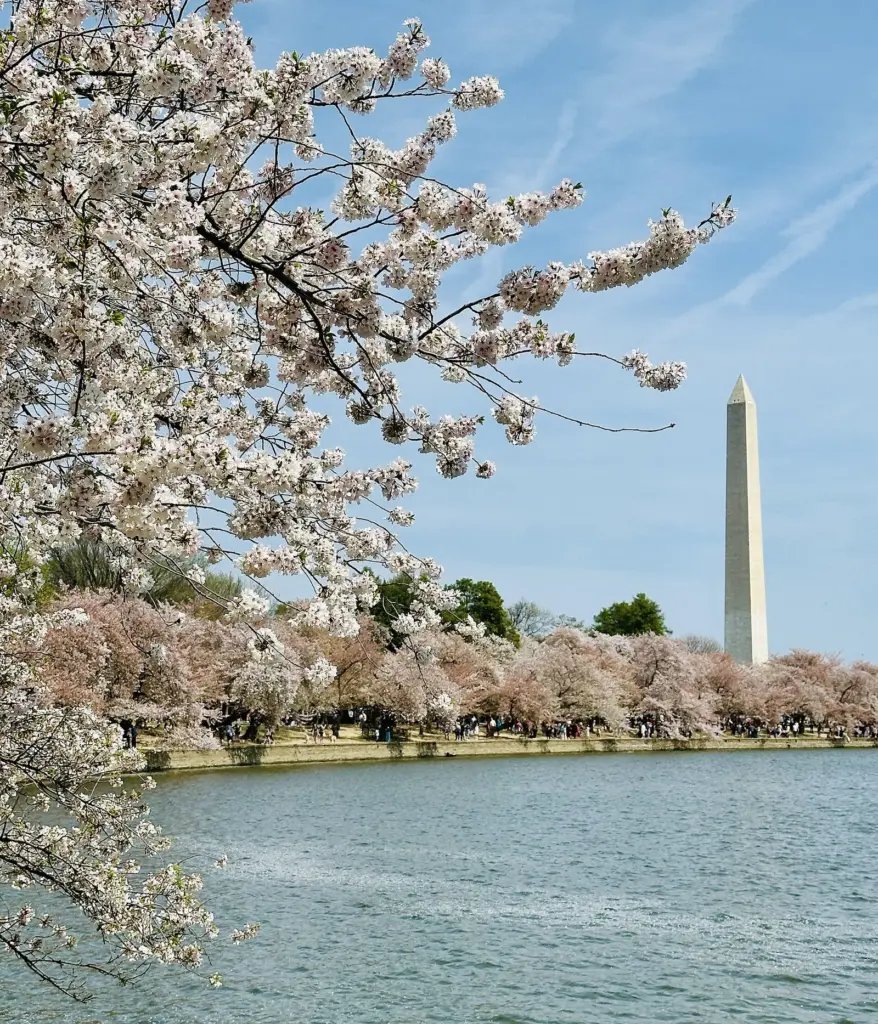
Cherry blossoms. The Park Service says peak bloom on the Tidal Basin is most likely between the last week of March and the first week of April, and the show lasts several days after peak if the weather is kind. In 2026 its forecast was March 29 to April 1. The 2027 National Cherry Blossom Festival is scheduled for March 20 to April 11, 2027, but the peak bloom date won’t be forecast until late winter, so treat any 2027 bloom date you see now as a guess. Expect the biggest crowds of the year, and book hotels early.
Summer. Hot, humid and stormy in the afternoons. The Smithsonian Folklife Festival usually takes over the Mall in late June and early July, and the July 4 fireworks go up near the Lincoln Memorial, with viewing areas on the Mall behind security checkpoints. Do the memorials early or late and save the museums for the afternoon heat.
Fall. Our pick. From mid-September to early November the weather is kind and the school groups have thinned out. This fall also brings the last two new Air and Space galleries (October 30 and November 11) and the Hirshhorn’s sculpture garden (October 31). The zoo switched to its 8 a.m. to 4 p.m. hours on September 15.
Winter. Cold, quiet and often the cheapest time for hotels. The National Christmas Tree goes up in President’s Park near the White House, with the lighting ceremony usually in early December and free tickets by lottery on Recreation.gov; check the 2026 date before you plan around it. The National Gallery’s ice rink has opened in late November in recent seasons.
How to get around between sights
Walk the Mall and use the Metro for everything else. When you build a Washington DC itinerary, group the sights by area: the Capitol, the Library of Congress, the Supreme Court and the Folger in one morning; the Smithsonian museums on the Mall on another day; the memorials in an evening; and Arlington with the Pentagon across the river.
- Metro: tap a contactless bank card or phone at the fare gate, with no need to buy a fare card; tap-to-pay arrived on trains in May 2025 and on buses in November 2025. Fares run $2.25 to $6.75 on weekdays before 9:30 p.m. and $2.25 to $2.50 at other times and on weekends. Unlimited passes cost $13.50 for one day, $33.75 for three and $60.75 for seven, but they load onto a SmarTrip card or a phone wallet, not a bank card. Trains run from 5 a.m. on weekdays (6 a.m. on weekends) until midnight, and until 2 a.m. on Friday and Saturday nights.
- Buses: Metrobus costs $2.25, and tapping the same card gets you a free transfer between bus and train within two hours. The bus network was redesigned and renamed in 2025, so ignore route numbers in older guides.
- Bikes: Capital Bikeshare (#66) is the quickest way along the Mall.
- No Circulator: the DC Circulator buses, including the old National Mall route, stopped running on December 31, 2024, and no dedicated replacement loop runs on the Mall.
- Driving: skip it downtown. Where you do need a car, budget for parking: $30 to $40 at the zoo, $15 at Udvar-Hazy and $20 per vehicle at Great Falls.
Of all the Washington DC travel tips we could give, the most useful is this: the Mall is bigger than it looks. The Lincoln Memorial to the Capitol is about two miles, and a museum day easily adds a couple more miles inside the buildings. Plan fewer stops than you think you can manage.
What to skip, and outdated advice to ignore
- Don’t try to see more than two big museums in a day. They’re huge, you’ll walk miles inside them, and the third one blurs.
- Don’t drive to the Mall. Parking near it is scarce and time-limited, and Metro stations are a few minutes’ walk from nearly everything in the top 20.
- Skip the Mall at midday in July and August. Do the memorials early or late and the museums in the heat of the afternoon.
- Don’t pay for what’s free. Resellers sell “tickets” and tours that bundle the Capitol, the Washington Monument and the museums, but the real passes are free or $1 through the official sites linked above. A paid Washington DC attraction pass only pays off if you stack several paid extras, such as the Spy Museum and a river cruise.
- Don’t count on a last-minute White House tour. There’s no walk-up option; requests go through Congress or an embassy weeks ahead.
What’s changed: older tips to ignore
- The Kennedy Center: on September 15, 2026, minutes after a federal judge again blocked adding President Trump’s name to the building, its board voted to close the main building immediately, citing safety and financial problems. Its future is in court, so don’t plan a show there without checking.
- The Old Post Office Tower, once a free Park Service lookout, has been closed since October 1, 2025, with no reopening date.
- The Smithsonian Castle reopened briefly from May 22 to September 7, 2026 and is closed again for renovation.
- The DC Circulator ended on December 31, 2024.
- The Black Lives Matter Plaza mural on 16th Street was removed in March 2025.
- The Newseum closed in 2019, and there has been no aquarium in DC since 2013; the National Aquarium is in Baltimore.
- Six Flags America in Maryland closed for good in November 2025.
- The Tidal Basin seawall rebuild was finished in December 2025, so older warnings about construction fencing are out of date.
- Taxes: DC’s general sales tax rises from 6% to 7% on October 1, 2026. Restaurant meals are taxed at 10% and hotel rooms at 15.95%.
Things to do in Washington DC: frequently asked questions
What is the number one thing to do in Washington DC?
For most first-time visitors, it’s walking the National Mall from the Lincoln Memorial east past the Washington Monument toward the Capitol. It’s free, open 24 hours and ties together the city’s best-known memorials and museums. If you add one indoor stop, make it the National Museum of African American History and Culture, and book its free timed pass ahead.
What can you do in Washington DC for free?
Almost everything on a first-timer’s list. The Mall memorials, the Smithsonian museums and the National Zoo, the National Gallery of Art, the Capitol tour, the Library of Congress, the Supreme Court and Arlington National Cemetery all cost nothing. Some need free timed passes, and the Washington Monument and the Holocaust Museum charge $1 booking fees on advance tickets.
How many days do you need in Washington DC?
Three full days covers the Mall memorials, four or five major museums, the Capitol and the Library of Congress, and Arlington National Cemetery. With four or five days you can add Georgetown, a neighborhood evening and Mount Vernon or Old Town Alexandria without rushing. Two days works if you choose museums ruthlessly and book passes before you arrive.
Are the monuments in DC open at night?
Yes. The memorials on the National Mall and around the Tidal Basin are open 24 hours, lit after dark and much quieter than by day, and park rangers are on duty at the main ones into the evening. The Washington Monument is the exception: its elevator runs only from 9 a.m. to 5 p.m., with timed tickets.
Do you need tickets for the Smithsonian museums?
Admission is always free, but as of September 2026 three Smithsonian sites require free timed-entry passes: the National Museum of African American History and Culture, the National Air and Space Museum on the Mall and the National Zoo. Natural History, American History and the others let you walk in after a bag check.
Is the National Zoo free?
Entry is free, but everyone, infants included, needs a free entry pass, released online 30 days ahead. Parking isn’t free: it costs $30 per car if you buy at least a day ahead and $40 on the day. From September 15 to March 14 the grounds are open 8 a.m. to 4 p.m., with last entry at 3 p.m.
Which museum in DC is the best?
For most visitors, the National Museum of African American History and Culture: it’s the most powerful and best-designed museum in the city. Families usually get the most from Natural History or Air and Space, art lovers should head for the National Gallery of Art, and anyone who loves architecture should see the Library of Congress.
What closes in Washington DC during a government shutdown?
The Smithsonian museums and the National Zoo close once their carryover funds run out; in 2025 that happened on October 12, 11 days into the shutdown. The Washington Monument and park visitor centers close too, while the open-air memorials generally stay accessible. The government is funded through December 11, 2026, so there’s no shutdown risk before then.
Sources and How We Checked
Everything on this page was checked on September 23, 2026 against the official websites of the organizations below, plus news reports of record for the Kennedy Center, federal funding and the National Guard deployment. The guide is compiled from those sources; it doesn’t claim first-hand visits or original photography.
- National Park Service: National Mall and Memorial Parks alerts, Washington Monument tickets and the White House tour
- Smithsonian: National Air and Space Museum, National Museum of African American History and Culture and the National Zoo
- U.S. Capitol Visitor Center and the Library of Congress
- United States Holocaust Memorial Museum
- WMATA fares and the DC Office of Tax and Revenue
- News: NPR on the Kennedy Center vote (September 16, 2026) and NPR on the National Guard deployment (July 14, 2026)
We also checked the websites of Arlington National Cemetery, the Supreme Court, the National Archives, the Bureau of Engraving and Printing, Pentagon Tours, the National Gallery of Art, the Folger Shakespeare Library, Planet Word, Ford’s Theatre, Washington National Cathedral, the National Shrine, President Lincoln’s Cottage, the Phillips Collection, the National Museum of Women in the Arts, the Museum of the Bible, the National Building Museum, Hillwood, the International Spy Museum, ARTECHOUSE, the U.S. Botanic Garden, the U.S. National Arboretum, Capital Bikeshare, City Cruises, Eastern Market, Union Market, George Washington’s Mount Vernon, DASH (the King Street Trolley), Ben’s Chili Bowl, the National Cherry Blossom Festival and Recreation.gov.
Washington DC Tourism Guide is an independent publication. We are not affiliated with Destination DC, the National Park Service, the Smithsonian Institution or any attraction listed here, and no one paid to be included.
Photo Credits
- The National Mall from the air: photo by Mariordo (Mario Roberto Durán Ortiz), via Wikimedia Commons (CC BY-SA 4.0)
- The African American history museum during the 2025 shutdown: photo by G. Edward Johnson, via Wikimedia Commons (CC BY 4.0)
- Inside the Lincoln Memorial: photo by APK, via Wikimedia Commons (CC BY-SA 4.0)
- The Natural History Museum rotunda: photo by Syed07, via Wikimedia Commons (CC BY 4.0)
- The Library of Congress Great Hall: photo by Diliff, via Wikimedia Commons (CC BY-SA 3.0)
- The Tomb of the Unknown Soldier, Arlington: photo by Staff Sgt. Charles Burden, via Wikimedia Commons (Public domain)
- Bao Li at the National Zoo: photo by Melina Kolburn, via Wikimedia Commons (CC BY-SA 4.0)
- Key Bridge from the Georgetown waterfront: photo by G. Edward Johnson, via Wikimedia Commons (CC BY 4.0)
- The Jefferson Memorial at dusk: photo by Joe Ravi, via Wikimedia Commons (CC BY-SA 3.0)
- The Washington Monument and 2026 cherry blossoms: photo by APK, via Wikimedia Commons (CC BY 4.0)