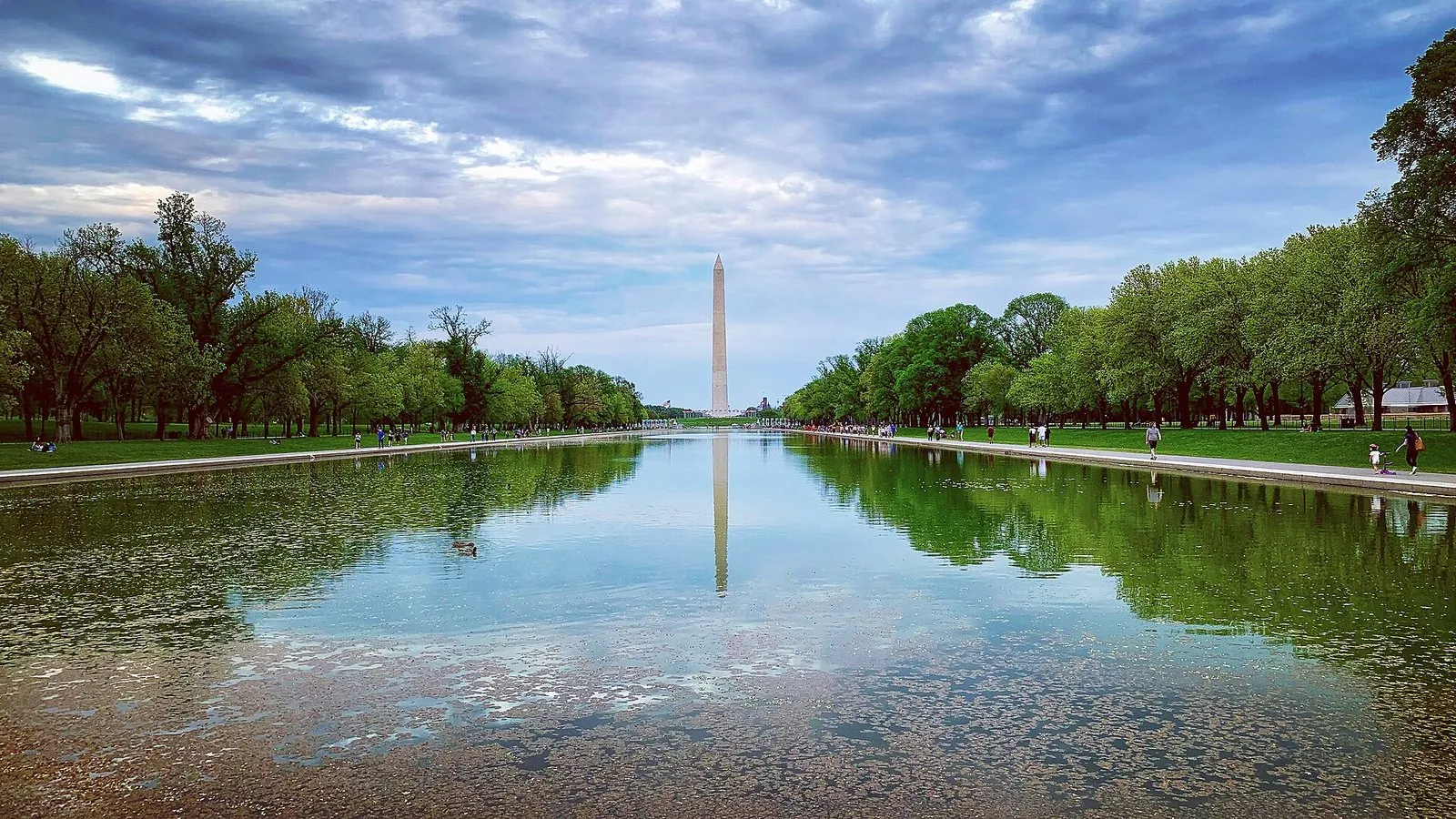
Stand on the top step of the Lincoln Memorial and face east. The Reflecting Pool runs out ahead of you for more than a third of a mile, the WWII Memorial’s fountains sit at its far end, the Washington Monument rises behind them, and two miles away the Capitol dome closes the view. Most of the famous Washington DC monuments sit on or just off that line, and every one of them is free and open around the clock. What catches people out is scale. The distances look short on a map and aren’t, the shade is patchy, and a few of the best memorials sit a ten-minute walk off the obvious path.
Quick answer: The major memorials line the western half of the National Mall and the shore of the Tidal Basin: Lincoln, World War II, Vietnam, Korean War, Martin Luther King Jr., FDR and Jefferson, with the Washington Monument in the middle. All are free and open 24 hours, with park rangers on duty from 9:30 a.m. to 10 p.m. Only the Washington Monument’s elevator needs a ticket. Allow three to four hours for the core loop, then come back after dark.
Last updated September 24, 2026. Hours, tickets, alerts and closures were checked that day against the National Park Service’s and Recreation.gov’s own websites.
- Cost: every memorial is free. Washington Monument elevator tickets are free too, but booking one online adds a $1 non-refundable fee per ticket (as of September 2026).
- Hours: the memorial grounds never close, and the National Park Service has rangers on duty from 9:30 a.m. to 10 p.m. daily. The Washington Monument runs 9 a.m. to 5 p.m., last entry 4 p.m.
- Distances: about 2 miles from the Lincoln Memorial to the Capitol. The Tidal Basin loop adds roughly 2 more.
- Metro: Smithsonian (Blue, Orange, Silver lines) for the middle of the Mall; Foggy Bottom-GWU (same lines) for the Lincoln end.
- Recent changes: the Reflecting Pool was drained and resurfaced in 2026, the Tidal Basin seawall rebuild is finished, and the Old Post Office Tower’s free lookout is closed.
On this page: At a glance | How the Mall is laid out | The big eight | Quieter memorials | Walking routes | After dark | Visitor essentials | Shutdowns | What’s changed | What to skip | FAQ
The memorials are the backbone of a first trip, but they’re only part of the city. If you’re building a longer plan, our guide to the best things to do in Washington DC ranks the museums, neighborhoods and day trips alongside them.
Washington DC Monuments at a Glance
Everything in this table is free and open 24 hours unless it says otherwise. The time estimates assume you read the inscriptions rather than photograph the front and leave, and they don’t include the walk between stops.
| Memorial | Where | Ticket? | Time to allow | Best time |
|---|---|---|---|---|
| Lincoln Memorial | West end of the Mall, on the Potomac | No | 30-45 min | Sunrise, or after 9 p.m. |
| Washington Monument | Center of the Mall at 15th St | Yes, a timed ticket for the elevator | 1-1.5 hours with security | Early slot on a clear day |
| National WWII Memorial | 17th St, east end of the Reflecting Pool | No | 20-30 min | Morning |
| Vietnam Veterans Memorial | Constitution Gardens, north of the Reflecting Pool | No | 20-30 min | Early morning, before groups arrive |
| Korean War Veterans Memorial | South of the Reflecting Pool, near Lincoln | No | 20 min | Dusk or after dark |
| Martin Luther King Jr. Memorial | Tidal Basin, northwest shore | No | 20-30 min | Late afternoon or night |
| FDR Memorial | Tidal Basin, west shore | No | 30-45 min | Hot afternoons (shade and waterfalls) |
| Jefferson Memorial | Tidal Basin, south shore | No | 20-30 min | Sunset, or lit from across the water |
| Eisenhower Memorial | Independence Ave, 4th to 6th Sts SW | No | 15-20 min | Paired with Air and Space |
| National WWI Memorial | Pershing Park, Pennsylvania Ave at 14th St NW | No | 15-20 min | Paired with a White House walk |
Two things the table can’t hold. Only the Washington Monument has security screening, a ticket and set hours; you can walk into every other memorial at 6 a.m. or midnight. And on the Mall the walking between memorials, not the memorials themselves, takes most of the day. Plan for that and you’ll enjoy it far more.
How the National Mall Is Laid Out
Picture a cross. The long arm runs east to west for about two miles, from the Capitol on its hill to the Lincoln Memorial beside the Potomac, with the Washington Monument roughly in the middle. The short arm runs north to south through the monument, from the White House to the Jefferson Memorial on the far side of the Tidal Basin. Nearly everything famous sits somewhere on those two lines.
The eastern half, between the Capitol and the Washington Monument, belongs to the museums: the Smithsonian museums line both sides of the grass, along with the National Gallery of Art. The western half is where the memorials cluster. The WWII Memorial holds the head of the Reflecting Pool, the Vietnam Veterans Memorial sits off its north side in Constitution Gardens, the Korean War memorial sits off its south side, and the Lincoln Memorial closes the far end. South of Independence Avenue, the Tidal Basin makes a separate loop, with the MLK, FDR and Jefferson memorials spaced around its shore.
What a National Mall map hides is how the two zones connect. From the Lincoln Memorial to the Jefferson Memorial is a little over a mile on foot, along the basin’s west shore past MLK and FDR, and there’s no shortcut across the water. From the Jefferson back to the Washington Monument is close to another mile. Plenty of visitors plan the Reflecting Pool memorials, forget that the Tidal Basin is a second walk, and run out of energy halfway around it.
A few landmarks help you steer. The Washington Monument is visible from almost everywhere, so treat it as your compass. Constitution Avenue runs along the Mall’s north edge and Independence Avenue along its south edge. The gravel paths down the middle of the grass are the most direct routes, but the paved sidewalks on Madison and Jefferson Drives, in front of the museums, are easier on strollers, wheelchairs and hot feet.
The Eight Memorials Most Visitors Come For
These are listed roughly in the order people prioritize them, not in walking order. The walking routes further down stitch them together.
1. Lincoln Memorial
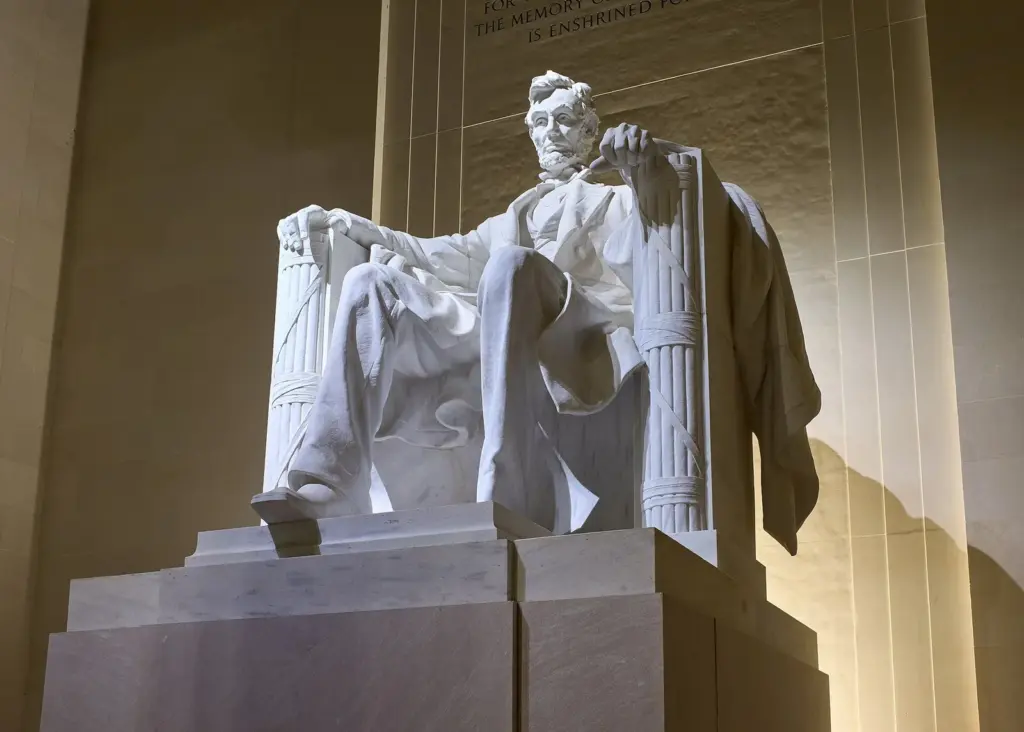
Free, open 24 hours, no ticket. If you see one memorial, make it this one. Henry Bacon’s marble temple was dedicated in 1922, and inside a ring of 36 columns, one for each state in the Union when Lincoln died, Daniel Chester French’s seated Lincoln looks down the length of the Mall. The figure is 19 feet tall, and it’s bigger in person than any photo prepares you for. The Gettysburg Address is carved into the south wall and the Second Inaugural Address into the north. Most people read the first and leave. The second takes a few minutes longer, and it’s the one that explains what the war cost.
The steps have their own history. Marian Anderson sang here on Easter Sunday 1939 after she was barred from Constitution Hall, and Martin Luther King Jr. gave the “I Have a Dream” speech from the landing on August 28, 1963. An inscription marks where he stood, set into the landing 18 steps below the chamber. It’s easy to miss in a crowd, so head for the middle of the landing and check the stone under your feet.
Timing matters more here than anywhere else on the Mall. The memorial faces east, so sunrise lights the columns and the statue, and the steps are nearly empty before 7 a.m. Midday in summer brings tour groups and full sun on the steps. After 9 p.m. it’s a different place: lit from inside, much quieter, with the Washington Monument glowing at the end of the pool. If you can only come once, come at night.
Plan it: Open 24 hours; rangers on duty 9:30 a.m. to 10 p.m. daily. Free, no ticket. Metro: Foggy Bottom-GWU (Blue, Orange, Silver lines), 20-minute walk. An elevator reaches the chamber for anyone who can’t manage the steps. Allow 30-45 minutes. Best for: first-timers, night, photographers.
2. Washington Monument
Free timed ticket required for the elevator; $1 fee if you book online. At about 555 feet, the obelisk is the thing you’ll use to find your way all week. Look roughly 150 feet up and you’ll see the marble change shade. Construction stopped in 1854 when the money ran out, the Civil War followed, and when work resumed decades later the new stone came from a different quarry. It was finished in 1884.
The ride is the point. An elevator lifts you to the 500-foot level in about 70 seconds, and windows on all four sides show the whole plan of the city at once: the White House to the north, the Jefferson to the south, the Capitol at one end of the Mall and the Lincoln at the other. On a clear morning it’s the best orientation you’ll get. On a hazy August afternoon the view flattens, and it’s less worth the effort.
Washington Monument tickets work like this, as of September 2026. Timed tickets go on sale on Recreation.gov 30 days ahead at 10 a.m. Eastern, with a second batch at 3 p.m. the day before. Each ticket carries a $1 non-refundable reservation fee, with a limit of six per account. Free same-day tickets are handed out at the Washington Monument Lodge on 15th Street from 8:45 a.m., up to six per person, and you have to be 16 or older to collect them. Everyone 2 and up needs a ticket. Security bans strollers, food, unsealed drinks and bags larger than 18 x 16 x 8 inches.
The monument closes on July 4, on December 25 and for one maintenance day a month. For the rest of 2026, those days are October 5, November 4 and December 8.
Plan it: 9 a.m. to 5 p.m., last entry 4 p.m. Free timed ticket; book on Recreation.gov up to 30 days ahead ($1 fee) or pick up free same-day tickets at the Lodge from 8:45 a.m. while they last. Metro: Smithsonian (Blue, Orange, Silver lines), 10-minute walk. Airport-style security. Allow 1 to 1.5 hours. Best for: first-timers, families with kids old enough to enjoy a view.
3. National World War II Memorial
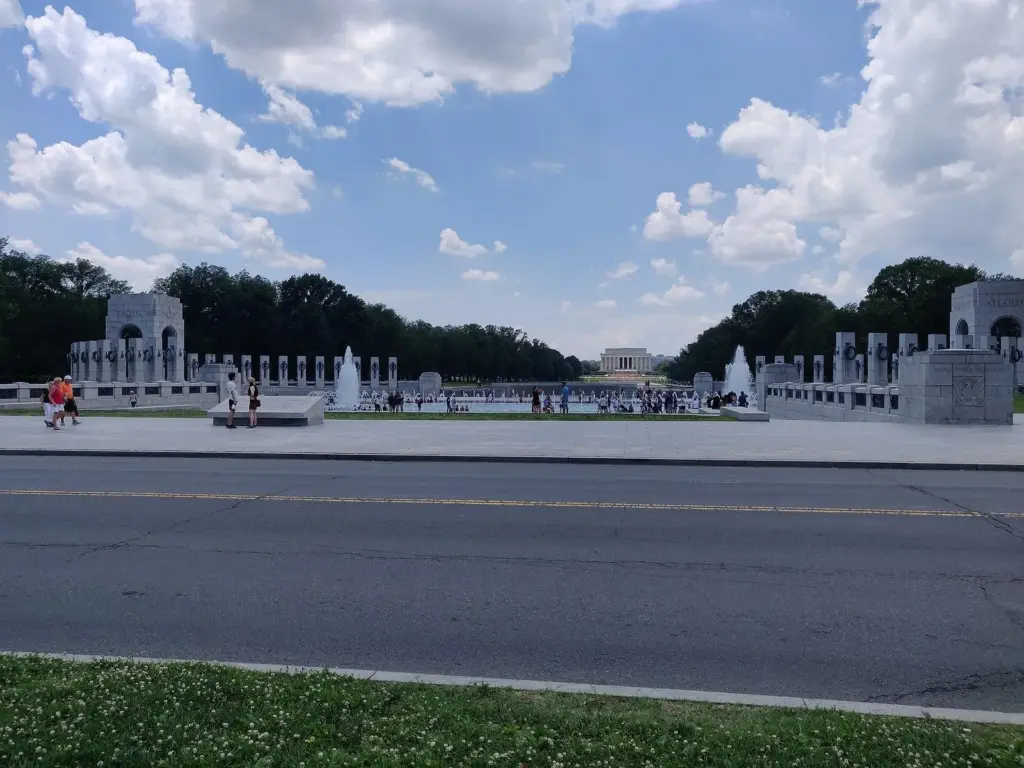
Free, open 24 hours. Dedicated in 2004, the WWII Memorial fills an oval plaza between the Washington Monument and the Reflecting Pool. Fifty-six granite pillars, one for each state and territory of the war years plus the District of Columbia, ring the Rainbow Pool, and two arches mark the Atlantic and Pacific theaters. On the west side, the Freedom Wall holds 4,048 gold stars. Each one stands for 100 Americans who died in the war. Read that number twice.
It’s a sociable memorial in a way the others aren’t. People sit on the pool’s edge with their feet near the water, kids hunt for their home state’s pillar, and Honor Flight groups bring veterans here on many spring and fall mornings. If one arrives while you’re there, you’ll see why people stop and applaud. The engraved quotations around the edges are worth a slow lap, and the view west down the Reflecting Pool to Lincoln is one of the best on the Mall.
Plan it: Open 24 hours; rangers 9:30 a.m. to 10 p.m. Free. Metro: Smithsonian (Blue, Orange, Silver lines), 15-minute walk. Step-free ramps on both sides. Allow 20-30 minutes. Best for: first-timers, families, veterans and their families.
4. Vietnam Veterans Memorial
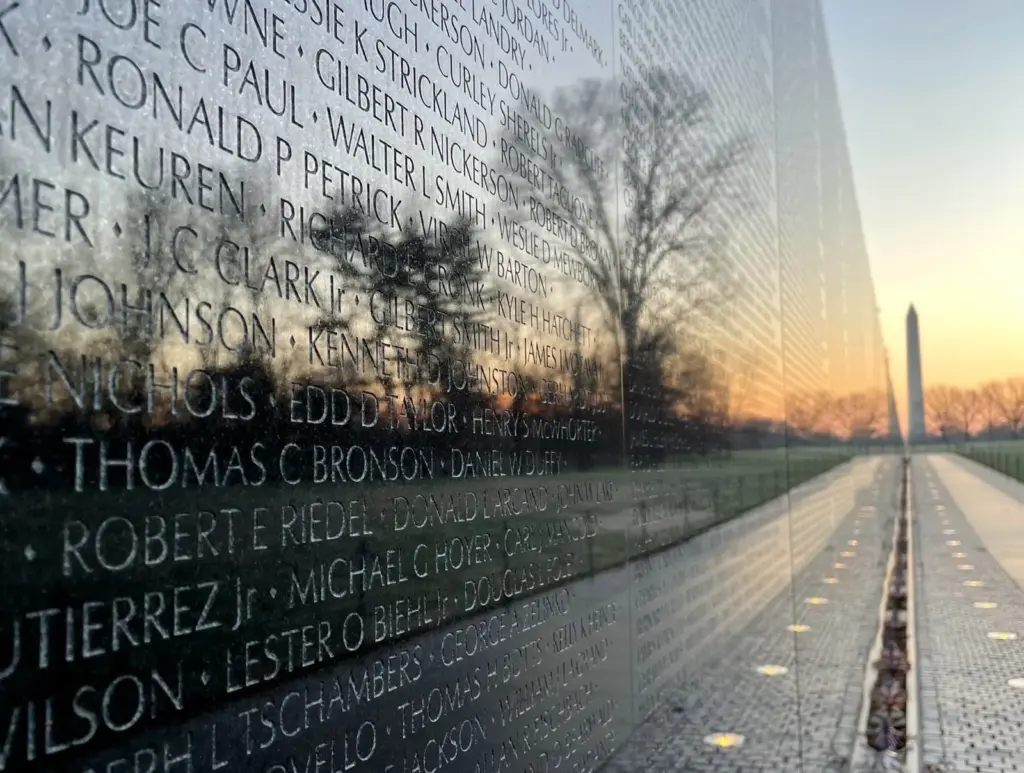
Free, open 24 hours. Maya Lin was a 21-year-old architecture student when her design won the competition, and the Wall was dedicated in November 1982. Two black granite walls, each about 246 feet long, meet in a shallow V, one arm pointing at the Washington Monument and the other at the Lincoln Memorial. More than 58,000 names are carved in the order the service members died or went missing. They start at the center in 1959, run out to the east end, pick up again at the far west end and come back to the center in 1975, so the first and last names meet.
The wall is only ankle-high at its ends and about 10 feet tall at the center. As you walk down the slope, the names rise above you, and your own reflection sits among them in the polished stone. That’s the design, and it works on almost everyone. Directories at each end help families find a specific name by panel and line, and volunteers often have paper and pencils for rubbings.
Two sculptures stand nearby: the Three Servicemen statue, added in 1984, and the Vietnam Women’s Memorial, dedicated in 1993 to the women who served, most of them nurses. People leave letters, photos and medals at the base of the wall. The Park Service collects and keeps them rather than throwing them away. Keep your voice down, don’t lean on the stone, and if someone is making a rubbing, give them room.
Plan it: Open 24 hours; rangers 9:30 a.m. to 10 p.m. Free. Metro: Foggy Bottom-GWU (Blue, Orange, Silver lines), 15-minute walk. Flat, step-free path. Allow 20-30 minutes. Best for: first-timers, older kids, veterans’ families.
5. Korean War Veterans Memorial
Free, open 24 hours. Nineteen stainless-steel soldiers in rain ponchos walk through a triangle of juniper toward an American flag, spread out as if on patrol and looking over their shoulders. The memorial was dedicated in 1995. Reflected in the polished black granite wall beside them, the 19 become 38, a nod to the 38th parallel that divides the Korean peninsula. The wall is sandblasted with more than 2,000 faces taken from archival photographs of support troops: nurses, chaplains, mechanics, cooks.
In 2022 the Wall of Remembrance was added around the Pool of Remembrance. It carries the names of more than 36,000 Americans who died in the war and more than 7,000 Korean soldiers who served in U.S. Army units. It changed the memorial from something you look at into something you read, and it’s worth the extra ten minutes.
This is the memorial to see after dark. Lit from below, the soldiers seem to come out of the shadows toward you, and on a foggy or drizzly night it’s the most affecting place on the Mall. It’s also four minutes’ walk from the Lincoln Memorial, so it costs you almost nothing to add.
Plan it: Open 24 hours; rangers 9:30 a.m. to 10 p.m. Free. Metro: Foggy Bottom-GWU (Blue, Orange, Silver lines), 20-minute walk. Step-free. Allow 20 minutes. Best for: night, photographers, history buffs.
6. Martin Luther King Jr. Memorial
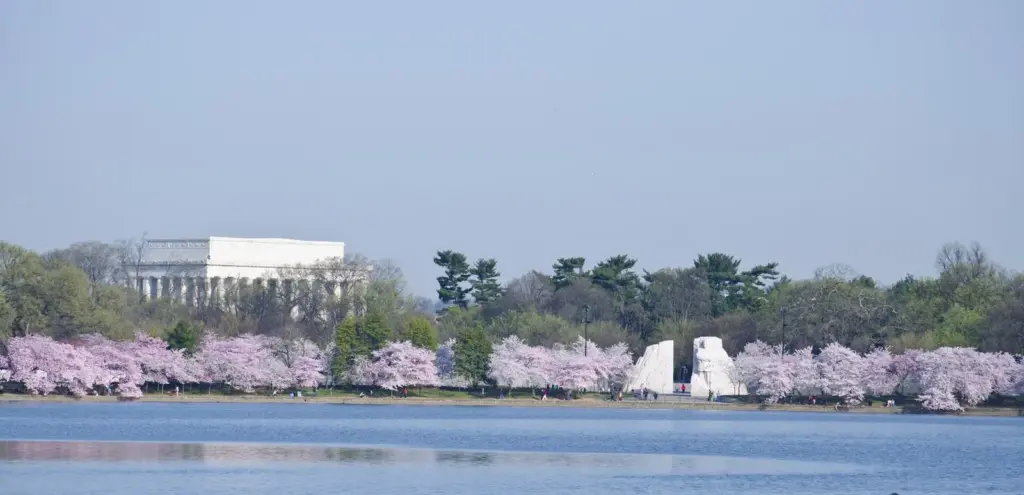
Free, open 24 hours. Opened in 2011 on the northwest shore of the Tidal Basin, the MLK Memorial has the address 1964 Independence Avenue SW, for the year the Civil Rights Act passed. You enter through a split granite “Mountain of Despair.” The missing piece, the “Stone of Hope,” stands out in front with King’s 30-foot figure carved into it, arms folded, looking across the water toward the Jefferson Memorial. Both names come from a line in the 1963 speech: “Out of the mountain of despair, a stone of hope.”
Behind the statue, a long curved inscription wall carries 14 quotations from King’s sermons, speeches and writings, spanning the Montgomery bus boycott years to 1968. Give yourself time to read them; they’re the heart of the place, and they’re easy to skip if you only photograph the statue. It’s the first memorial you reach walking south from Lincoln, and it links the Reflecting Pool memorials to the Tidal Basin loop.
Plan it: Open 24 hours; rangers 9:30 a.m. to 10 p.m. Free. Metro: Smithsonian (Blue, Orange, Silver lines), 20-minute walk. Step-free. Allow 20-30 minutes. Best for: first-timers, families, night.
7. Franklin Delano Roosevelt Memorial
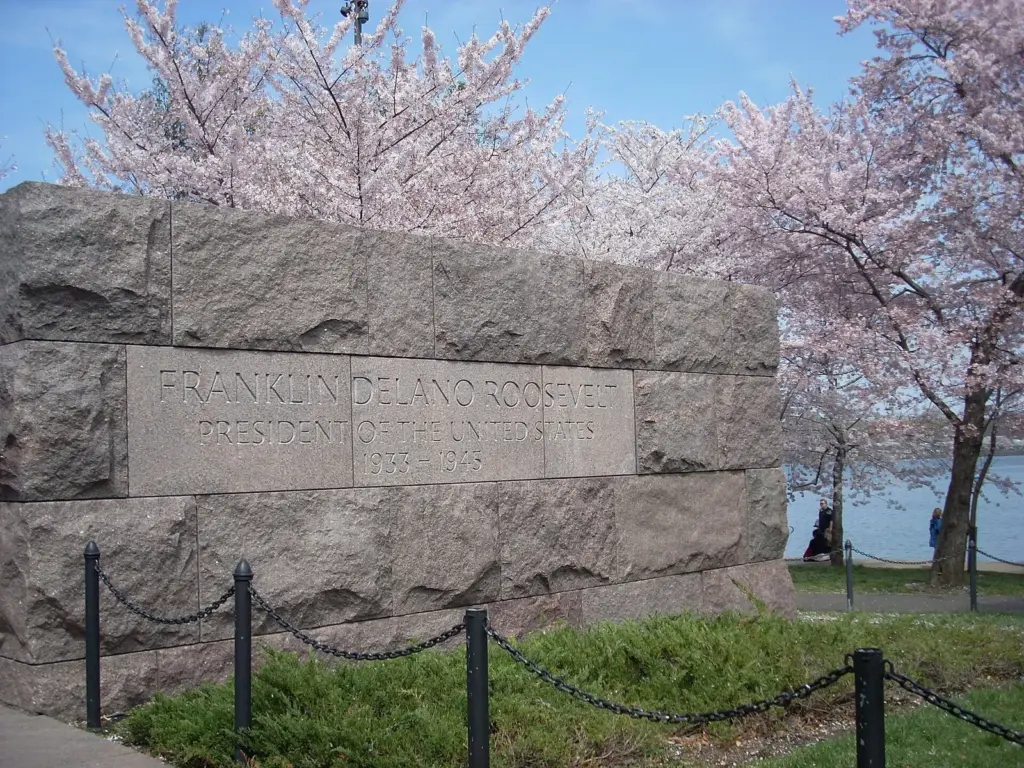
Free, open 24 hours. Most first-timers skip it, and they shouldn’t. Lawrence Halprin’s memorial, dedicated in 1997, covers 7.5 acres along the Tidal Basin’s west shore and unfolds as four open-air rooms, one for each of Roosevelt’s terms, walled in rough red granite. Waterfalls run through all of it, and they get louder and more chaotic as the story moves from the Depression to the war, then calm again at the end.
The sculptures are what people remember: a breadline of gaunt men waiting in a row, a man hunched beside a radio listening to a fireside chat, Eleanor Roosevelt standing in her United Nations years, and Fala, the president’s Scottie, sitting beside him. Since 2001 a statue at the entrance has shown Roosevelt in a wheelchair, which he used for most of his adult life but hid from the public. The whole memorial was built to be step-free, which feels right.
On a hot afternoon this is the best place on the Mall to be. The walls throw shade, the water cools the air, and it’s the one memorial you can linger in without cooking.
Plan it: Open 24 hours; rangers 9:30 a.m. to 10 p.m. Free. Metro: Smithsonian (Blue, Orange, Silver lines), 25-minute walk. Fully step-free. Allow 30-45 minutes. Best for: hot days, families, accessibility.
8. Thomas Jefferson Memorial
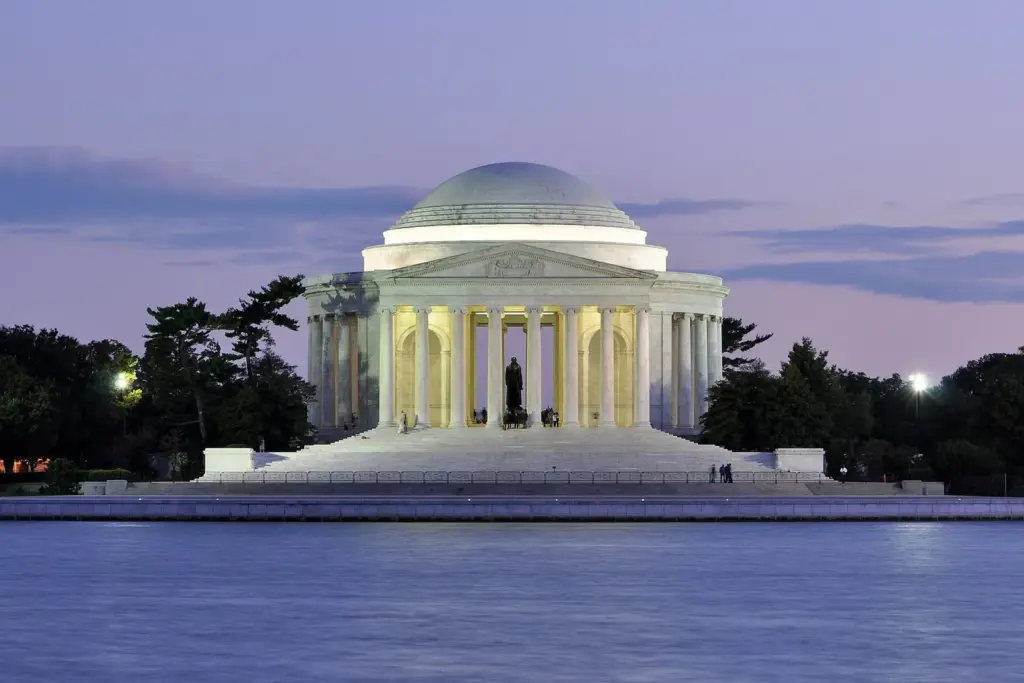
Free, open 24 hours. John Russell Pope’s domed rotunda on the Tidal Basin’s south shore was dedicated on April 13, 1943, Jefferson’s 200th birthday. The 19-foot bronze statue came later: wartime metal shortages meant a painted plaster stand-in until 1947. Around it, the walls carry passages from the Declaration of Independence and Jefferson’s other writings. The memorial sits on the same north-south line as the White House, which you can see straight across the water.
Here’s an honest take. Up close, the Jefferson is quieter and a little austere, and if your legs are done, you can skip the walk around. Its best view is from across the Tidal Basin at dusk, lit and reflected, and you get that from the MLK Memorial or the path near the Washington Monument. If you do go, the rebuilt seawall, finished in December 2025, gives you a wider walkway along the basin’s edge than older guides describe.
Pedal boats rent from the Tidal Basin dock on the basin’s northeast side. In September 2026, Adventures Unbound ran them weekdays 10 a.m. to 7 p.m. and weekends 9 a.m. to 7 p.m., last boat 5:45 p.m., for $38 on weekdays and $40 on weekends. Check Adventures Unbound for the season’s closing date.
Plan it: Open 24 hours; rangers 9:30 a.m. to 10 p.m. Free. Metro: Smithsonian (Blue, Orange, Silver lines), 20-minute walk. An elevator serves the chamber. Allow 20-30 minutes. Best for: couples, night, photographers.
Quieter Memorials Worth the Detour
None of these needs more than 20 minutes, and most visitors never find them. Each is close to something you’re probably visiting anyway.
9. Dwight D. Eisenhower Memorial
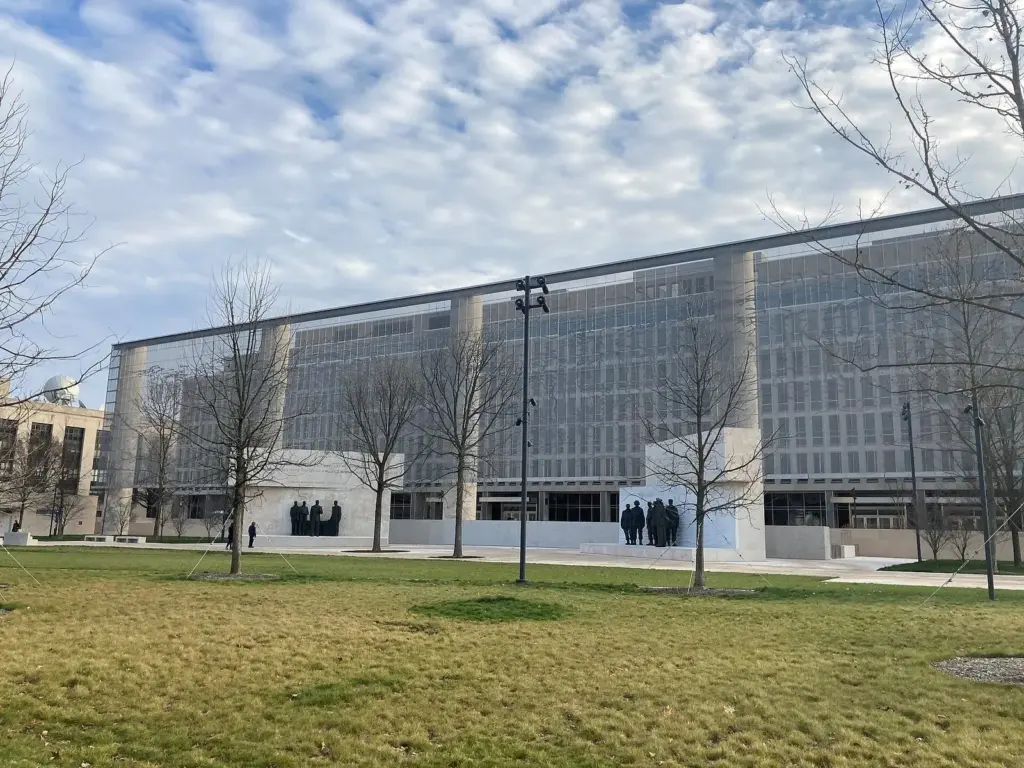
Free, open 24 hours. Frank Gehry’s memorial opened in September 2020 in a small park south of the Air and Space Museum. A huge woven stainless-steel screen shows the Normandy cliffs at Pointe du Hoc in peacetime, and bronze groups show Eisenhower as a Kansas boy, as the general addressing paratroopers before D-Day and as president. It’s best at night, when the screen is lit, and it pairs naturally with the museums at the Capitol end.
Plan it: Free, open 24 hours. Metro: L’Enfant Plaza (Blue, Orange, Silver, Green, Yellow lines), 5-minute walk. Allow 15 minutes. Best for: history buffs, night.
10. National World War I Memorial
Free, open 24 hours. Pershing Park, on Pennsylvania Avenue a block from the White House grounds, became the national WWI memorial in 2021. Its centerpiece, Sabin Howard’s “A Soldier’s Journey,” was dedicated in September 2024: a bronze wall nearly 60 feet long in which one soldier leaves his family, goes to war and comes home changed, told through 38 figures. It’s one of the most detailed pieces of public sculpture in the city, and almost nobody on a monuments walk knows it’s there.
Plan it: Free, open 24 hours. Metro: Federal Triangle (Blue, Orange, Silver lines), 5-minute walk. Allow 15-20 minutes. Best for: history buffs, a stop on the way to the White House.
11. District of Columbia War Memorial
Free, open 24 hours. A small domed marble bandstand in the trees south of the Reflecting Pool, dedicated in 1931 to the District’s own World War I dead. The names of 499 Washingtonians are carved into its base. It’s a two-minute detour from the path between the WWII and Korean War memorials, and it’s the calmest spot in that stretch.
Plan it: Free, open 24 hours. Metro: Smithsonian or Foggy Bottom-GWU (Blue, Orange, Silver lines), about 20 minutes on foot. Allow 10 minutes. Best for: a quiet break.
12. George Mason Memorial
Free, open 24 hours. A bronze Mason sits on a bench in a small garden near the Jefferson Memorial, books piled beside him. He wrote the Virginia Declaration of Rights, a model for the Bill of Rights, and then refused to sign the Constitution because it lacked one. The memorial opened in 2002, and it’s the rare memorial where you can sit next to the subject.
Plan it: Free, open 24 hours. Metro: Smithsonian (Blue, Orange, Silver lines), 20-minute walk. Allow 10 minutes. Best for: the Tidal Basin loop.
13. Albert Einstein Memorial
Free, on the grounds of the National Academy of Sciences. On Constitution Avenue a short walk from the Vietnam memorial, Robert Berks’ 12-foot bronze Einstein slouches on a granite bench holding a page of his equations. Kids climb into his lap, and nobody minds. It was dedicated in 1979 for the centenary of his birth. It stands on the Academy’s grounds rather than Park Service land, so it works best as a daytime stop.
Plan it: Free. Metro: Foggy Bottom-GWU (Blue, Orange, Silver lines), 10-minute walk. Allow 10 minutes. Best for: families, photos.
14. National Japanese American Memorial to Patriotism During World War II
Free, open 24 hours. Near Union Station and the Capitol, a bronze sculpture of two cranes tangled in barbed wire sits at the center of a small plaza. The walls name the camps where more than 100,000 Japanese Americans were held during the war, alongside the Japanese Americans who died serving in the U.S. military. It opened in 2000. It’s a sobering ten minutes, and an easy add if you arrive by train.
Plan it: Free, open 24 hours. Metro: Union Station (Red line), 5-10 minute walk. Allow 10-15 minutes. Best for: history buffs, train arrivals.
15. Constitution Gardens and the 56 Signers Memorial
Free, open 24 hours. North of the Reflecting Pool, next to the Vietnam memorial, a pond with a small island holds 56 low stone blocks carved with the signatures of the men who signed the Declaration of Independence. A footbridge reaches the island. It’s less a sight than a pause: benches, ducks, shade and the fewest people anywhere near the Lincoln Memorial.
Plan it: Free, open 24 hours. Metro: Foggy Bottom-GWU (Blue, Orange, Silver lines), 15-minute walk. Allow 10-20 minutes. Best for: a rest stop, families with small kids.
16. Ulysses S. Grant Memorial
Free, open 24 hours. At the foot of Capitol Hill, a bronze Grant sits still on his horse above the Capitol Reflecting Pool, flanked by a cavalry charge and an artillery team in full motion. It was dedicated in 1922, and it’s one of the largest equestrian statues in the country. Look at the artillery group’s faces. The contrast between the calm general and the chaos around him is the point.
Plan it: Free, open 24 hours. Metro: Capitol South or Federal Center SW (Blue, Orange, Silver lines), 10-minute walk. Allow 10 minutes. Best for: pairing with a Capitol visit.
Several of the best-known war memorials in the area are across the Potomac in Virginia: the Marine Corps War Memorial (the Iwo Jima statue), the Air Force Memorial and the Pentagon Memorial. They’re easiest to combine with a visit to Arlington National Cemetery, which is a short Metro ride or a walk across Memorial Bridge from the Lincoln Memorial.
How Long Does It Take to Walk the Washington DC Monuments?
The short answer is three to four hours for the main memorials if you walk steadily and stop to read, and a full day if you add the Washington Monument elevator and the Capitol end. The distances are approximate, by the usual paths.
| From | To | Distance | Walking time |
|---|---|---|---|
| Smithsonian Metro | Washington Monument | 0.4 mile | 8-10 min |
| Washington Monument | WWII Memorial | 0.3 mile | 5-7 min |
| WWII Memorial | Lincoln Memorial | 0.5 mile | 10-12 min |
| Lincoln Memorial | Korean War or Vietnam memorial | 0.2 mile | 4-5 min |
| Lincoln Memorial | MLK Memorial | 0.4 mile | 8-10 min |
| MLK Memorial | FDR Memorial (through all four rooms) | 0.4 mile | 10 min plus stops |
| FDR Memorial | Jefferson Memorial | 0.4 mile | 8-10 min |
| Jefferson Memorial | Washington Monument | 0.8 mile | 15-20 min |
| Washington Monument | Capitol (west front) | 1.3 miles | 25-30 min |
| Lincoln Memorial | Capitol | About 2 miles | 40-45 min |
The two-hour core
Start at Smithsonian station, walk west to the Washington Monument, then the WWII Memorial, then down the north side of the Reflecting Pool under the elms to the Lincoln Memorial. Drop down to the Korean War memorial, cross back to the Vietnam Veterans Memorial and finish in Constitution Gardens. It’s about 2 miles and takes two to two and a half hours with stops, and it covers the four memorials first-timers most want. End at Foggy Bottom-GWU, a 15-minute walk north, or take a bus from Constitution Avenue.
The Tidal Basin loop
Pick up at the MLK Memorial, walk through the FDR Memorial’s four rooms, cross the inlet bridge to the Jefferson Memorial and George Mason, then follow the east shore back toward the Washington Monument. It’s about 2 miles and takes about two hours, and it’s best in the late afternoon, when the light swings onto the Jefferson’s dome. When the DC cherry blossoms are out, this is the busiest path in the city. The 2027 National Cherry Blossom Festival runs March 20 to April 11, and peak bloom won’t be forecast until late winter.
The full memorial loop
Join the two at the Lincoln-to-MLK link and you have the complete circuit: roughly 3.5 to 4 miles and four to five hours with stops, before any museum. It’s doable in one go in spring or fall. In July, split it: the Reflecting Pool memorials in the morning, the Tidal Basin after dark. Adding the Eisenhower Memorial and the Capitol end makes it a 6-mile day, which is where most people’s feet give up.
Seeing the Washington DC Monuments After Dark
The memorials never close, every major one is lit, and rangers stay on duty until 10 p.m. Nights are cooler, the crowds thin out after about 9 p.m., and some memorials are simply better lit than in daylight. If you have one evening free, spend it here.
The best order starts at the WWII Memorial, with its fountains lit, and follows the Reflecting Pool to the Lincoln Memorial, which glows from inside and is at its best at night. From there, the Korean War memorial is four minutes away and at its most striking. The Vietnam wall is lit low, so names are harder to read, but the reflection of the Washington Monument in the stone is worth the stop. Finish at the MLK Memorial, where the Jefferson’s lit dome sits across the water. A lot of people consider the DC monuments at night the high point of their trip, and it’s easy to see why.
Practical notes: the main paths are well lit, but the stretches around the Tidal Basin and West Potomac Park are darker, so stay on the paved routes and keep your phone charged. Metro runs until midnight Monday to Thursday and on Sundays, and until 2 a.m. on Friday and Saturday nights, as of September 2026. Capital Bikeshare docks near the Lincoln Memorial and the Jefferson Memorial make an easy ride back to a Metro station.
National Mall Visitor Essentials
Getting there and getting around
Metro is the easy way in. Smithsonian station (Blue, Orange, Silver lines) comes up on the Mall itself, a 10-minute walk from the Washington Monument. Foggy Bottom-GWU, on the same lines, is the nearest station to the Lincoln Memorial, about 20 minutes away on foot, and Federal Triangle and L’Enfant Plaza serve the WWI and Eisenhower memorials. Rail fares run $2.25 to $6.75 on weekdays before 9:30 p.m. and $2.25 to $2.50 at other times, and you can pay by tapping a contactless card or phone, as of September 2026. WMATA’s site has the trip planner.
There is no longer a shuttle loop on the Mall. The DC Circulator, including its National Mall route, shut down on December 31, 2024, and nothing replaced it; the city points riders to regular Metrobus routes. Capital Bikeshare fills the gap for many visitors: $1 to unlock plus 15 cents a minute on a classic bike, 35 cents a minute on an e-bike, or a $10 day pass with unlimited 45-minute classic rides, as of September 2026. Parking near the memorials is scarce and time-limited, so leave the car at your hotel. Paid hop-on, hop-off buses and guided tours are an option if walking is hard, but for most visitors, legs plus the occasional bike ride beat any bus.
Restrooms, water and food
Public restrooms are at the Lincoln and Jefferson memorials, on their lower levels, and at the FDR Memorial. Every Smithsonian museum on the Mall has them too, and they’re usually cleaner. Carry a refillable bottle: water fountains are spread out, and the vendors’ carts charge accordingly. Food is thin on the memorial side of the Mall. Refreshment kiosks and food trucks cluster near the Washington Monument and along the streets that border the Mall, and the museum cafes are the only sit-down options until you leave the park. Pack snacks, especially with kids.
Shade, heat and weather
DC summers are hot and humid, and the Mall’s central lawns have almost no shade. The best cover is under the elms beside the Reflecting Pool, in Constitution Gardens, and inside the FDR Memorial’s granite rooms. From June to August, walk early or late, carry more water than you think you need, and duck into an air-conditioned museum at midday. Spring and fall are the best seasons for a long memorial walk, and winter is quiet, cold and often beautiful after snow.
Accessibility
Every major memorial can be reached without steps. The Lincoln and Jefferson memorials have elevators up to their chambers, the Washington Monument is elevator-only, and the FDR, MLK, Korean War and Vietnam memorials are at ground level. The gravel paths down the middle of the Mall are the hard part in a wheelchair or with a stroller; use the paved sidewalks along Madison and Jefferson Drives and the paved paths around the Tidal Basin instead. Distances are the real barrier, so plan shorter loops and use the Metro stations at each end.
Rangers, maps and safety
Rangers are on duty at the major memorials from 9:30 a.m. to 10 p.m. daily and give short talks through the day; ask at any memorial and they’ll tell you when the next one starts. The park’s information line is 202-426-6841. The Park Service posts closures and alerts on its site, and it’s worth a look the morning you go. Uniformed National Guard members have patrolled parts of central Washington, including tourist areas, since August 2025, and the deployment has been extended to January 2029. The Mall is busy and generally safe in daylight; at night, stick to the lit paths and keep an eye on your belongings as you would in any city center.
Are DC Monuments Open During a Government Shutdown?
Current federal funding runs through December 11, 2026. If Congress lets it lapse, what happens to the memorials depends on the shutdown plan the administration adopts. The open-air memorials have no gates and are often left reachable, though with fewer rangers, restroom closures and less trash pickup. That isn’t guaranteed: during the 2013 shutdown, barricades went up around memorials including the WWII Memorial. Staffed sites such as the Washington Monument’s elevator are the first to stop.
The museums are the bigger risk. In the 43-day shutdown that began October 1, 2025, the Smithsonian museums and the National Zoo closed from October 12 until mid-November. If your trip falls in mid-December 2026, check the news before you go, and build a backup plan around the memorials rather than the museums.
What’s Changed on the National Mall in 2025 and 2026
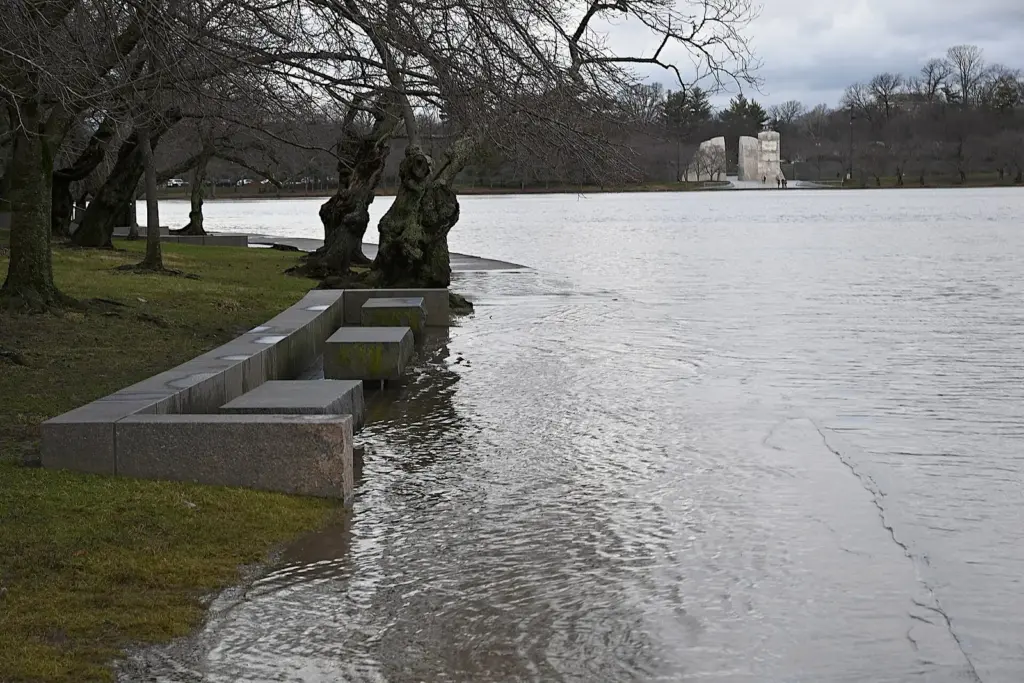
A lot of older guides, and some photos you’ll find online, now describe a Mall that no longer exists. Here’s what’s different.
- The Reflecting Pool was drained and recoated. The Park Service closed the Lincoln Memorial Reflecting Pool on April 10, 2026, for cleaning, joint repairs and a new lining. News reports say it was recoated in a bright blue finish at the White House’s direction and refilled in early June. Closure notices ran into September, so check the Park Service’s page for the pool’s current status. If the pool looks bluer than in older pictures, that’s why.
- The Tidal Basin seawall is finished. For years the basin’s sunken walls flooded the walkway at high tide, and the rebuild fenced off long stretches. The Park Service announced its completion on December 10, 2025, eight months early. The new wall carries a wider, more accessible walkway, and 426 new trees, including 269 cherries, were planned for planting in spring 2026 to replace those removed.
- The Old Post Office Tower is closed. The clock tower on Pennsylvania Avenue was the free alternative to the Washington Monument’s view. It has been closed since October 1, 2025, during a federal ownership review, with no reopening date.
- The Kennedy Center’s main building is closed. The Kennedy Center is officially the national memorial to President Kennedy, and its roof terrace was long a favorite Potomac lookout after a Lincoln visit. Its board voted on September 15, 2026, to close the main building, and its future is in court. Don’t plan around it without checking.
- No more Circulator. The DC Circulator’s National Mall bus ended with the rest of the system on December 31, 2024.
- More timed passes nearby. Several museums near the memorials, including the National Air and Space Museum on the Mall and the National Museum of African American History and Culture, now require free timed passes. Book those before you plan a museum-and-memorials day.
What to Skip, and What People Get Wrong
Don’t try to do the whole Mall at midday in July. It looks like a pleasant stroll on the map. It’s a 4-mile walk on gravel in full sun. Split the memorials between morning and evening, and put the museums in the middle of the day.
Don’t drive between memorials. Parking is scarce, the drives are confusing, and you’ll spend longer circling than walking.
Agree on the total before you get in a pedicab. Pedicabs along the Mall usually charge by the minute, and a slow tour of the memorials adds up fast. They can be a good option for tired legs or limited mobility, but settle the price for the whole trip first.
Don’t skip the Korean War memorial and the FDR Memorial. They’re the two most often left out, and for many people they end up being the most memorable.
Skip the Washington Monument elevator on a hazy summer afternoon. If your only available ticket is at 3 p.m. in August humidity, the view is flat, and your time is better spent at the memorials themselves.
Don’t treat the Vietnam wall as a photo backdrop. Photos are fine, but people come here to find the names of family and friends. Keep selfies and group shots away from anyone at the wall.
And a small one: the National Mall isn’t a shopping mall, and there are no stores on it. If you need supplies, the museum shops and the streets north of Constitution Avenue are your nearest bet. Once you’ve done the memorials, the rest of our guide to what to do in DC picks up where the Mall leaves off.
Washington DC Monuments FAQ
Are the monuments in DC open at night?
Yes. The memorials on the National Mall are open 24 hours a day, every day, and all the major ones are lit after dark. Park rangers are on duty from 9:30 a.m. to 10 p.m. The Washington Monument is the exception: its elevator runs 9 a.m. to 5 p.m., with last entry at 4 p.m.
How long does it take to walk the monuments in DC?
Allow three to four hours for the main memorials, walking steadily and stopping to read. The Reflecting Pool group alone takes about two hours, and the Tidal Basin loop about two more. Add the Washington Monument elevator and the Capitol end and it becomes a full day of about 6 miles.
Do you need tickets to visit the DC monuments?
No, except for the Washington Monument’s elevator. All the memorials are free with no reservation. Washington Monument tickets are free too, but online bookings on Recreation.gov carry a $1 fee per ticket, and a limited number of free same-day tickets are handed out at the Lodge from 8:45 a.m.
Are DC monuments open during a government shutdown?
It depends on the shutdown. The open-air memorials have no gates and have often stayed reachable, but with fewer rangers and closed restrooms, and in 2013 some were barricaded. Staffed sites like the Washington Monument usually close. Federal funding currently runs through December 11, 2026, so check the news if your trip falls after that.
Are the DC monuments open on Sundays and holidays?
Yes. The memorials are open every day of the year, including Sundays and federal holidays. The Washington Monument closes on July 4 and December 25, and for one maintenance day a month: October 5, November 4 and December 8 for the rest of 2026. Holidays bring bigger crowds, so go early.
What is the best way to tour the DC monuments?
On foot, in two loops. Walk the Reflecting Pool memorials (WWII, Lincoln, Korean War, Vietnam) in the morning, and do the Tidal Basin loop (MLK, FDR, Jefferson) in the late afternoon or after dark. Use Metro to get to each end, and a bike-share bike if your feet give out.
Is there a shuttle or trolley around the National Mall?
Not a public one. The DC Circulator’s National Mall route ended on December 31, 2024, and nothing replaced it on the Mall. Regular Metrobus routes run along the edges, and paid hop-on, hop-off tours and pedicabs operate, but most visitors find walking and Capital Bikeshare the most flexible options.
Related Washington DC Guides
- Things to Do in Washington DC: how the memorials fit into a full trip, with the museums, neighborhoods and day trips ranked.
Sources and How We Checked
This guide was checked on September 24, 2026, against the official sites below and compiled from them; we don’t claim first-hand visits.
- National Park Service: National Mall and Memorial Parks operating hours
- National Park Service: National Mall alerts and conditions
- National Park Service: Lincoln Memorial alerts and conditions
- Recreation.gov: Washington Monument tickets
- National Park Service: Tidal Basin seawall completion
- WMATA: Metro fares and hours
- NPR: Reflecting Pool refill report, June 2026
We also used the National Cherry Blossom Festival’s announced 2027 dates, Capital Bikeshare’s posted pricing, the Adventures Unbound boat rental page and news of record (NPR and WTOP) on federal funding, the 2025 shutdown, the National Guard deployment and the Kennedy Center.
Washington DC Tourism Guide is an independent publication. We are not affiliated with Destination DC, the National Park Service, the Smithsonian Institution or any attraction listed here, and no one paid to be included.
Photo Credits
- The Reflecting Pool and Washington Monument: photo by Ali Khan, via Wikimedia Commons (CC BY-SA 4.0)
- The Lincoln statue inside the Lincoln Memorial: photo by Frank Schulenburg, via Wikimedia Commons (CC BY-SA 4.0)
- The National World War II Memorial: photo by Kurt Kaiser, via Wikimedia Commons (CC0)
- The Vietnam Veterans Memorial wall: photo by National Park Service, via Wikimedia Commons (CC BY 2.0)
- The MLK Memorial across the Tidal Basin: photo by Tim Evanson, via Wikimedia Commons (CC BY-SA 2.0)
- The FDR Memorial entrance wall: photo by Botteville, via Wikimedia Commons (Public domain)
- The Jefferson Memorial at dusk: photo by Joe Ravi, via Wikimedia Commons (CC BY-SA 3.0)
- The Dwight D. Eisenhower Memorial: photo by Eric T Gunther, via Wikimedia Commons (CC BY 3.0)
- The old Tidal Basin walkway at high tide, 2024: photo by G. Edward Johnson, via Wikimedia Commons (CC BY 4.0)