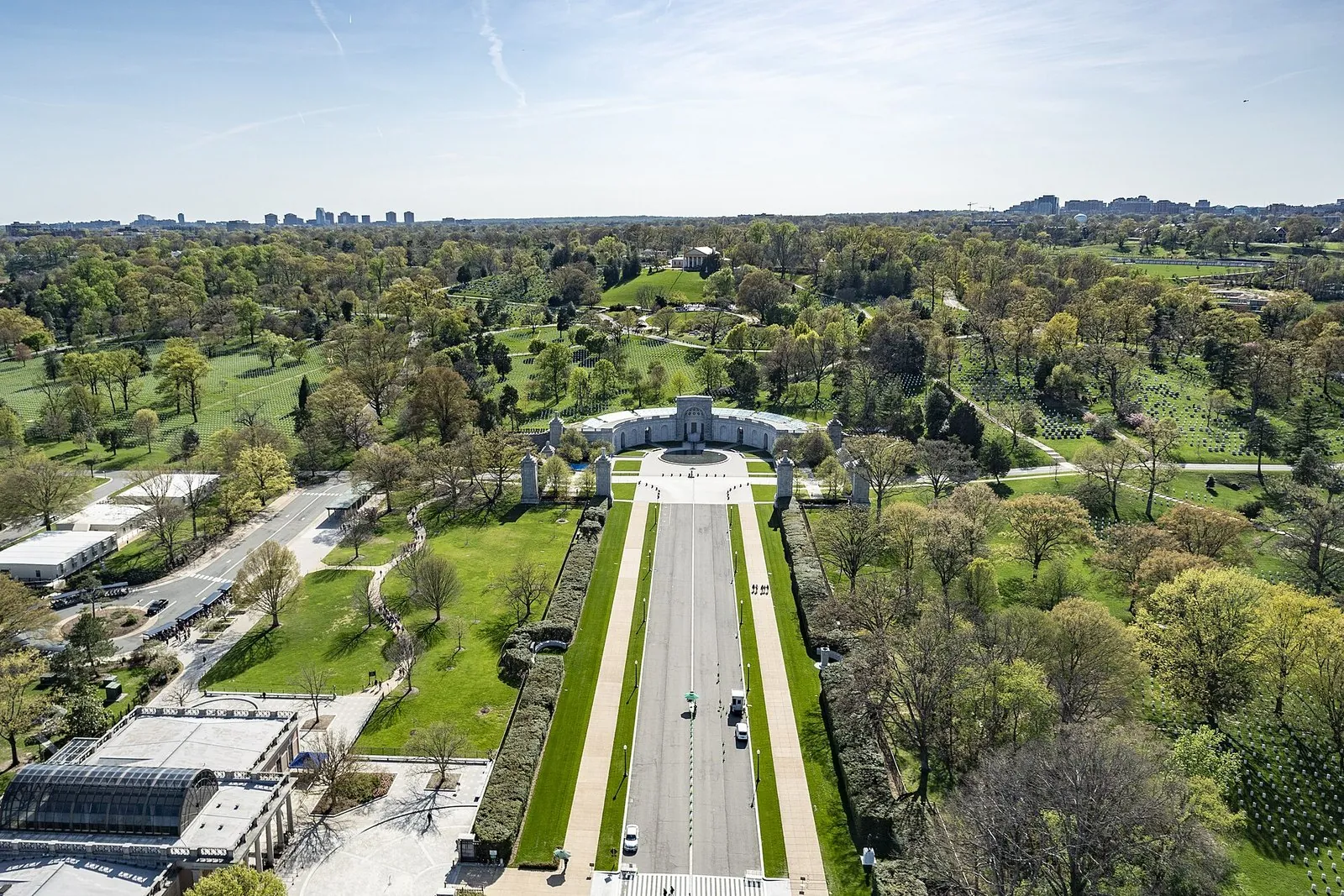
Nothing prepares you for the scale of Arlington National Cemetery. You see it on the news every Memorial Day, but from the hill below Arlington House the white headstones run in every direction, over more than 600 acres and more than 400,000 graves, and it’s still a working cemetery, with funerals every weekday. That’s the first thing to understand before you go: you’re a guest at a place where people are still being buried. The second is practical. It’s big, it’s hilly, and the things most visitors want to see (the Changing of the Guard, the Kennedy graves, Arlington House) are a long uphill walk from the gate.
Quick answer: Arlington National Cemetery is free and open every day, 8am to 5pm from October through March and 8am to 7pm from April through September. Take the Metro Blue Line to Arlington Cemetery station, bring photo ID, and allow at least two hours. The official tram tour, from $21.50 for adults, saves a lot of climbing.
Last updated September 24, 2026. Hours, fares and rules below were checked that day against the cemetery’s, the National Park Service’s and the other memorials’ own websites.
- Cost: free to enter. The tram tour and the parking garage are the only things you pay for.
- Changing of the Guard: every hour on the hour from October 1 to March 31, and every 30 minutes from April 1 to September 30.
- Security: everyone 16 and older needs photo ID, and walk-in visitors are screened at the Welcome Center.
- Beyond the gates: the Marine Corps War Memorial, the Netherlands Carillon, the Air Force Memorial and the Pentagon Memorial are all within a short ride.
On this page: At a glance | Planning | Getting there | Tram or walk | Changing of the Guard | History | What to see | Memorials outside | Map | Routes | Find a grave | Etiquette | Special days | More in Arlington | FAQ
Arlington National Cemetery at a glance
| What | Details (as of September 2026) |
|---|---|
| Admission | Free, no tickets |
| Hours, October 1 to March 31 | 8am to 5pm daily |
| Hours, April 1 to September 30 | 8am to 7pm daily |
| Changing of the Guard | Top of every hour in fall and winter; every 30 minutes in spring and summer |
| Tram tour | From $21.50 adults, from $11.50 military and veterans; departures every 30 minutes |
| Metro | Arlington Cemetery station (Blue line), steps from the Welcome Center |
| Parking | Pay garage at the Welcome Center; first 30 minutes free |
| ID | Photo ID for everyone 16 and older |
| Time needed | 2 hours for the highlights, 4 for a thorough visit |
| Best time | Weekday mornings, and October for the weather |
Planning a visit to Arlington National Cemetery
How long to allow. Two hours covers the Welcome Center, the Kennedy graves, the Changing of the Guard and Arlington House if you take the tram. On foot, give it three or four. The cemetery climbs steadily from the Welcome Center to the ridge where Arlington House stands, and the Tomb of the Unknown Soldier sits deeper in, on another rise. Most people underestimate the distances because the map makes it look like a park.
When to go. Weekday mornings are calmest. Summer afternoons are the hardest time: there’s little shade on the main paths, the Tomb plaza is packed for each guard change, and school groups move through in waves. Fall is the best season, with cooler walking weather and the trees turning around Arlington House. In winter the cemetery closes at 5pm and the guard changes hourly, so plan your arrival backward from the ceremony you want to see.
What to bring. Photo ID for everyone 16 and up, comfortable shoes, water in summer, and a small bag, since you’ll be screened on the way in. There’s no dress code for visitors, but it’s a cemetery with funerals in progress, so dress as you would for a place of mourning rather than a theme park.
Combining it with the city. Arlington is across the Potomac from the Lincoln Memorial, and the walk over Arlington Memorial Bridge is one of the best in the area. It pairs naturally with a morning on the Mall; our guide to Washington DC monuments covers the memorials on the DC side of the bridge.
How to get to Arlington National Cemetery
| Option | How it works | Cost |
|---|---|---|
| Metro | Blue line to Arlington Cemetery station, then a 2-minute walk to the Welcome Center | Regular Metro fare |
| On foot | From the Lincoln Memorial across Arlington Memorial Bridge and up Memorial Avenue, about 20 to 25 minutes | Free |
| Car | Welcome Center pay garage off Memorial Drive | First 30 minutes free, then hourly |
| Tour bus | Some DC hop-on hop-off tours include an Arlington stop and the tram | Varies by package |
By Metro
Arlington Cemetery station is on the Blue line only, so if you’re coming from an Orange or Silver line station, change at Rosslyn or at any shared downtown station. Trains on the Blue line run less often than on the shared trunk, so check the next train before you commit to a transfer. Rail fares were $2.25 to $6.75 on weekdays before 9:30pm and $2.25 to $2.50 at other times as of September 2026, and you can tap a contactless card or phone at the gates.
On foot from the Lincoln Memorial
From the back of the Lincoln Memorial, cross Arlington Memorial Bridge and follow Memorial Avenue straight to the ceremonial entrance, with Arlington House on the hill ahead of you. The Welcome Center is to the left, just before the entrance. It’s flat and about a mile. It’s also the only approach that shows you how deliberately the cemetery and the Lincoln Memorial were lined up across the river.
By car and parking
The cemetery’s pay garage sits beside the Welcome Center. The first 30 minutes are free, and after that you pay by the hour. On Memorial Day, Veterans Day and Wreaths Across America Day the roads around the cemetery close and the garage fills early, so take the Metro on those days.
Security and ID
Walk-in visitors go through security screening at the Welcome Center, and everyone 16 and older, whether on foot, driving or riding in a car, needs a valid photo ID, as listed on the cemetery’s security page in September 2026. Leave large bags at your hotel.
Getting around: walk, tram or gravesite shuttle?
The tram. Arlington National Cemetery Tours runs the only official tour inside the cemetery: a hop-on, hop-off tram with a recorded and live commentary. Tickets start at $21.50 for adults and $11.50 for military and veterans, departures come every 30 minutes, and the loop covers more than 3 miles with seven stops on weekdays and eight on weekends (as of September 2026, per arlingtontours.com). Ticket sellers list the stops as the Welcome Center, the Tomb of the Unknown Soldier, the Kennedy gravesite, Arlington House, the Coast Guard Memorial and the Pershing gravesite, with Section 60 added on weekends. Buy tickets at the desk inside the Welcome Center.
Is the tram worth it? For most visitors, yes. The climb to Arlington House and the Tomb is real, and the tram lets you spend your energy at the stops rather than between them. Walk if you’re fit, the weather’s mild and you want to wander the sections; the quiet rows away from the tram route are where the cemetery feels most like itself.
The free gravesite shuttle. If you’re visiting a specific grave, the cemetery lists a free shuttle for gravesite visits. Ask at the Welcome Center. It’s meant for people paying respects, not for sightseeing.
Accessibility. The tram is the easiest way for anyone with limited mobility to reach the main sites, and the paved roads are smoother than the grass between graves. Some viewpoints, including the Arlington House portico, involve steps or steep paths.
The Changing of the Guard at the Tomb of the Unknown Soldier
This is the ceremony most people come for, and it deserves the time. The Tomb has been guarded around the clock since 1937, and since 1948 the sentinels have come from the 3rd U.S. Infantry Regiment, known as The Old Guard. Between changes, the sentinel walks 21 steps along the mat, turns, pauses for 21 seconds, and walks back. At the change, the relief commander inspects the incoming sentinel’s rifle in a slow, exact routine, and the old and new sentinels trade posts with the words “Post and orders, remain as directed.”
| Season | Cemetery hours | Changing of the Guard |
|---|---|---|
| October 1 to March 31 | 8am to 5pm | On the hour, every hour |
| April 1 to September 30 | 8am to 7pm | Every 30 minutes |
Those are the times listed on the cemetery’s Changing of the Guard page in September 2026. Arrive 15 to 20 minutes early on busy days if you want to stand at the front of the terraced steps. Visitors are asked to stand and stay silent throughout, and the sentinels will break their silence to correct anyone who doesn’t. Groups can also request a public wreath-laying ceremony at the Tomb through the cemetery.
The Tomb itself, a white marble sarcophagus, holds an unknown soldier from World War I, placed here on November 11, 1921, and crypts for unknowns from later wars sit on the plaza in front. It’s the one place in the cemetery where the crowd goes completely quiet, which tells you more about it than any sign does.
How Arlington became a national cemetery
The land was never meant to be a cemetery. George Washington Parke Custis built Arlington House between 1802 and 1818, partly as a memorial to his step-grandfather, George Washington, and his daughter Mary married a young Army officer named Robert E. Lee in the house in 1831. When Lee resigned from the U.S. Army and joined the Confederacy in 1861, the family left, and Union troops occupied the estate within weeks.
By 1864 the hospitals around Washington were overwhelmed with the dead. Quartermaster General Montgomery C. Meigs chose the Arlington estate for a new military cemetery, and the first military burial, Private William Christman, took place on May 13, 1864. Meigs had graves dug close to the house, by most accounts to make sure the Lees could never live there again. Meanwhile Freedman’s Village, a government settlement for people who had escaped slavery, grew up on the southern part of the estate and lasted until 1900.
The Lees’ son, George Washington Custis Lee, sued for the land, and in 1882 the Supreme Court ruled the seizure unlawful. Rather than move thousands of graves, the government bought the estate from him the next year for $150,000. The Memorial Amphitheater opened in 1920, the Tomb of the Unknown Soldier followed in 1921, and President Kennedy’s burial in 1963 made Arlington one of the most visited places in the Washington area. Today the cemetery is run by the U.S. Army and still holds funerals every weekday.
What to see at Arlington National Cemetery
The cemetery holds far more than a single visit can take in. These are the stops worth prioritizing, roughly in order of how many visitors come for them.
1. Tomb of the Unknown Soldier
The heart of the cemetery. Beyond the ceremony, it’s worth time on its own: the view from the plaza over the cemetery, the inscription “Here rests in honored glory an American soldier known but to God,” and the quiet between changes, when the sentinel’s footsteps are the only sound.
Plan it: open during cemetery hours; guard changes on the hour in fall and winter, every 30 minutes in spring and summer. Tram stop. On foot, allow about 25 minutes uphill from the Welcome Center. Allow 45 minutes including a ceremony. Best for: everyone.
2. John F. Kennedy gravesite and eternal flame
Free, tram stop. President Kennedy lies on the slope below Arlington House, with Jacqueline Kennedy Onassis and two of their children beside him and the eternal flame, first lit at his funeral in November 1963, at the center. Lines from his inaugural address are carved into the low wall of the terrace. Robert F. Kennedy’s grave, marked by a simple white cross, and Edward Kennedy’s are a few steps away.
Plan it: open during cemetery hours. Tram stop, or about 15 minutes’ walk uphill from the Welcome Center. Allow 20 to 30 minutes. Best for: first-timers, history buffs.
3. Arlington House
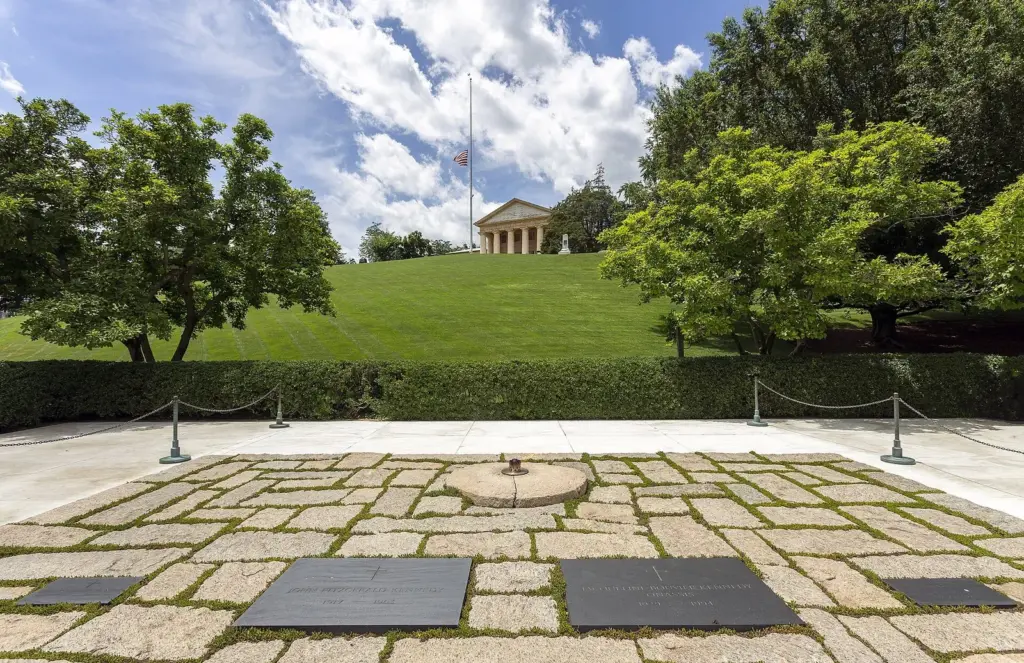
Free, no reservation. The columned house on the ridge was built by George Washington Parke Custis, Martha Washington’s grandson, and later became the home of Robert E. Lee and his wife, Mary Custis Lee. The Union army took the estate during the Civil War, and burials began on its grounds in 1864, which is how the cemetery started. The National Park Service runs it as a memorial and museum, and it also tells the stories of the enslaved people who lived and worked here. Pierre L’Enfant, who planned Washington, is buried on the lawn in front, facing the city he laid out, and the view from the portico is one of the best in the region.
Plan it: the museum, the slave quarters and the self-guided house tour are open daily 9am to 4:30pm, with no tickets needed; the house tour covers the South Wing only, according to the National Park Service. Tram stop, or a steep 20-minute walk from the Welcome Center. Allow 45 minutes. Best for: history buffs, the view.
4. Memorial Amphitheater
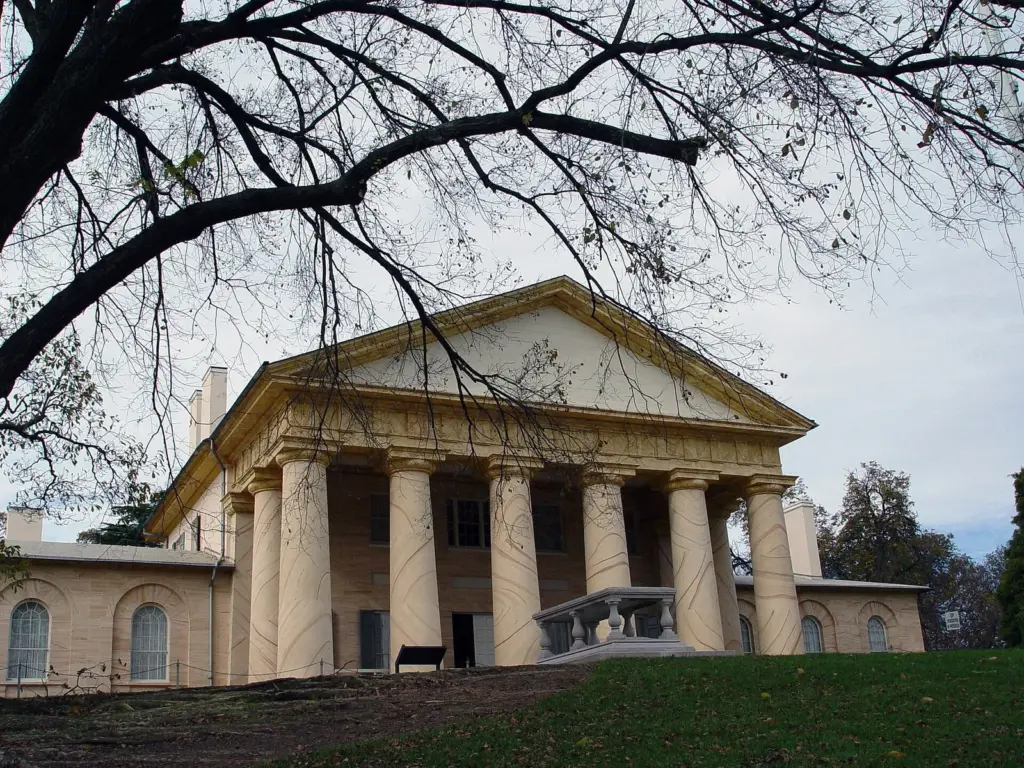
Free, next to the Tomb. The white marble amphitheater adjoining the Tomb hosts the national Memorial Day and Veterans Day observances, and on other days it’s a calm, shaded place to sit. Its display room holds objects connected to the Tomb and the ceremonies held here.
Plan it: open during cemetery hours; closed to casual visitors during ceremonies. Walk from the Tomb plaza. Allow 15 minutes. Best for: a rest, architecture fans.
5. Section 60
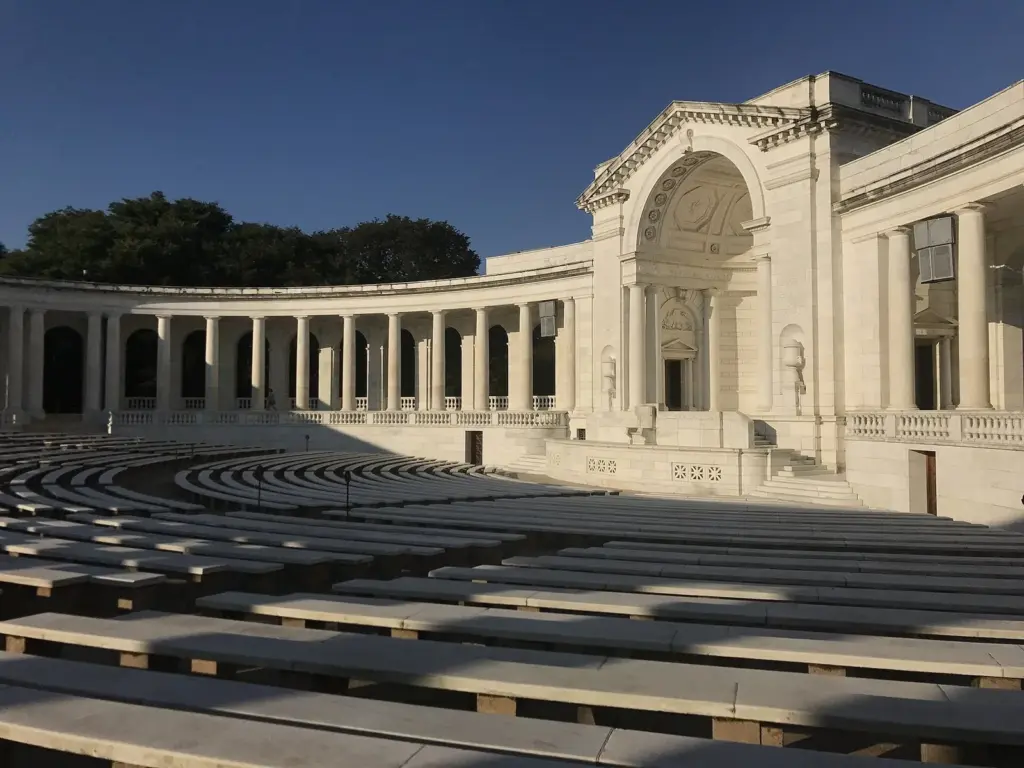
Free, weekend tram stop. Many of those killed in Iraq and Afghanistan are buried here, and it’s the section where you’re most likely to see families visiting, sometimes sitting on blankets by a headstone. Visit if you feel you should, but keep your distance, keep your voice down and keep your camera away. It’s the most personal part of the cemetery.
Plan it: open during cemetery hours. Tram stop on weekends only; on weekdays, about a 20- to 25-minute walk from the Welcome Center. Allow 20 minutes. Best for: veterans, military families.
6. Space Shuttle Challenger and Columbia memorials
Free, near the amphitheater. Two memorials a short walk from the Tomb honor the crews lost on Challenger in 1986 and Columbia in 2003. Remains of some crew members are buried nearby. They’re easy to miss, and worth the five-minute detour.
Plan it: open during cemetery hours. Walk from the Tomb or the amphitheater. Allow 10 to 15 minutes. Best for: space fans, families.
7. USS Maine Mast Memorial
Free. The actual mast of the battleship Maine, which exploded in Havana harbor in 1898, rises from a stone base shaped like a ship’s turret, surrounded by the graves of many of her crew. It’s one of the stranger and more affecting sights here.
Plan it: open during cemetery hours. Walk from the Tomb, about 10 minutes. Allow 10 minutes. Best for: history buffs.
8. Military Women’s Memorial
Free. Built into the curved wall at the ceremonial entrance, at the end of Memorial Avenue, this memorial and education center tells the story of women’s service in the armed forces. It’s a few minutes’ walk from the Welcome Center, and many visitors walk straight past it.
Plan it: Monday to Saturday 9am to 5pm, Sunday noon to 5pm, open about 357 days a year (as listed by the Military Women’s Memorial in September 2026). You go through the cemetery’s security screening to reach it. Allow 30 to 45 minutes. Best for: veterans, families, anyone with extra time.
9. Section 27 and Freedman’s Village
Free. Near the cemetery’s northern edge, Section 27 holds the graves of thousands of formerly enslaved people, many of them from Freedman’s Village, a settlement set up on the Arlington estate during the Civil War, along with soldiers of the U.S. Colored Troops. It’s one of the oldest parts of the cemetery and one of the least visited.
Plan it: open during cemetery hours. About a 15-minute walk from the Welcome Center. Allow 20 minutes. Best for: history buffs, repeat visitors.
10. Notable graves worth finding
Free; use the cemetery’s app. Two presidents are buried at Arlington: Kennedy and William Howard Taft. You’ll also find Robert Todd Lincoln, Justices Thurgood Marshall and Ruth Bader Ginsburg, civil rights leader Medgar Evers, boxer Joe Louis, Audie Murphy, astronaut and senator John Glenn and computing pioneer Grace Hopper, among many others. Most have standard government headstones, which is the point: rank and fame end at the same white marble as everyone else.
Plan it: open during cemetery hours. Use the ANC Explorer app or the kiosks in the Welcome Center to find each grave. Allow as long as you like. Best for: history buffs, repeat visitors.
11. General Pershing’s grave
Free, tram stop. General John J. Pershing, who commanded the American forces in Europe in World War I, asked to be buried among the soldiers he led. His grave has a standard government headstone and sits on a gentle rise in a section full of World War I dead. It’s a quiet stop, and a good one for explaining to children what the rows mean.
Plan it: open during cemetery hours. Tram stop. Allow 10 minutes. Best for: history buffs, families.
12. Coast Guard Memorial
Free, tram stop. A granite pyramid topped by a bronze seagull honors Coast Guard members lost in World War I, including the crews of the cutters Tampa and Seneca. It’s small, but it’s on the tram route, so it costs you nothing to see, and it looks over one of the most peaceful stretches of the cemetery.
Plan it: open during cemetery hours. Tram stop. Allow 10 minutes. Best for: Coast Guard families, history buffs.
Arlington’s memorials outside the cemetery
Four more memorials sit within a mile or two of the gates, on National Park Service or military land. They’re easy to add on foot, by Metro or by car.
13. U.S. Marine Corps War Memorial (Iwo Jima Memorial)
Free, no tickets. The giant bronze of six Marines raising the flag on Iwo Jima in 1945, based on Joe Rosenthal’s photograph, stands on a ridge just north of the cemetery. It’s more impressive in person than in photos, partly for its size and partly because the flag on it is real and flies around the clock. On summer Tuesday evenings at 7pm, the Marines stage the free Sunset Parade here, with the Marine Drum and Bugle Corps and the Silent Drill Platoon; no reservations are needed, as listed by Marine Barracks Washington.
Plan it: free; parking at the memorial. Metro: Rosslyn (Blue, Orange, Silver lines), about a 15-minute walk. Allow 20 to 30 minutes, or an evening for the parade. Best for: first-timers, veterans, sunset photos.
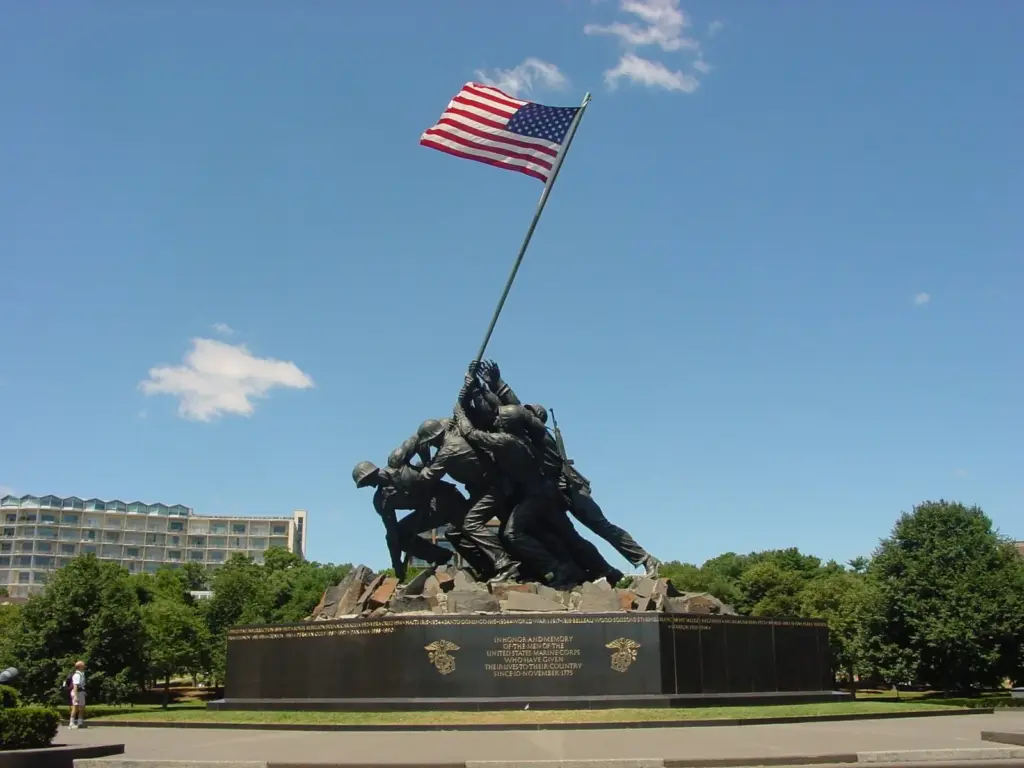
14. Netherlands Carillon
Free. A steel bell tower next to the Iwo Jima Memorial, given by the Netherlands as thanks for American help during and after World War II. The lawn around it has one of the best views of the Mall, with the Lincoln Memorial, Washington Monument and Capitol lined up across the river. The bells play automated concerts daily at noon and 6pm, and guest carillonneurs play live on Saturdays from 6pm to 8pm in June, July and August.
Plan it: grounds open 6am to midnight year-round (as listed by the National Park Service in September 2026). Park at the Marine Corps War Memorial. Allow 15 minutes. Best for: views, Fourth of July fireworks, summer Saturday concerts.
15. U.S. Air Force Memorial
Free. Three stainless-steel spires on a bluff above the Pentagon, curving upward like the contrails of a flying display. It’s quieter than the other memorials, and at dusk, with the city behind the spires, it’s one of the most photogenic spots in Arlington. Check the Air Force Memorial’s website for its current visiting hours before a late visit.
Plan it: free. Metro: Pentagon City (Blue, Yellow lines), about a 15-minute walk uphill. Allow 20 minutes. Best for: photographers, Air Force families.
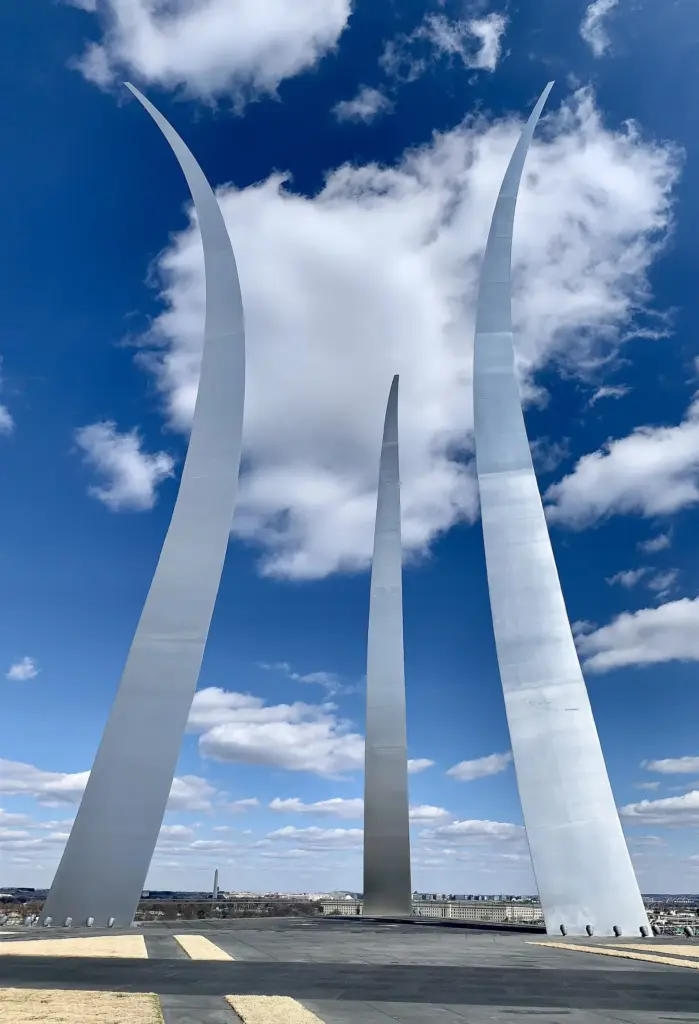
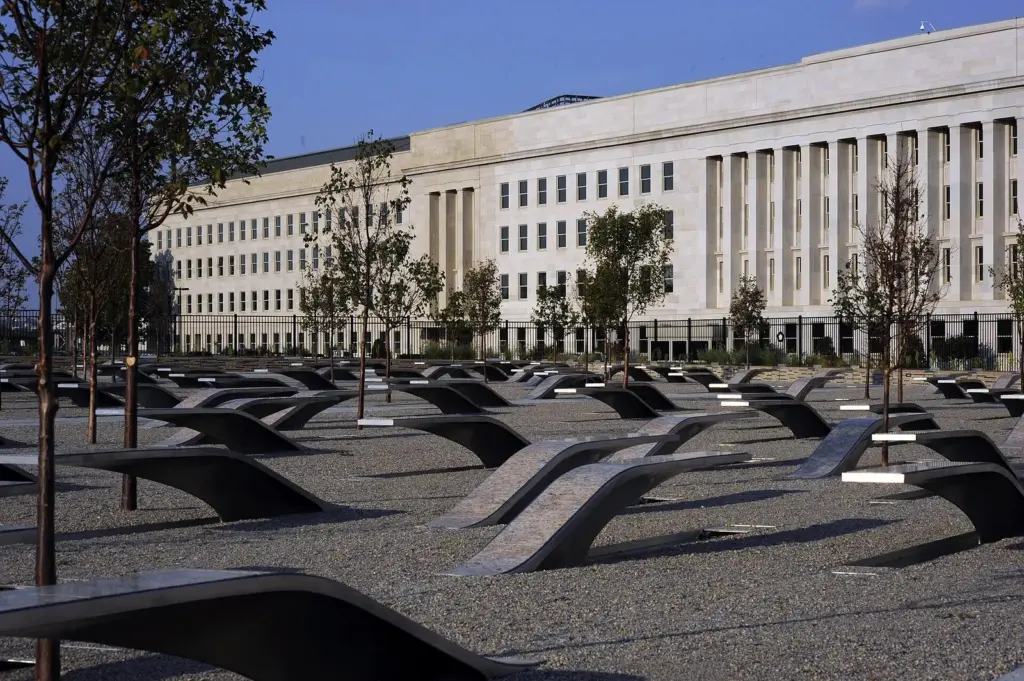
16. National 9/11 Pentagon Memorial
Free, open 24 hours. Beside the Pentagon’s west wall, 184 cantilevered benches, one for each person killed at the Pentagon and on American Airlines Flight 77, are arranged by the victims’ ages. Each bench has a small pool of water beneath it, lit at night, which makes an evening visit especially moving. The benches for those who died in the building face one way, and those for the passengers the other.
Plan it: open 24 hours a day, 365 days a year; restrooms 7am to 10pm. There’s no public parking on the Pentagon grounds, so take the Metro to Pentagon (Blue, Yellow lines), about a 10-minute walk (per the Pentagon Memorial). Allow 30 minutes. Best for: evenings, anyone who remembers the day.
Map of Arlington National Cemetery and nearby memorials
The cemetery fills the center of the map below. Rosslyn and the Iwo Jima Memorial are at the top, the Pentagon and the Air Force Memorial at the bottom right, and the Lincoln Memorial just across the river on the right edge.
Two routes that work
The two-hour visit. Metro to Arlington Cemetery, clear security at the Welcome Center and buy a tram ticket. Ride to the Kennedy gravesite, walk up to Arlington House for the view, then reboard for the Tomb and time your arrival for the next guard change. Take the tram back to the Welcome Center. In fall and winter, aim to reach the Tomb about 15 minutes before an hour.
The half-day on foot. Start at the Military Women’s Memorial, then walk up to the Kennedy graves and Arlington House. Continue to the Tomb for a guard change, and spend time at the amphitheater and the Challenger and Columbia memorials. Head back through the quieter sections, detouring to the USS Maine mast and Section 27. Then return to the Welcome Center and walk on to the Iwo Jima Memorial and the Netherlands Carillon, about 20 minutes on foot, for the late-afternoon view.
The evening add-on. After the cemetery closes, the Pentagon Memorial and the Marine Corps War Memorial are both at their best after dark. On a summer Tuesday, the Sunset Parade at the Iwo Jima Memorial is one of the best free evenings in the area.
How to find a grave at Arlington
The cemetery’s ANC Explorer app, free for iPhone and Android, and the kiosks in the Welcome Center let you search by name. They show the section and grave number, a photo of the headstone and walking directions. Download the app before you arrive rather than relying on signal inside the cemetery. Staff at the Welcome Center can also help, and if you’re visiting a family member’s grave, ask about the cemetery’s free gravesite shuttle.
Once you’re in the right section, the numbers on the back of each headstone help you count your way along the row. Bring a small flag or flowers if you like. Fresh cut flowers are generally welcome at graves, but the cemetery removes decorations on a schedule, so don’t leave anything you want kept.
Visiting a family member’s grave
If you’re coming to visit someone buried here, tell the staff at the Welcome Center. They can look up the grave and point you to the free gravesite shuttle. Family members of those buried here can also apply for a permanent parking pass; the application is on the cemetery’s website. Military and veteran visitors pay a reduced tram fare, from $11.50, which helps if you also want to see the main sites. Many families plan a visit around Memorial Day, when every grave has a small flag, or December, when many carry wreaths.
Etiquette: how to visit respectfully
Arlington works as a tourist site only because visitors behave as guests. The rules and customs are simple:
- Funerals first. Several happen every weekday. If a procession passes, stop, stay quiet and let it go by. Don’t walk toward a graveside service, and don’t photograph mourners.
- Silence at the Tomb. Stand and stay quiet during the Changing of the Guard. The sentinels will correct anyone who doesn’t.
- Stay on paths and roads. Don’t sit or lean on headstones, and don’t climb on monuments.
- No picnics or recreation. It isn’t a park, so skip the jogging, games and lunch on the grass.
- Photos are fine, with judgment. Take pictures of the memorials and the landscape, but not of people grieving.
- Keep children close. Explain before you go that it’s a place to be quiet, and it usually goes well.
Visiting Arlington with children
Children usually respond to Arlington better than parents expect, and the Changing of the Guard holds even young kids’ attention with its precision. A few things help. Explain before you go that it’s a cemetery where families are still visiting, so voices stay low. Use the tram, because the climbs wear out small legs fast. Keep the visit to about two hours, build it around one guard change, and let older children use the ANC Explorer app to find a grave, which turns the rows into people. Strollers manage fine on the paved roads, though some paths near Arlington House are steep. For a family day, add the Iwo Jima Memorial afterward; it’s big, open and easy to explain.
Visiting in fall and winter
From October 1 the cemetery switches to its shorter schedule, 8am to 5pm, and the Changing of the Guard moves to the top of each hour. Daylight shrinks fast: sunset moves from just before 7pm at the start of October to about 4:45pm in December. Plan to reach your last stop by mid-afternoon rather than racing the closing time. The payoff is fewer crowds, cooler walking weather and, from late October into November, the trees around Arlington House turning.
Dress in layers, because the ridge by Arlington House and the open Tomb plaza catch the wind. After snow or ice, the steep paths near the house and the Tomb need real care, and the tram is the safer way up. The winter guard changes, with a small crowd on the steps and the sentinel’s breath showing in the cold, are some of the most memorable of the year.
Memorial Day, Veterans Day and Wreaths Across America
Three days a year transform the cemetery, and each is worth planning around, either to attend or to avoid.
Memorial Day (the last Monday in May) brings a national ceremony at the Memorial Amphitheater, usually with a presidential wreath-laying at the Tomb, heavy security and road closures. In the days before, soldiers of The Old Guard place a small flag at every grave, and the rows of flags are an extraordinary sight.
Veterans Day (November 11; a Wednesday in 2026) brings the national Veterans Day observance at the amphitheater, with a wreath-laying at the Tomb. Expect crowds and closures around the ceremony.
Wreaths Across America takes place on a Saturday in mid-December, when thousands of volunteers lay wreaths on graves across the cemetery. It’s moving and extremely crowded. The wreaths stay up for weeks afterward, and a weekday visit in late December gives you the sight without the crush.

One more date to know this fall: the Marine Corps Marathon runs on Sunday, October 25, 2026, through Arlington and Washington, with road closures around the cemetery and Rosslyn that morning.
More things to do in Arlington, Virginia
Arlington County is more than the cemetery, and it’s an easy base for a DC trip. A few ideas beyond the memorials:
- Theodore Roosevelt Island: a wooded island memorial reached by footbridge from the George Washington Memorial Parkway, with trails and a statue of Roosevelt in a hidden plaza. Its restrooms close from about October to April.
- Gravelly Point: a riverside park at the end of Reagan National Airport’s runway, where planes pass low overhead every few minutes.
- The Mount Vernon Trail: a paved path along the Potomac, popular with cyclists, running south past the airport to Old Town Alexandria and on to Mount Vernon.
- Rosslyn, Clarendon and Ballston: the Orange and Silver line corridor, with restaurants, bars and a younger crowd than downtown DC.
- The Pentagon tour: free guided tours are booked online 14 to 90 days ahead, Monday to Thursday 10am to 4pm and Friday noon to 4pm, with photo ID for anyone 18 and over. Like the White House, it’s an official tour you have to plan well in advance; our White House tour guide explains how those requests work.
Staying on this side of the river can make sense, too. Rosslyn, Crystal City and Pentagon City hotels are a few Metro stops from both the cemetery and the Mall, and often cost less than downtown DC. Our guide to where to stay in Washington DC compares the Virginia neighborhoods with the city’s.
Is Arlington National Cemetery worth visiting? Honest advice
Yes, and for many visitors it’s the most memorable stop of a DC trip. But go in with realistic expectations. It’s a long, hilly visit, and summer heat on the exposed paths is punishing, so don’t schedule it for 2pm in July. The Changing of the Guard on a summer afternoon means a big crowd on the steps; the early-morning or winter ceremonies are far more intimate. Arlington House is worth the climb for the view, but its self-guided tour covers only part of the house.
What to skip: trying to see everything. Pick three or four stops, see them properly and leave time to walk a quiet row or two. And skip Arlington on Memorial Day or Wreaths Across America Saturday unless the ceremony itself is your reason for going. Those are days for families, and the crowds make an ordinary visit hard.
If you come back later with more time, Arlington rewards it. Many people find the second visit, without the checklist, is the one that stays with them.
Arlington National Cemetery FAQ
Does it cost money to visit Arlington National Cemetery?
No. Entry is free and there are no tickets. You pay only for extras: the official tram tour, from $21.50 for adults and $11.50 for military and veterans as of September 2026, and the Welcome Center parking garage after the first 30 minutes. The Metro to Arlington Cemetery station costs a regular fare.
Is there a shuttle at Arlington National Cemetery?
Yes, two kinds. The official hop-on, hop-off tram tour leaves the Welcome Center every 30 minutes and stops at the Kennedy gravesite, Arlington House and the Tomb of the Unknown Soldier, among others. The cemetery also runs a free shuttle for people visiting a specific grave; ask at the Welcome Center.
What time is the Changing of the Guard at Arlington?
From October 1 to March 31, the guard changes at the top of every hour while the cemetery is open, 8am to 5pm. From April 1 to September 30 it changes every 30 minutes, with the cemetery open until 7pm. Arrive about 15 minutes early on busy days for a good view.
How long do you need at Arlington National Cemetery?
Plan on two hours for the highlights with the tram: the Kennedy graves, Arlington House and a Changing of the Guard. On foot, or to add Section 60, the amphitheater and the memorials, allow three to four hours. Add another hour or two for the Iwo Jima Memorial and the Netherlands Carillon.
Can you take pictures at Arlington National Cemetery?
Yes, personal photos of the memorials, headstones and landscape are fine. Use judgment: don’t photograph funerals, mourners or families at graves, and keep quiet while you shoot at the Tomb of the Unknown Soldier. Commercial photography is a separate matter that needs the cemetery’s permission.
Can you walk from DC to Arlington National Cemetery?
Yes. From the Lincoln Memorial, walk across Arlington Memorial Bridge and straight up Memorial Avenue to the ceremonial entrance, with the Welcome Center on your left. It’s a flat walk of about a mile, or 20 to 25 minutes, and it’s one of the most rewarding walks in the area.
How do I find a specific grave at Arlington?
Use the free ANC Explorer app or the kiosks in the Welcome Center to search by name. They give the section and grave number, a photo of the headstone and directions. Download the app before you go rather than relying on signal inside. Staff at the Welcome Center can help too.
Can civilians be buried at Arlington National Cemetery?
Generally no. Burial and inurnment are limited to members of the armed forces, certain veterans and their eligible family members, with a small number of exceptions, and the rules for in-ground burial are stricter than those for above-ground niches. The cemetery publishes the current eligibility criteria on its website.
Related Washington DC Guides
- Washington DC Monuments and Memorials: the Lincoln Memorial and the rest of the Mall, just across the bridge.
- White House Tour: how to request a tour, and the other free official tours in DC.
- Where to Stay in Washington DC: neighborhoods compared, including Rosslyn and Crystal City.
Sources and How We Checked
We checked every hour, fare and rule on this page on September 24, 2026 against the official websites below, and compiled the page from them. We don’t claim first-hand visits.
- Arlington National Cemetery: Visit
- Arlington National Cemetery: Changing of the Guard
- Arlington National Cemetery Tours: Tickets
- National Park Service: Arlington House basic information
- 9/11 Pentagon Memorial: Visitor FAQ
- National Park Service: Netherlands Carillon
We also checked the Military Women’s Memorial, Marine Barracks Washington, the Marine Corps Marathon, the Pentagon Tours program and WMATA.
Washington DC Tourism Guide is an independent publication. We are not affiliated with Destination DC, the National Park Service, the Smithsonian Institution, Arlington National Cemetery or any attraction listed here, and no one paid to be included.
Photo Credits
- Aerial view of Arlington National Cemetery: photo by Arlington National Cemetery, via Wikimedia Commons (Public domain)
- John F. Kennedy gravesite: photo by Acroterion, via Wikimedia Commons (CC BY-SA 4.0)
- Arlington House: photo by Unknown photographer, via Wikimedia Commons (Public domain)
- Memorial Amphitheater: photo by Hunter Bloor, via Wikimedia Commons (CC BY-SA 4.0)
- U.S. Marine Corps War Memorial: photo by Christopher Hollis, via Wikimedia Commons (Public domain)
- U.S. Air Force Memorial: photo by APK, via Wikimedia Commons (CC BY-SA 4.0)
- Pentagon Memorial: photo by U.S. Navy Photo by Mass Communication Specialist 1st Class Brien Aho, via Wikimedia Commons (Public domain)
- Wreaths at Arlington National Cemetery: photo by Scott Pauley, via Wikimedia Commons (Public domain)