For a city known for marble, Washington is remarkably green. Rock Creek Park alone covers 1,754 acres, more than twice the size of Central Park, and its wooded valley reaches to within a couple of miles of the White House. The best parks in Washington DC go far beyond the Mall’s lawns: an island memorial you reach by footbridge, a 446-acre arboretum, a marsh full of lotus flowers, a river gorge 15 miles upstream, and a patch of grass at the end of a runway where jets pass low enough to read the lettering. Most are free, many are run by the National Park Service, and several are a Metro ride or a bike trail from downtown. This guide covers the parks, gardens, trails and outdoor adventures worth your time, with how to get to each and the best season to go.
Quick answer: Rock Creek Park is DC’s great wild park, the U.S. National Arboretum and the U.S. Botanic Garden are the best gardens, and Theodore Roosevelt Island is the easiest nature escape from downtown. For drama, Great Falls is 15 miles up the Potomac. Most parks are free; Great Falls charges an entrance fee per vehicle. Spring and fall are the best seasons.
Last updated September 24, 2026. Hours, fees and conditions were checked that day against the National Park Service’s and the gardens’ own websites. Park conditions change with weather and construction.
- Free: Rock Creek Park, the Arboretum, the Botanic Garden, Roosevelt Island, Kenilworth, Anacostia Park and the National Mall.
- Car-free: Upper Beach Drive in Rock Creek Park, about 5 miles, is now closed to cars full-time, year-round.
- Closures: Meridian Hill Park’s cascading fountain has been off since 2019, and much of the park closed for construction in 2026; check before you go.
- On the water: kayaks and paddleboards rented for $22 on weekdays and $24 on weekends in September 2026.
On this page: At a glance | The best parks | Gardens | Hiking | Biking | Paddling | Outdoor days | Map | By season | Picnics and dogs | With kids | Safety | FAQ
Parks in Washington DC at a glance
| Park | Cost | Getting there | Best for |
|---|---|---|---|
| Rock Creek Park | Free | Several Red line stations on its edges; best by bike or car | Hiking, biking, woods |
| U.S. National Arboretum | Free | Stadium-Armory, then Metrobus C41; free parking | Gardens, spring azaleas |
| U.S. Botanic Garden | Free | Federal Center SW, 5 minutes’ walk | Rainy days, plants |
| Theodore Roosevelt Island | Free | Walk from Rosslyn, or park on the GW Parkway | Easy nature walks |
| Kenilworth Aquatic Gardens | Free | Deanwood (Orange line), about 15 minutes’ walk | Lotus and water lilies in summer |
| Great Falls Park (Virginia) | Entrance fee per vehicle | Car, about 30 minutes from downtown | River views, hiking |
| C&O Canal at Great Falls (Maryland) | Entrance fee at the tavern area | Car, about 30 minutes | The Billy Goat Trail |
| The National Mall | Free, 24 hours | Smithsonian (Blue, Orange, Silver) | Picnics, strolls, monuments |
| Gravelly Point | Free | Mount Vernon Trail, or the northbound GW Parkway | Plane-spotting |
| Anacostia Park | Free | Anacostia (Green line) | Riverside trails, skating |
The best parks in Washington DC
Ranked for a visitor, with the easiest and most rewarding first. Most are national parks, which means they’re free, open long hours and staffed by rangers at the bigger sites.
1. Rock Creek Park
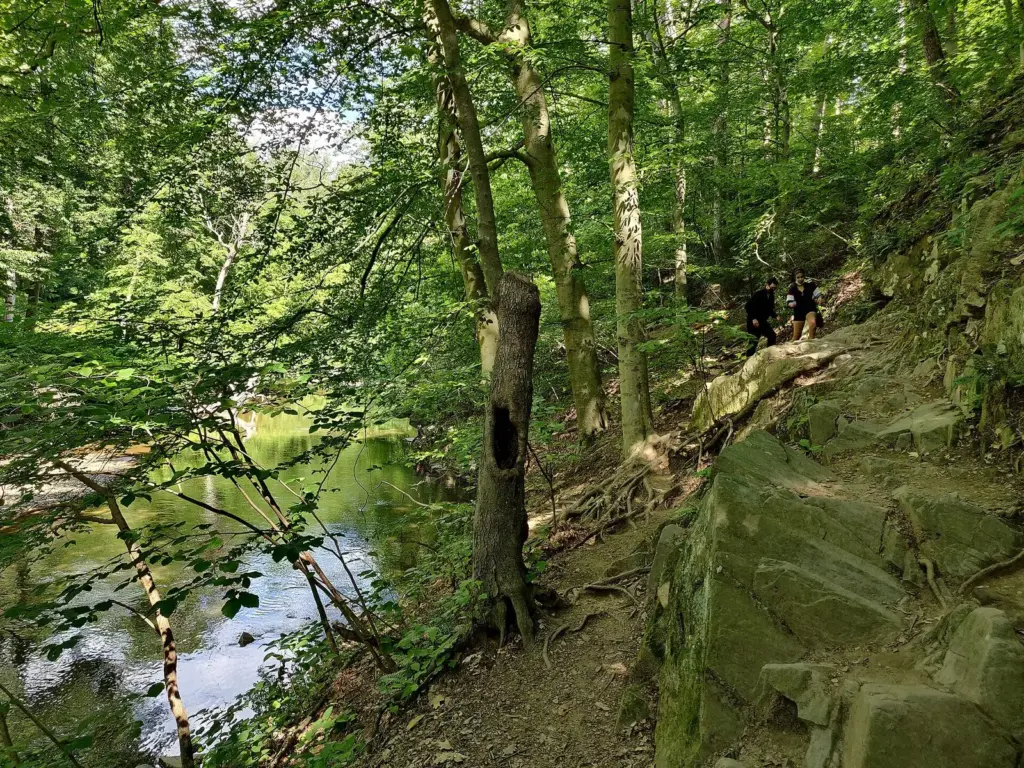
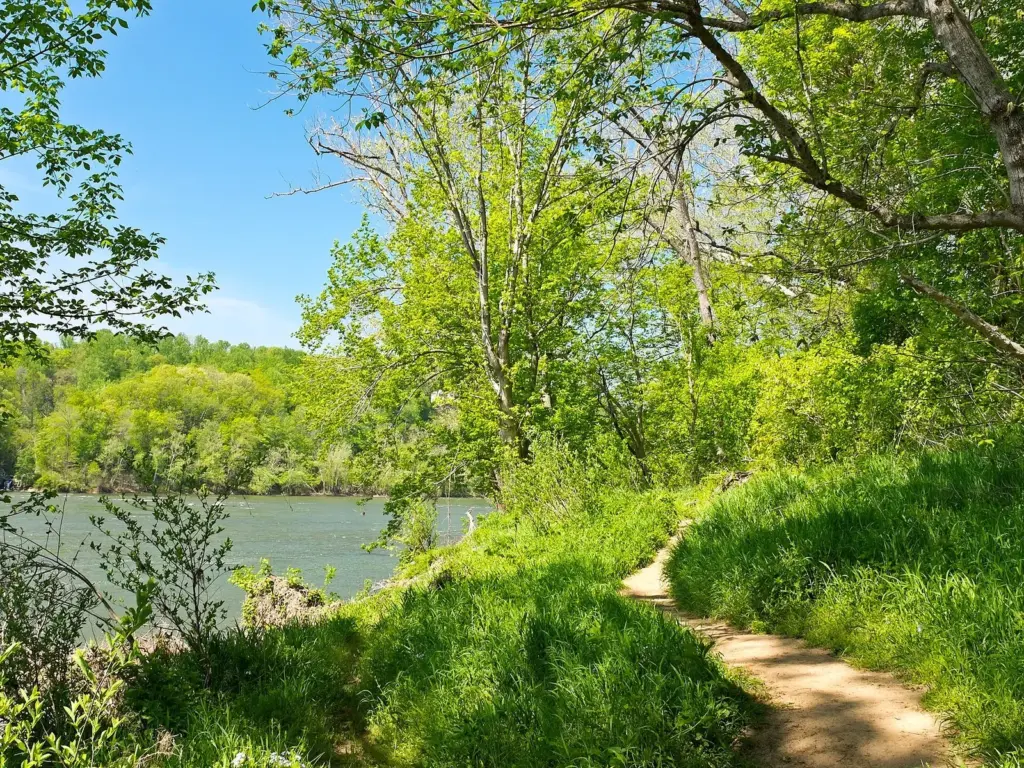
Free; DC’s great wild park. Authorized in 1890, Rock Creek Park runs as a wooded stream valley from the Maryland line nearly to the Potomac, with hiking trails on both ridges, a paved bike route along the creek, picnic groves and historic sites including Peirce Mill. Upper Beach Drive, about 5 miles through the park’s northern section, is now closed to cars full-time, year-round, which makes it one of the best places in the city to walk, run or ride. The Nature Center has the only planetarium in the National Park System, with free tickets handed out 30 minutes before shows. Look for Boulder Bridge, a stone bridge built to look as if it grew out of the creek, and in fall, for the foliage along the valley, which is some of the best in the city. Peirce Mill, a restored 1820s gristmill at the park’s southern end, normally opens on weekends, though a broken pump stopped its grinding; check before you go.
Plan it: free; the park is open daily. Metro stations on its edges include Cleveland Park, Van Ness-UDC and Woodley Park (Red line), but the best access is by bike or car. Allow half a day. Best for: hikers, cyclists, families, anyone who needs trees.
2. U.S. National Arboretum
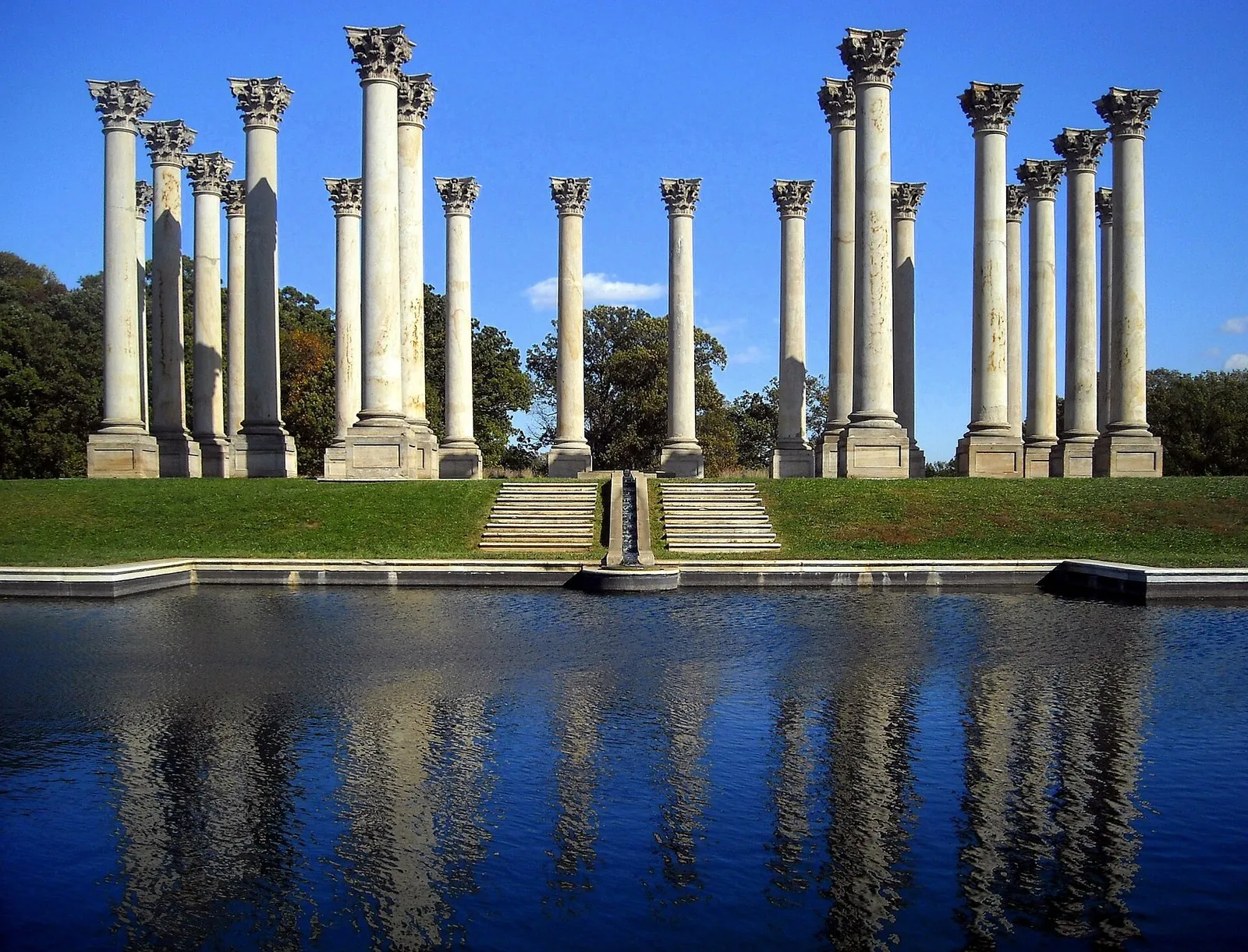
Free; the best garden in the city. The Arboretum’s 446 acres in Northeast DC hold collections from azaleas and dogwoods to conifers, herbs and a grove of state trees, plus the National Bonsai and Penjing Museum. Its most photographed sight is the National Capitol Columns, 22 sandstone columns that held up the Capitol’s East Portico until 1958, now standing in a meadow above a reflecting pool. Late April, when thousands of azaleas bloom, is its peak.
Plan it: 8am to 5pm daily, last entry 4:30pm, closed December 25; the bonsai museum is open roughly 10am to 4pm; free (as of September 2026). Enter at 2400 R St NE. Metro: Stadium-Armory (Blue, Orange, Silver lines), then Metrobus C41; free parking inside. Allow 2 to 3 hours. Best for: garden lovers, photographers, drivers.
3. U.S. Botanic Garden
Free; the best rainy-day park. At the foot of the Capitol, the Conservatory’s glass rooms hold a jungle, a desert, orchids and medicinal plants, and outside are the National Garden and Bartholdi Park, with its big 19th-century fountain. It’s one of the oldest botanic gardens in the country, and the 2026 exhibition is America’s State Flowers.
Plan it: Conservatory 10am to 5pm; the National Garden 7:30am to 5pm (until 7pm from April 1 to September 15); Bartholdi Park dawn to dusk; closed December 25; free (as of September 2026). Metro: Federal Center SW, about 5 minutes’ walk. Allow 1 hour. Best for: families, cold or wet days.
4. Theodore Roosevelt Island
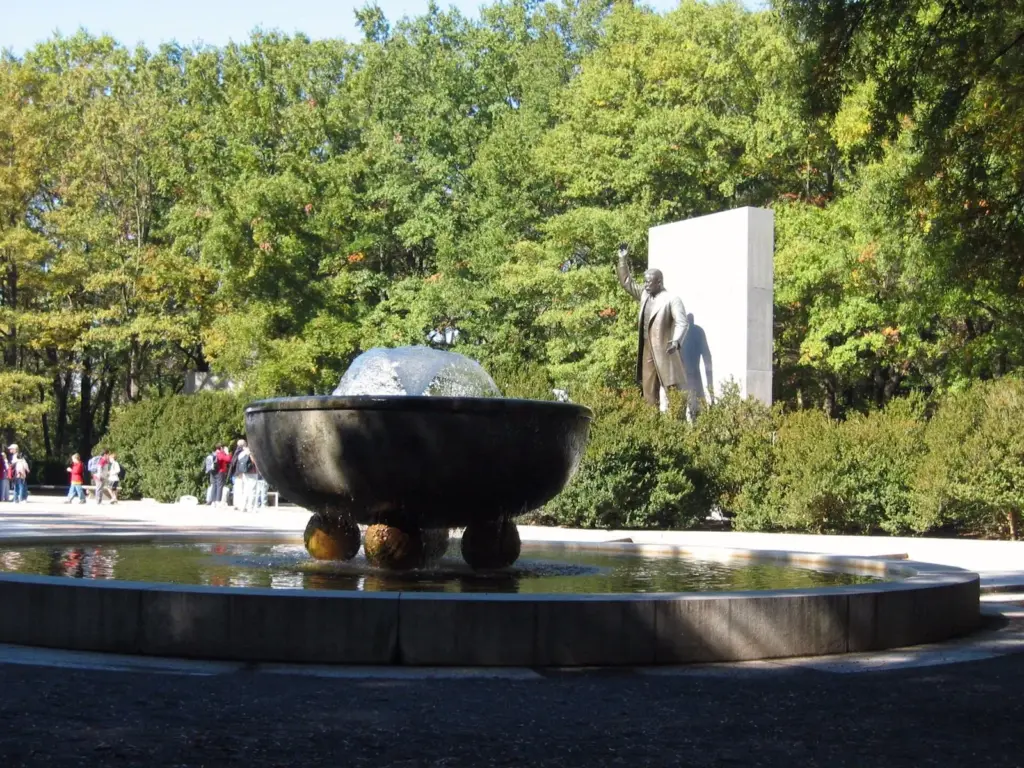
Free; the easiest escape. An 88-acre wooded island in the Potomac, reached by footbridge from the Virginia shore, with a couple of miles of trails through forest and marsh and, at its center, a plaza with a 17-foot statue of Roosevelt, fountains and granite tablets carved with his words. It’s a fitting memorial to the conservationist president, and it feels far from the city even though the Kennedy Center and Georgetown are across the water.
Plan it: free. Walk about 15 minutes from Rosslyn station (Blue, Orange, Silver lines) via the Mount Vernon Trail, or drive to the small lot off the northbound George Washington Memorial Parkway, which has had construction closures, so check first. The island’s restrooms close from about October to April. Allow 1 to 1.5 hours. Best for: walkers, birders, families.
5. Kenilworth Park and Aquatic Gardens
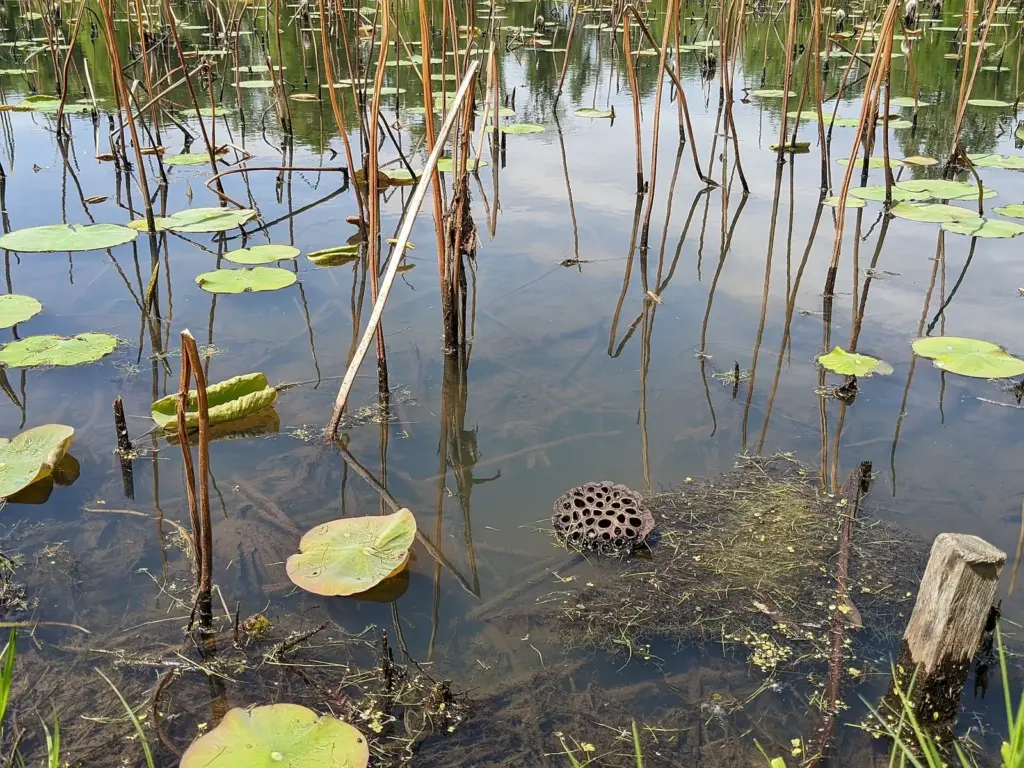
Free; a summer secret. The only national park site devoted to aquatic plants, Kenilworth’s ponds fill with lotus and water lilies in summer, and a boardwalk leads out through the tidal marsh of the Anacostia River. The lotus usually peaks in July, when the park holds its Lotus and Water Lily Festival. Get there early: the flowers open in the morning and close in the midday heat.
Plan it: opens 8am daily; free (as of September 2026). Metro: Deanwood (Orange line), about 15 minutes’ walk. Allow 1 to 2 hours. Best for: photographers, birders, summer mornings.
6. Great Falls Park (Virginia)
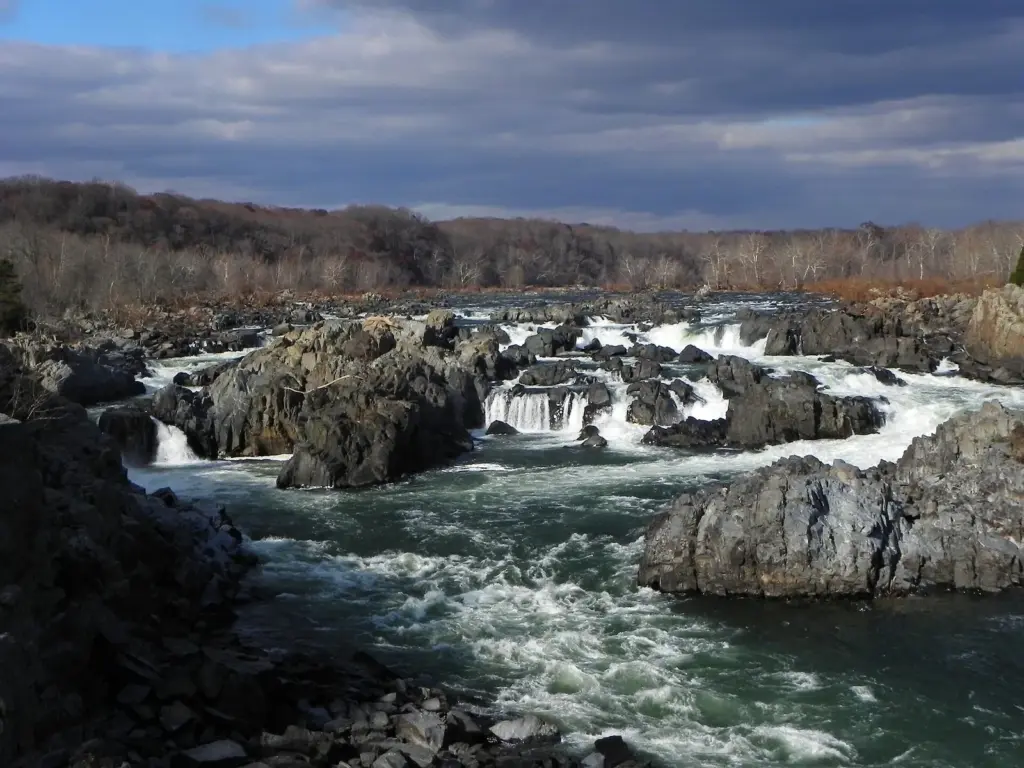
Entrance fee; the region’s most dramatic scenery. About 15 miles upstream from DC, the whole Potomac River crashes over a series of rocky ledges into narrow Mather Gorge. Three overlooks on the Virginia side give the classic views, and the River Trail follows the cliffs above the gorge. It’s the best nature half day near the city, and busy on weekends. Look, too, for the ruins of the Patowmack Canal, a skirting canal whose company George Washington led in the 1780s; its old locks are an easy walk from the visitor center.
Plan it: open 7am to dark; entrance fee per vehicle, which was $20 under the fee schedule set in 2020 (check the current rate on the park’s fee page). No public transit; about 30 minutes by car from downtown, and the lots fill by late morning on weekends. Allow 2 to 3 hours. Best for: hikers, photographers, drivers. For more escapes like this, see our guide to day trips from DC.
7. The C&O Canal at Great Falls and the Billy Goat Trail
Entrance fee at the tavern area. On the Maryland side, the Great Falls Tavern visitor center sits beside the C&O Canal, and the Olmsted Island boardwalk leads out over the rapids to a close-up view of the falls. The famous Billy Goat Trail Section A starts nearby: a strenuous route with rock scrambles and climbs along the cliffs of Mather Gorge, the most exciting hike in the area and not one to take lightly. Sections B and C are milder woodland walks.
Plan it: the C&O Canal park is free except the Great Falls Tavern area, which charges an entrance fee payable by card or contactless only, no cash (as of September 2026). About 30 minutes by car. Allow 3 to 4 hours for Section A and the towpath back. Best for: fit hikers, climbers; not young children.
8. The National Mall
Free, open 24 hours. The Mall is itself a national park, about 2 miles of lawns, tree-lined paths and reflecting pools from the Capitol to the Lincoln Memorial, and it’s one of the most visited parks in the country. Beyond the monuments, it’s a fine place for a picnic, a frisbee game or an evening walk. Park Service rangers are on duty at the memorials from 9:30am to 10pm daily. Our guide to Washington DC monuments covers the memorials in detail. For the greenest stretch, walk the elm-lined paths along the Mall’s edges rather than the open center, and finish at the Tidal Basin, where the loop around the water is about 2 miles.
Plan it: free, open 24 hours. Metro: Smithsonian or Federal Triangle (Blue, Orange, Silver lines). Allow as long as you like. Best for: first-timers, picnics, evening walks.
9. Constitution Gardens
Free. A quieter corner of the Mall between the Washington Monument and the Lincoln Memorial, with a pond, willow trees and a small island holding a memorial to the 56 signers of the Declaration of Independence. At its eastern edge stands the Lockkeeper’s House, a stone relic of the canal that once ran where Constitution Avenue is now. The pond’s shady willow-lined edges are one of the calmest places on the Mall to sit, and ducks and turtles are regulars.
Plan it: free, open 24 hours. Metro: Foggy Bottom-GWU or Federal Triangle. Allow 30 minutes. Best for: a quiet break from the monuments.
10. East Potomac Park and Hains Point
Free. The long peninsula south of the Tidal Basin is a local favorite for running, cycling and fishing, with a road loop along the water, a public golf course, tennis courts and a pool. In spring its Kwanzan cherries bloom about two weeks after the Tidal Basin’s trees. Hains Point, at the tip, looks across to the Anacostia and Alexandria. Ohio Drive, the road that loops the park, is a favorite with runners and cyclists, and on the Washington Channel side the views look across the water to the Wharf.
Plan it: free. No close Metro; walk or bike from L’Enfant Plaza or Smithsonian, 20 to 25 minutes. Allow 1 to 2 hours. Best for: runners, cyclists, anglers.
11. Meridian Hill Park
Free; check for closures. A formal Italian-style park on a hill above Adams Morgan, with a cascade of 13 basins, one of the longest cascading fountains in North America, and the city’s only equestrian statue of a woman, Joan of Arc. Its Sunday afternoon drum circle has been a neighborhood tradition for decades. The fountain has been off since 2019 during a long rehabilitation, and in 2026 much of the park closed for months of construction, so check its status before you go.
Plan it: free. Metro: Columbia Heights (Green line) or U Street, about 15 minutes’ walk. Allow 30 minutes to an hour. Best for: architecture fans, Sunday afternoons.
12. Anacostia Park
Free. A long riverside park on the east bank of the Anacostia, with fields, a roller-skating pavilion, fishing spots and the Anacostia Riverwalk Trail, which links it with Navy Yard, Kenilworth and beyond. It’s the park DC residents use rather than the one tourists see, and it shows a side of the city many visitors miss. Kingman and Heritage Islands, in the river near the park’s northern end, have short nature trails and good birding.
Plan it: free. Metro: Anacostia (Green line). Allow 1 to 2 hours. Best for: cyclists, families, locals-style afternoons.
13. Gravelly Point
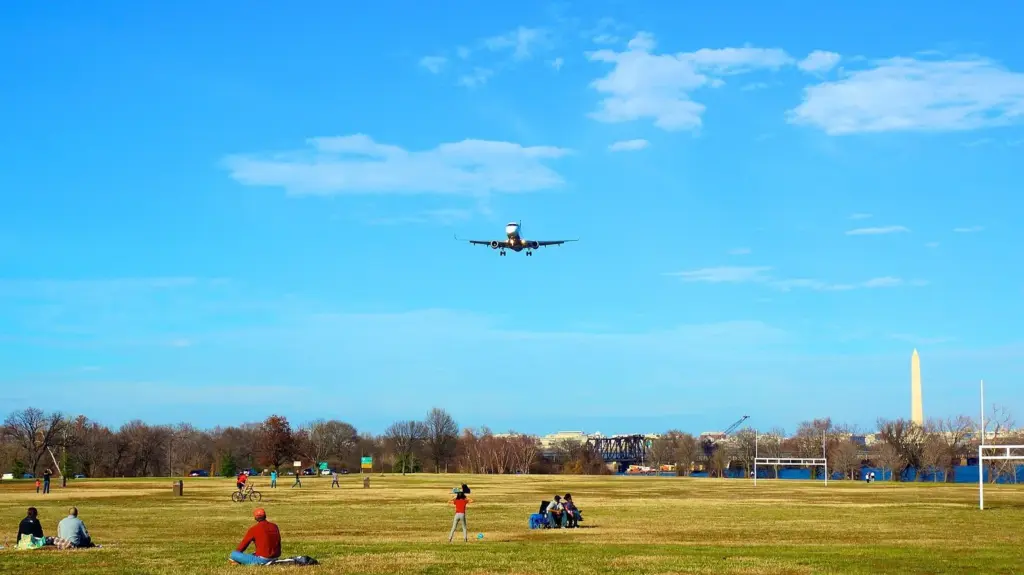
Free; the plane-spotter’s park. A grassy riverside park at the north end of Reagan National Airport’s main runway, where jets pass just overhead on approach or takeoff, every few minutes at busy times. Bring a blanket and watch the planes against the Washington Monument skyline. It’s loud, and that’s the point. The lawn is also used for picnics and pickup soccer, and because the Mount Vernon Trail runs right past it, it’s an easy stop on a bike ride.
Plan it: free. Reach it by bike or on foot along the Mount Vernon Trail, or by car from the northbound George Washington Memorial Parkway. Allow 30 minutes to an hour. Best for: kids, aviation fans, cyclists.
14. Glover-Archbold Park
Free. A narrow wooded valley that runs north from the Potomac near Georgetown for several miles, with a single long trail under tall trees. It’s where locals go for a quiet woodland walk without leaving the city, and it links with the C&O Canal towpath at its southern end. In spring the valley floor fills with wildflowers under the beeches and tulip trees.
Plan it: free. Enter from Reservoir Road or other cross streets in upper Northwest; no close Metro. Allow 1 to 2 hours. Best for: hikers, runners, dog walkers.
15. The Fort Circle Parks
Free. During the Civil War, Washington was ringed with dozens of earthwork forts, and several survive as wooded parks, especially in Southeast DC, where a hiking trail links Fort Dupont, Fort Davis and others. Fort Stevens, in Northwest, is where Lincoln came under fire in 1864. They’re quiet, historic and almost unknown to visitors.
Plan it: free; Fort Stevens is open sunrise to sunset. Best reached by car or bus. Allow 1 to 2 hours. Best for: history buffs, hikers.
Georgetown’s riverside park and the C&O Canal towpath there are two of the city’s best outdoor spaces too; our Georgetown DC guide covers both, along with Montrose Park and Dumbarton Oaks’ gardens.
Where to go for each outdoor activity
| Activity | Best places |
|---|---|
| Easy walks | Theodore Roosevelt Island, the Arboretum, Constitution Gardens, the Tidal Basin loop |
| Serious hiking | Billy Goat Trail Section A, Great Falls’ River Trail, Rock Creek’s ridge trails |
| Cycling | The Mount Vernon Trail, the Capital Crescent Trail, car-free Upper Beach Drive |
| Paddling | The Potomac from Key Bridge and Thompson Boat Center; pedal boats on the Tidal Basin |
| Gardens | The Arboretum, the Botanic Garden, Kenilworth, Dumbarton Oaks |
| Plane-spotting | Gravelly Point |
| Picnics | The Mall, East Potomac Park, Rock Creek’s picnic groves |
| Birding | Kenilworth’s marsh, Roosevelt Island, the Arboretum |
| Rainy days | The Botanic Garden’s Conservatory |
The best gardens in Washington DC
DC’s gardens range from the national collections to private estates, and together they make a strong case for a garden-focused trip.
- U.S. National Arboretum: the biggest, with azaleas, the Capitol Columns and bonsai; free.
- U.S. Botanic Garden: the Conservatory, National Garden and Bartholdi Park at the Capitol; free.
- Kenilworth Aquatic Gardens: lotus and water lilies, best in July; free.
- Dumbarton Oaks: terraced estate gardens in Georgetown; $15 with a timed ticket in the 2026 season, free in winter.
- Hillwood Estate: formal and Japanese gardens around a mansion museum; suggested donation.
- The National Gallery of Art Sculpture Garden: modern sculpture around a fountain on the Mall; free.
- The Hirshhorn Sculpture Garden: reopening Saturday, October 31, 2026, after a redesign by the artist Hiroshi Sugimoto; free.
- The Franciscan Monastery: rose gardens and Holy Land shrines in Brookland; free.
Hiking in and near DC
You don’t have to leave the city to hike. Rock Creek Park’s Western Ridge and Valley trails make a loop of several miles through deep woods, and the Glover-Archbold Trail and the trails on Theodore Roosevelt Island are easy, shaded walks. The Fort Circle trail in Southeast strings together Civil War forts.
Just outside the city, the Billy Goat Trail’s Section A at Great Falls is the classic challenge, with boulder scrambles above the gorge; Sections B and C are easier. The Virginia side of Great Falls has the River Trail along the cliffs. For mountain hiking, Shenandoah National Park’s northern entrance is about 70 miles away, and entrance was $30 per vehicle for seven days in September 2026.
| Hike | Where | Difficulty | Why go |
|---|---|---|---|
| Rock Creek Valley and Western Ridge trails | Rock Creek Park, DC | Easy to moderate | Deep woods inside the city |
| Theodore Roosevelt Island trails | Potomac River, off the Virginia shore | Easy | Forest, marsh and the memorial |
| Glover-Archbold Trail | Upper Northwest DC | Easy | A quiet stream valley |
| Billy Goat Trail Section A | C&O Canal, Great Falls, Maryland | Strenuous, with rock scrambles | The area’s most exciting hike |
| River Trail | Great Falls Park, Virginia | Moderate | Cliff-top views of Mather Gorge |
| Fort Circle trail | Southeast DC | Easy to moderate | Civil War earthworks in the woods |
Biking in DC
Washington is one of the best cities in the country for recreational cycling, with long, mostly flat trails along its rivers and valleys. Capital Bikeshare makes it easy: a classic bike cost a $1 unlock plus 15 cents a minute, or $10 for a day pass with unlimited 45-minute classic rides, as of September 2026.
- The Mount Vernon Trail: a paved path along the Virginia bank of the Potomac from Theodore Roosevelt Island past Reagan National Airport and Gravelly Point to Old Town Alexandria and on to Mount Vernon, about 18 miles.
- The Capital Crescent Trail: a paved rail trail of about 7 miles from Georgetown to Bethesda, Maryland, gently uphill all the way out.
- The C&O Canal towpath: a flat, unpaved path from Georgetown all the way to Cumberland, Maryland, 184.5 miles, with Great Falls about 14 miles out.
- Rock Creek: the Rock Creek trail and car-free Upper Beach Drive through the park.
- The Anacostia Riverwalk Trail: along both banks of the Anacostia, linking Navy Yard, Anacostia Park and Kenilworth.
- The National Mall and East Potomac Park: easy loops past the monuments and around Hains Point.
Kayaking and paddling
The Potomac is one of the best ways to see DC. Boathouses at Key Bridge and at Thompson Boat Center, at the mouth of Rock Creek, rent kayaks and paddleboards for trips along the Georgetown waterfront and around Theodore Roosevelt Island, and pedal boats go out on the Tidal Basin. In September 2026, a single kayak or paddleboard cost $22 on weekdays and $24 on weekends, and a pedal boat $38 and $40. The Key Bridge Boathouse opened noon to 6pm on weekdays and 9am to 6pm on weekends; Thompson opened daily from 6am, with last boats out at 5:45pm. The paddling season winds down in the fall, so check the boathouses’ sites for closing dates.
Stay away from the river above Chain Bridge unless you’re an expert with a guide: the stretch around Great Falls and Little Falls is extremely dangerous, and swimming or wading in the Potomac there kills people most years.
Three outdoor days in and around DC
A green day in the city. Start at Theodore Roosevelt Island early, walking from Rosslyn over the footbridge. Cross Key Bridge into Georgetown for lunch and a walk along the waterfront park and the canal towpath. In the afternoon, take a rideshare or bike up to Rock Creek Park for a woodland walk on car-free Beach Drive, or head to the Arboretum if it’s azalea season.
The Great Falls day. Drive to the Virginia side of Great Falls Park at opening, when the lots are empty and the light is good at the overlooks. Walk the River Trail above Mather Gorge. Then cross to the Maryland side for the Olmsted Island boardwalk and, if you’re fit, the Billy Goat Trail’s Section A, returning on the C&O Canal towpath. Pack lunch; food options in the park are limited.
The bike day. Rent a Capital Bikeshare bike near the Mall and ride across Arlington Memorial Bridge to the Mount Vernon Trail. Stop at Gravelly Point to watch the planes, carry on to Old Town Alexandria for lunch by the river, and ride back, or keep going south toward Mount Vernon if your legs allow. The trail is flat, paved and mostly separated from traffic.
Small parks for a break downtown
Between museums and meetings, the city’s small squares and circles are worth knowing. Franklin Square, near Planet Word, reopened after a major renovation with a restored fountain and a playground. Lafayette Square, facing the White House, is ringed with statues and history. Dupont Circle’s fountain is a classic people-watching spot, and Farragut Square fills with office workers at lunch. By the rivers, Georgetown’s waterfront park and the Yards Park at Navy Yard are the best places to sit by the water, and the National Gallery of Art’s Sculpture Garden on the Mall has shaded benches around its fountain.
Wildlife in DC’s parks
For a capital city, Washington has a surprising amount of wildlife. White-tailed deer are common in Rock Creek Park, and foxes and owls live there too. Great blue herons and egrets fish the marshes at Kenilworth and around Roosevelt Island, turtles sun themselves on logs in the Potomac’s backwaters, and bald eagles have nested at the National Arboretum in recent years. Early mornings are best for sightings, and binoculars make a real difference at Kenilworth.
Accessibility
The easiest parks for wheelchair users and strollers are the National Mall, with its wide, mostly paved paths; the Botanic Garden; the Arboretum, where you can drive between collections and park at each; and Kenilworth, with its boardwalks. Roosevelt Island has a footbridge and wide dirt and gravel trails that are manageable in dry weather. The rougher trails, Rock Creek’s ridges and anything on the Billy Goat Trail, aren’t suitable. Great Falls Park’s overlooks vary, so check with the park before you go if access is a concern.
Food, water and restrooms
The big natural parks have few places to buy food, so pack a picnic and more water than you think you’ll need, especially in summer. Restrooms can be seasonal: Roosevelt Island’s close from about October to April. The Mall has restrooms near the major memorials and inside the Smithsonian museums, which are free and make an easy break from the heat or the rain.
Map of DC’s parks
The map shows central Washington’s green spaces: Rock Creek Park running north through the upper left, Theodore Roosevelt Island in the Potomac at left, the National Mall and East Potomac Park in the center, and the Arboretum, Anacostia Park and Kenilworth to the east.
Pairing parks with sightseeing
Many parks sit right next to the sights, so you can fit green time into a sightseeing day without a detour. After the Lincoln Memorial, walk through Constitution Gardens and around the Tidal Basin. After the Capitol, step into the Botanic Garden and Bartholdi Park at the foot of the Hill. After a morning in Georgetown, cross Key Bridge and walk to Theodore Roosevelt Island. The National Zoo sits in the Rock Creek valley, so a zoo morning can turn into a creekside walk in the afternoon. After Frederick Douglass’s house in Anacostia, Anacostia Park is a short ride away, and after Old Town Alexandria, the Mount Vernon Trail runs along the river right from the waterfront.
Trail etiquette for walkers and cyclists
DC’s trails are busy, especially on weekends, and a few habits keep everyone happy. On shared paths, keep right and pass on the left, and call out “on your left” or ring a bell before you pass. Cyclists yield to walkers. Ride at a sensible speed on e-bikes, since the Mount Vernon Trail and the Capital Crescent Trail are crowded on sunny weekends. Don’t block the trail when you stop, keep dogs on short leashes, and leave space at the narrow bridges and boardwalks. When you’re done with a Capital Bikeshare bike, dock it properly and check that the light shows it’s locked, or the clock keeps running.
DC parks by season
Spring is the showpiece: cherry blossoms around the Tidal Basin and in East Potomac Park from late March, and azaleas at the Arboretum in late April. It’s also the busiest season everywhere.
Summer is hot and humid. Go early: lotus at Kenilworth in July, paddling on the Potomac, and shaded trails in Rock Creek Park. Save exposed places like the Mall for the evening.
Fall may be the best season for the parks. Rock Creek Park, Theodore Roosevelt Island and Great Falls turn gold and red, usually from mid-October into November, and the weather is ideal for hiking and cycling.
Winter is quiet. The Botanic Garden’s Conservatory is the warmest place in town, and the National Gallery’s Sculpture Garden has hosted an ice rink in past winters; check the Gallery’s site for the 2026-27 season. Snow turns Rock Creek Park into a different world, though the Park Service closes some roads and facilities in bad weather.
Picnics, grills and dogs
Picnics: the Mall, Constitution Gardens, East Potomac Park, the Arboretum’s grounds and Rock Creek Park’s picnic groves are all good spots. Some of Rock Creek Park’s groves can be reserved for groups, and grilling is allowed only in designated picnic areas, so check the park’s rules before you bring charcoal. Glass bottles and alcohol rules vary by park, so check before a party.
Dogs: leashed dogs are welcome on most National Park Service trails around DC, including Rock Creek Park and Theodore Roosevelt Island, but not everywhere: dogs aren’t allowed on the Billy Goat Trail’s Section A, for example. The city’s Department of Parks and Recreation runs fenced dog parks in several neighborhoods, and Congressional Cemetery runs a well-known membership program for dog walkers. Bring water in summer, and clean up after your dog.
Parks with kids
The best parks for children are the ones with a payoff: planes roaring overhead at Gravelly Point, the Botanic Garden’s jungle room, the planetarium at Rock Creek Park’s Nature Center, the boardwalk into the marsh at Kenilworth, and the footbridge and island at Roosevelt Island. The Mall itself is a giant playground of lawns between museums. Our guide to things to do in DC with kids covers the city’s playgrounds, carousels and family activities in more detail.
Safety and etiquette in the parks
- Respect the river. Don’t swim or wade in the Potomac, especially around Great Falls; the currents are deadly.
- Know the Billy Goat Trail. Section A involves real climbing. Bring water, wear proper shoes, start early, and don’t attempt it in rain or with small children.
- Watch for ticks. They’re common in the woods from spring to fall; stay on trails and check yourself afterward.
- Beat the heat. In summer, hike early and carry more water than you think you’ll need.
- Go with company after dark. The Mall is busy and lit in the evenings, but the wooded parks are best enjoyed in daylight.
- Leave no trace. Pack out what you bring, and don’t pick plants or flowers, including the cherry blossoms.
What to skip
Skip Great Falls on a spring or fall weekend afternoon unless you’re prepared to wait for parking; go at opening or on a weekday.
Skip Meridian Hill Park until you’ve confirmed it’s open; construction has closed much of it.
Skip Kenilworth at midday in July. The lotus flowers close up in the afternoon heat, so arrive by 8am.
Don’t try the Billy Goat Trail’s Section A as a casual stroll. Choose Section C if you want a gentle walk with river views.
Parks in Washington DC FAQ
What is the biggest park in Washington DC?
Rock Creek Park, at 1,754 acres, is the largest single park in the city and more than twice the size of New York’s Central Park. It runs from the Maryland line nearly to the Potomac, with trails, a car-free section of Beach Drive, picnic areas, a nature center and historic sites.
What are the best parks in DC for walking?
Theodore Roosevelt Island for an easy, shaded loop; Rock Creek Park for longer woodland hikes; the National Mall and Constitution Gardens for a monument stroll; Glover-Archbold Park for a quiet valley trail; and the U.S. National Arboretum for gardens. Upper Beach Drive in Rock Creek Park is closed to cars full-time.
Are DC’s parks free?
Almost all of them. Rock Creek Park, the National Mall, the Arboretum, the Botanic Garden, Roosevelt Island, Kenilworth and Anacostia Park are free. Great Falls Park in Virginia and the Great Falls Tavern area of the C&O Canal in Maryland charge entrance fees, and a few private gardens, such as Dumbarton Oaks in season, charge admission.
Where can you watch planes land in DC?
Gravelly Point, a free riverside park at the end of Reagan National Airport’s runway in Arlington, is the classic spot: jets pass just overhead every few minutes at busy times, with the Washington Monument in the background. Reach it by bike or on foot on the Mount Vernon Trail, or by car from the northbound George Washington Memorial Parkway.
Which DC parks allow dogs?
Leashed dogs are allowed on most National Park Service trails, including Rock Creek Park and Theodore Roosevelt Island, but not on the Billy Goat Trail’s Section A. DC’s Department of Parks and Recreation runs fenced dog parks in several neighborhoods, and Congressional Cemetery has a membership program for dog walkers.
What are the best gardens in Washington DC?
The U.S. National Arboretum for scale, azaleas and the Capitol Columns; the U.S. Botanic Garden for its Conservatory; Kenilworth Aquatic Gardens for lotus in July; and Dumbarton Oaks in Georgetown for terraced estate gardens. The Arboretum, Botanic Garden and Kenilworth are free.
Is Great Falls worth visiting from DC?
Yes. It’s the most dramatic natural scenery near Washington, where the Potomac crashes through Mather Gorge about 15 miles upstream. The Virginia side has overlooks and cliff-top trails; the Maryland side has the Olmsted Island boardwalk and the Billy Goat Trail. You’ll need a car, and both sides charge entrance fees.
Can you kayak in DC?
Yes. The Key Bridge Boathouse and Thompson Boat Center in Georgetown rent kayaks and paddleboards for the Potomac, and pedal boats go out on the Tidal Basin. In September 2026 a single kayak cost $22 on weekdays and $24 on weekends. The season winds down in the fall, so check dates before you go.
Related Washington DC Guides
- Washington DC Monuments: the memorials on the Mall and around the Tidal Basin.
- Things to Do in DC with Kids: playgrounds, carousels and family days out.
- Day Trips from DC: Shenandoah, Harpers Ferry and more escapes.
- Georgetown DC: the waterfront park, the C&O Canal and Dumbarton Oaks.
Sources and How We Checked
We checked hours, fees and conditions on this page on September 24, 2026 against the official websites below, and compiled the page from them. We don’t claim first-hand visits.
- National Park Service: Rock Creek Park
- U.S. National Arboretum
- U.S. Botanic Garden
- National Park Service: Theodore Roosevelt Island
- National Park Service: Kenilworth Park and Aquatic Gardens
- National Park Service: C&O Canal fees
We also checked Great Falls Park, Meridian Hill Park, the National Mall and Memorial Parks, Shenandoah National Park’s fee page, Capital Bikeshare, Adventures Unbound’s boathouses and reporting on Meridian Hill Park’s 2026 construction.
Washington DC Tourism Guide is an independent publication. We are not affiliated with Destination DC, the National Park Service or any attraction listed here, and no one paid to be included.
Photo Credits
- National Capitol Columns, U.S. National Arboretum: photo by APK, via Wikimedia Commons (CC BY-SA 3.0)
- Rock Creek Park trail: photo by Sdkb, via Wikimedia Commons (CC BY-SA 4.0)
- Theodore Roosevelt Island memorial: photo by Unknown photographer, via Wikimedia Commons (Public domain)
- Kenilworth Aquatic Gardens: photo by bobistraveling, via Wikimedia Commons (CC BY 2.0)
- Great Falls of the Potomac: photo by National Park Service, via Wikimedia Commons (Public domain)
- Billy Goat Trail: photo by Bonnachoven, via Wikimedia Commons (CC0)
- Gravelly Point: photo by Ted Eytan, via Wikimedia Commons (CC BY-SA 3.0)