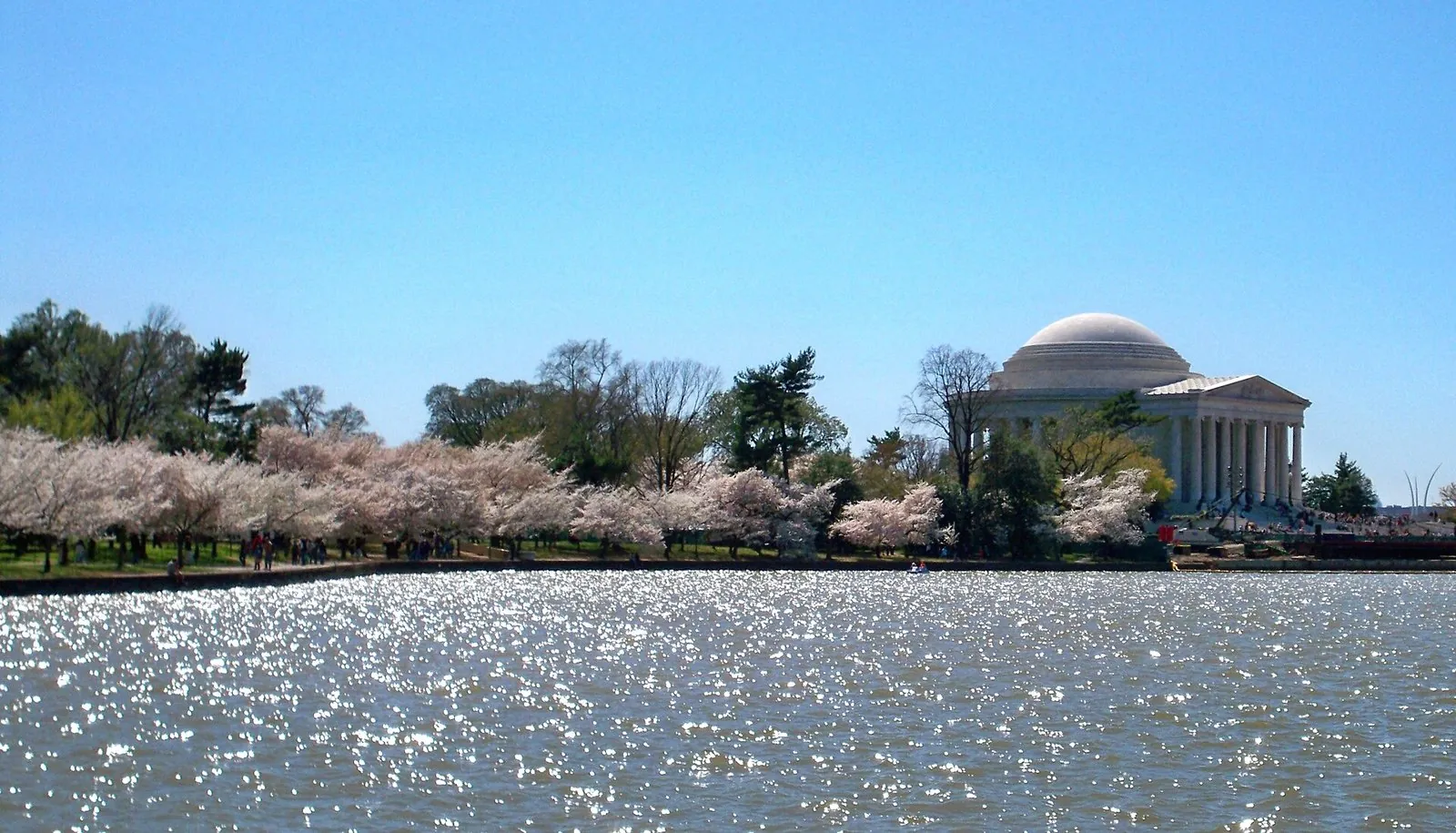
Washington’s two most comfortable seasons are short, and neither is the one on the postcards. The cherry blossoms bring the city’s biggest crowds and highest hotel prices in late March and early April, often with a cold snap thrown in. The weeks that feel best on foot, when the average high sits around 70°F and the school buses thin out, tend to come in May and from mid-September into early November. So the best time to visit Washington DC depends on what you’re trading: blossoms against crowds, low prices against cold, summer events against summer heat. This guide lays out those trades month by month, using the National Weather Service’s climate normals for the city.
Quick answer: The best time to visit Washington DC is mid-September through early November, with late April through early June a close second: mild weather, a full calendar and fewer crowds than cherry blossom season. For the blossoms, come in the last week of March or the first week of April and book early. For the lowest prices, come in January or February. July and August are the hardest months, hot and humid, but the museums are air-conditioned and free.
Last updated September 24, 2026. Weather figures are the National Weather Service’s 1991-2020 normals for Reagan National Airport; event dates and closures were checked that day against the organizers’ and agencies’ own websites.
- Warmest month: July, with an average high of 89.6°F and the most rain (4.33 inches).
- Coldest month: January, with an average high of 44.8°F and low of 30.1°F. February is the snowiest, at 5.0 inches on average.
- Cherry blossoms: the 2027 festival runs March 20 to April 11; peak bloom usually lands between the last week of March and the first week of April and is forecast in late winter.
- Fall color: usually peaks in the city in late October and early November.
- Cheapest: January and February, plus late-summer and weekend stays downtown.
On this page: Month by month at a glance | Fall 2026 | The months, ranked | By season | By type of trip | By experience | Holidays | Seasonal hours | Packing | Crowds | Prices | Weather and timing risks | Best time of day | FAQ
Washington DC Month by Month at a Glance
Temperatures and rainfall are 1991-2020 averages from the National Weather Service’s Reagan National station. Crowd and price ratings are relative, for the city center.
| Month | Avg high / low (°F) | Rain (in) | Crowds | Hotel prices | Highlights |
|---|---|---|---|---|---|
| January | 44.8 / 30.1 | 2.86 | Low | Lowest | MLK Day, Restaurant Week |
| February | 48.3 / 31.8 | 2.62 | Low | Low | Lunar New Year, Presidents’ Day |
| March | 56.5 / 38.6 | 3.50 | Rising, very high late | High late | Cherry Blossom Festival begins |
| April | 68.0 / 48.4 | 3.21 | Very high | Highest early | Blossoms, parade, school groups |
| May | 76.5 / 58.0 | 3.94 | High | High | Passport DC, Memorial Day |
| June | 85.1 / 67.5 | 4.20 | High | Medium-high | Pride, Folklife Festival |
| July | 89.6 / 72.4 | 4.33 | High | Medium | July 4, lotus bloom |
| August | 87.8 / 71.0 | 3.25 | Medium | Low-medium | Congress recess, Restaurant Week |
| September | 80.7 / 64.1 | 3.93 | Medium | Medium-high | Quieter after Labor Day |
| October | 69.4 / 52.2 | 3.66 | Medium-high | High (weekdays) | Best weather, marathon |
| November | 58.2 / 41.6 | 2.91 | Medium | Medium | Fall color, Veterans Day, holidays begin |
| December | 48.8 / 34.5 | 3.41 | Low-medium | Low-medium | National Christmas Tree, ZooLights |
Two things jump out. The rain is spread evenly through the year, so no month is a washout, and summer rain mostly arrives as short, heavy thunderstorms rather than all-day drizzle. And the jump from April’s average high of 68°F to June’s 85°F is fast: late May can feel like summer. For the events behind each month’s highlights, see our month-by-month guide to events in Washington DC.
Is Now a Good Time to Visit Washington DC? Fall 2026 at a Glance
Yes: late September through early November is the city’s best stretch, and 2026 adds a few reasons to come. Here’s what’s specific to this fall, as of September 24, 2026.
- New openings. The Air and Space Museum opens its At Home in Space gallery on October 30 and its last renovated gallery, Modern Military Aviation, on November 11, completing a renovation that ran for years. The Hirshhorn’s redesigned Sculpture Garden reopens with a free weekend on October 31 and November 1.
- Race day. The Marine Corps Marathon closes roads across central DC and Arlington on the morning of Sunday, October 25.
- Monument maintenance days. The Washington Monument closes on October 5, November 4 and December 8 for maintenance.
- Higher sales tax. DC’s general sales tax rises from 6% to 7% on October 1, 2026; the 15.95% hotel tax is unchanged.
- Closed landmarks. The Kennedy Center’s main building is closed after its board’s September 15 vote, with its future in court, and the Old Post Office Tower has been closed since October 2025.
- The funding deadline. Federal funding runs through December 11, 2026. A shutdown after that date would close the Smithsonian museums and the zoo, so December visitors should watch the news.
- A last chance. The Holocaust Museum’s current permanent exhibition becomes unavailable to the public once construction of its replacement begins in January 2027.
The Best Months to Visit Washington DC, Ranked
This ranking weighs weather, crowds, prices and what’s on for a typical sightseeing trip. Each month’s own guide goes deeper; here’s the short version, best first.
1. October
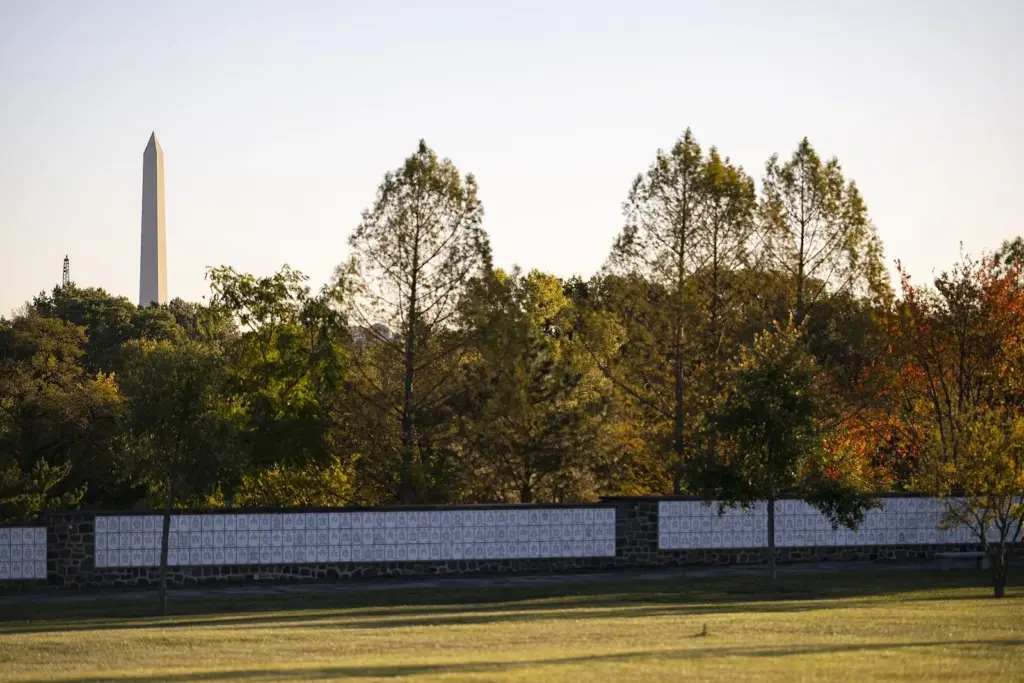
Best weather of the year. October’s average high of 69.4°F and low of 52.2°F are close to ideal for long days on foot, the humidity is gone, and the light is soft. Fall color starts to show late in the month. The calendar is full without being frantic: the Marine Corps Marathon takes over the roads on its race day (October 25 in 2026), Halloween brings the High Heel Race and costume crowds to Dupont Circle, and in 2026 the Air and Space Museum opens its At Home in Space gallery on October 30 and the Hirshhorn’s redesigned Sculpture Garden reopens with a free weekend on October 31 and November 1.
The downside is money. October is peak conference season, so weekday hotel rates downtown can be high; weekends are often the better deal. The Washington Monument closes for maintenance on October 5, 2026, so avoid that day if the elevator is on your list.
Plan it: Average 69.4°F / 52.2°F, 3.66 inches of rain. Crowds: medium to high. Hotels: book weekends downtown, or weekdays in Arlington. Best for: first-timers, couples, walkers, photographers.
2. May

Green, warm and full of events. May averages 76.5°F by day and 58°F at night, the trees are fully leafed out and the Arboretum’s azaleas are usually at their best in late April and early May. Passport DC opens embassy doors on Saturdays, the Marine Corps’ Friday Evening Parade and Tuesday Sunset Parade begin their summer seasons, and Memorial Day weekend (May 31 in 2027) brings the concert, the parade and the flags at Arlington.
The catch is company. May is the peak of school-trip season and graduation weekends, so museums are busy on weekday mornings and hotels fill for commencements. Start museum days at opening, and save the memorials for evening.
Plan it: Average 76.5°F / 58.0°F, 3.94 inches of rain. Crowds: high. Hotels: high, especially graduation weekends. Best for: first-timers, families, anyone who wants events and warmth.
3. September
Summer weather with fall crowds. Once Labor Day passes (September 6 in 2027), families head home and the city settles. The average high is still a warm 80.7°F, so early September feels like summer and late September like autumn. Hispanic Heritage Month starts on September 15, neighborhood street festivals fill the weekends, and the African American history museum marks its anniversary on September 24. It’s one of the easiest months to book museum passes and restaurant tables.
Humidity can linger into the middle of the month, and it’s the heart of hurricane season, which in DC usually means the remnants of storms bringing a day or two of heavy rain rather than direct hits. Keep a museum day in reserve.
Plan it: Average 80.7°F / 64.1°F, 3.93 inches of rain. Crowds: medium. Hotels: medium to high on weekdays. Best for: couples, museum lovers, travelers without school-age kids.
4. April
Blossoms and spring, at a price. April brings the tail of cherry blossom season (the National Cherry Blossom Parade is on April 10, 2027, and the festival ends April 11), comfortable days averaging 68°F and a city bursting with color. DC Emancipation Day on April 16 is a District holiday. If peak bloom falls in early April, this is the month for the Tidal Basin.
It’s also one of the busiest months of the year. Cherry blossom crowds overlap with spring break and the start of school-group season, hotel prices peak in the first half of the month, and the Tidal Basin’s paths are packed by mid-morning. Tree pollen is heavy too, which allergy sufferers will notice. Book early and go to the blossoms at sunrise.
Plan it: Average 68.0°F / 48.4°F, 3.21 inches of rain. Crowds: very high. Hotels: highest of the year in the first half. Best for: blossom seekers, photographers, anyone who books early.
5. November
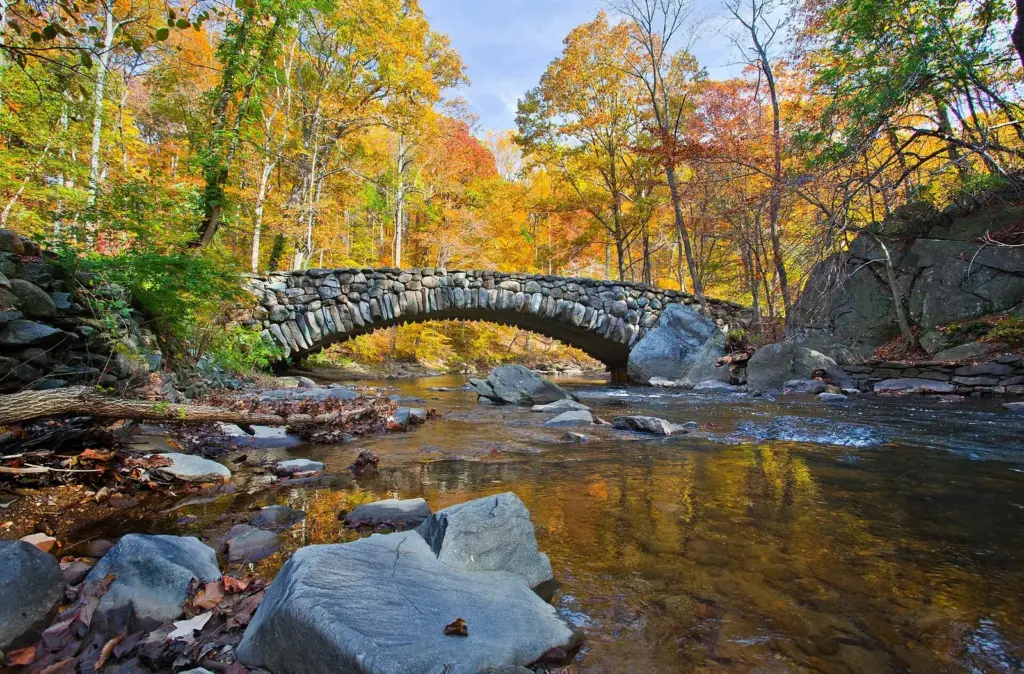
Fall color, then the holidays, with fewer people. In the city, leaf color usually peaks around Halloween and into early November, and Rock Creek Park, where the upper stretch of Beach Drive is now closed to cars year-round, is the best place to see it. Veterans Day on November 11 brings ceremonies at Arlington and the memorials, and in 2026 it’s also the day the Air and Space Museum opens its last renovated gallery. The DowntownDC Holiday Market opens on November 13, 2026, ZooLights and the ice rinks usually open late in the month, and Thanksgiving falls on November 26.
Days are short, with the average high dropping to 58.2°F, and Thanksgiving week is busy with families. The Washington Monument closes for maintenance on November 4, 2026.
Plan it: Average 58.2°F / 41.6°F, 2.91 inches of rain. Crowds: medium. Hotels: medium, higher around Thanksgiving. Best for: couples, fall-color seekers, budget-minded travelers.
6. June
Long days and big weekends. June averages 85.1°F, with long evenings that make after-dinner walks to the memorials a pleasure. Capital Pride fills a weekend, Juneteenth (June 19) brings programs at the African American history museum, and the Smithsonian Folklife Festival opens on the Mall late in the month. The Marine parades run every week.
Humidity builds as the month goes on, and school holidays bring families. Plan outdoor sightseeing for mornings and evenings, and move indoors in the afternoon.
Plan it: Average 85.1°F / 67.5°F, 4.20 inches of rain. Crowds: high. Hotels: medium to high, highest on Pride weekend. Best for: families, night owls, festival-goers.
7. March
A gamble on the weather and the trees. March is a swing month: the average high climbs from the upper 40s to the 60s over the month, and it averages 2.0 inches of snow. The National Cherry Blossom Festival opens on March 20, 2027, with the Blossom Kite Festival on March 27, and if the trees bloom early, late March can be spectacular. Peak bloom has come as early as March 15 (in 1990). If the White House Easter Egg Roll keeps its Easter Monday tradition, it falls on March 29 in 2027.
Spring break sends families and student groups to the city from mid-March, and hotel prices rise with them. Early March is quiet and cheap but often raw.
Plan it: Average 56.5°F / 38.6°F, 3.50 inches of rain, 2.0 inches of snow. Crowds: low early, very high late. Hotels: rising sharply late in the month. Best for: blossom chasers with flexible dates.
8. December
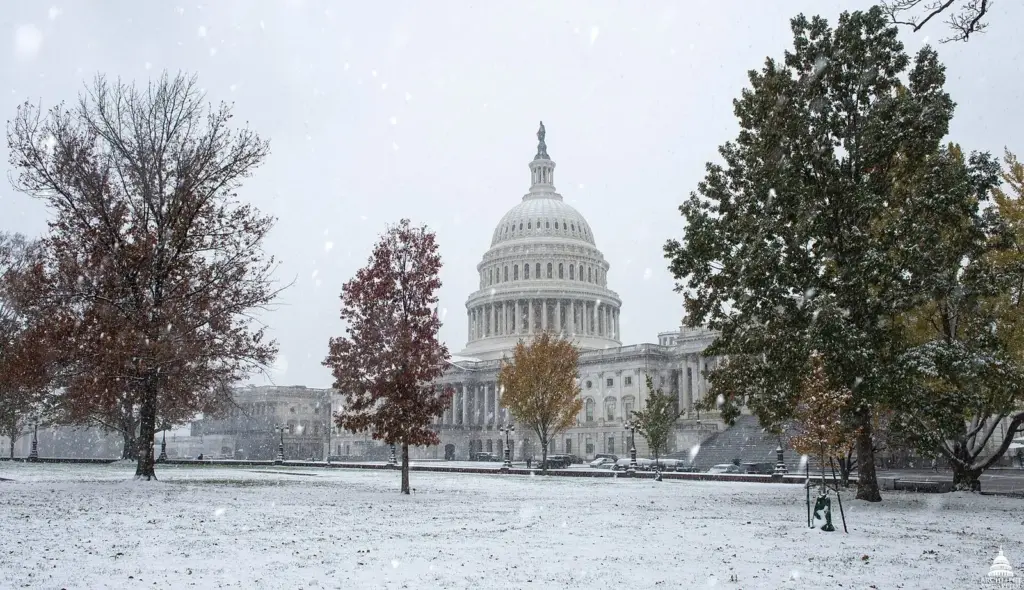
Festive and quiet until Christmas week. The National Christmas Tree on the Ellipse, ZooLights at the zoo, holiday lights and the DowntownDC Holiday Market (through December 23 in 2026) give the city a seasonal glow, and the first three weeks are among the least crowded of the year. Average highs are 48.8°F, with 1.7 inches of snow on average.
Two cautions for 2026. Federal funding runs through December 11; if Congress lets it lapse, the Smithsonian museums and the zoo close, as they did from October 12, 2025, during that year’s shutdown. And on December 25, the Smithsonian museums and the Washington Monument close; the monument also closes for maintenance on December 8, 2026. The Bureau of Engraving and Printing’s tours pause from December 24, 2026, to January 2, 2027.
Plan it: Average 48.8°F / 34.5°F, 3.41 inches of rain, 1.7 inches of snow. Crowds: low early, high between Christmas and New Year. Hotels: low to medium. Best for: holiday lovers, couples, budget travelers.
9. February
Cheap, quiet and the snowiest month. February averages 48.3°F by day and 31.8°F at night, with 5.0 inches of snow on average, the most of any month. In exchange, you’ll find some of the year’s lowest hotel prices and empty museum galleries. Lunar New Year falls on February 6 in 2027, with Chinatown’s parade usually soon after; Black History Month brings programs across the city; and Presidents’ Day is February 15, 2027. A snow day on the Mall, with the memorials under white, is something most visitors never see.
Plan it: Average 48.3°F / 31.8°F, 2.62 inches of rain, 5.0 inches of snow. Crowds: low. Hotels: low. Best for: museum lovers, budget travelers, winter photographers.
10. January
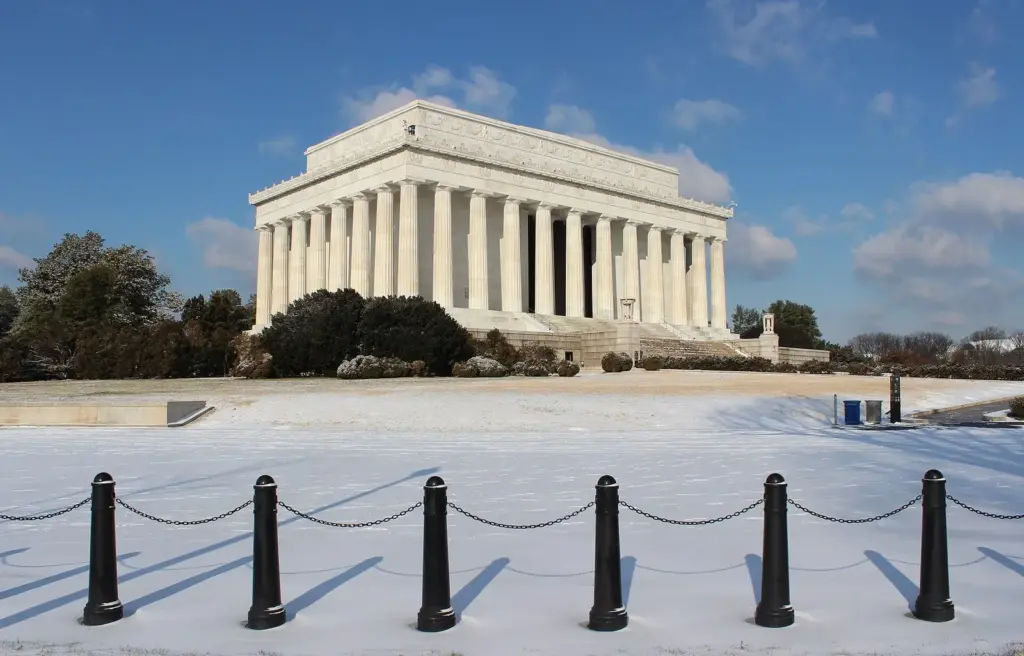
The coldest and cheapest month. January’s average high is 44.8°F and its low 30.1°F, with 4.9 inches of snow on average. Crowds are at their lowest outside inauguration years (the next is January 2029), and hotel rates follow. Martin Luther King Jr. Day (January 18 in 2027) brings programs across the city, and winter Restaurant Week usually runs this month.
One 2027 change to know: the U.S. Holocaust Memorial Museum’s current permanent exhibition becomes unavailable to the public once construction of a new one begins in January 2027, so if seeing it matters to you, go before then. Timed tickets are required for it all year.
Plan it: Average 44.8°F / 30.1°F, 2.86 inches of rain, 4.9 inches of snow. Crowds: lowest. Hotels: lowest. Best for: budget travelers, museum marathons, crowd-averse visitors.
11. August
Hot, sticky and surprisingly good value. August averages 87.8°F with thick humidity, and afternoon thunderstorms are common. But Congress is on recess, business travel slows, and the city feels emptier than in any other warm month. Hotel deals are easier to find, summer Restaurant Week usually runs this month, and the last Marine parades and summer Fridays of Jazz in the Garden round out the season. Do the memorials at dawn or after dark, and spend afternoons in the museums.
Plan it: Average 87.8°F / 71.0°F, 3.25 inches of rain. Crowds: medium. Hotels: low to medium. Best for: budget travelers who don’t mind heat, museum days, night owls.
12. July

The hottest, wettest month, with the biggest party. July’s average high of 89.6°F and its 4.33 inches of rain make it the toughest month for sightseeing on foot. The Mall has little shade, and a midday walk from the Lincoln Memorial to the Capitol is an ordeal. But July 4 is DC’s biggest single day, with the parade, the concert on the Capitol’s West Lawn and the fireworks over the Reflecting Pool, and the Folklife Festival runs into early July. The lotus bloom peaks at Kenilworth Aquatic Gardens, and the Wharf’s free Friday concerts run all summer. The Washington Monument closes on July 4.
Plan it: Average 89.6°F / 72.4°F, 4.33 inches of rain. Crowds: high, especially around July 4. Hotels: medium, high for the holiday. Best for: July 4 fans, families on school break, museum-heavy trips.
Washington DC by Season
Spring (March to May)
The most popular season and the most crowded. Cherry blossoms around the Tidal Basin, azaleas at the Arboretum and dogwoods across the city make it the prettiest time of year, and the weather warms from March’s unpredictable 56°F average high to May’s 76°F. It’s also school-trip season, so museums are busiest on weekday mornings from March to early June. Our cherry blossom guide covers bloom timing in detail.
Summer (June to August)
Hot and humid, with average highs of 85 to 90°F and frequent afternoon thunderstorms. In return: long evenings, July 4, Pride, the Folklife Festival, the Marine parades, free outdoor concerts and a city full of families. The free, air-conditioned Smithsonian museums are the summer visitor’s best friend, and August’s congressional recess brings lower hotel prices.
Fall (September to November)
The best season overall. September keeps summer’s warmth with fewer crowds, October has the best weather of the year, and November brings fall color and the start of the holidays. Weekday hotel prices can be high during conference season, but the walking weather makes up for it.
Winter (December to February)
Cold, quiet and cheap. Average highs run from about 45 to 49°F, and the city gets about 13.7 inches of snow a year, most of it from December to February. Snow is rarely deep for long, but even a few inches can disrupt roads and close federal offices. The holidays bring the National Christmas Tree, ZooLights and markets, and January and February offer the emptiest museums of the year.
The Best Time to Visit Washington DC for Your Kind of Trip
First-time visitors
Mid-September to early November, or May. You get comfortable walking weather for the memorials, the museums at full operation and a good selection of events, without cherry blossom crowds or summer heat.
Families with kids
Summer is when most families can travel, and it works if you plan around the heat: memorials early, museums in the afternoon, the zoo at opening. If you can take kids out of school, late September and October are easier, and the week between Christmas and New Year is festive, though busy.
Avoiding crowds
January and February, the first three weeks of December, and the weeks after Labor Day in September. On any date, visit the big museums at opening and the memorials at sunrise or after 9 p.m.
On a budget
January and February have the lowest hotel rates, with late summer and weekends downtown close behind. Nearly all the city’s headline sights are free whenever you come, so the hotel is where your timing saves money. Our where-to-stay guide explains how weekday and weekend rates differ.
Cherry blossoms
Aim for the last week of March or the first week of April, when peak bloom usually lands, and keep your dates flexible; the Park Service forecasts peak bloom in late winter. In 2026, its forecast was March 29 to April 1. Peak bloom has come as early as March 15 and as late as April 18.
Fall foliage
Late October to early November, with peak color in the city often around Halloween. Rock Creek Park, the National Arboretum, the C&O Canal towpath and Arlington National Cemetery’s hills are the best places to see it.
Events and festivals
Late March to early April for the cherry blossoms, late June to early July for the Folklife Festival and Independence Day, and December for the holiday season. Our annual events calendar lists the confirmed dates.
The National Zoo
Spring and fall are the zoo’s best seasons, when animals are active through the day and the hilly paths are comfortable. In summer, go at opening, since many animals retreat from the afternoon heat. The giant pandas, back since January 2025 on the Asia Trail, draw the longest waits, so head there first. A free entry pass is required for everyone year-round, and on the winter schedule, from September 15, the grounds close at 4 p.m.
Combining DC with New York
The two cities share similar seasons, with New York a few degrees cooler, so the same windows work: late April to early June and mid-September to early November. Trains link the two in a few hours, which makes a two-city trip easy. Avoid pairing DC’s cherry blossom peak with a busy New York holiday week unless you’ve booked both well ahead.
Seeing Congress at work
Congress is usually in session from January through July and from September to mid-December, with a long recess in August. Gallery passes come from your representative or senators, and international visitors can get them at the Capitol Visitor Center’s appointment desks with ID.
The Best Time for Each Experience
If your trip is built around one thing, time it to that. This table sums up when each of DC’s seasonal highlights is at its best.
| Experience | Best time | Why, and what to know |
|---|---|---|
| Cherry blossoms | Last week of March to first week of April | Peak bloom is forecast in late winter; the 2027 festival runs March 20 to April 11 |
| Azaleas | Late April to early May | The National Arboretum’s hillsides are the showpiece |
| Lotus bloom | July | Kenilworth Aquatic Gardens, opening at 8 a.m.; go early before the heat |
| Fall color | Late October to early November | Rock Creek Park, the Arboretum and the C&O Canal towpath |
| Snow on the memorials | January and February | The snowiest months, averaging about 5 inches each |
| July 4 fireworks | July 4 | Arrive by mid-afternoon; the Washington Monument is closed that day |
| Marine Corps parades | May to August | Friday evenings at the Barracks (free reservation) and Tuesday evenings at the Marine Corps War Memorial |
| Holiday lights | Late November to early January | The National Christmas Tree, ZooLights and the DowntownDC Holiday Market |
| Paddling the Tidal Basin | Spring to fall | Pedal boats ran daily in September 2026; the season’s end date wasn’t posted |
| Empty museums | January, February and early December | Weekday mornings are almost private |
| Seeing Congress in session | January to July, September to mid-December | August is a long recess |
Federal Holidays and Long Weekends, 2026-27
Federal holidays shape a DC visit more than in most cities. The Smithsonian museums stay open on every holiday except December 25, but federal sites such as the Bureau of Engraving and Printing close, government offices shut, and long weekends bring crowds.
| Holiday | Date | What it means for visitors |
|---|---|---|
| Columbus Day / Indigenous Peoples’ Day | Mon, Oct 12, 2026 | Long weekend in peak fall season; museums open |
| Veterans Day | Wed, Nov 11, 2026 | Ceremonies at Arlington and the memorials; Air and Space gallery opening |
| Thanksgiving | Thu, Nov 26, 2026 | Museums open; restaurants book up; busy weekend |
| Christmas Day | Fri, Dec 25, 2026 | Smithsonian museums and the Washington Monument closed |
| New Year’s Day | Fri, Jan 1, 2027 | Museums open; federal offices closed |
| Martin Luther King Jr. Day | Mon, Jan 18, 2027 | Programs across the city; quiet otherwise |
| Presidents’ Day | Mon, Feb 15, 2027 | A popular long weekend for families |
| DC Emancipation Day | Fri, Apr 16, 2027 | District holiday; DC government offices closed |
| Memorial Day | Mon, May 31, 2027 | Concert, parade and Arlington ceremonies all weekend |
| Juneteenth | Sat, Jun 19, 2027 (observed Fri, Jun 18) | Programs at the African American history museum |
| Independence Day | Sun, Jul 4, 2027 (observed Mon, Jul 5) | DC’s biggest day on the Mall |
| Labor Day | Mon, Sep 6, 2027 | End of the summer crowds |
Seasonal Hours: What Opens, Closes and Changes
The zoo changes hours twice a year. From March 15 to September 14, its grounds are open 8 a.m. to 6 p.m. From September 15 to March 14, the grounds close at 4 p.m., with last entry at 3 p.m. and animal buildings open 9 a.m. to 4 p.m. A free entry pass is required year-round, for everyone including infants.
Boating is seasonal. In September 2026, the Tidal Basin pedal boats ran weekdays 10 a.m. to 7 p.m. and weekends 9 a.m. to 7 p.m., with the last boat at 5:45 p.m.; the Key Bridge Boathouse and Thompson Boat Center rented kayaks and paddleboards on the Potomac; and the Washington Sailing Marina had finished for the year. Closing dates weren’t posted, so check before planning an autumn paddle. The Potomac Water Taxi linking the Wharf, Georgetown, Old Town Alexandria and National Harbor runs from March to December.
Summer-only events. The Marine Corps’ Friday Evening Parade and Tuesday Sunset Parade run from May to August, and the National Gallery of Art’s Jazz in the Garden runs on summer Fridays by weekly lottery. In winter, the same Sculpture Garden pool becomes an ice rink; the 2025-26 season ran from November 24 to March 1.
Tour schedules shift. The Bureau of Engraving and Printing’s extended summer tour season ended on September 4, 2026; tours now run Monday to Friday, 9 a.m. to 2 p.m., and pause from December 24, 2026, to January 2, 2027. The Washington Monument’s monthly maintenance closures are listed on Recreation.gov.
Year-round constants. The memorials on the Mall are open 24 hours every day, the Smithsonian museums open daily except December 25, and the upper stretch of Rock Creek Park’s Beach Drive is closed to cars year-round, which makes it a good walking and cycling route in any season.
What to Pack for Each Season
Spring: layers. March mornings can be near freezing and April afternoons warm, often in the same week. Bring a light rain jacket, a warm layer for early cherry blossom visits at sunrise and allergy medicine if tree pollen bothers you.
Summer: the lightest, most breathable clothes you own, a hat, sunscreen and a refillable water bottle. A small umbrella earns its place for sudden thunderstorms, and a light sweater helps in heavily air-conditioned museums.
Fall: layers again. September can still be summery, while a November evening at the memorials calls for a proper jacket. October is the easiest month to pack for.
Winter: a warm coat, hat and gloves, and waterproof shoes in case of snow or slush. Evenings at ZooLights or the National Christmas Tree are colder than they look on the forecast.
Every season: comfortable walking shoes. A day on the Mall easily runs to five miles or more, and the gravel paths are hard on thin soles.
Crowds: When DC Is Busiest and Quietest
DC’s crowds follow three calendars at once. The first is the tourist calendar, peaking with the cherry blossoms, July 4 and the holidays. The second is the school calendar: student groups arrive by the busload from March to early June, and families come in summer and school holidays. The third is the government and business calendar, which fills hotels from Monday to Thursday, especially when Congress is in session and during big conventions.
The busiest stretch of the year runs from mid-March through April, when all three overlap. The quietest are January and February, the first three weeks of December, and the weeks after Labor Day. Within any week, weekdays are busier at the museums in spring (school groups) and weekends busier in summer (families). Three timed-pass sites, the African American history museum, Air and Space on the Mall and the National Zoo, can book up well ahead in peak season, so reserve those as soon as you know your dates.
Day of the week matters too. In spring, Tuesday to Thursday mornings are the worst for museum crowds, because that’s when school groups visit. In summer and on holiday weekends, Saturdays are busiest. Sunday mornings are often the calmest time of the week at the memorials, and Monday is a normal opening day for the Smithsonian, unlike many museums elsewhere.
Prices: When Hotels Cost the Least
Because most of DC’s big sights are free, your hotel is the main cost that shifts with timing. Rates are usually highest during cherry blossom season, around big events and graduations, and on weekdays during conference season in spring and fall. They’re usually lowest in January and February, in August when Congress is out, and on weekends downtown, when business travelers go home. Whatever the season, add the 15.95% hotel tax to any quote. Our guide to the cheapest time to visit breaks this down further.
Weather and Timing Risks to Plan Around
Summer heat and storms. From June to August, highs average 85 to 90°F with high humidity, and heat waves push well past that. Afternoon thunderstorms can be sudden and intense. Carry water, plan shade and indoor time, and don’t be caught in the open on the Mall when a storm rolls in.
Hurricane remnants. The Atlantic hurricane season runs June to November. Direct hits are rare this far inland, but storm remnants can bring a day or two of heavy rain and wind, most often from August to October.
Winter snow. The city averages 13.7 inches a year, mostly in January and February. A few inches can snarl roads and close federal offices, and the Park Service sometimes delays openings. The Metro usually keeps running.
Government shutdowns. Current federal funding runs through December 11, 2026. In the 43-day shutdown that began October 1, 2025, the Smithsonian museums and the zoo closed from October 12 until mid-November. If your trip falls after a funding deadline, check the news before you travel.
Closures on specific days. The Smithsonian museums close only on December 25. The Washington Monument closes on July 4 and December 25 and for one maintenance day a month (October 5, November 4 and December 8 for the rest of 2026).
Have a rainy-day plan. Whatever the month, keep one flexible day. If storms roll in, swap outdoor memorials for the Smithsonian museums, the National Gallery of Art or the Library of Congress, and save the Mall walk for the next clear morning. In summer, storms often pass within an hour, and the memorials after rain, with the heat broken and the crowds gone, can be the best of the trip.
The Best Time of Day for Sightseeing
Museums at opening. Most Smithsonian museums open at 10 a.m., and the first hour is the calmest. The Portrait Gallery and American Art Museum stay open until 7 p.m., which makes them the best late-afternoon choice.
Memorials at the edges of the day. The memorials never close, and rangers are on duty until 10 p.m. Sunrise at the Lincoln Memorial and the Tidal Basin is quiet and beautiful, and the memorials at night, lit and cool, are a highlight in any season, and the best way to beat summer heat.
The zoo early. Animals are most active in the morning, and paths are quieter. On the winter schedule, from September 15 to March 14, the zoo’s grounds are open 8 a.m. to 4 p.m.
Best Time to Visit Washington DC FAQ
What is the best month to visit Washington DC?
October, for the best balance of weather, crowds and events: average highs near 69°F, low humidity, early fall color and a full calendar. May is a close second, warmer and greener but busier with school groups. September after Labor Day is the best value of the three.
What is the best time to visit DC to avoid crowds?
January and February, the first three weeks of December, and the weeks after Labor Day in September. Avoid mid-March through April, when cherry blossoms, spring break and school groups overlap. Whenever you go, visit museums at opening and the memorials early in the morning or late at night.
When is the best time to see the cherry blossoms in DC?
Usually the last week of March or the first week of April, when peak bloom tends to arrive. The National Park Service forecasts peak bloom in late winter, and it has ranged from March 15 to April 18. The 2027 National Cherry Blossom Festival runs March 20 to April 11.
Is summer a good time to visit Washington DC?
It can be, with planning. July averages 89.6°F and August 87.8°F, with high humidity and thunderstorms. But summer brings long evenings, July 4, the Folklife Festival and free outdoor concerts, and the museums are air-conditioned and free. Sightsee outdoors early and late.
When is the cheapest time to visit Washington DC?
January and February, when hotel rates are at their lowest outside inauguration years. Late August, when Congress is on recess, and weekends downtown are also good value. Nearly all the major sights are free year-round, so hotel timing is where you save.
Does it snow in Washington DC?
Yes, but not much. The city averages 13.7 inches a year, most of it in January (4.9 inches) and February (5.0 inches). Snow rarely stays long, but even a few inches can disrupt roads and federal offices. The memorials under snow are one of the city’s best sights.
What is the best time to visit DC with kids?
Summer works for most families, with an early-and-late schedule to beat the heat. If you can travel during term time, late September and October are ideal: mild weather, shorter lines and fewer school groups than spring. December’s holiday events and ZooLights are a hit with younger kids.
When do the leaves change in Washington DC?
Fall color in the city usually peaks from late October to early November, often around Halloween, depending on the weather. Rock Creek Park, where upper Beach Drive is closed to cars year-round, the National Arboretum and the C&O Canal towpath are the best places to see it.
Related Washington DC Guides
- Events in Washington DC: the festivals, holidays and confirmed dates behind each month.
Sources and How We Checked
This guide was checked on September 24, 2026, against the official sites below and compiled from them; we don’t claim first-hand visits.
- National Weather Service: Reagan National Airport climate normals, 1991-2020
- National Park Service: cherry blossom bloom watch
- National Cherry Blossom Festival: 2027 dates
- Recreation.gov: Washington Monument closures
- Smithsonian’s National Zoo: seasonal hours
- U.S. Holocaust Memorial Museum: tickets and exhibition changes
We also used the Bureau of Engraving and Printing’s holiday schedule, the Park Service’s Rock Creek Park and Kenilworth pages, the event organizers’ published dates, fall foliage reporting from regional weather forecasters, and news of record (NPR and WTOP) on federal funding and the 2025 shutdown.
Washington DC Tourism Guide is an independent publication. We are not affiliated with Destination DC, the National Park Service, the Smithsonian Institution or any attraction listed here, and no one paid to be included.
Photo Credits
- Cherry blossoms on the Tidal Basin: photo by MBisanz, via Wikimedia Commons (CC BY-SA 3.0)
- Fall color and the Washington Monument, October 2025: photo by Arlington National Cemetery, via Wikimedia Commons (Public domain)
- Azaleas at the U.S. National Arboretum: photo by Katja Schulz from Washington, D. C., USA, via Wikimedia Commons (CC BY 2.0)
- Boulder Bridge, Rock Creek Park: photo by NPS, via Wikimedia Commons (Public domain)
- The U.S. Capitol in snow, 2018: photo by USCapitol from Washington, D.C., United States of America, via Wikimedia Commons (Public domain)
- The Lincoln Memorial after snow, 2013: photo by Anita Mishra, via Wikimedia Commons (CC BY-SA 3.0)
- A lotus at Kenilworth Aquatic Gardens: photo by JasmineCalypso, via Wikimedia Commons (CC BY-SA 4.0)