Most cities give you one sensible airport. Washington gives you three, spread across two states, and the cheapest ticket can land you 30 miles from your hotel. The Washington DC airports are Reagan National (DCA), a short Metro ride across the Potomac; Dulles (IAD), the international hub out in the Virginia suburbs; and BWI Marshall, which sits closer to Baltimore than to the Capitol. Pick well and you save an hour each way, plus a fair amount of money once the ride into town is added to the airfare.
Quick answer: Fly into Reagan National if your airline goes there. It’s about 4 miles from downtown and the Metro stops at the terminal. Choose Dulles for most international flights and long-haul United routes, and budget close to an hour on the Silver line. Take BWI when its fare is clearly lower or you’re staying near Union Station, Baltimore or Annapolis; trains reach Union Station in about 30 to 35 minutes.
Last updated September 24, 2026. Fares, schedules and transit details were checked that day against the airports’ and transit agencies’ own websites: WMATA, the Metropolitan Washington Airports Authority, BWI Marshall, Maryland’s MTA and the TSA. Every price below carries the month it was checked.
- Reagan National (DCA): in Arlington, Virginia, about 4 miles from the White House. Metro’s Blue and Yellow lines stop beside the terminal.
- Dulles (IAD): about 26 miles west in Northern Virginia. The Silver line runs to the airport, and the station is a 7 to 8 minute walk from the main terminal.
- BWI Marshall (BWI): about 30 miles northeast in Maryland. A free shuttle links the terminal with Amtrak and MARC trains to Union Station.
- Metro fares (September 2026): $2.25 to $6.75 on weekdays before 9:30pm, and $2.25 to $2.50 at other times, according to WMATA’s fare page. Tap a contactless card or phone at the gate.
On this page: At a glance | Which to fly into | The three ranked | From Reagan National | From Dulles | From BWI | Transfer costs | By traveler | Late and early flights | What’s changed | FAQ
The three Washington DC airports at a glance
Here’s the comparison most people need before they book. Distances are rounded road miles to downtown, and times assume an ordinary weekday outside rush hour.
| Reagan National (DCA) | Dulles (IAD) | BWI Marshall (BWI) | |
|---|---|---|---|
| Where it is | Arlington, Virginia, on the Potomac | Loudoun and Fairfax counties, Virginia | Anne Arundel County, Maryland |
| Distance to downtown DC | About 4 miles | About 26 miles | About 30 miles |
| Rail link | Metro Blue and Yellow lines, station beside the terminal | Metro Silver line, then a 7-8 minute walk | Free shuttle to BWI Rail Station, then Amtrak or MARC |
| Rail time to downtown | About 15-20 minutes | Close to an hour | 30-35 minutes to Union Station, plus the shuttle |
| Rail fare (Sept 2026) | Near the bottom of Metro’s $2.25-$6.75 range | $6.75 at weekday peak; up to $2.50 nights and weekends | A separate MARC or Amtrak ticket; MARC is usually cheaper |
| Taxi to downtown | A short meter ride plus a $3 airport fee | Metered: about $65 on distance, plus tip | A long meter ride, about 45 minutes off-peak |
| Biggest airline | American | United (hub) | Southwest |
| International flights | Only from airports with US preclearance, mostly in Canada | The region’s main long-haul gateway | A much shorter list than Dulles |
| Best for | Domestic trips, first-timers, short stays | Overseas arrivals, United flyers, Tysons and Reston | Low fares, Capitol Hill stays, Baltimore and Annapolis |
Which Washington DC airport should you fly into?
Start with where your airline flies and where you’re sleeping, and the answer usually picks itself. Four rules cover almost every trip.
Rule 1: default to Reagan National. If your airline flies there, nonstop or with one easy connection, it’s the easy choice. The Metro platform is a covered walk from the terminal, the ride to the Mall takes about 20 minutes, and a taxi to most hotels is a short meter. The catch is the route map. A federal perimeter rule limits most nonstops to 1,250 miles, so from the West Coast you’ll usually connect, or pay for one of a small number of long-haul exemption flights.
Rule 2: fly into Dulles from overseas. Dulles is United’s hub and the region’s long-haul international gateway, with the customs hall and the widebody gates to match. The Silver line runs straight to the airport now, so the old bus-then-train routine is gone. The trip into town still takes close to an hour, which is fine after a flight from Europe and less fine at the end of a 90-minute hop from Boston.
Rule 3: check BWI whenever the fare gap is real. BWI is Southwest’s big base in the region and often has the lowest fares. It also has the best rail link of the three for anyone staying near Union Station: a free shuttle, then a 30 to 35 minute train. But add the ground trip for everyone in your party, in both directions, before you call a cheaper fare a saving. A small difference on the ticket can vanish into train fares or one late-night taxi.
Rule 4: let your hotel break ties. Staying in Arlington or Old Town Alexandria? Reagan National is minutes away. Staying in Tysons or Reston for work? Dulles is on your own Silver line. Staying on Capitol Hill or in NoMa? The BWI train drops you at Union Station, a short walk away. If you haven’t chosen a base yet, our guide to where to stay in Washington DC matches the neighborhoods to the Metro lines.
One habit helps with all of this: search the metro-area code WAS instead of a single airport. It returns flights into DCA, IAD and BWI together, which is the only way to see the real range of fares and times for your dates.
Washington DC airports ranked for a sightseeing trip
This ranking assumes the most common visit: a few days of museums and memorials, a hotel in or near downtown, and no car. Change any of those and the order can change too. The traveler table further down covers the exceptions.
1. Reagan National (DCA): the closest, if your airline flies there
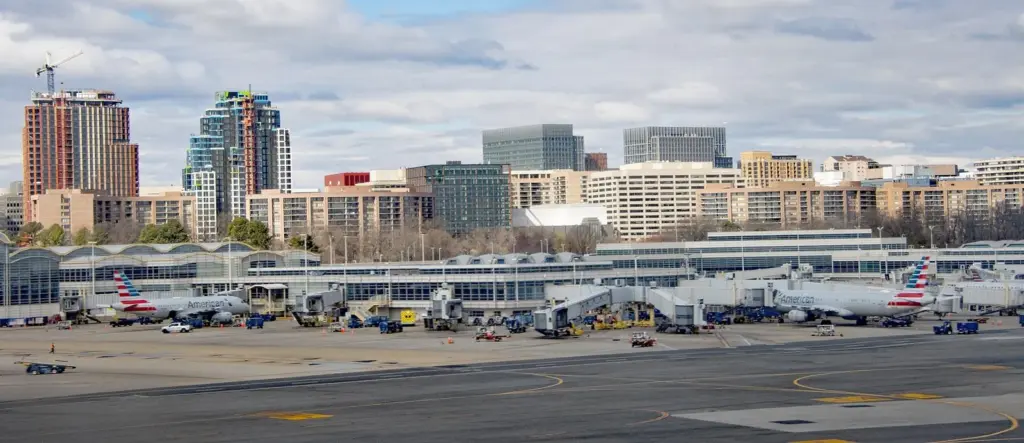
Metro beside the terminal, about 4 miles from the White House. Reagan National sits on the Virginia bank of the Potomac, across the river from the monuments, and it’s the only one of the three you could honestly call convenient. Metro’s Blue and Yellow lines stop at an elevated station linked to the terminals by covered walkways, and WMATA points out that the station is closer to the terminal than the parking lots are. From baggage claim to a downtown hotel lobby often takes less than an hour.
The airport pays for that location with limits. The site is hemmed in by the river and the parkway, and federal rules cap both how many flights it handles and how far they go. The perimeter rule dates to 1966, when jets started flying here, and was widened to its current 1,250 statute miles in the 1980s. A limited number of exemption flights reach western cities such as Denver, Las Vegas, Los Angeles, Phoenix, Salt Lake City, San Francisco and Seattle, but most of the schedule points east of the Rockies. American Airlines is the largest carrier.
International service is thin. The airport has no customs hall for arriving international flights, so its foreign flights come only from airports with US preclearance, mostly in Canada, where you clear US immigration before you board.
One small pleasure: when you land from the north, the approach follows the river, and the Washington Monument, the Capitol and the Mall slide past on the left side of the plane. A left-side window seat (usually seat A) gives you the view. The turns along the river are noticeable, too. Which direction you arrive from depends on the wind, so treat the view as a bonus rather than a promise.
Plan it: Metro: Ronald Reagan Washington National Airport station (Blue, Yellow lines), a covered walkway from the terminals. Fare as of September 2026: $2.25 to $6.75 on weekdays before 9:30pm and $2.25 to $2.50 at other times, and this short ride sits near the bottom of that range. Taxi: metered, plus a $3 airport fee. Allow 45 minutes to an hour from the gate to a downtown hotel. Best for: first-timers, families, short trips, domestic flyers.
Verdict: If the fare is within reason, pay it. Nothing else in DC travel buys back as much time for as little money.
2. Dulles (IAD): the international gateway
The big airport, and the only real choice from most of the world. Dulles opened in 1962 on open land west of the city, and it still has room to spare. The airports authority describes it as the much larger airport, built for bigger planes and longer flights, and treats it as the region’s growth airport. United runs a hub here, so this is where most long-haul flights from Europe, Asia, Africa, the Middle East and Latin America land, along with a long list of domestic routes.
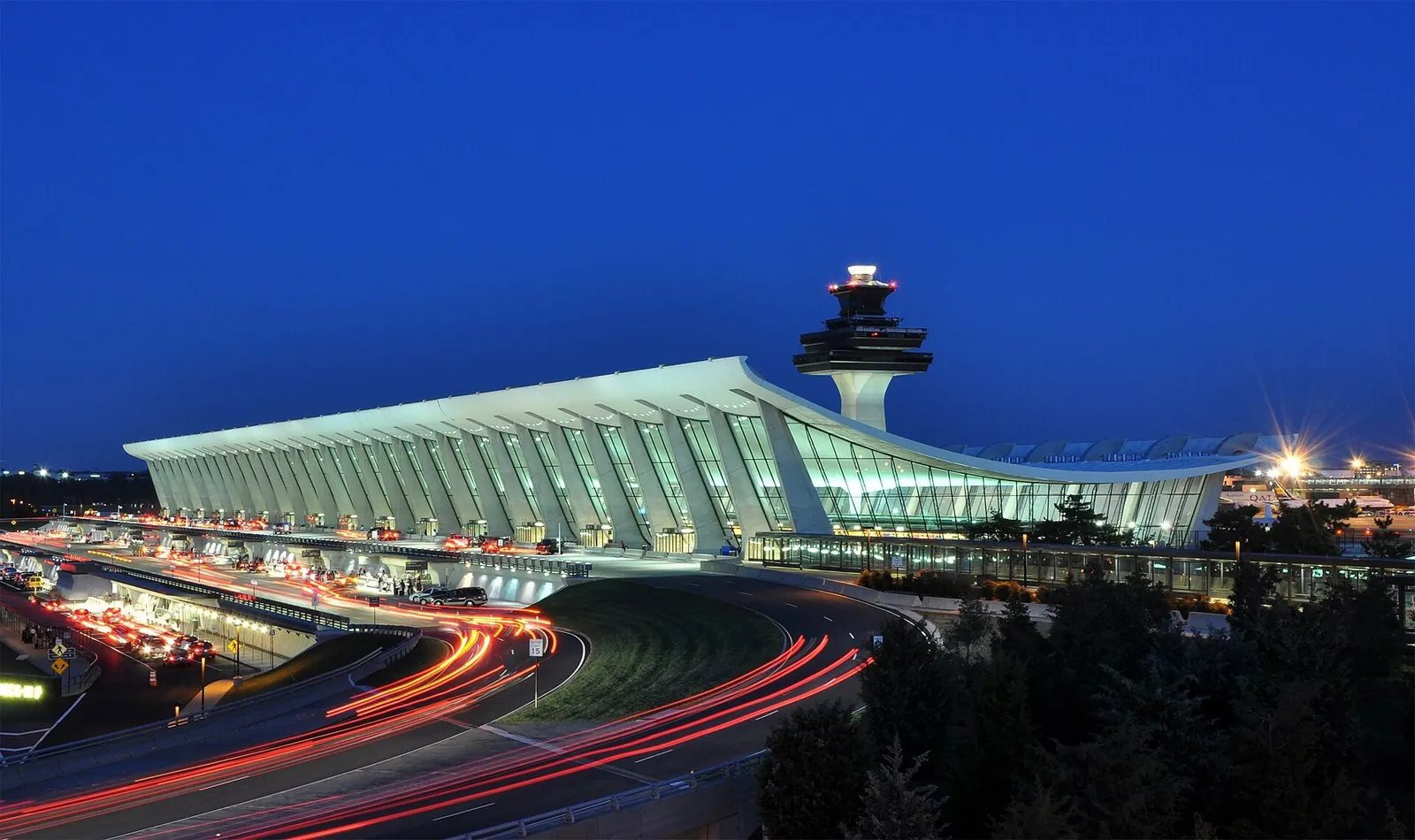
The terminal is worth a look even if you’re in a hurry. Eero Saarinen’s main building, with its swooping roof hung between angled concrete columns, is one of the landmarks of American modernism. The gates are a train ride away, which matters for tight connections.
The weak point is distance. Dulles is about 26 miles from downtown, on highways that clog at rush hour. Since November 2022 the Silver line has run straight to the airport, which fixed the worst of it: no more bus to a distant Metro station. The ride to Metro Center still takes close to an hour.
Plan it: Metro: Washington Dulles International Airport station (Silver line), about 600 feet and a 7-8 minute walk from the main terminal. Fare as of September 2026: $6.75 at weekday peak, up to $2.50 on weekends and after 9:30pm on weekdays. Taxi: Washington Flyer, metered. Allow about 90 minutes from the gate to a downtown hotel, and more after an international arrival. Best for: international travelers, United flyers, anyone staying in Tysons, Reston or Herndon.
Verdict: The right airport for an overseas trip and a fine one for a long domestic flight. For a short domestic hop, the extra ground time usually outweighs any fare saving over Reagan National.
3. BWI Marshall: the budget wildcard
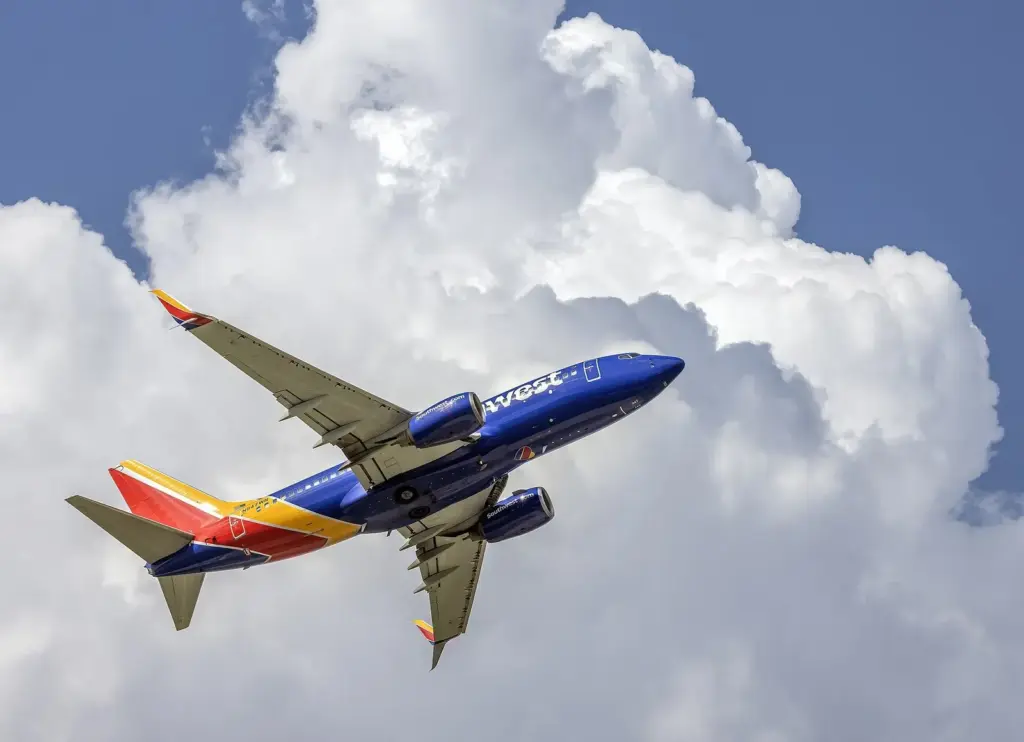
Often the cheapest fares, never the closest. Baltimore/Washington International Thurgood Marshall Airport, BWI to everyone, sits between the two cities but much nearer Baltimore. Southwest is by far its largest airline, and the competition it brings often makes BWI the cheapest of the three for domestic trips. The international list is much shorter than at Dulles.
What BWI has that Dulles lacks is a proper train. A free shuttle runs around the clock from the terminal to BWI Rail Station, where Amtrak and MARC commuter trains head south to Washington Union Station. BWI puts the ride at about 30 minutes on Amtrak and 35 on MARC. Union Station is a few blocks from the Capitol and on the Metro Red line, so if you’re staying on Capitol Hill, in NoMa or near the station, BWI can beat Dulles door to door.
The weak spots are late nights and Sundays. MARC is a commuter railroad, and its weekend schedule is thin. Amtrak runs later but costs more. A taxi into the city is a long meter ride: BWI estimates 45 minutes, and rush hour on I-95 or the Baltimore-Washington Parkway can stretch that a long way.
Plan it: Shuttle: free, 24 hours a day, every 10-15 minutes (every 25 minutes from 1am to 5am), from the lower level outside Doors 2, 8, 15 and 17. Trains: Amtrak (about 30 minutes) or the MARC Penn Line (about 35 minutes) to Union Station, which is on Metro’s Red line. Fare: a separate MARC or Amtrak ticket; MARC is usually the cheaper. Allow 90 minutes to two hours from the gate to a downtown hotel. Best for: budget travelers, Southwest flyers, Capitol Hill stays, trips that add Baltimore or Annapolis.
Verdict: Worth it when the savings are real or your plans lean north. Not worth it to save a few dollars on a trip based in Georgetown or Arlington.
Getting downtown from Reagan National
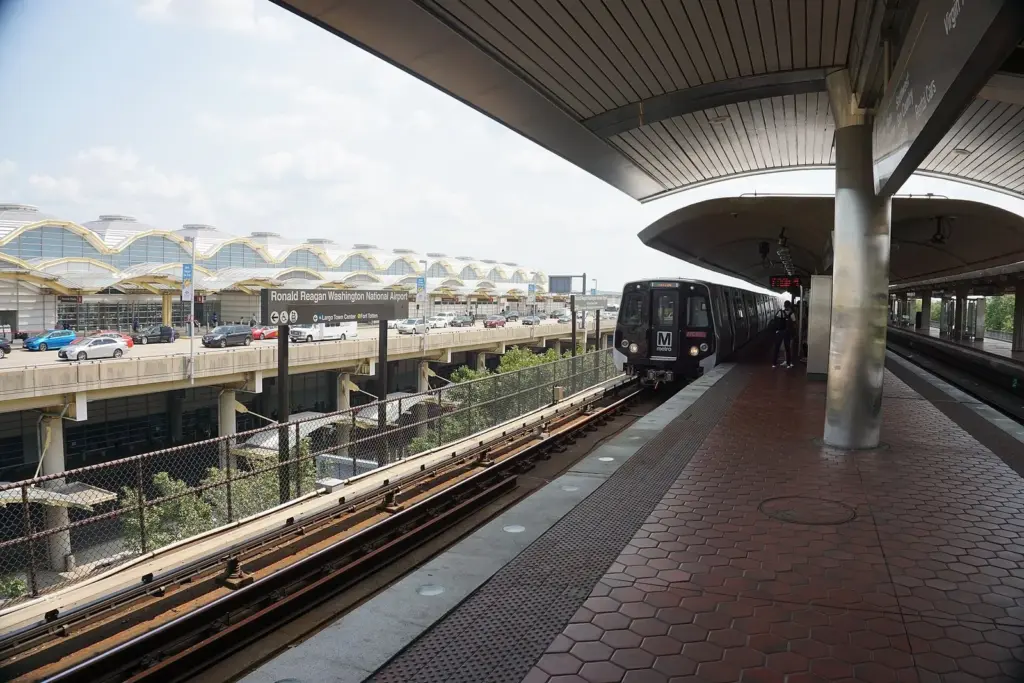
This is the easy one. Follow the signs for Metrorail, cross the covered walkway and tap in at the fare gates with a contactless card or phone, which Metro has accepted on rail since May 2025. You don’t need to buy a SmarTrip card first, though one works too. Families should know that up to two children age 4 and under ride free with each paying adult.
Which train you take depends on your hotel:
- Yellow line for the quickest trip into the city. It crosses the Potomac on its own bridge and stops at L’Enfant Plaza, Archives, Gallery Place and Mt Vernon Sq, where it ends. Take it for the east end of the National Mall, Penn Quarter, Chinatown and the convention center.
- Blue line for Arlington Cemetery, Rosslyn, Foggy Bottom and the downtown stations from Farragut West through Metro Center to Smithsonian. It loops through Virginia first, so it’s slower to the Mall than the Yellow.
- Changes: the Yellow line doesn’t run to U Street, Shaw or Columbia Heights, and it never went to Navy Yard or the Wharf. For those, switch to the Green line at L’Enfant Plaza or Gallery Place.
Allow about 15 to 20 minutes on the train to the downtown stations, plus the wait on the platform. Check the destination signs before you board, because Blue and Yellow trains share the airport tracks and go separate ways after the Pentagon. Our guide to getting around Washington DC explains the fare gates, passes and lines in more detail.
By taxi: taxi lines are signposted outside baggage claim, and every cab dispatched at the airport has to run its meter. The airport’s own fare estimates leave out a $3 airport fee, so expect that on top. To most downtown hotels it’s a short ride off-peak, and a sensible one for three or four people with luggage, or when you land after the Metro has closed.
By rideshare: Uber and Lyft both serve the airport from marked pickup zones. Follow the signs rather than meeting a driver at the arrivals curb. Prices move with demand, so compare them with a Metro fare before booking a ride for one.
Getting downtown from Dulles
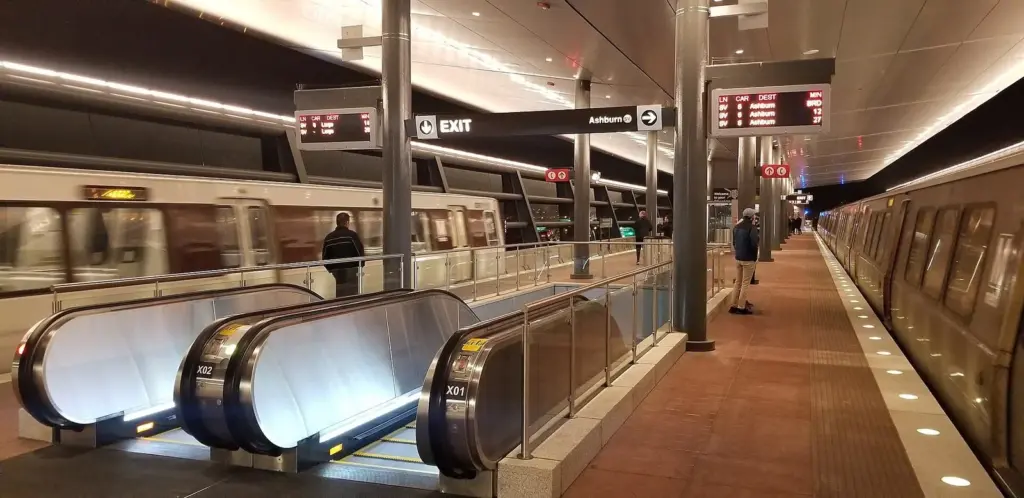
Dulles gives you three real choices: the Silver line, a Washington Flyer taxi or a rideshare. If you’re alone or a couple, the train wins on cost and, at rush hour, often on time as well.
The Silver line. From baggage claim, follow the Metrorail signs to the underground walkway. It’s about 600 feet to the station, with moving walkways, and WMATA puts the walk at 7 to 8 minutes. Tap in with a contactless card or phone and take a train heading toward the city. They run through Reston, Tysons and Arlington, then under the river to Foggy Bottom, Farragut West, McPherson Sq, Metro Center, Federal Triangle, Smithsonian and L’Enfant Plaza before continuing across Capitol Hill.
Plan on close to an hour from the airport to Metro Center. At weekday peak you’ll pay Metro’s maximum $6.75 fare. On weekends and after 9:30pm on weekdays, the same ride costs no more than $2.50 (fares as of September 2026), which makes a Saturday arrival one of the better bargains in American airport transit. Metro cars have no luggage racks, so keep your bags beside you and out of the doorways, and use the station elevators if you’re wrangling big suitcases.
Washington Flyer taxis. The taxis at the Dulles curb are Washington Flyer cabs, and they run on meters. The airport’s posted rates, effective January 2024 and still the ones listed in September 2026, are $3.50 for the first quarter mile, 54 cents for each additional quarter mile and a $5 trip fee on every ride to or from Dulles. By our arithmetic, the roughly 26 miles to downtown come to about $65 before the tip. Split three or four ways, that’s reasonable. For one person at 5pm on a Friday, it’s an expensive way to sit in traffic beside a train that keeps moving.
Rideshare. Uber and Lyft pick up from designated zones, and the signs in baggage claim point the way. Fares move with demand, and the long distance makes surge pricing hurt more here than at Reagan National.
Sleeping near the airport? If you land late and fly out early, an airport hotel can make sense for one night. Our guide to DC hotels and neighborhoods covers when that’s worth it and when it’s a false economy.
Getting from BWI into the city
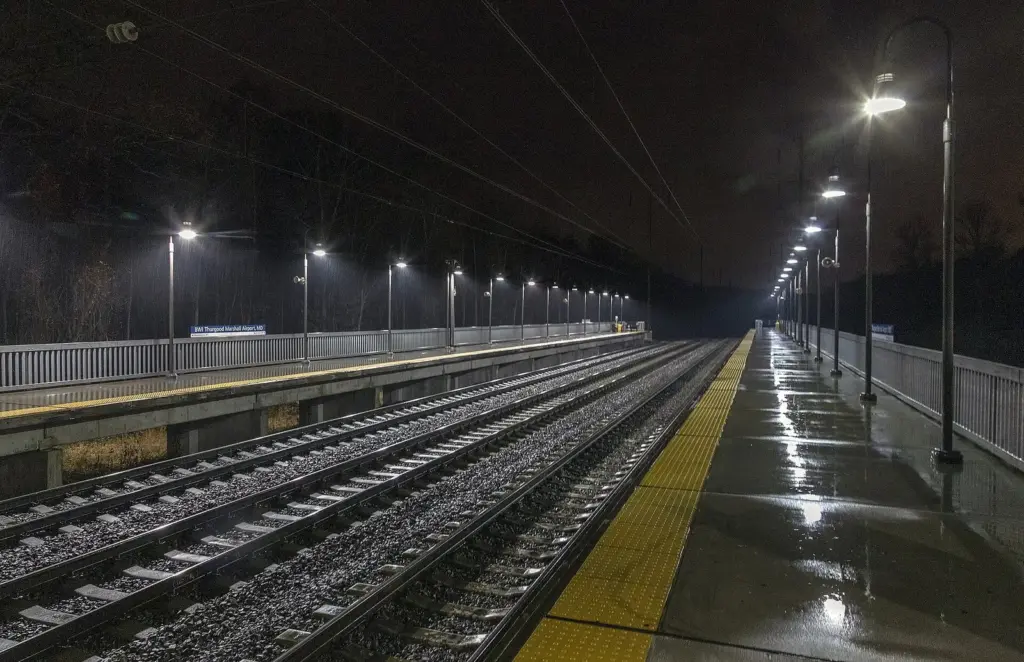
BWI’s route into Washington has one more step than the others, but it’s a well-worn one.
Step 1: the free shuttle. Head to the lower level and wait at the shuttle stops on the inner roadway outside Doors 2, 8, 15 or 17. The airport runs the shuttle 24 hours a day, 365 days a year, about every 10 to 15 minutes, and every 25 minutes between 1am and 5am. The ride to BWI Rail Station is short.
Step 2: the train. Two railroads serve the station, and they aren’t interchangeable:
- MARC Penn Line: Maryland’s commuter train, usually the cheaper option, about 35 minutes to Union Station. Buy a one-way ticket in MTA’s CharmPass app or at the station machine before you board. Conductors do sell one-way tickets on board, but only for cash and with a $5 surcharge if the station you boarded at had a ticket machine or agent.
- Amtrak: about 30 minutes to Union Station, with reserved tickets bought in the Amtrak app or at the station. Fares are higher than MARC’s and rise as trains fill, but Amtrak keeps running late at night and on weekends when MARC service is thin or finished.
MARC’s timetable matters. As listed by BWI in late September 2026, MARC trains toward Washington ran from early morning until about 9:30pm on weekdays and Saturdays, and only from mid-morning until the late afternoon on Sundays. The Penn Line gets a new timetable on October 12, 2026, so check it before you count on a late train.
Step 3: Union Station. Trains pull into Washington Union Station, the grand 1907 terminal a few blocks north of the Capitol. From there, the Red line runs to Gallery Place, Metro Center, Dupont Circle and beyond, and taxis line up out front. Older guides suggest hopping the free streetcar to H Street; it stopped running on March 31, 2026.
Taxi or rideshare instead: BWI’s taxis wait on the lower level outside Doors 5 and 13, and Uber and Lyft pick up on the upper level between Doors 5 and 12. BWI estimates 45 minutes to Washington. Rush hour on I-95 or the Baltimore-Washington Parkway can push that well past an hour. It’s a long meter, so if the cost matters, ask the BWI taxi office (410-859-1100) for a quote, or check the rideshare apps before you walk outside.
By bus: there’s no Metro to BWI. The one bus link into the Metro system that BWI lists is MTA Commuter Bus 201 to Shady Grove on the Red line, which takes about an hour and 10 minutes. It only makes sense if you’re staying up in Rockville or Gaithersburg.
Transfer times and costs, side by side
Every sensible way into the city, with the times and costs as of September 2026. Train times are the operators’ estimates; add waiting time and, at BWI, the shuttle.
| From | Option | Time to downtown | Cost (Sept 2026) | Watch out for |
|---|---|---|---|---|
| Reagan National | Metro (Yellow or Blue) | About 15-20 min | Near the low end of $2.25-$6.75 | Stations close at midnight Sunday to Thursday |
| Reagan National | Taxi | About 15-25 min off-peak | Meter plus a $3 airport fee | Rush hour on the bridges |
| Dulles | Metro (Silver) | Close to an hour | $6.75 weekday peak; up to $2.50 nights and weekends | A 7-8 minute walk to the station |
| Dulles | Washington Flyer taxi | 40 minutes to well over an hour | About $65 plus tip, from the posted meter rates | Rush hour into the city |
| BWI | Shuttle, then Amtrak | About 30 min on the train | Amtrak fare, varies by train | Reserved tickets; buy ahead |
| BWI | Shuttle, then MARC | About 35 min on the train | MARC fare; $5 extra if bought on board | Thin Sunday service; new timetable Oct 12, 2026 |
| BWI | Taxi or rideshare | About 45 min off-peak | A long meter; ask for a quote | I-95 and parkway traffic |
How to compare fares across the three airports
Airlines price the three airports as rivals, and the gap can be big on one route and zero on the next. A few habits help:
- Search WAS, not one airport. The metro-area code covers DCA, IAD and BWI in a single search on most airline and booking sites.
- Price the whole trip. Add the ground trip both ways for everyone traveling. Two adults on the Silver line at weekday peak spend $27 on Metro fares for the round trip, while the same pair riding Metro from Reagan National spends a fraction of that. A taxi each way from BWI can cost more than the fare gap you were chasing.
- Price your time. An extra hour on the train each way is two hours less in the city. On a three-day trip, that’s a museum.
- Check bag fees and seat rules. The airline with the lowest fare into BWI may charge more for bags than the one flying into Reagan National. Compare the final price, not the headline.
- Mix airports if it helps. Nothing stops you flying into Dulles and home from Reagan National. On domestic routes, two one-way tickets often cost about the same as a round trip, so it’s cheap to try.
Which airport suits your kind of trip
The ranking above fits a typical sightseeing trip. Here’s how the answer shifts for everyone else.
| You are… | Fly into | Why |
|---|---|---|
| A first-timer on a domestic flight | Reagan National | Metro beside the terminal; the Mall about 20 minutes away |
| Flying in from Europe, Asia, Africa or Latin America | Dulles | Most long-haul flights land there; the Silver line goes downtown |
| A family with small kids and lots of luggage | Reagan National | The shortest taxi and train; kids 4 and under ride Metro free with a paying adult |
| On a tight budget | Compare all three, often BWI | Southwest and other low-fare airlines, plus a train to Union Station |
| Staying on Capitol Hill, in NoMa or near Union Station | BWI or Reagan National | The BWI train stops at Union Station; DCA is a short Metro or taxi ride |
| Staying in Arlington or Old Town Alexandria | Reagan National | A few Metro stops, or a very short taxi |
| Working in Tysons, Reston or Herndon | Dulles | Silver line stations along the way |
| Adding Baltimore or Annapolis | BWI | Much closer to both than either Virginia airport |
| Landing after 11pm on a weeknight | Any, with a taxi budget | Metro stations close at midnight Sunday to Thursday |
| Flying from the West Coast | Dulles, or a connection into DCA | Only a handful of exemption nonstops reach Reagan National |
If you use a wheelchair or can’t manage long walks, note that every Metro station has elevators, including the two airport stations. Reagan National is usually the gentlest arrival. Dulles adds the 600-foot walk to the train and a long terminal, and BWI adds the shuttle transfer.
Match the airport to where you’re staying
Where you sleep changes the math more than anything else. A quick guide by neighborhood:
- Downtown, Penn Quarter and Chinatown: Reagan National and the Yellow line to Archives or Gallery Place is the smoothest trip. From Dulles, the Silver line reaches Metro Center without a change.
- Near L’Enfant Plaza, the Wharf and the south side of the Mall: the Yellow line from Reagan National reaches L’Enfant Plaza in four stops. For the Wharf, change to the Green line for one stop to Waterfront.
- Capitol Hill, NoMa and around Union Station: BWI’s trains land you right there. From Reagan National, take the Yellow line and change at L’Enfant Plaza, or take a taxi.
- Georgetown: there’s no Metro station. Take a taxi from Reagan National, or ride the Blue or Silver line to Foggy Bottom and walk about 15 minutes.
- Dupont Circle and Logan Circle: from Reagan National, take a taxi or the Yellow line to Gallery Place and change to the Red. From Dulles, ride the Silver line to Farragut West and walk or change.
- Arlington and Old Town Alexandria: Reagan National, full stop.
- Tysons and Reston: Dulles, on the Silver line.
Haven’t booked yet? Compare the neighborhoods in our Washington DC hotel guide before you pick the flight, because the right airport follows the right base.
Arriving late or leaving at dawn
Flights keep landing long after the Metro stops, and this is where visitors get caught. As of September 2026, Metrorail stations are open:
- Monday to Thursday: 5am to midnight
- Friday: 5am to 2am
- Saturday: 6am to 2am
- Sunday: 6am to midnight
Those are station hours, and the last train from any given station can leave well before closing. If you land at Dulles at 11:15pm on a Tuesday, by the time you’ve collected a bag you may miss the last Silver line train. Look up WMATA’s last-train times for the airport station on your arrival day, and keep a taxi budget as a backup.
Early departures cut the other way. On weekends the Metro opens at 6am, which is too late for a 7am flight out of Dulles when the ride takes close to an hour. Book a taxi or rideshare, or move to a hotel near the airport for the last night.
At BWI, the shuttle runs all night but the trains don’t. MARC’s last trains toward the airport leave well before midnight, and on Sundays in the late afternoon, on the timetable in force in September 2026. A late arrival usually means Amtrak or a taxi.
Flying in from abroad
If you’re coming from outside North America, you’ll almost certainly land at Dulles. Expect the full arrival process: immigration, baggage claim, customs, then the walk to ground transportation. Lines vary with how many widebody jets land at once. If you qualify for one of US Customs and Border Protection’s trusted-traveler programs, use it.
BWI handles a much smaller set of international flights and processes them in its own arrivals area. Reagan National has no customs hall at all: its international flights come only from airports with US preclearance, mostly in Canada, so you arrive as if on a domestic flight.
Inside the terminals: what to expect
Reagan National is compact by big-airport standards. The main terminal, with its row of domed roofs, faces the airfield and the river, and on a clear day you can pick out the Washington Monument from the windows. Walking distances are short, and the Metro station is right outside. Terminal 1, the original 1941 building, serves a smaller group of airlines.
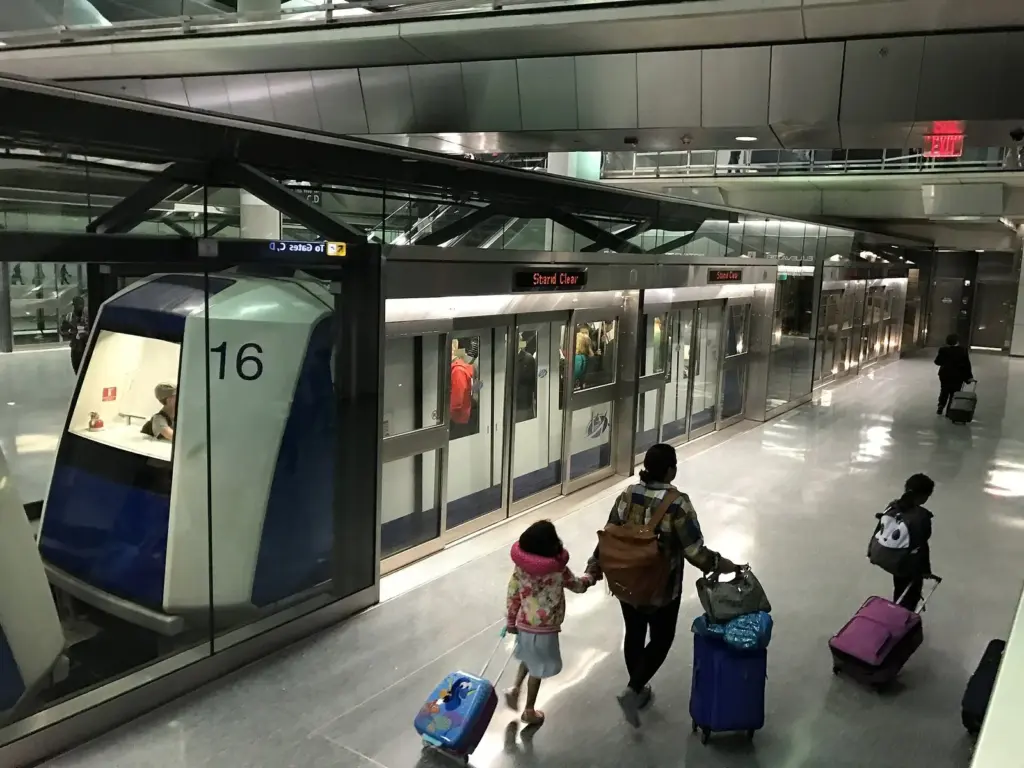
Dulles spreads out. You check in and clear security in or beside Saarinen’s main terminal, then ride the AeroTrain, an underground people mover, out to the concourses. Some gates are still reached by the mobile lounges, which have carried passengers across the airfield here since the 1960s. Between security, the train and the walk to a far gate, 30 minutes from curb to gate is optimistic.
BWI sits in between: one terminal with several concourses, and a long walk to the farthest gates. The rail shuttle stops are on the lower level, and Southwest’s gates take up a large share of the building.
ID, security lines and how early to arrive
Bring a REAL ID or a passport. REAL ID enforcement at TSA checkpoints began on May 7, 2025. A state license needs the REAL ID star to work on its own, and a passport, passport card or other TSA-accepted ID also does the job. Since February 1, 2026, travelers who arrive without an acceptable ID can pay $45 for TSA ConfirmID, an alternative identity check that covers a 10-day travel period. The TSA says verification usually takes 10 to 15 minutes, sometimes 30 or more, and it comes with extra screening. It’s a safety net, not a plan.
How early? Most airlines advise two hours before a domestic flight and three before an international one. At Reagan National, weekday mornings can mean long security lines as the business crowd heads out. At Dulles, add time for the AeroTrain. At BWI, if you’re arriving by train, add the shuttle ride from the rail station.
Skip the rental car (usually)
All three airports have rental counters, and for a city break none of them is a good idea. Central Washington is compact, the Metro reaches most sights, and parking is where a car starts costing real money. Hotel parking downtown is expensive, street parking is tightly regulated, and DC adds a 10.25% tax to car rentals made in the District (as of September 2026). Rentals at the Virginia and Maryland airports carry their own taxes and airport fees.
A car earns its keep for day trips to places the trains don’t reach, like the Shenandoah Valley. If that’s the plan, pick it up on the day you leave the city rather than at the airport on arrival. Our guide to the Metro, buses and bikes shows how far you can get without one.
When a taxi or rideshare is worth it
Public transit wins for solo travelers and couples at every airport, except at odd hours. A car makes sense when:
- You’re three or four people going to one hotel, especially from Reagan National, where a shared cab costs each person only a little more than the train.
- You land after the last trains or leave before the Metro opens.
- You’re carrying small children, a stroller and a car seat, or more bags than hands.
- You’re staying somewhere the rail lines don’t reach, such as Georgetown or upper Northwest.
At every airport, use the official taxi line or the marked rideshare zone, and ignore anyone offering rides inside the terminal.
Got a long connection? What fits between flights
With five or six hours between flights, you can leave the airport, but only two of the three make it comfortable, and only if you’re sure about getting back through security in time. If you’re changing planes on an international itinerary, leaving the airport also means clearing US immigration, so you’ll need the right visa or travel authorization.
From Reagan National, the Yellow line reaches L’Enfant Plaza in four stops, a short walk from the Smithsonian museums on the Mall. Two hours in the city is realistic if your connection gives you five. For something closer, Gravelly Point, the riverside park at the north end of the runway, is where locals go to watch the jets.
From Dulles, the city is too far for a short connection, but the Smithsonian’s Steven F. Udvar-Hazy Center is close by. It’s free, open 10am to 5:30pm, and holds Space Shuttle Discovery along with hangars full of aircraft. Ride the Silver line one stop to Innovation Center and take Fairfax Connector bus 983, or take a short taxi ride.
From BWI, Washington is a long round trip for a layover, and your time is better spent closer to Baltimore.
Whatever the airport, leave at least 90 minutes to get back through security, more at Dulles, and set an alarm on your phone. Metro delays happen.
Weather, delays and shutdowns
Summer is thunderstorm season. July is DC’s wettest month, averaging 4.33 inches of rain at Reagan National in the 1991-2020 normals, and much of it falls in afternoon storms that can stop departures for an hour or more. From June to August, morning flights are the safer bet.
Winter brings the occasional snowstorm. A normal year sees 13.7 inches of snow at the airport, often in just a few storms, and a big one can halt flights for a day. All three airports get the same weather, so switching airports rarely beats waiting it out.
Federal funding matters too. Air traffic controllers and TSA officers are federal employees who keep working during a government shutdown, and long shutdowns have brought staffing gaps and delays. Current funding runs through December 11, 2026. If Congress misses that date, watch your airline’s alerts and add time at security.
Why Washington has three airports
The short version: the region kept outgrowing its airports. Washington National opened in 1941 on filled land beside the Potomac, close enough to the Capitol that a member of Congress could get there in minutes. By the jet age it was too small for long flights, so the federal government built Dulles, which opened in 1962 far out in the Virginia countryside, with room to grow. In Maryland, Friendship International Airport opened outside Baltimore in 1950. It was renamed Baltimore/Washington International in 1973 and added Thurgood Marshall’s name in 2005.
For decades the rules kept National small to push long flights out to Dulles, which is why the perimeter rule exists. National became Ronald Reagan Washington National Airport in 1998. Today the Metropolitan Washington Airports Authority runs both Virginia airports, and the State of Maryland runs BWI. The result is three airports with three personalities: the close one, the big one and the cheap one.
What’s changed at the Washington DC airports
Advice about getting to and from DC’s airports goes stale quickly. Here’s what older guides get wrong, as of September 2026:
- The Silver line reaches Dulles. Since November 2022, there’s been no need for the old bus link to a distant Metro station.
- You can tap to ride. Metro has accepted contactless cards and phones at rail fare gates since May 2025, and on buses since November 18, 2025. You don’t have to hunt for a SmarTrip machine after a long flight.
- The flat $2 weekend fare is gone. Nights and weekends now cost $2.25 to $2.50 on Metrorail.
- REAL ID is enforced, and since February 2026, flying without an acceptable ID costs $45 for TSA ConfirmID.
- The H Street streetcar has stopped. It ended service on March 31, 2026, so the free ride from Union Station that some guides still suggest no longer exists.
- MARC’s Penn Line timetable changes on October 12, 2026. Check train times from BWI after that date.
- DC’s sales tax rises to 7% on October 1, 2026, and hotel rooms are taxed at 15.95%. Neither touches your airfare, but both change the trip budget.
What to skip
- Don’t book BWI to save a few dollars if you’re staying in Georgetown, Arlington or Alexandria. The ground trip will eat the savings, and an evening with them.
- Don’t take a taxi from Dulles at weekday rush hour unless you’re splitting it. The train costs $6.75 and doesn’t care about traffic.
- Don’t count on MARC on a Sunday evening. On the September 2026 timetable, the last Sunday train from BWI toward Washington left in the late afternoon.
- Don’t accept rides from people who approach you in baggage claim. Use the taxi line or the rideshare zone.
- Don’t book the last flight home on a stormy summer evening if missing it would wreck your week. Afternoon storms back up the evening schedule at all three airports.
Washington DC airports FAQ
What is the closest airport to downtown Washington DC?
Reagan National (DCA) is the closest, about 4 miles from the White House across the Potomac in Arlington, Virginia. Metro’s Blue and Yellow lines stop beside the terminal, and the ride to the downtown stations takes about 15 to 20 minutes. A taxi is a short meter ride plus a $3 airport fee.
Which airport is best to fly into for Washington DC?
For most domestic trips, Reagan National is best, because it’s close and on the Metro. From overseas, Dulles is usually the only practical choice, with the Silver line into the city. BWI is worth it when its fares are clearly lower or you’re staying near Union Station, Baltimore or Annapolis.
Is it better to fly into Dulles or Reagan National?
Reagan National, if your airline flies there: it’s about 4 miles from downtown against 26 for Dulles, and the Metro ride takes 15 to 20 minutes instead of close to an hour. Dulles wins for international flights and long nonstops, because a federal perimeter rule limits most Reagan National flights to 1,250 miles.
Does the Metro go to all three DC airports?
No. Metro serves Reagan National (Blue and Yellow lines) and Dulles (Silver line) directly. BWI has no Metro station: take the free airport shuttle to BWI Rail Station, then an Amtrak or MARC train to Union Station, which is on Metro’s Red line. BWI estimates 30 to 35 minutes on the train.
How much is a taxi from Dulles into the city?
Dulles taxis are Washington Flyer cabs on a meter: $3.50 for the first quarter mile, 54 cents for each additional quarter mile and a $5 trip fee, on rates posted since January 2024. By our math, the roughly 26 miles to downtown come to about $65 before the tip. The Silver line costs $6.75 at most.
Is BWI too far from Washington DC?
Not if you take the train. A free 24-hour shuttle links the terminal to BWI Rail Station, and Amtrak or MARC reaches Union Station in about 30 to 35 minutes. It gets harder late at night and on Sundays, when MARC service thins out. By taxi it’s about 45 minutes off-peak, and much longer at rush hour.
Do I need a REAL ID to fly out of DC?
You need a REAL ID-compliant license, a passport or another TSA-accepted ID, and enforcement began on May 7, 2025. Since February 1, 2026, travelers without one can pay $45 for TSA ConfirmID, an identity check that covers 10 days of travel but adds time and extra screening. Bring your passport if your license lacks the star.
How early should I get to the airport in Washington DC?
Most airlines advise two hours before domestic flights and three before international ones. At Dulles, add time for the AeroTrain or a mobile lounge; at BWI, add the rail shuttle if you’re arriving by train. Riding Metro to a very early flight? Stations open at 5am on weekdays and 6am on weekends.
Related Washington DC Guides
- Getting Around Washington DC: Metro lines, fares, passes, buses and bikes once you’ve landed.
- Where to Stay in Washington DC: the neighborhoods, what they cost and which Metro lines serve them.
Sources and How We Checked
We checked every fare, schedule and rule on this page on September 24, 2026, against the official sites below, and compiled the page from them. We didn’t make test trips for this page, and we don’t claim to have.
- WMATA: airports and train stations
- WMATA: cost to ride
- Washington Dulles International Airport: Washington Flyer taxi fares
- Reagan National: slot and perimeter rules
- BWI Marshall: getting to Washington, DC
- Maryland Transit Administration: MARC fares
- TSA: the $45 ConfirmID fee option
We also used the Metropolitan Washington Airports Authority’s page on the DCA perimeter, Reagan National’s taxi service page, the DC Office of Tax and Revenue, DDOT’s notice on the end of streetcar service, the Smithsonian’s Udvar-Hazy Center listing and the National Weather Service’s 1991-2020 climate normals for Reagan National.
Washington DC Tourism Guide is an independent publication. We are not affiliated with Destination DC, the National Park Service, the Smithsonian Institution or any attraction listed here, and no one paid to be included.
Photo Credits
- Dulles main terminal at dusk: photo by Joe Ravi (Shutterstock iStock Dreamstime), via Wikimedia Commons (CC BY-SA 3.0)
- Reagan National Airport and Crystal City: photo by David, via Wikimedia Commons (CC BY 2.0)
- Southwest Boeing 737 at BWI: photo by Acroterion, via Wikimedia Commons (CC BY-SA 4.0)
- Reagan National Airport Metro station: photo by Michael Barera, via Wikimedia Commons (CC BY-SA 4.0)
- Dulles Airport Silver line station: photo by Rainclaw7, via Wikimedia Commons (CC BY-SA 4.0)
- BWI Rail Station at night: photo by Acroterion, via Wikimedia Commons (CC BY-SA 4.0)
- AeroTrain station at Dulles: photo by Vmzp85, via Wikimedia Commons (CC BY-SA 4.0)