
Washington might be the best big city in the country for a family trip, for one simple reason: most of the headline attractions are free. You can walk out of the Air and Space Museum after 40 minutes because someone is melting down, and it cost you nothing. The giant pandas are back at the National Zoo, the dinosaurs are on display at Natural History, and there’s a museum where you can pretend to be a spy. The trick with things to do in DC with kids isn’t finding enough to do. It’s choosing, pacing and knowing which few places need a ticket booked ahead. This guide gives you 50 ideas, sorted by type, with the logistics that matter when you’re traveling with small legs.
Quick answer: The best things to do in DC with kids are the National Zoo, to see the giant pandas; the National Museum of Natural History, for dinosaurs and the Hope Diamond; the Air and Space Museum; the National Children’s Museum, for under-12s; the International Spy Museum, for older kids; and pedal boats on the Tidal Basin. The zoo, the Smithsonian museums and the memorials are free, though the zoo and Air and Space need free timed passes booked ahead.
Last updated September 24, 2026. Hours, prices and pass rules were checked that day against each attraction’s and agency’s own website.
- Free and walk-in: most Smithsonian museums, the memorials and many parks. No tickets, no lines beyond the bag check.
- Book ahead (free): the National Zoo (everyone, including infants), the Air and Space Museum on the Mall and the African American history museum.
- Metro: up to two children age 4 and under ride free with each paying adult; kids 5 and up pay the regular fare.
- Not in DC anymore: there’s been no aquarium in the city since 2013, and Six Flags America closed for good in November 2025.
On this page: Best picks by age | Museums | Monuments and government | Zoo, parks and outdoors | Seasonal events | Day trips | Getting around with kids | Free vs. paid | Tips by age | When to go | What to skip | FAQ
This page focuses on the family angle. For the full museum rundown, see our guide to the Smithsonian museums, and for the wider trip, everything to do in Washington DC.
Best Things to Do in DC With Kids, by Age
| Age | Top picks | Why |
|---|---|---|
| Toddlers (1-3) | National Children’s Museum, National Zoo, Natural History, Tidal Basin swan boats | Hands-on, forgiving, easy to leave |
| Young kids (4-7) | Natural History, Air and Space, the zoo, Postal Museum, Planet Word | Dinosaurs, planes, animals and things to press |
| Older kids (8-12) | Spy Museum, Air and Space, Bureau of Engraving and Printing, Washington Monument, American History | Stories, gadgets and “how it works” |
| Teens | African American history museum, Holocaust Museum, Capitol tour, Spy Museum, a night walk to the memorials | History with weight, and a bit of independence |
Two museum-sized visits a day is plenty for most kids, and one is often better with toddlers. Put the big outing in the morning, after breakfast and before the crowds, and leave the afternoon loose: a playground, a boat, an ice cream on the Mall.
Museums Kids Love
1. National Museum of Natural History
Free, no pass. The one museum every family should do. A giant elephant greets you in the rotunda, the Hall of Fossils: Deep Time has around 700 fossils including dinosaurs, and the Hope Diamond glitters upstairs. Go at 10 a.m. opening and head upstairs first, while the crowds pile into the fossils.
Plan it: 10 a.m. to 5:30 p.m. daily. Metro: Smithsonian or Federal Triangle (Blue, Orange, Silver lines). Allow 2 hours. Best for: all ages.
2. National Air and Space Museum
Free timed pass for everyone. The Wright brothers’ plane, the Apollo 11 capsule and hangar-sized galleries of aircraft and spacecraft. As of September 2026, 18 of its 20 renovated galleries are open, with the last two due October 30 and November 11. Book passes before you go, and enter on Jefferson Drive.
Plan it: 10 a.m. to 5:30 p.m. daily. Metro: L’Enfant Plaza (Blue, Orange, Silver, Green, Yellow lines). Allow 2 hours. Best for: ages 4 and up.
3. National Children’s Museum
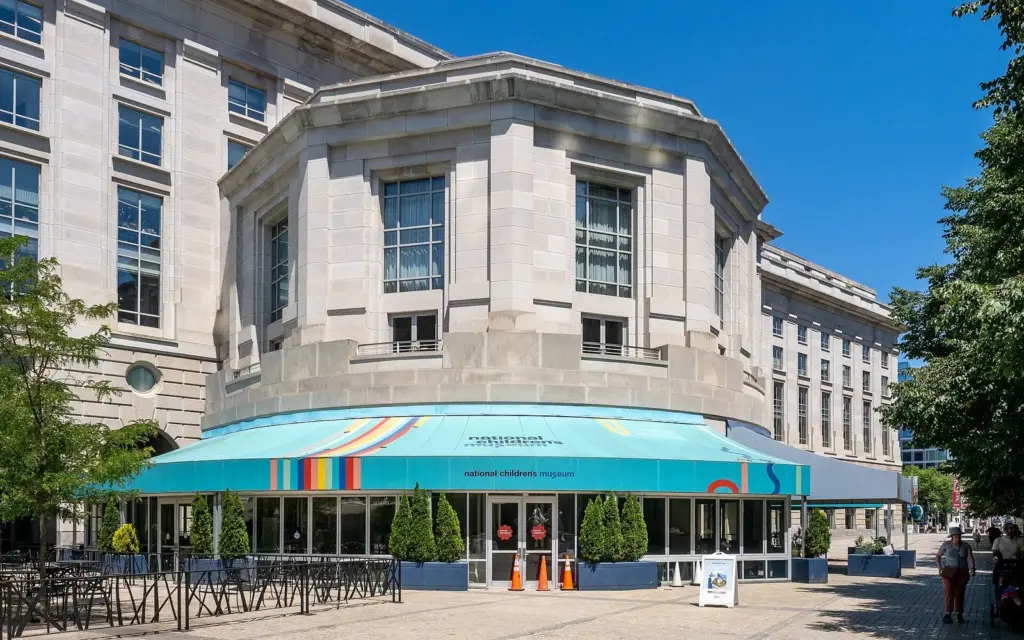
Paid, timed entry. Built for children under 12, with play-based science, technology, engineering, arts and math exhibits. It’s the best rainy-morning option for toddlers and young kids. Tickets are $18.95 for everyone 1 and older (babies under 1 are free) as of September 2026, and booking online is strongly recommended.
Plan it: Daily except Tuesday, 9:30 a.m. to 4:30 p.m. Entrance on Woodrow Wilson Plaza, 13th Street and Pennsylvania Avenue NW. Metro: Federal Triangle (Blue, Orange, Silver lines), 2-minute walk. Allow 2 hours. Best for: toddlers to age 10.
4. International Spy Museum
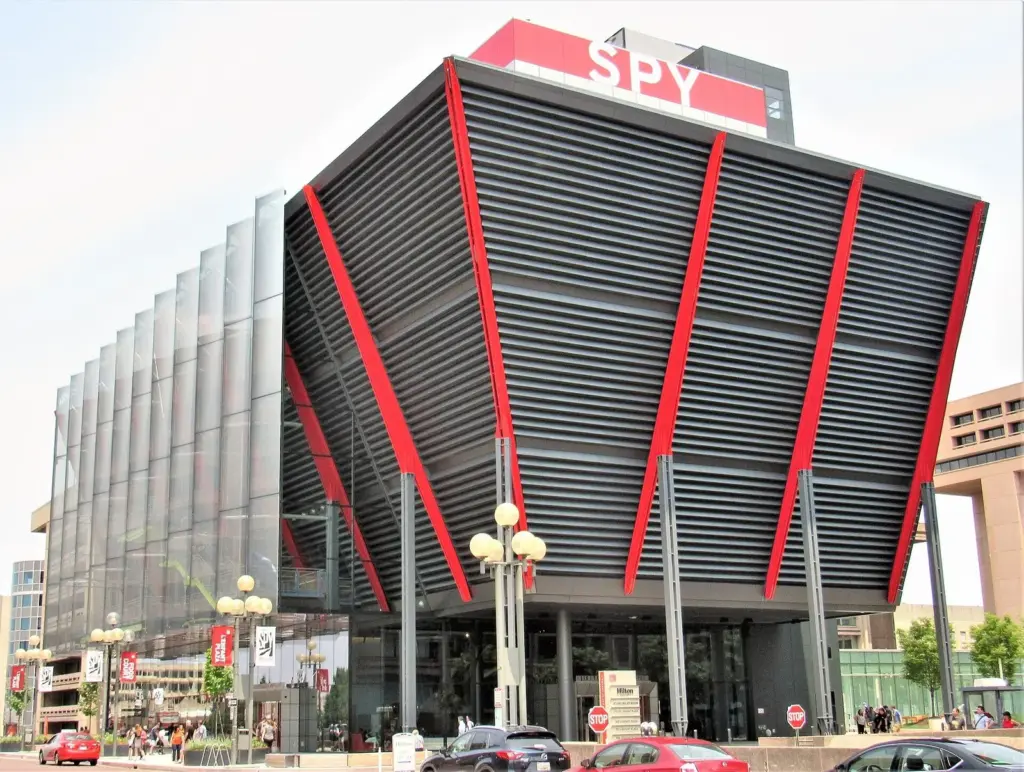
Paid; kids 6 and under free. Gadgets, disguises and real espionage stories, with an interactive mission you play through the museum. Older kids and teens love it. Tickets use “plan-ahead” pricing, with discounts of up to 30% for booking early. From September to February, it’s open weekdays 10 a.m. to 6 p.m., Saturdays 9 a.m. to 7 p.m. and Sundays 9 a.m. to 6 p.m.
Plan it: Book online early for the best price. Metro: L’Enfant Plaza, 3-minute walk. Allow 2 to 3 hours. Best for: ages 8 and up, teens.
5. National Museum of American History
Free, no pass. Dorothy’s ruby slippers, the Star-Spangled Banner (no photos in its room), trains, presidents and pop culture. It’s usually calmer than Natural History next door, which makes it a good second museum of the day.
Plan it: 10 a.m. to 5:30 p.m. daily. Metro: Federal Triangle or Smithsonian. Allow 1.5 to 2 hours. Best for: ages 6 and up.
6. Steven F. Udvar-Hazy Center
Free, no pass; parking $15. Two enormous hangars near Dulles Airport hold Space Shuttle Discovery, an SR-71 Blackbird and a Concorde. It’s a hit with plane-mad kids, but it’s far from the city; best on the way to or from a Dulles flight, or with a car.
Plan it: 10 a.m. to 5:30 p.m. daily. Transit: Silver line to Innovation Center, then Fairfax Connector bus 983. Allow 2 to 3 hours plus travel. Best for: aviation fans of any age.
7. National Postal Museum
Free, no pass. Vintage mail planes hang from the atrium ceiling, and kids can climb into a railway mail car. It’s next to Union Station and almost never crowded: perfect for the hour before a train.
Plan it: 10 a.m. to 5:30 p.m. daily. Metro: Union Station (Red line). Allow 1 hour. Best for: ages 3 to 10.
8. Planet Word
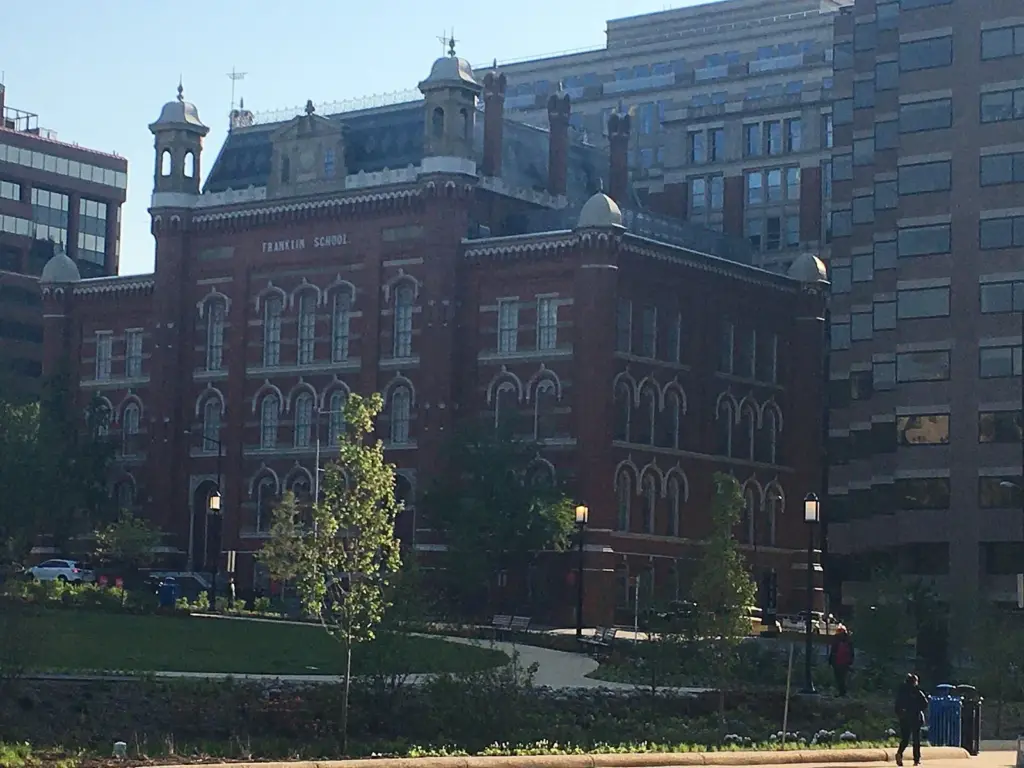
Free. A museum of language, full of interactive word games, voice-activated exhibits and hands-on rooms, in the historic Franklin School. It’s a clever, surprising stop for readers and talkers.
Plan it: Monday and Wednesday to Friday 10 a.m. to 5 p.m., weekends 10 a.m. to 6 p.m., closed Tuesday (as of September 2026). 925 13th Street NW. Metro: McPherson Square (Blue, Orange, Silver lines). Allow 1.5 hours. Best for: ages 7 and up.
9. National Building Museum
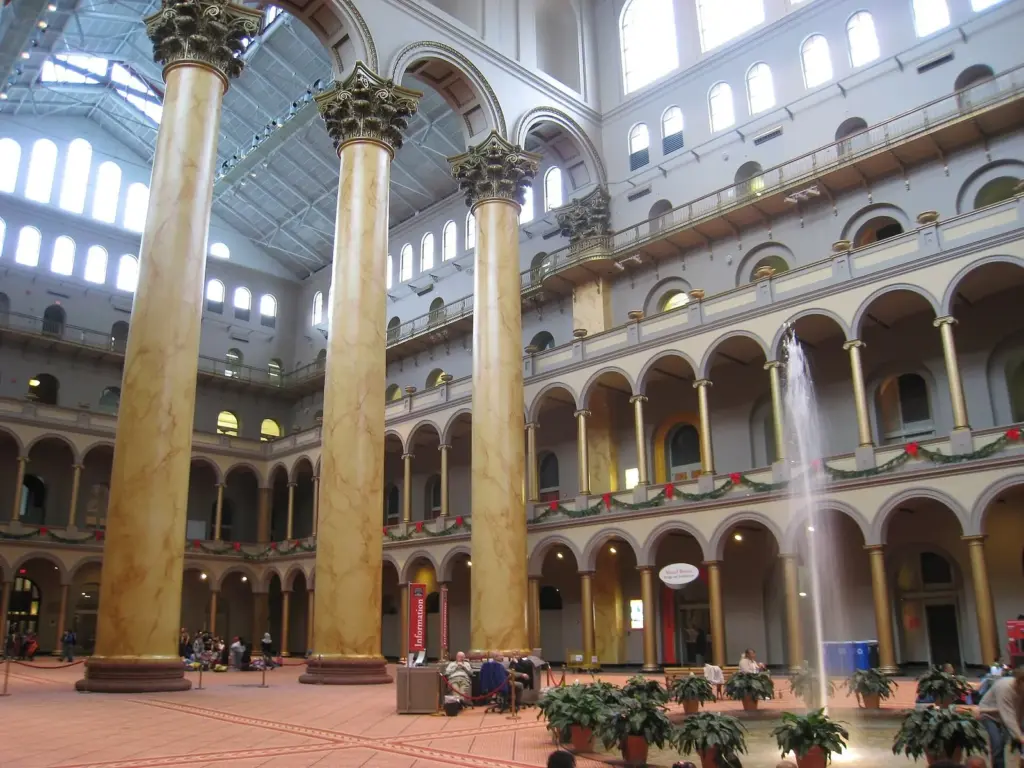
Great Hall free; exhibitions paid. The Great Hall, with its 75-foot columns, is one of the most impressive rooms in the city and free to walk into. Exhibition tickets are $10 for adults and $7 for youth, as of September 2026.
Plan it: Thursday to Monday, 10 a.m. to 5 p.m.; closed Tuesday and Wednesday. Metro: Judiciary Square (Red line). Allow 1 to 1.5 hours. Best for: builders and designers of all ages.
10. Bureau of Engraving and Printing
Free ticket required. Watch real money being printed and cut from a gallery over the factory floor. Kids are mesmerized. Tickets are free but required year-round, with same-day tickets online from 8 a.m.
Plan it: Monday to Friday, 9 a.m. to 2 p.m. (as of September 2026). 14th and C Streets SW. Metro: Smithsonian. Allow 45 minutes. Best for: ages 6 and up.
11. National Museum of the American Indian
Free, no pass. A striking curved building, rotating exhibitions and, above all, lunch. The Mitsitam Native Foods Cafe, open 10 a.m. to 5 p.m., is the best food on the Mall and an easy family refuel.
Plan it: 10 a.m. to 5:30 p.m. daily. Metro: L’Enfant Plaza. Allow 1 hour plus lunch. Best for: lunch breaks, curious kids.
12. National Gallery of Art and Sculpture Garden
Free. Not part of the Smithsonian, but free and right on the Mall. The Sculpture Garden, with its big fountain, is a good place to let kids stretch, and in winter the fountain pool becomes an ice rink.
Plan it: 10 a.m. to 5 p.m. daily. Metro: Archives-Navy Memorial-Penn Quarter (Green, Yellow lines). Allow 1 hour. Best for: short art visits, fresh air.
13. National Museum of African American History and Culture
Free timed pass required, all ages. Essential for teens and older kids; the lower history galleries are intense, and younger children often do better in the culture galleries upstairs. Passes release 30 days ahead, with same-day passes online at 8:15 a.m.
Plan it: 10 a.m. to 5:30 p.m., last entry 4 p.m. Metro: Smithsonian or Federal Triangle. Allow 3 hours. Best for: ages 10 and up.
14. Hirshhorn Museum and Sculpture Garden
Free. The round “doughnut” building of modern art sparks strong opinions from kids, which is half the fun. Its redesigned Sculpture Garden reopens with a free weekend on October 31 and November 1, 2026.
Plan it: 10 a.m. to 5:30 p.m. daily. Metro: L’Enfant Plaza or Smithsonian. Allow 45 minutes. Best for: art-curious kids and teens.
15. Washington National Cathedral
Paid entry for sightseeing. Soaring Gothic architecture and a grotesque-spotting challenge on the exterior. Admission is $15 for adults and $10 for youth, as of September 2026; tower climbs run $35 to $75 and are for ages 11 and up. Hours vary, so check before you go.
Plan it: Book on the cathedral’s ticket site. Metro: none nearby; bus or rideshare. Allow 1.5 hours. Best for: ages 8 and up.
16. Library of Congress
Free timed-entry ticket. The Great Hall’s painted ceilings and the view into the domed reading room impress even kids who don’t like libraries. Tickets release 30 days ahead, with same-day tickets at 9 a.m.
Plan it: Tuesday to Saturday 10 a.m. to 5 p.m., Thursdays to 8 p.m.; closed Sunday and Monday. Metro: Capitol South. Allow 1 hour. Best for: ages 8 and up.
Monuments and Government Buildings, Kid-Style
17. Ride Up the Washington Monument
Free timed ticket; $1 online fee. A 70-second elevator ride to the 500-foot level and windows over the whole city. Everyone 2 and older needs a ticket, and strollers aren’t allowed. Book on Recreation.gov 30 days ahead, or try for free same-day tickets at the Lodge from 8:45 a.m.
Plan it: 9 a.m. to 5 p.m., last entry 4 p.m. Metro: Smithsonian. Allow 1 hour with security. Best for: ages 5 and up.
18. Climb the Lincoln Memorial Steps
Free, open 24 hours. Kids love the giant seated Lincoln and running (carefully) down to the Reflecting Pool, refilled in 2026 after its resurfacing. Look for the inscription on the landing marking where Martin Luther King Jr. gave his “I Have a Dream” speech.
Plan it: Rangers on duty 9:30 a.m. to 10 p.m. Metro: Foggy Bottom-GWU (Blue, Orange, Silver lines), 20-minute walk. Allow 30 minutes. Best for: all ages.
19. Find Your State at the WWII Memorial
Free, open 24 hours. Fifty-six granite pillars, one for each state and territory of the war years plus DC, ring the fountain. Hunting for your own state’s pillar turns a solemn memorial into a quest.
Plan it: Metro: Smithsonian, 15-minute walk. Allow 20 minutes. Best for: ages 4 and up.
20. Explore the FDR Memorial
Free, open 24 hours. Four open-air granite rooms with waterfalls, and a bronze of Roosevelt’s dog, Fala, that kids always find. It’s step-free, so it’s easy with a stroller, and cool on a hot afternoon.
Plan it: Metro: Smithsonian, 25-minute walk. Allow 30 minutes. Best for: all ages, stroller days.
21. Sit in Einstein’s Lap
Free. On the grounds of the National Academy of Sciences on Constitution Avenue, a 12-foot bronze Einstein lounges on a bench, and climbing into his lap for a photo is practically required. Best as a daytime stop.
Plan it: Metro: Foggy Bottom-GWU, 10-minute walk. Allow 15 minutes. Best for: all ages.
22. See the Memorials After Dark
Free. The memorials never close, and they’re lit at night. For older kids and teens, a nighttime walk from the Lincoln Memorial to the Korean War memorial is one of the most memorable things they’ll do in DC, and it’s cooler in summer.
Plan it: Rangers until 10 p.m. Metro: Foggy Bottom-GWU or Smithsonian. Allow 1 to 2 hours. Best for: ages 8 and up.
23. Tour the U.S. Capitol
Free guided tour. Guides lead you through the Crypt, the Rotunda and Statuary Hall. Book online or walk up; without a reservation, arrive by 2:30 p.m.
Plan it: Enter at the Capitol Visitor Center on the east side. Metro: Capitol South or Union Station. Allow 1.5 hours. Best for: ages 7 and up.
24. White House Visitor Center, or a Tour
Free. White House tours must be requested through a member of Congress or an embassy, 21 days to three months ahead, and bags and strollers stay behind. Without one, the Visitor Center at 1450 Pennsylvania Avenue NW has exhibits and rangers, open 7:30 a.m. to 4 p.m. daily except major holidays.
Plan it: Metro: Federal Triangle. Allow 30 to 45 minutes. Best for: ages 6 and up.
The Zoo, Parks and the Great Outdoors
25. The National Zoo and the Pandas
Free entry pass required for everyone, including babies. Giant pandas Bao Li and Qing Bao have been on public view on the Asia Trail since January 24, 2025, and your zoo entry pass covers them. Passes release 30 days ahead on a rolling basis. On the winter schedule, from September 15 to March 14, the grounds are open 8 a.m. to 4 p.m. (last entry 3 p.m.); in summer they close at 6 p.m. At busy times, you may be limited to about 10 minutes at the pandas.
Plan it: Metro: Cleveland Park (Red line), a mostly flat walk; the walk from Woodley Park is uphill. Parking $30 bought a day or more ahead, $40 same day. Allow 3 hours. Best for: all ages.
26. Pedal Boats on the Tidal Basin
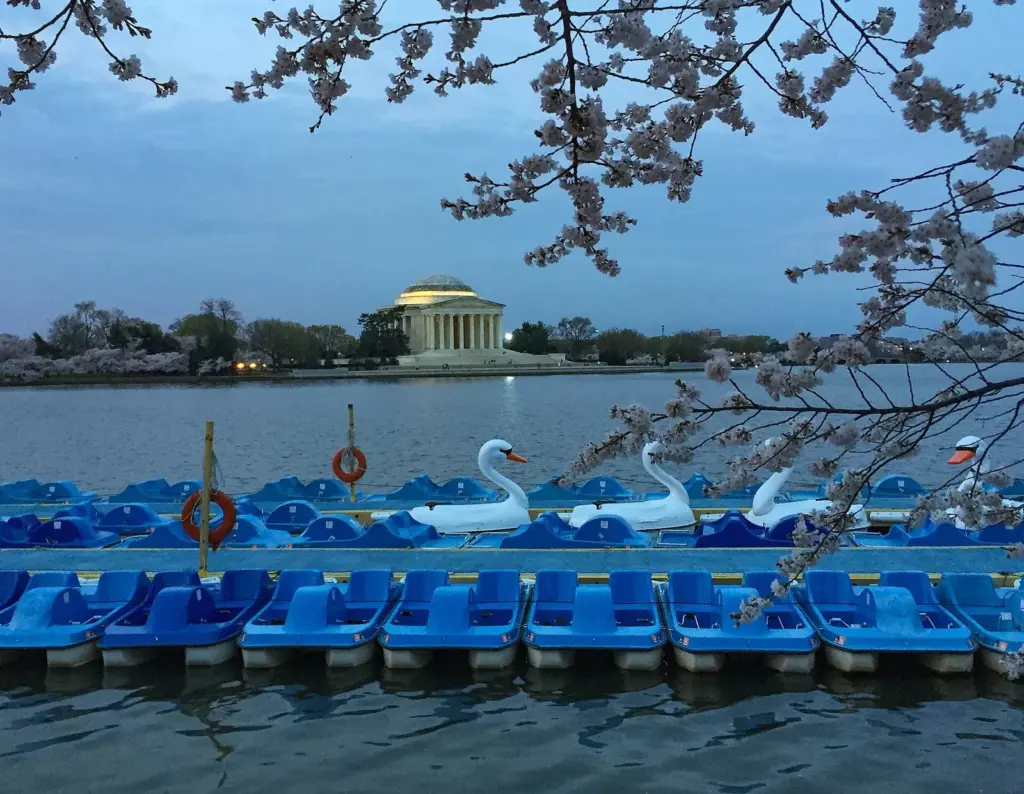
Paid. Pedal around the basin with the Jefferson Memorial in view. In September 2026, boats rented weekdays 10 a.m. to 7 p.m. and weekends 9 a.m. to 7 p.m. (last boat 5:45 p.m.), for $38 on weekdays and $40 on weekends. Check with the boat operator for the season’s end date.
Plan it: Boathouse on the basin’s northeast side. Metro: Smithsonian, 15-minute walk. Allow 1 hour. Best for: ages 3 and up.
27. Kayak or Paddleboard on the Potomac
Paid. With older kids, rent a kayak or paddleboard from the Key Bridge Boathouse or Thompson Boat Center and paddle past Georgetown and Roosevelt Island. In September 2026, a single kayak or board cost $22 on weekdays and $24 on weekends.
Plan it: Seasonal; check closing dates. Allow 1 to 2 hours. Best for: ages 10 and up with confident swimmers.
28. Take the Water Taxi
Paid. The Potomac Water Taxi links the Wharf with Georgetown and Old Town Alexandria in about 30 minutes, and National Harbor in about 45. Adults paid about $22 one way in 2026, and it runs from March to December.
Plan it: Board at the Wharf. Allow half a day with a stop. Best for: all ages.
29. Rock Creek Park Nature Center and Planetarium
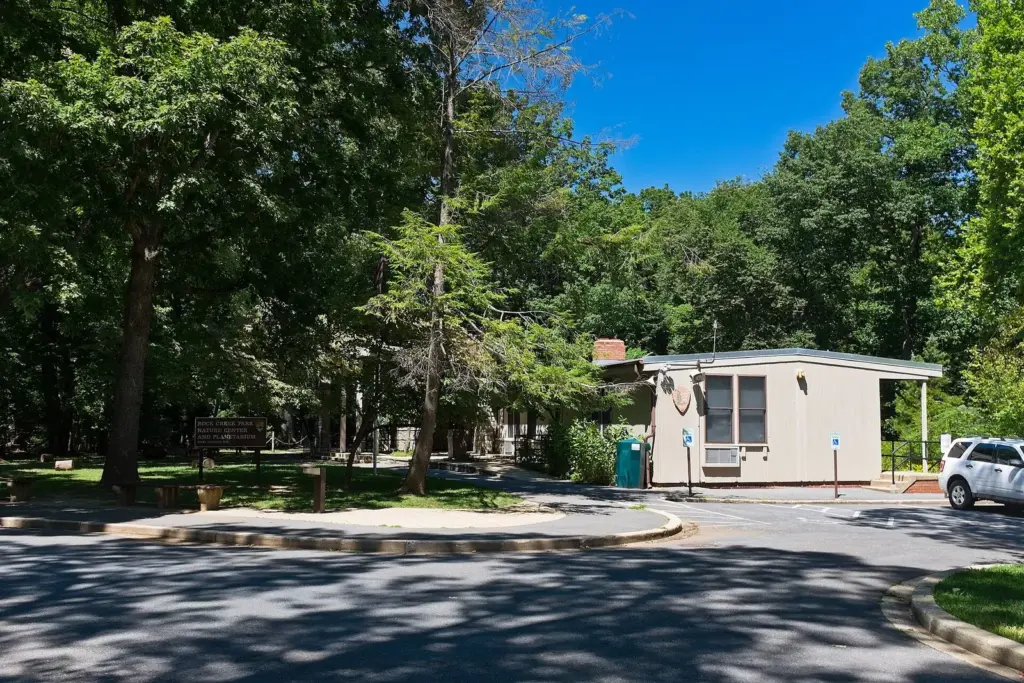
Free. The only planetarium in the entire national park system is here, and tickets for shows are handed out 30 minutes beforehand. The nature center’s exhibits and trails make an easy half day in the woods.
Plan it: Check show times before you go. Best by car or rideshare. Allow 2 hours. Best for: ages 4 to 12.
30. Bike or Scoot Car-Free Beach Drive
Free. About 5 miles of upper Beach Drive in Rock Creek Park are now closed to cars full-time, year-round, which makes it a safe, shady route for family bike rides and scooters.
Plan it: Bring or rent bikes. Allow 1 to 2 hours. Best for: ages 6 and up who can ride.
31. Theodore Roosevelt Island
Free. A wooded island in the Potomac with easy trails, boardwalks and a big statue of Teddy Roosevelt. It feels wild despite being minutes from Georgetown. Restrooms close from about October to April.
Plan it: Footbridge from the Virginia side, near Rosslyn. Metro: Rosslyn (Blue, Orange, Silver lines), 15-minute walk. Allow 1 to 1.5 hours. Best for: ages 3 and up.
32. Kenilworth Aquatic Gardens
Free. Ponds full of lotus and water lilies, with boardwalks over the marsh, turtles and frogs. The lotus bloom peaks in July, when the park holds a festival. Go early, when it opens at 8 a.m., before the heat.
Plan it: Northeast DC; best by car or rideshare. Allow 1 hour. Best for: ages 3 and up.
33. U.S. National Arboretum
Free. Wide lawns, gardens and the National Capitol Columns standing in a meadow, plus a bonsai museum. Plenty of space to run.
Plan it: 8 a.m. to 5 p.m. (last entry 4:30), closed December 25; entrance 2400 R Street NE. Best by car. Allow 1.5 hours. Best for: all ages, picnics.
34. Great Falls Park
Paid, per vehicle. The Potomac thunders through a rocky gorge about 30 minutes’ drive from the city, with overlooks that kids can reach easily. Open 7 a.m. to dark; there’s a per-vehicle entrance fee, so check the park’s site for the current fee.
Plan it: Car needed. Allow half a day. Best for: ages 5 and up; hold hands near the edges.
35. Cycle the Mall on Capital Bikeshare
Paid. For teens and confident riders, bike-share bikes make the Mall’s long distances fun. It costs $1 to unlock plus 15 cents a minute on a classic bike, or $10 for a day pass, as of September 2026.
Plan it: Docks all around the Mall. Allow 1 to 2 hours. Best for: teens with an adult.
36. The Wharf
Free to wander. Piers, boats, swings and the Municipal Fish Market, which dates to 1805, plus free Friday concerts at 7 p.m. on the Transit Pier in summer. An easy family evening.
Plan it: Metro: Waterfront (Green line) or L’Enfant Plaza. Allow 2 hours. Best for: all ages.
Seasonal Family Events
37. Blossom Kite Festival
Free. Hundreds of kites fill the sky around the Washington Monument during the National Cherry Blossom Festival. In 2027 it’s on Saturday, March 27.
Plan it: Bring a kite, or just watch. Metro: Smithsonian. Best for: all ages.
38. Smithsonian Folklife Festival
Free. Music, crafts, food and hands-on demonstrations in tents on the Mall, usually for about two weeks around July 4. Themes change every year.
Plan it: Go late afternoon to avoid the worst heat. Best for: all ages.
39. Marine Corps Parades
Free. The Tuesday Sunset Parade at the Marine Corps War Memorial, 7 p.m. in summer, needs no reservation; the Friday Evening Parade at Marine Barracks Washington, 8:45 p.m. from May through August, needs a free reservation and a late bedtime. The Silent Drill Platoon wows every age.
Plan it: Bring a blanket for Tuesdays. Best for: ages 6 and up.
40. The Fourth of July on the Mall
Free. A parade in the late morning and fireworks over the Reflecting Pool after 9 p.m. It’s hot, crowded and a highlight for older kids, but a long day for little ones. The Washington Monument is closed that day.
Plan it: Arrive by mid-afternoon with water and snacks. Best for: ages 7 and up.
41. ZooLights
Paid. The zoo lights up on winter evenings with animal-shaped light displays. In 2025-26, tickets were $9 for everyone over 2; the 2026-27 dates hadn’t been announced as of September 24, 2026.
Plan it: Usually late November to early January. Dress warmly. Best for: all ages.
42. The National Christmas Tree
Free. After the December lighting ceremony, the tree on the Ellipse and its ring of state trees are free to visit, traditionally with model trains circling the base. Ceremony tickets are by lottery.
Plan it: Weekday evenings are calmest. Metro: Federal Triangle. Best for: all ages.
43. Ice Skating in the Sculpture Garden
Paid. The National Gallery’s Sculpture Garden fountain turns into a rink in winter. The 2025-26 season ran from November 24 to March 1, with skating at $15; 2026-27 details hadn’t been announced.
Plan it: Metro: Archives. Best for: ages 5 and up.
Day Trips and Bigger Outings
44. George Washington’s Mount Vernon
Paid. Washington’s home, farm and riverside estate, with plenty of outdoor space. Adult tickets (ages 12 and up) start at $30 online as of September 2026, with $2 off if you book three or more days ahead, and a timed Mansion entry is chosen at checkout.
Plan it: Open 9 a.m. to 5 p.m. About 40 minutes by car; transit via Huntington station (Yellow line) and a bus. Allow half a day. Best for: ages 6 and up.
45. Old Town Alexandria
Free to explore. Cobbled streets, a waterfront and the Torpedo Factory Art Center, where kids can watch artists at work, free and open daily 10 a.m. to 6 p.m. A free King Street Trolley runs every 15 minutes from the Metro, 11 a.m. to 11 p.m.
Plan it: Metro: King Street-Old Town (Blue, Yellow lines). Allow half a day. Best for: all ages.
46. The Changing of the Guard at Arlington
Free. The precise, silent Changing of the Guard at the Tomb of the Unknown Soldier holds even restless kids spellbound. It happens every 30 minutes from April 1 to September 30 and on the hour from October 1 to March 31. The cemetery is open 8 a.m. to 5 p.m. from October 1.
Plan it: Metro: Arlington Cemetery (Blue line). It’s a long, hilly walk to the Tomb; plan for it. Allow 2 hours. Best for: ages 7 and up; a quiet, respectful visit.
47. The National Aquarium, in Baltimore
Paid. DC hasn’t had an aquarium since 2013, so the nearest is the National Aquarium in Baltimore, about an hour away. As of September 2026, general admission was $49.95, youth ages 5 to 20 paid $39.95, and children 4 and under got in free, with timed entry.
Plan it: Trains from Union Station to Baltimore, or drive. Allow a full day. Best for: all ages.
48. Kings Dominion
Paid. With Six Flags America closed after its final day on November 2, 2025, the nearest big theme park is Kings Dominion in Virginia, more than 80 miles south. Its 2026 season opened March 21, with daily operation through the summer.
Plan it: Car needed; check the operating calendar. Allow a full day. Best for: thrill-seeking kids and teens.
49. Hersheypark
Paid. Pennsylvania’s largest amusement park, about two to two and a half hours north of DC by car, opened its 2026 season on April 3, its 120th operating year. It’s a long day trip, better as an overnight.
Plan it: Car needed. Allow a full day or two. Best for: families with a car and energy to spare.
50. A Nationals Game
Paid. Baseball at Nationals Park, on the Anacostia River, is a relaxed family night out in spring and summer. The regular season ends in late September. Backpacks aren’t allowed; clear bags up to 16 by 16 by 8 inches are.
Plan it: Metro: Navy Yard-Ballpark (Green line). Allow 3 to 4 hours. Best for: all ages.
Getting Around DC With Kids
Metro is your friend. Up to two children age 4 and under ride free with each fare-paying adult on trains and buses, and kids 5 and older pay the regular fare. Every station has elevators, though they’re occasionally out of service, so check before you go if you rely on a stroller. The DC Circulator buses ended in December 2024, and there’s no shuttle on the Mall.
Distances are longer than they look. From the Lincoln Memorial to the Capitol is about two miles. With small children, pick one end of the Mall per day, bring the stroller even for kids who’ve outgrown it at home, and use Metro stations at each end rather than walking the whole thing.
Strollers are welcome almost everywhere, including the Smithsonian museums, but not at the Washington Monument or on White House tours, where bags and strollers must stay behind.
Where to stay: a hotel near a Metro station, with a short walk to the Mall, makes the midday nap or reset possible. Our guide to where to stay in Washington DC covers family-friendly areas, including Capitol Hill, the Wharf and Arlington.
Food, Restrooms and Breaks
The Smithsonian museums are your rest stops: clean restrooms, water fountains, benches and air conditioning. The Mall itself has little food, so pack snacks. The best lunch on the Mall is the Mitsitam cafe in the American Indian museum; otherwise, walk a few blocks north to Penn Quarter. The Kogod Courtyard, the glass-roofed atrium shared by the Portrait Gallery and American Art Museum, is one of the calmest places in the city to sit down with kids, and it stays open until 7 p.m. On nice days, a picnic on the Mall’s lawns beats any museum cafe.
Free vs. Paid: What Costs Money
| Free | Free but book ahead | Paid |
|---|---|---|
| Smithsonian museums (most), National Gallery of Art, the memorials, Planet Word, Rock Creek Park, Roosevelt Island, Kenilworth, the Arboretum | National Zoo, Air and Space Museum, African American history museum, Library of Congress, Bureau of Engraving and Printing, Washington Monument ($1 online fee) | National Children’s Museum, Spy Museum, Building Museum exhibitions, pedal boats, the water taxi, Mount Vernon, the Cathedral, ZooLights |
A family can fill four or five days in DC without paying a single admission fee. The money goes on hotels, food and the handful of paid extras you choose.
Tips for Each Age Group
Toddlers and preschoolers. Build the day around naps and snacks, not attractions. Morning is prime time: the zoo when it opens, Natural History at 10 a.m., the National Children’s Museum’s first time slot. Bring the stroller everywhere except the Washington Monument and the White House, and use the museums for changing, feeding and air conditioning. The FDR Memorial, the Sculpture Garden and the Arboretum’s lawns are easy places to let little ones roam.
School-age kids. Give them a mission: find your state at the WWII Memorial, spot the Hope Diamond, count the gargoyles at the Cathedral, collect a photo in Einstein’s lap. Mix one “look” museum with one “do” activity each day, and let them choose one thing on the itinerary. Kids in this range are usually the ones who get the most from the Bureau of Engraving and Printing and the Washington Monument elevator.
Tweens and teens. Give them some control and some independence. Teens can navigate Metro themselves with a card or phone, ride bike-share bikes along the Mall with an adult nearby, and usually love the Spy Museum and a night walk to the memorials. They’re old enough for the African American history museum’s history galleries and the Holocaust Museum, which needs timed tickets all year; both are powerful, and worth talking through afterward.
School and Group Trips
DC is the classic school-trip destination, and groups need more planning than families. Book group entries early: the Library of Congress asks groups of 21 or more to register separately, up to 60 days ahead, and the Capitol Visitor Center and White House tour requests both favor early applications. Timed-pass museums, including Air and Space and the African American history museum, fill up fastest in spring, when student groups peak from March to early June. If you can, schedule the busiest sites for early mornings and save the memorials for the evening, when they’re lit and quieter.
When to Visit DC With Kids
Summer is when most families can come, and it works with planning: July averages a high of 89.6°F, so do the memorials early, the museums in the heat of the day and outdoor fun after dinner. Spring is beautiful but busy, with cherry blossom crowds and school groups filling the museums on weekday mornings. Fall, especially late September and October, is the sweet spot if you can travel during term time: mild weather, shorter lines and a full calendar. Winter is quiet and cheap, with ZooLights, the National Christmas Tree and ice skating to fill the evenings.
A Rainy-Day Plan
Rain is when DC’s free museums shine. Start at Natural History at 10 a.m., then walk next door to American History. On another day, pair the National Children’s Museum with the Postal Museum near Union Station, or the Spy Museum with the National Building Museum’s Great Hall. The Kogod Courtyard is the place to wait out a downpour.
What to Skip, and What’s Changed
Don’t look for an aquarium in DC. The National Aquarium’s Washington branch closed in 2013. The nearest aquarium is in Baltimore.
Don’t plan on Six Flags America. It closed for good after its final day on November 2, 2025.
Don’t show up at Air and Space or the zoo without passes. Both require free timed passes for everyone, and popular dates book up.
Don’t try the Washington Monument with a stroller-age toddler unless you’re ready to carry them: strollers aren’t allowed, and everyone 2 and older needs a ticket.
Don’t over-schedule. The best family days in DC have one big museum, one outdoor thing and a long lunch. The free admission means you can leave when kids are done, and come back another day.
Watch the funding deadline. Federal funding runs through December 11, 2026. In the 2025 shutdown, the Smithsonian museums and the zoo closed from October 12 into mid-November. If your trip falls after December 11, check the news before you travel.
Things to Do in DC With Kids FAQ
What is there to do in DC with kids?
Plenty, and much of it free: the National Zoo and its giant pandas, dinosaurs at the Natural History museum, planes at the Air and Space Museum, the National Children’s Museum for under-12s, the Spy Museum for older kids, pedal boats on the Tidal Basin and a ride up the Washington Monument.
Is Washington DC good for kids?
Very. Most major attractions are free, so you can visit for an hour and leave without wasting money. The museums have restrooms, cafes and air conditioning, Metro is easy with a stroller, and up to two children age 4 and under ride free with each paying adult.
Do kids need tickets for the National Zoo?
Yes. The zoo is free, but everyone, including infants, needs a free entry pass, released 30 days ahead on a rolling basis. The pass covers the giant pandas, which have been on view on the Asia Trail since January 2025. Parking costs extra.
Is there an aquarium in Washington DC?
No. The National Aquarium’s DC branch closed in 2013. The nearest aquarium is the National Aquarium in Baltimore, about an hour away by train or car, where children 4 and under get in free and youth tickets cost $39.95 as of September 2026.
What is the best museum in DC for young kids?
For toddlers and preschoolers, the National Children’s Museum, built for kids under 12, is the best bet, though it charges admission. Among the free museums, Natural History wins for dinosaurs and animals, and the Postal Museum’s hanging planes and mail train car are a quiet hit.
What are the best free things to do in DC with kids?
The Smithsonian museums, the National Zoo (with a free pass), the memorials, Planet Word, the National Gallery’s Sculpture Garden, Rock Creek Park’s nature center and planetarium, Roosevelt Island, Kenilworth Aquatic Gardens and the Blossom Kite Festival are all free.
What is there to do in DC with teens?
Teens tend to love the Spy Museum, the African American history museum, a Capitol tour, bike-share rides along the Mall, kayaking on the Potomac and a nighttime walk to the memorials. The National Museum of Women in the Arts is free for everyone under 21.
How many days do you need in DC with kids?
Four days is a good length for a family trip: enough for the zoo, three or four museums, the memorials and one outdoor outing, at a pace kids can handle. With toddlers, plan one major activity a day and add a day for rest.
Related Washington DC Guides
- The Smithsonian Museums: every museum ranked, with passes and hours.
- Where to Stay in Washington DC: family-friendly areas and hotels near Metro.
- Things to Do in Washington DC: the whole city, ranked.
Sources and How We Checked
This guide was checked on September 24, 2026, against the official sites below and compiled from them; we don’t claim first-hand visits.
- Smithsonian’s National Zoo: hours and entry passes
- National Children’s Museum: plan your visit
- WMATA: fares, including children
- Recreation.gov: Washington Monument tickets
- Arlington National Cemetery: Changing of the Guard
- National Air and Space Museum: visiting in DC
We also used the Spy Museum’s, Planet Word’s, National Building Museum’s, Washington National Cathedral’s, Mount Vernon’s and National Aquarium’s own information, the Park Service’s pages for Rock Creek Park, Roosevelt Island, Kenilworth and Great Falls, the City of Alexandria’s trolley details, the theme parks’ 2026 announcements and news of record (NPR, WTOP) on the 2025 shutdown and Six Flags America’s closure.
Washington DC Tourism Guide is an independent publication. We are not affiliated with Destination DC, the National Park Service, the Smithsonian Institution or any attraction listed here, and no one paid to be included.
Photo Credits
- Qing Bao the giant panda, 2026: photo by Melina Kolburn, via Wikimedia Commons (CC BY-SA 4.0)
- The National Children's Museum entrance, 2024: photo by ajay_suresh, via Wikimedia Commons (CC BY 2.0)
- The International Spy Museum, 2019: photo by Farragutful, via Wikimedia Commons (CC BY-SA 4.0)
- Planet Word in the Franklin School, 2022: photo by Nicolet1327, via Wikimedia Commons (CC BY-SA 4.0)
- The National Building Museum's Great Hall, 2007: photo by Daderot, via Wikimedia Commons (Public domain)
- Pedal and swan boats on the Tidal Basin: photo by Victoria Stauffenberg, via Wikimedia Commons (Public domain)
- The Rock Creek Park Nature Center: photo by Bonnachoven, via Wikimedia Commons (CC0)