The Smithsonian counts 21 museums and the National Zoo, and it doesn’t charge a cent to walk into any of them. Eight of the museums you can actually visit stand shoulder to shoulder along the National Mall, close enough that you can leave the dinosaurs at 2 p.m. and be looking at the Apollo 11 capsule by 2:20. That’s the good news about the Smithsonian museums. The bad news is that there’s far too much of it for one trip, two of the best need timed passes, and a few buildings on older lists are closed. This page ranks them, tells you which to book ahead, and says honestly which ones you can skip.
Quick answer: If you only have one day, see the National Museum of Natural History and the National Museum of American History, which sit next to each other and need no passes. With a free timed pass, the National Museum of African American History and Culture is the most powerful museum in Washington, and the Air and Space Museum on the Mall is the one kids beg for. Most museums open 10 a.m. to 5:30 p.m. daily; all are free.
Last updated September 24, 2026. Hours, passes, closures and reopenings were checked that day against the Smithsonian’s and the individual museums’ own websites.
- Cost: free at every museum, every day.
- Timed passes: needed for the National Museum of African American History and Culture, the National Air and Space Museum on the Mall and the National Zoo. Every other Smithsonian museum is walk-in (as of September 2026).
- Hours: most museums 10 a.m. to 5:30 p.m. daily, closed December 25. The American Art Museum and Portrait Gallery run 11:30 a.m. to 7 p.m.
- Closed: the Smithsonian Castle and the Arts and Industries Building, both reopened only briefly for summer 2026. The Hirshhorn’s Sculpture Garden reopens October 31, 2026.
- Metro: Smithsonian (Blue, Orange, Silver lines) comes up on the Mall between the museums.
On this page: At a glance | Map | Every museum, ranked | Closed and building-less museums | Timed passes | Hours, security, food | Sample days | By interest | What’s changed | What to skip | FAQ
The museums fill one half of the Mall and the memorials fill the other, and most trips mix the two. Our guide to the monuments and memorials on the National Mall covers the western half, and our full list of things to do in Washington DC puts both in the context of a whole trip.
The Smithsonian Museums at a Glance
Every museum below is free. Hours are as posted in September 2026, and “time to allow” is for a visit that does the highlights properly rather than a sprint.
| Museum | Where | Pass? | Hours | Time to allow |
|---|---|---|---|---|
| African American History and Culture | Mall, 14th St and Constitution Ave | Yes, free timed pass | 10-5:30, last entry 4 | 3-4 hours |
| Natural History | Mall, 10th St and Constitution Ave | No | 10-5:30 | 2-3 hours |
| Air and Space (Mall) | Mall, 650 Jefferson Dr SW | Yes, free timed pass | 10-5:30 | 2-3 hours |
| American History | Mall, 14th St and Constitution Ave | No | 10-5:30 | 2-3 hours |
| National Portrait Gallery | Penn Quarter, 8th and F Sts NW | No | 11:30-7 | 1.5-2 hours |
| American Art Museum | Penn Quarter, 8th and G Sts NW | No | 11:30-7 | 1.5-2 hours |
| Udvar-Hazy Center | Chantilly, Virginia, near Dulles | No | 10-5:30 | 2-3 hours plus travel |
| American Indian | Mall, 4th St and Independence Ave | No | 10-5:30 | 1.5 hours |
| Hirshhorn | Mall, 7th St and Independence Ave | No | 10-5:30 | 1-1.5 hours |
| Asian Art (Freer and Sackler) | Mall, 12th St and Jefferson Dr | No | 10-5:30 | 1-1.5 hours |
| Renwick Gallery | Pennsylvania Ave at 17th St NW | No | 10-5:30 | 45 min |
| Postal Museum | Next to Union Station | No | 10-5:30 | 1 hour |
| African Art | Mall, behind the Castle | No | 10-5:30 | 45 min-1 hour |
| Anacostia Community Museum | Southeast DC | No | 10-5 | 1 hour |
A rule of thumb that saves a lot of disappointment: two big museums a day is the realistic maximum. Three if one is small. People who plan five spend the afternoon in a daze, looking at nothing.
Where the Smithsonian Museums Are on the Mall
The museums face each other across the grass between the Capitol and the Washington Monument, and once you know which side is which, the Mall stops being confusing. On the north side, along Constitution Avenue and Madison Drive, you have, from west to east, the African American history museum at 14th Street, American History next to it, and Natural History at 10th Street. On the south side, along Independence Avenue and Jefferson Drive, the order from west to east is the Freer, the Castle with the African Art museum and the Sackler tucked behind it, the Arts and Industries Building, the Hirshhorn, Air and Space and, at the Capitol end, the American Indian museum.
Crossing the Mall takes about five minutes, so a north-side museum and a south-side museum make an easy pair. Walking the length of the museum row, from the African American history museum to the American Indian museum, takes about 20 minutes. The Portrait Gallery and American Art Museum sit a few blocks north in Penn Quarter, and the Renwick, the Postal Museum and the Anacostia museum are farther out.
Not everything free on the Mall is the Smithsonian. The National Gallery of Art, with its two buildings between the Natural History museum and the Capitol, is a separate institution. It’s also free, open 10 a.m. to 5 p.m. daily as of September 2026, and easily as good as any art museum here. The National Archives, the U.S. Holocaust Memorial Museum and the U.S. Botanic Garden aren’t Smithsonian either, and their rules differ: the Holocaust Museum needs timed tickets all year, with a $1 advance fee, while Archives reservations are optional. Our guide to the other museums in Washington DC covers them in detail.
Every Smithsonian Museum in DC, Ranked
This ranking is for a first-time visitor with a normal mix of interests. Families with young kids should swap Natural History and Air and Space to the top; art lovers should move the Portrait Gallery and American Art Museum up. The reasons are in each entry.
1. National Museum of African American History and Culture
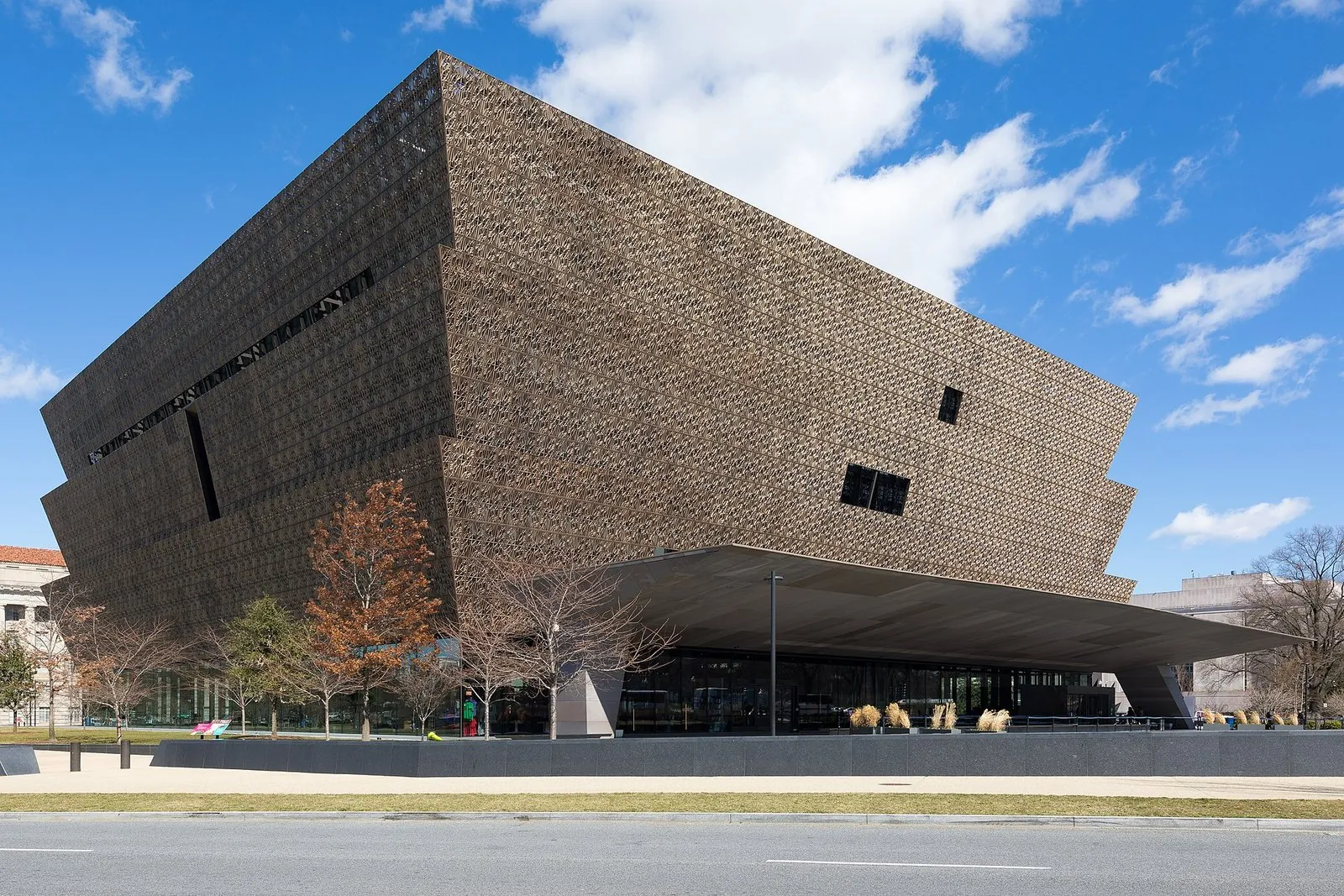
Free timed pass required, even for babies. If you can get a pass, this is the best museum in Washington. It opened on September 24, 2016, in the bronze-latticed building at 14th Street and Constitution Avenue, and it’s built like a descent and a climb. You take an elevator down to the history galleries, which begin in the 15th century with the slave trade, and you work your way up, ramp by ramp, through slavery, Reconstruction, segregation and the civil rights movement to the present. The early galleries are close and dim; the rooms open up as the story moves forward. The architecture is doing that on purpose.
The objects are what stay with people: a segregated railroad car you can walk through, a guard tower from Louisiana’s Angola prison, Harriet Tubman’s hymnal, and Emmett Till’s casket, in a quiet room where photographs are not allowed. The upper floors turn to culture: music, sport, the military, community life. Chuck Berry’s red Cadillac is up there, and a Tuskegee Airmen training plane hangs in the atrium.
Budget far more time than you think. The history galleries alone take two to three hours if you read, and many people find they need a break in the Contemplative Court, a round room with water falling from the ceiling, before the upper floors. It’s heavy and it’s worth it. It’s less suited to young children, who tend to do better in the culture galleries upstairs.
Plan it: 10 a.m. to 5:30 p.m. daily, last entry 4 p.m., closed December 25 (as of September 2026). Free timed passes on the museum’s website, released 30 days ahead on a rolling basis, with same-day passes online from 8:15 a.m. Eastern; up to nine per order. You can enter any time from your pass time until 4 p.m. Veterans, active-duty service members and first responders can enter with ID. Metro: Smithsonian or Federal Triangle (Blue, Orange, Silver lines), 10-minute walk. Allow 3-4 hours. Best for: adults, teens, first-timers.
2. National Museum of Natural History
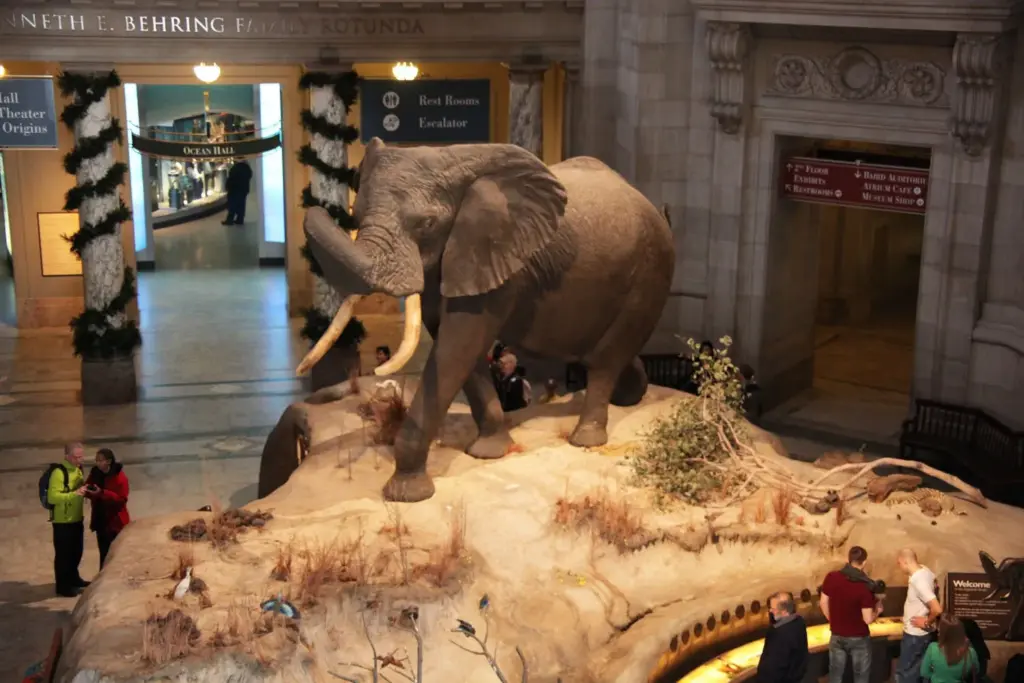
Free, no pass. The easiest win in the city, and the museum to pick if you only do one with kids. You walk in under the dome to a huge African elephant, and from there the choice is yours. The Hope Diamond is on the second floor, 45 carats of deep blue in a case that always has a crowd around it; go early or late to get close. The Hall of Fossils: Deep Time, on the first floor, lays out roughly 700 fossils, with a T. rex, a triceratops and the story of life on Earth told end to end. Nearby are the ocean hall, the human origins hall and the mammals, and each could fill an hour.
The downside is that everyone knows all this. It’s the busiest Smithsonian museum, and on a rainy weekend the rotunda feels like a train station. Enter from Constitution Avenue at 10th Street instead of the Mall side, where lines tend to be longer, and head upstairs first while families bottleneck at the fossils.
Plan it: 10 a.m. to 5:30 p.m. daily, closed December 25 (as of September 2026). Free, no pass. Entrances on Madison Drive (Mall side) and Constitution Avenue at 10th Street. Metro: Smithsonian or Federal Triangle (Blue, Orange, Silver lines), or Archives-Navy Memorial-Penn Quarter (Green, Yellow lines), 5-minute walk. Allow 2-3 hours. Best for: families, first-timers, rainy days.
3. National Air and Space Museum
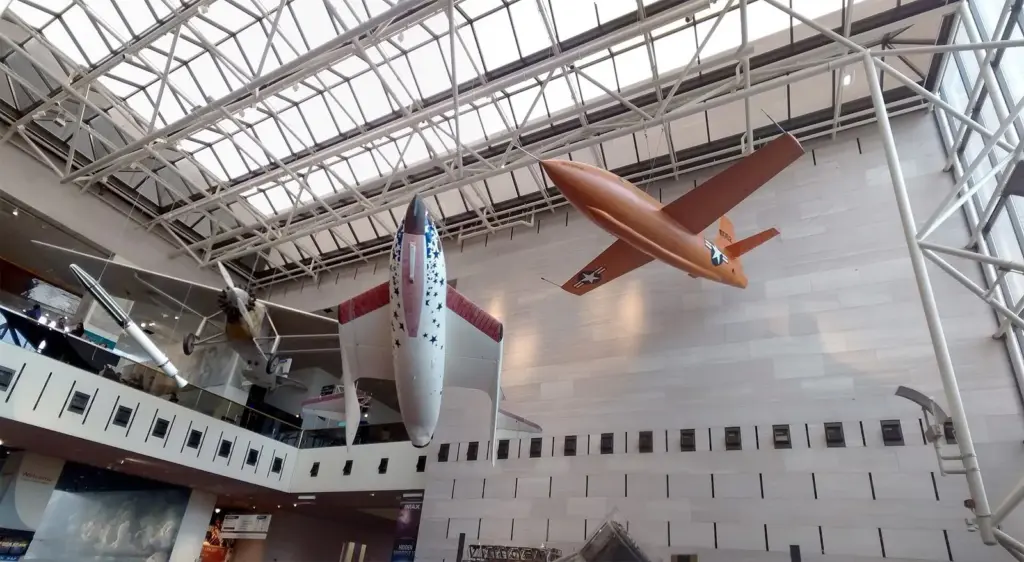
Free timed pass required for all ages. After years of phased renovation, the Mall building is nearly whole again. As of September 2026, 18 of its 20 renovated galleries are open: the main Milestones of Flight hall and several others reopened on July 28, 2025, and five more opened on July 1, 2026, for the museum’s 50th anniversary. The last two are due on October 30, 2026 (At Home in Space) and November 11, 2026 (Modern Military Aviation). The Wright brothers’ 1903 Flyer, the Spirit of St. Louis and the Apollo 11 command module Columbia are the objects people come for, and they’re all here.
Two catches. You need a pass, so this isn’t a museum you can drop into on a whim. And the entrance is on Jefferson Drive only (650 Jefferson Dr SW), on the Mall side, which trips up anyone arriving from Independence Avenue. One small note for Trekkies: the original Star Trek Enterprise model is off display until late fall 2026.
If aviation is your thing, the Mall museum is only half of it. The bigger aircraft live at the Udvar-Hazy Center in Virginia, ranked below, and the two together make a full day.
Plan it: 10 a.m. to 5:30 p.m. daily, closed December 25 (as of September 2026). Free timed passes for everyone, booked on the museum’s website. Enter on Jefferson Drive. Metro: L’Enfant Plaza (Blue, Orange, Silver, Green, Yellow lines) or Smithsonian, 5-10 minute walk. Allow 2-3 hours. Best for: families, kids of every age, aviation fans.
4. National Museum of American History
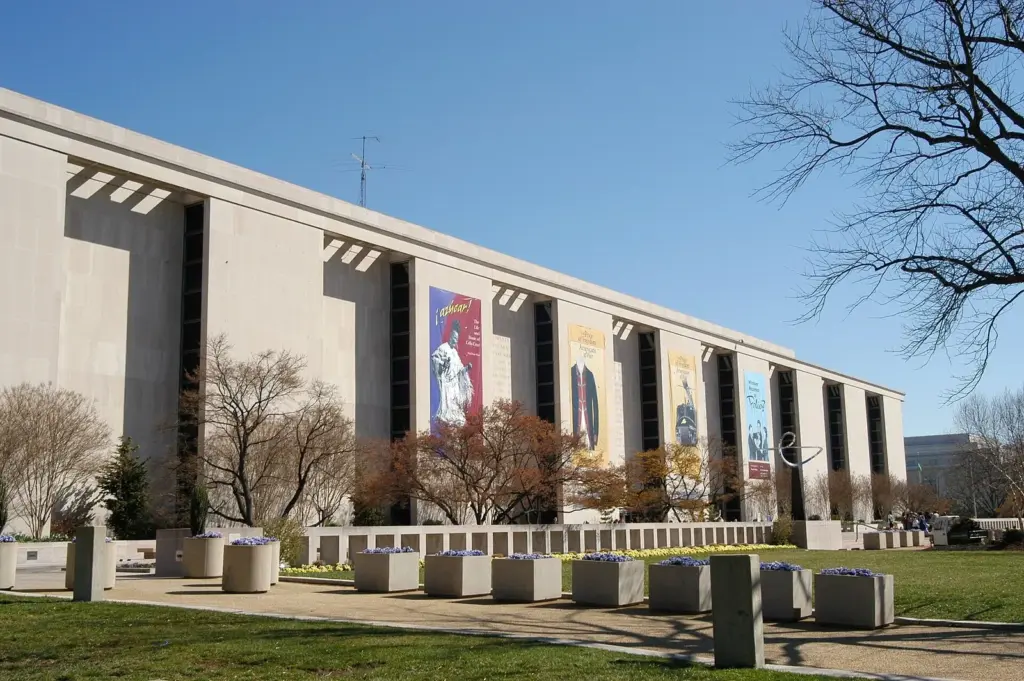
Free, no pass. The museum most people underrate. It’s a sprawling attic of the country, and it rewards picking three things rather than trying to see everything. Start with the Star-Spangled Banner, the actual 30-by-34-foot flag that inspired the anthem, shown in a dim, climate-controlled room where photos aren’t allowed. Then Dorothy’s ruby slippers, which sit at the entrance to the Entertainment Nation exhibition. After that, follow your nose: presidents, first ladies’ gowns, the Greensboro lunch counter where four students sat in, trains, inventions.
The Molina Family Latino Gallery is here too, the Smithsonian’s first gallery devoted to Latino history, run by the National Museum of the American Latino. Its second exhibition, the bilingual ¡Puro Ritmo!: The Musical Journey of Salsa, opened in April 2026.
American History is also the smart pairing for the African American history museum next door, and for Natural History, one block east. It’s less crowded than either, so it’s a good place to recover.
Plan it: 10 a.m. to 5:30 p.m. daily, closed December 25 (as of September 2026). Free, no pass. Metro: Federal Triangle or Smithsonian (Blue, Orange, Silver lines), 5-minute walk. Allow 2-3 hours. Best for: families, history buffs, pop culture fans.
5. National Portrait Gallery
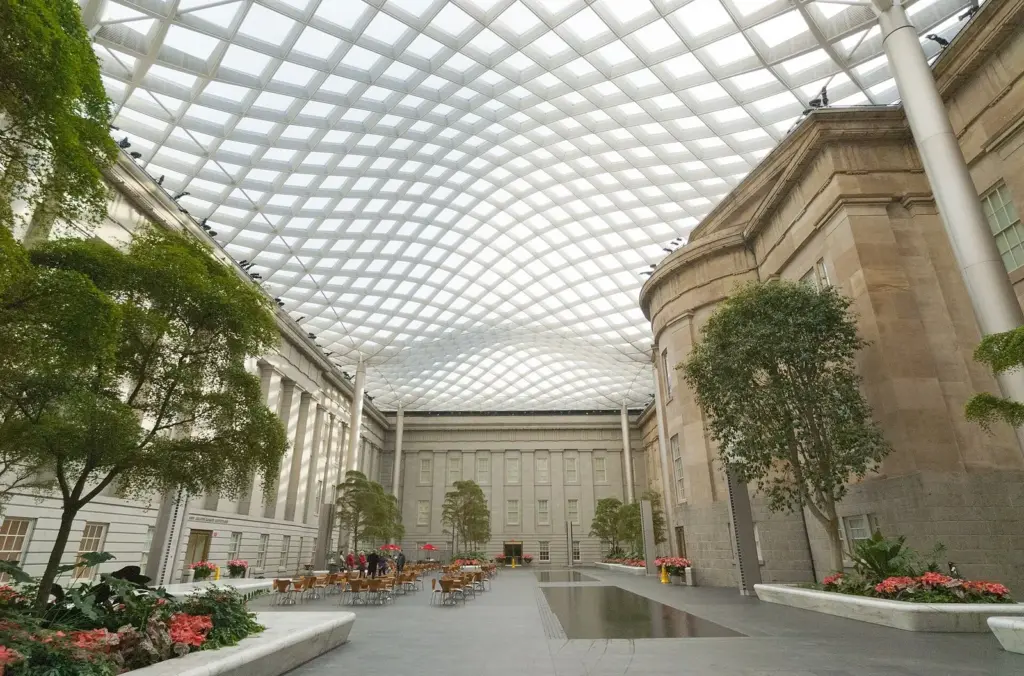
Free, no pass, open late. Off the Mall in Penn Quarter, the Portrait Gallery shares the Greek Revival Old Patent Office Building with the American Art Museum. Its America’s Presidents gallery is the only complete collection of presidential portraits outside the White House, and it’s the one room almost everyone visits. The rest of the collection runs from colonial figures to contemporary athletes, musicians and activists, and the rotating shows are some of the most interesting in the Smithsonian.
The late hours are the secret weapon. It opens at 11:30 a.m. and closes at 7 p.m., so you can do the Mall museums until they shut at 5:30 and walk over. The glass-roofed Kogod Courtyard in the middle of the building, with its cafe and tables, is one of the nicest free places in the city to sit down.
Plan it: 11:30 a.m. to 7 p.m. daily, closed December 25 (as of September 2026). Free, no pass. 8th and F Streets NW. Metro: Gallery Place-Chinatown (Red, Green, Yellow lines), 1-minute walk. Allow 1.5-2 hours. Best for: couples, art and history fans, evenings.
6. Smithsonian American Art Museum
Free, no pass, open late. The other half of the same building, and easy to do together. Its collection covers American art from the colonial era to now, including folk art, New Deal-era painting and a strong run of 20th-century work. Don’t miss the Luce Foundation Center on the upper floors, a visible storage area where thousands of objects sit in floor-to-ceiling glass cases. It feels like being let into the back room.
If you’re choosing between this and the Portrait Gallery, the Portrait Gallery has the bigger-name draw and this one the better art. Doing both takes about three hours, and they close late enough to fit in after a day on the Mall.
Plan it: 11:30 a.m. to 7 p.m. daily, closed December 25 (as of September 2026). Free, no pass. 8th and G Streets NW. Metro: Gallery Place-Chinatown (Red, Green, Yellow lines), 1-minute walk. Allow 1.5-2 hours. Best for: art lovers, rainy days, evenings.
7. Steven F. Udvar-Hazy Center
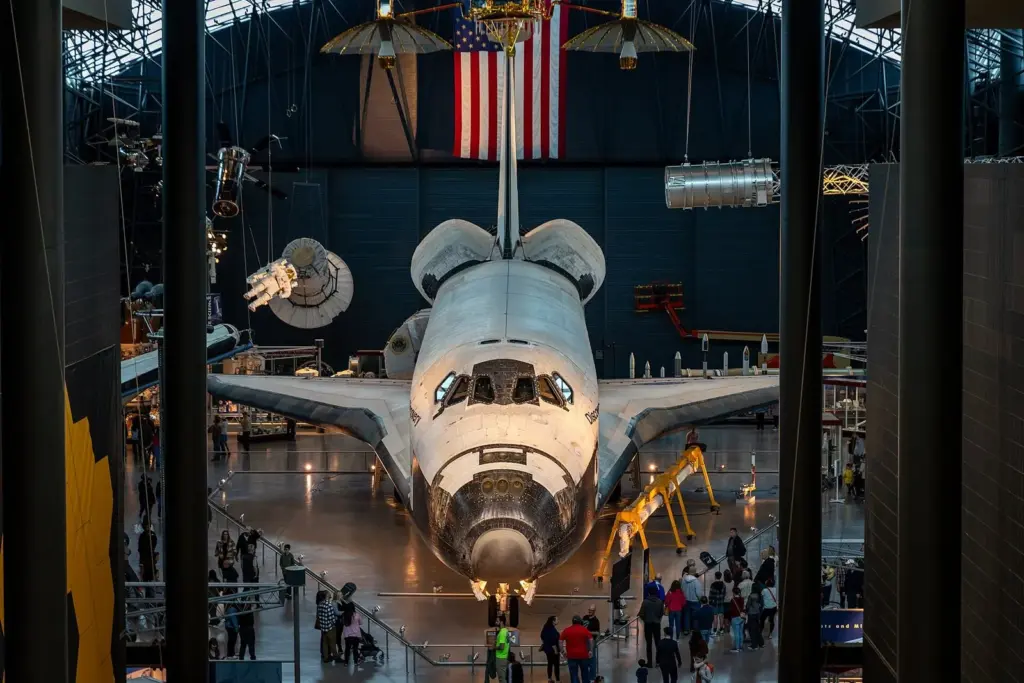
Free, no pass; parking $15. The Air and Space Museum’s second site is two enormous hangars near Dulles Airport in Chantilly, Virginia, and it’s where the aircraft too big for the Mall ended up. Space Shuttle Discovery fills one end of the space hangar. The SR-71 Blackbird, the Enola Gay and an Air France Concorde are in the main hangar, surrounded by hundreds of other aircraft, many of them hanging overhead.
Discovery nearly left. A 2025 federal law set aside $85 million to move it to Houston, and NASA approved the move that August. The Smithsonian warned that the shuttle might have to be cut apart to travel, and in early 2026 NASA’s new administrator, Jared Isaacman, halted the plan, according to news reports. As of September 2026, it’s still in Virginia.
The honest drawback is getting there. Without a car, it’s the Silver Line to Innovation Center, then the Fairfax Connector 983 bus, which runs about every 25 minutes at peak times and hourly off-peak and on weekends. Allow at least an hour each way from downtown. It’s a great half day for aviation fans, and a long detour for everyone else.
Plan it: 10 a.m. to 5:30 p.m. daily (as of September 2026). Free, no pass; parking $15. Metro: Innovation Center (Silver line), then Fairfax Connector bus 983. Allow 2-3 hours plus travel. Best for: aviation fans, families with cars, a day near Dulles.
8. National Museum of the American Indian
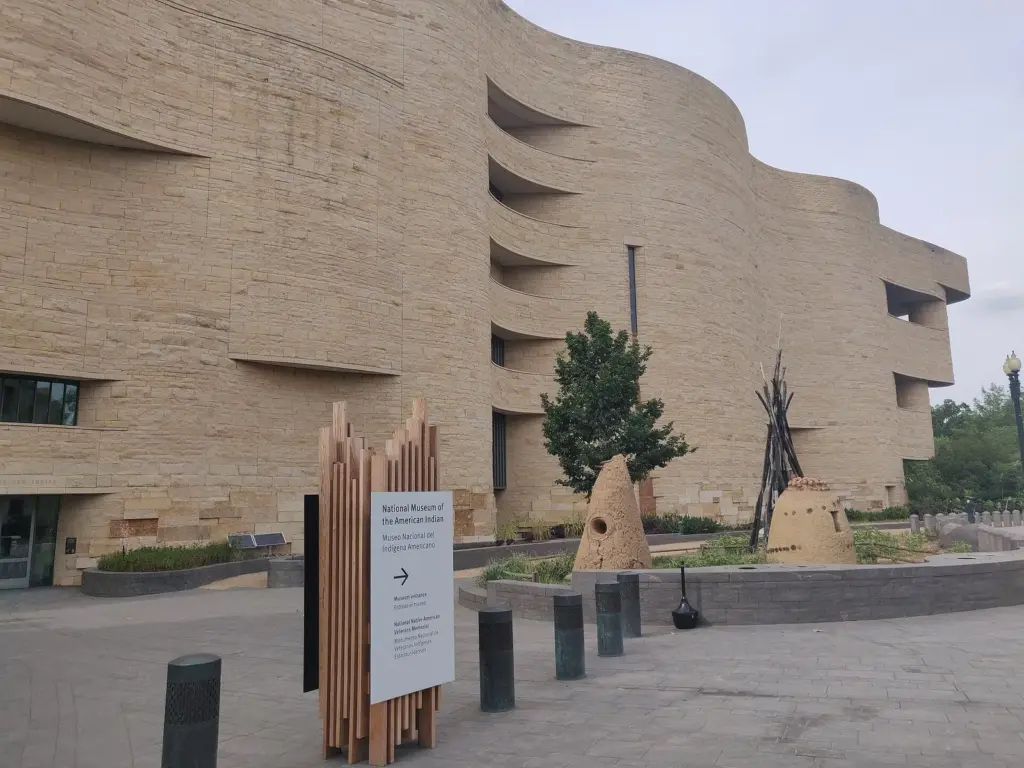
Free, no pass. The building is half the reason to come. Its curving, golden limestone walls stand out from every other museum on the Mall, and the grounds are planted with the wetland, meadow, forest and crop landscapes of the region before Europeans arrived. Inside, the exhibitions change more than at most Smithsonian museums, and they’re strongest on treaties, identity and the way Native imagery runs through American pop culture. Check what’s on before you go.
The other reason is lunch. The Mitsitam Native Foods Cafe serves dishes built on Native cooking traditions from across the Americas, and it’s the best food in any Smithsonian museum by a distance. It’s open 10 a.m. to 5 p.m. (as of September 2026), so plan a Mall day around it.
Plan it: 10 a.m. to 5:30 p.m. daily, closed December 25 (as of September 2026). Free, no pass. 4th Street and Independence Avenue SW. Metro: L’Enfant Plaza (Blue, Orange, Silver, Green, Yellow lines), 5-minute walk. Allow 1.5 hours, plus lunch. Best for: lunch, architecture, a quieter museum.
9. Hirshhorn Museum and Sculpture Garden
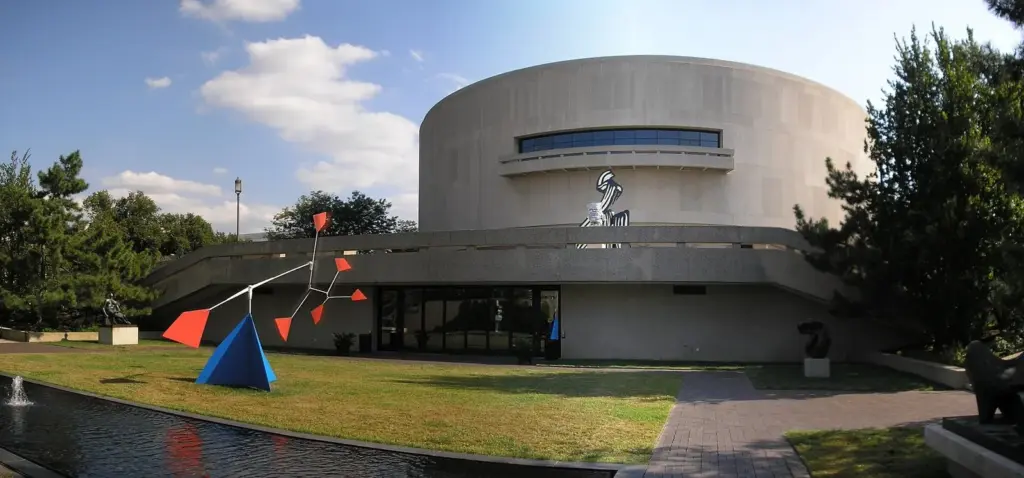
Free, no pass. The Smithsonian’s modern and contemporary art museum lives in a round concrete building on raised supports, which people call the doughnut. Inside, the galleries curve around the ring, so you walk in a loop and end up where you started. It’s the museum on the Mall most likely to divide your group, which is part of the fun.
Its big news is outside. The Sculpture Garden across Jefferson Drive has been closed for a redesign by the artist and architect Hiroshi Sugimoto, and it reopens on Saturday, October 31, 2026, with about 60 sculptures, roughly 30,000 plants and a restored passage under the road. The reopening weekend of October 31 and November 1 is free, like everything else, but expect it to be busy.
Plan it: Museum 10 a.m. to 5:30 p.m. daily (the Smithsonian’s standard hours); Sculpture Garden from October 31, 2026. Free, no pass. 7th Street and Independence Avenue SW. Metro: L’Enfant Plaza or Smithsonian, 5-minute walk. Allow 1-1.5 hours. Best for: contemporary art fans, couples, teens.
10. National Museum of Asian Art (Freer and Sackler Galleries)
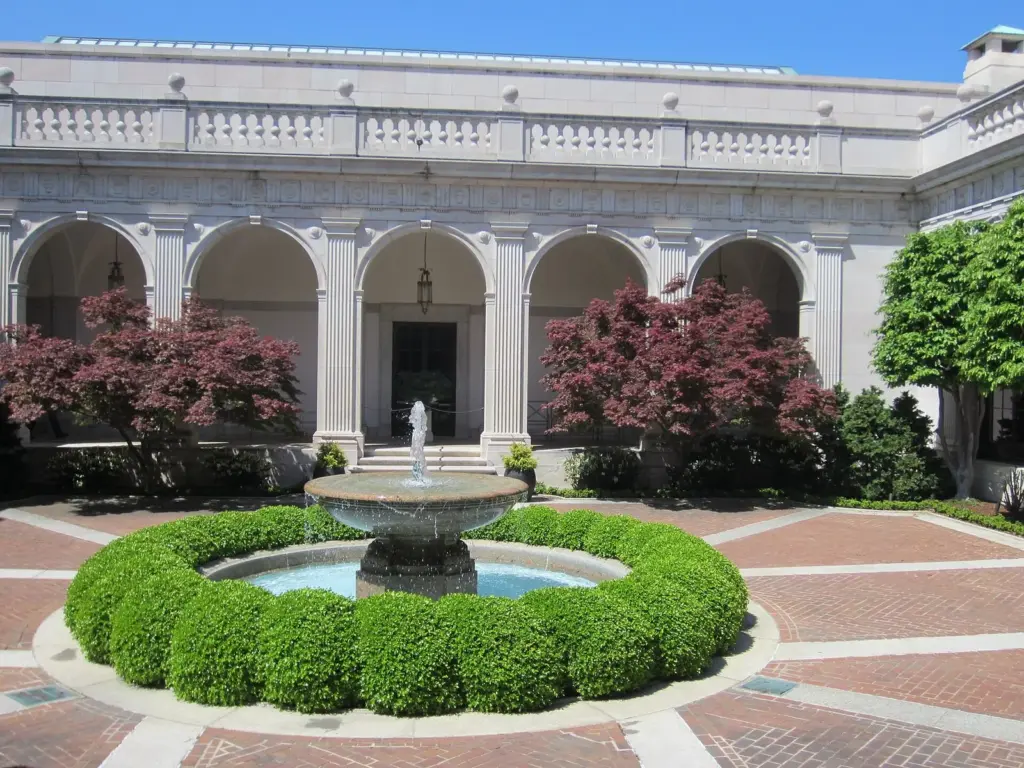
Free, no pass. Two connected galleries, the Freer in an elegant 1923 building on the Mall and the Sackler underground next door, hold one of the country’s great collections of Asian art: Chinese jades and bronzes, Japanese screens, Korean ceramics, Islamic manuscripts. The one room you shouldn’t miss is the Peacock Room, a London dining room covered in gold and blue peacocks by James McNeill Whistler, moved here in its entirety. It’s one of the strangest and most beautiful interiors in Washington.
It’s also calm. On a crowded Saturday, when Natural History across the Mall is a scrum, the Freer’s courtyard and galleries feel like a different city.
Plan it: 10 a.m. to 5:30 p.m. daily, closed December 25 (as of September 2026). Free, no pass. Jefferson Drive at 12th Street SW. Metro: Smithsonian (Blue, Orange, Silver lines), 2-minute walk. Allow 1-1.5 hours. Best for: art lovers, couples, a break from crowds.
11. Renwick Gallery
Free, no pass. The American Art Museum’s craft and decorative arts branch sits in a red-brick Second Empire building by James Renwick Jr. on Pennsylvania Avenue, steps from the White House grounds. It’s small, often playful, and its shows of contemporary craft and installation art tend to be some of the most photographed exhibitions in the city. Pair it with a walk past the White House; it takes 45 minutes.
Plan it: 10 a.m. to 5:30 p.m. daily (the Smithsonian’s standard hours, as of September 2026). Free, no pass. Pennsylvania Avenue at 17th Street NW. Metro: Farragut West (Blue, Orange, Silver lines), 5-minute walk. Allow 45 minutes. Best for: a stop near the White House, design fans.
12. National Postal Museum
Free, no pass. Don’t laugh. In the grand old City Post Office next to Union Station, the Postal Museum hangs vintage mail planes from the atrium ceiling and lets kids climb into a railway mail car. Its stamp galleries hold rarities collectors travel for. It’s the best museum in the city for a spare hour near Union Station, and it’s almost never crowded.
Plan it: 10 a.m. to 5:30 p.m. daily (the Smithsonian’s standard hours, as of September 2026). Free, no pass. Next to Union Station. Metro: Union Station (Red line), 2-minute walk. Allow 1 hour. Best for: families, train arrivals, rainy days.
13. National Museum of African Art
Free, no pass. Mostly underground, reached through a small pavilion off Independence Avenue behind the Castle, this is the only national museum in the country devoted to the arts of Africa, traditional and contemporary. It’s quiet and often overlooked, and its temporary shows can be excellent. It’s an easy add to a Freer visit next door.
Plan it: 10 a.m. to 5:30 p.m. daily (the Smithsonian’s standard hours, as of September 2026). Free, no pass. Enter from the Independence Avenue side. Metro: Smithsonian (Blue, Orange, Silver lines), 3-minute walk. Allow 45 minutes to 1 hour. Best for: art lovers, a quiet stop.
14. Anacostia Community Museum
Free, no pass. The Smithsonian’s neighborhood museum, in Southeast DC, tells the stories of Washington’s own communities rather than the nation’s. It reopened on May 30, 2026, and its exhibition We Make History runs through January 2028. It’s a trip off the tourist map, which is exactly the point, and it’s the one Smithsonian museum where you’ll mostly meet locals.
Plan it: 10 a.m. to 5 p.m. (as of September 2026). Free, no pass. Metro: Anacostia (Green line), then a bus or a rideshare. Allow 1 hour. Best for: repeat visitors, anyone curious about the city beyond the Mall.
Closed Buildings, Museums Without Buildings, and the Zoo
The Smithsonian Castle is closed. The red sandstone Castle, the Smithsonian’s first building, has been closed since February 1, 2023, for a renovation expected to take about five years. It reopened temporarily from May 22 to September 7, 2026, for the country’s 250th anniversary, and it’s closed again.
The Arts and Industries Building is closed too, but it has a future. Next door to the Castle, it opened for regular hours from June 16 to September 7, 2026, for the first time since 2004. On August 31, 2026, the Smithsonian’s Board of Regents chose it as the permanent home of the National Museum of the American Latino. There’s no opening date.
Two museums have no buildings yet. Congress created the National Museum of the American Latino and the Smithsonian American Women’s History Museum in 2020. For now, the Latino museum’s public space is the Molina Family Latino Gallery inside American History.
The zoo and New York. The National Zoo in Northwest DC is also free but needs a free entry pass for everyone, infants included, and the giant pandas are back on view. Two more Smithsonian museums are in New York City: Cooper Hewitt, the design museum, and the Heye Center of the National Museum of the American Indian.
Timed Passes: Which Museums Need Them and How to Get One
Only three Smithsonian sites require timed passes as of September 2026. Every other museum is walk-in, though every one of them checks bags at the door.
| Site | Who needs a pass | When passes appear | Good to know |
|---|---|---|---|
| African American History and Culture | Everyone, all ages | 30 days ahead, rolling; same-day online from 8:15 a.m. ET | Enter any time from your slot until 4 p.m.; veterans, service members and first responders enter with ID |
| Air and Space (Mall) | Everyone, all ages | Book on the museum’s site | Enter on Jefferson Drive only; Udvar-Hazy needs no pass |
| National Zoo | Everyone, infants included | 30 days ahead, rolling | Winter schedule from September 15: grounds 8 a.m. to 4 p.m. |
The practical advice: book the African American history museum the day your 30-day window opens if you’re traveling in spring, summer or a holiday week, and set an alarm for 8:15 a.m. Eastern if you’re trying for a same-day pass. Passes are free, so if a site asks you to pay for one, you’re on a reseller.
If you can’t get a pass
Don’t give up on the day. Check again at 8:15 a.m. Eastern for the African American history museum’s same-day release, and keep checking through the morning, because plans change and passes come back. If that fails, American History next door covers a lot of the same story, and the African American history museum’s lobby and shop are worth a look even if you can’t go further. For Air and Space, the Udvar-Hazy Center in Virginia needs no pass at all and holds the bigger aircraft.
Smithsonian Museum Logistics: Hours, Security, Food and Getting There
Hours
The Smithsonian’s standard hours are 10 a.m. to 5:30 p.m. daily, and the museums close only on December 25. The exceptions, as of September 2026: the Portrait Gallery and American Art Museum open 11:30 a.m. to 7 p.m., the Anacostia Community Museum closes at 5 p.m., and the African American history museum’s last entry is 4 p.m. The museums open every day of the week, including Mondays, which catches out visitors used to European museums.
Security and bags
Every museum screens bags at the entrance, and lines build fastest at Natural History and Air and Space on weekend mornings and rainy days. Carry as little as you can, and arrive near opening time. Food and drink generally stay in the cafes.
Food
Eat at the American Indian museum’s Mitsitam cafe if you can; it’s the standout. Most other museums have cafes or food courts that are fine and pricey, and the Portrait Gallery’s courtyard cafe is the nicest place to sit. Food trucks park along the streets bordering the Mall on weekdays. With kids, pack snacks: the walk between museums is longer than it looks.
Getting there
Smithsonian station (Blue, Orange, Silver lines) comes up in the middle of the Mall. L’Enfant Plaza is best for Air and Space, the American Indian museum and the Hirshhorn, Federal Triangle for American History and Natural History, and Gallery Place-Chinatown for the Portrait Gallery and American Art Museum. The DC Circulator’s Mall bus ended on December 31, 2024, and nothing replaced it, so between museums you walk. Parking on the Mall is scarce; don’t drive.
Busy and quiet times
The museums are busiest during spring break and cherry blossom season, from mid-March through April, on summer weekdays, and on any rainy weekend, when everyone who planned to be outside comes in. School groups flood Natural History and Air and Space on weekday mornings from March to early June. The quietest stretches are January and February weekdays and the weeks after Labor Day. Wherever you go, the first hour after opening and the last hour and a half before closing are the calmest. In late June and early July, the Smithsonian Folklife Festival takes over part of the Mall outside, which is a reason to come rather than to stay away.
Accessibility
All the museums are wheelchair accessible, with elevators to every public floor, though at a few older buildings the accessible entrance isn’t the main one. Wheelchairs can be borrowed at many information desks. The Mall’s gravel paths are hard going with wheels, so use the paved sidewalks along Madison and Jefferson Drives to get between museums.
How to Plan Your Smithsonian Days
One day, no passes
Natural History at 10 a.m., upstairs first for the Hope Diamond, then the fossils. Lunch, then American History next door for the flag, the ruby slippers and whatever catches your eye. If you have energy at 5:30, walk up to the Portrait Gallery, open until 7.
One day with a pass
The African American history museum from 10 a.m., history galleries first, for three hours or more. A long lunch. Then either American History next door or, if you’re done with heavy history, the Freer’s Peacock Room and courtyard across the Mall.
Families with kids
Air and Space (pass booked) in the morning, lunch at the American Indian museum’s cafe two blocks east, then Natural History in the afternoon. Save the Postal Museum for a rainy morning or the hour before a train.
Two days
Day one: the African American history museum with a pass in the morning, American History after lunch. Day two: Natural History at opening, Air and Space (pass booked) after lunch, with a break at the American Indian museum’s cafe in between. If you add a third, make it the Portrait Gallery and American Art Museum, or Udvar-Hazy if you have a car and love aircraft.
An art day
The Freer and the African Art museum in the morning, the Hirshhorn after lunch, and the Portrait Gallery and American Art Museum in the evening. Finish at the Renwick if you still have legs.
Best Smithsonian Museums by Interest
| If you love… | Go to | Why |
|---|---|---|
| Dinosaurs, gems, animals | Natural History | Hall of Fossils, the Hope Diamond |
| Planes and rockets | Air and Space, then Udvar-Hazy | Wright Flyer and Apollo 11 downtown; Discovery and the SR-71 in Virginia |
| American history | African American History and Culture, American History | The two best history museums in the country, side by side |
| Presidents | National Portrait Gallery | The complete set of presidential portraits |
| Art | American Art, Freer, Hirshhorn | American art, Asian art and the Peacock Room, contemporary art |
| Food | American Indian | Mitsitam Native Foods Cafe |
| Quiet | Freer, African Art, Postal | The least crowded museums near the Mall |
What’s Changed at the Smithsonian in 2025 and 2026
- Air and Space is nearly finished. Eighteen of twenty renovated galleries are open, and the last two open October 30 and November 11, 2026.
- The Castle and the Arts and Industries Building reopened and closed again. Both opened for summer 2026 only, and the Arts and Industries Building is now the planned home of the American Latino museum.
- The Hirshhorn Sculpture Garden reopens October 31, 2026, after its redesign.
- The Anacostia Community Museum reopened on May 30, 2026.
- Discovery is staying put. The 2025 plan to move the space shuttle to Houston was halted in early 2026.
- Exhibition content has been under review. In August 2025 the White House ordered a review of exhibitions at eight Smithsonian museums, including American History, Natural History, the African American history museum, Air and Space and the Portrait Gallery, with instructions to revise language it considered divisive. Some labels and displays may differ from what older guides and reviews describe.
- Shutdowns close the museums. In the 43-day shutdown that began October 1, 2025, the museums and the zoo closed from October 12 until November 14 to 17. Current federal funding runs through December 11, 2026, so check the news if you’re visiting after that date.
What to Skip, and Common Mistakes
Don’t plan more than two big museums a day. The museums are free, so there’s no pressure to get your money’s worth, and the ones you rush are the ones you won’t remember.
Don’t turn up at Air and Space or the African American history museum without a pass. You won’t get in, and the next pass may be days away.
Skip the Castle. It’s closed. Some older itineraries still send you there first as a visitor center.
Skip Natural History at 11 a.m. on a rainy Saturday if you can move it. Go at opening, or after 3 p.m., when school groups and families thin out.
Don’t do Udvar-Hazy without a car unless you really love aircraft. The transit trip is long, and the Mall museum has the most famous objects.
Don’t skip the small museums entirely. The Freer, the Renwick and the Postal Museum are where you can actually look at things without a crowd, and for many people they turn into the favorite of the trip.
Smithsonian Museums FAQ
Are the Smithsonian museums free?
Yes. Every Smithsonian museum and the National Zoo is free to enter, every day. Two museums, the African American history museum and Air and Space on the Mall, plus the zoo, require free timed passes. If a website asks you to pay for a pass or an entry ticket, it isn’t the Smithsonian.
Which Smithsonian museums are on the National Mall?
Eight open museums sit on the Mall: Natural History, American History, the African American history museum, Air and Space, the American Indian museum, the Hirshhorn, the National Museum of Asian Art and the African Art museum. The Castle and Arts and Industries Building are there too but closed. The Portrait Gallery and American Art Museum are a few blocks north in Penn Quarter.
Do you need tickets for the Smithsonian museums?
Only three Smithsonian sites need free timed passes as of September 2026: the African American history museum, Air and Space on the Mall and the National Zoo. The African American history museum releases passes 30 days ahead, with same-day passes online from 8:15 a.m. Every other museum is walk-in.
What time do the Smithsonian museums open and close?
Most open 10 a.m. to 5:30 p.m. every day of the week and close only on December 25, as of September 2026. The Portrait Gallery and American Art Museum run 11:30 a.m. to 7 p.m., the Anacostia museum closes at 5 p.m., and the African American history museum’s last entry is 4 p.m.
Which Smithsonian museum is best for kids?
Natural History is the surest bet, with dinosaurs, the Hope Diamond and huge animals, and it needs no pass. Air and Space is the other favorite but requires a free timed pass. For a quieter hour, the Postal Museum’s hanging mail planes and railway car are a hit with younger kids.
How many Smithsonian museums can you see in a day?
Realistically two large museums, or three if one is small. Natural History and American History are next door to each other and make an easy pair. The Portrait Gallery and American Art Museum stay open until 7 p.m., so they can be a third stop after the Mall museums close.
Is the Smithsonian Castle open?
No. The Castle has been closed since February 2023 for a renovation expected to take about five years. It reopened temporarily from May 22 to September 7, 2026, for the country’s 250th anniversary, and it’s closed again.
Related Washington DC Guides
- Washington DC Monuments and Memorials: the other half of the Mall, with walking routes and night visits.
- Things to Do in Washington DC: how the museums fit into a full trip.
Sources and How We Checked
This guide was checked on September 24, 2026, against the official sites below and compiled from them; we don’t claim first-hand visits.
- National Museum of African American History and Culture: plan your visit and timed passes
- National Air and Space Museum: visiting the museum in DC
- Smithsonian: Castle renovation
- Smithsonian: Arts and Industries Building
- National Museum of the American Latino: Molina Family Latino Gallery
- Smithsonian’s National Zoo: hours and passes
We also used the Smithsonian’s museum pages for Natural History, American History, the Hirshhorn and the Anacostia Community Museum, the White House’s August 2025 letter to the Smithsonian, and news of record (NPR, WTOP and FOX 5 DC) on the 2025 shutdown, federal funding and Space Shuttle Discovery.
Washington DC Tourism Guide is an independent publication. We are not affiliated with Destination DC, the National Park Service, the Smithsonian Institution or any attraction listed here, and no one paid to be included.
Photo Credits
- The National Museum of African American History and Culture: photo by Frank Schulenburg, via Wikimedia Commons (CC BY-SA 4.0)
- The rotunda of the National Museum of Natural History: photo by Tim Evanson, via Wikimedia Commons (CC BY-SA 2.0)
- The Air and Space Museum's main hall, 2014: photo by Gunnar Klack, via Wikimedia Commons (CC BY-SA 4.0)
- The National Museum of American History: photo by G. Edward Johnson, via Wikimedia Commons (CC BY 4.0)
- The Kogod Courtyard: photo by Zack Frank, Smithsonian American Art Museum, via Wikimedia Commons (CC BY-SA 3.0)
- Space Shuttle Discovery at the Udvar-Hazy Center: photo by Oren Rozen, via Wikimedia Commons (CC BY-SA 4.0)
- The National Museum of the American Indian: photo by Kurt Kaiser, via Wikimedia Commons (CC0)
- The Hirshhorn Museum, 2007: photo by Gryffindor, via Wikimedia Commons (Public domain)
- The Freer Gallery of Art courtyard: photo by Another Believer, via Wikimedia Commons (CC BY-SA 3.0)