For most of the last eight years, visiting the Air and Space Museum on the National Mall meant seeing half a museum. The building-wide renovation that started in 2018 closed galleries in waves, and returning visitors kept finding their favorite plane behind a construction wall. That’s nearly over. As of September 2026, 18 of the 20 renovated galleries are open, the last two open on October 30 and November 11, 2026, and the Wright Flyer, the Spirit of St. Louis and Apollo 11’s command module are all on view. Entry is still free, but every visitor needs a free timed pass, and everyone now comes in through a single set of doors on the Mall side.
Quick answer: The National Air and Space Museum on the Mall is free and open 10 a.m. to 5:30 p.m. daily except December 25, but you need a free timed-entry pass for every visitor, including babies, booked on the museum’s website. Enter on Jefferson Drive, allow two to three hours, and start with the Wright Flyer, the Spirit of St. Louis, the Bell X-1 and Apollo 11’s Columbia.
Last updated September 30, 2026. Hours, pass rules, gallery openings and theater details were checked that day against the museum’s own website, and are dated below wherever they can change. It’s one of the Smithsonian museums on the Mall, so a federal shutdown closes it; check the museum’s site the week you go.
- Cost: free. A free timed-entry pass is required for all visitors, regardless of age.
- Hours: 10 a.m. to 5:30 p.m. daily; closed December 25.
- Entrance: Jefferson Drive only, at 650 Jefferson Drive SW, on the Mall side of the building.
- Renovation: 18 of 20 renovated galleries open; At Home in Space opens October 30, 2026, and Modern Military Aviation on November 11, 2026.
- Costs extra: planetarium shows and IMAX films, with tickets sold at the museum.
On this page: At a glance | What’s open | Passes | Entrance and security | Highlights | Planetarium and IMAX | Time and route | With kids | Food | When to go | Mall or Udvar-Hazy | What to skip | FAQ
The Air and Space Museum at a glance
| What you need to know | Details (as of September 2026) |
|---|---|
| Cost | Free. Planetarium and IMAX tickets cost extra. |
| Passes | Free timed-entry pass required for every visitor, any age; up to nine per reservation; released on the 1st of each month at noon ET, two months ahead. |
| Hours | 10 a.m. to 5:30 p.m. daily; closed December 25. |
| Entrance | 650 Jefferson Drive SW (the Mall side) only. |
| Metro | L’Enfant Plaza (Blue, Orange, Silver, Green, Yellow lines), roughly a 10-minute walk. |
| Time needed | 2 hours for the highlights; 3 to 4 hours to see most galleries. |
| Best time | Weekday afternoons, or right at 10 a.m. outside school-trip season. |
| Food | Mars Café inside; Mitsitam Native Foods Cafe next door at the American Indian museum. |
What’s open at the Air and Space Museum in 2026
The museum on the Mall opened on July 1, 1976, and by the 2010s the building itself needed rescuing: new facade, new systems, new galleries. The renovation began in 2018 and was planned to wrap up with a set of openings on July 1, 2026, the building’s 50th anniversary. Most of that happened on schedule. Two galleries slipped into the fall.
The museum’s visit page lists these among the galleries open in September 2026:
- Boeing Milestones of Flight Hall, the central hall, with landmark aircraft and spacecraft on the floor and hanging overhead. It reopened in July 2025.
- The Wright Brothers & The Invention of the Aerial Age, home of the 1903 Wright Flyer.
- Barron Hilton Pioneers of Flight, the golden age of flying, reopened in July 2025.
- TEXTRON How Things Fly, the hands-on physics gallery that kids gravitate to.
- World War II in the Air, one of the July 2026 openings.
- Futures in Space, a newer gallery about where spaceflight is heading.
Two galleries are still to come: At Home in Space, about living and working in orbit, opens on October 30, 2026, and Modern Military Aviation opens on November 11, 2026. Once those are open, the renovation is complete. If you’re visiting in late October or early November, don’t plan a trip around either one until the museum confirms the day.
| Gallery | Status (as of September 30, 2026) |
|---|---|
| Boeing Milestones of Flight Hall | Open; reopened July 2025 |
| Barron Hilton Pioneers of Flight | Open; reopened July 2025 |
| World War I: The Birth of Military Aviation | Open; reopened July 2025 |
| Futures in Space | Open; new in the 2025 openings |
| The Wright Brothers & The Invention of the Aerial Age | Open |
| TEXTRON How Things Fly | Open; reopened July 2026 |
| World War II in the Air | Open; opened July 2026 |
| At Home in Space | Opens October 30, 2026 |
| Modern Military Aviation | Opens November 11, 2026 |
One famous object is away for now. The studio model of the starship Enterprise from the original Star Trek series is temporarily off display while its case is upgraded, and the museum says it returns in late fall 2026.
Do you need tickets for the Air and Space Museum?
You need a pass, and it’s free. As of September 2026, the museum requires a free timed-entry pass for every visitor, regardless of age, so count the baby in the stroller when you book. One reservation covers up to nine people. Book through the museum’s visit page; according to its FAQ, passes are released on the first of each month at noon Eastern, two months in advance. Set a reminder if you’re coming on a spring or summer weekend, a holiday week or the weeks around the cherry blossoms.
Entry slots run hourly from 10 a.m. to 4 p.m., and you can walk in any time after the time on your pass. The time is when you enter, not a limit: passes don’t cap how long you can stay. The catch is re-entry. Once you leave, you can’t come back in the same day without a new pass, so plan lunch accordingly. An early slot is doubly useful, because you get into the galleries before the building fills and can stay as long as your feet allow. Museum members get access to a separate, members-only pool of passes, which can help on a busy date.
Only three Smithsonian sites need timed passes as of September 2026: this museum, the National Museum of African American History and Culture, and the National Zoo. The Udvar-Hazy Center, Air and Space’s giant second site in Virginia, doesn’t need one at all. If you’re juggling several reservations, book this one and the African American history museum first; the other Smithsonian museums on the Mall are walk-in.
Getting in: the Jefferson Drive entrance and security
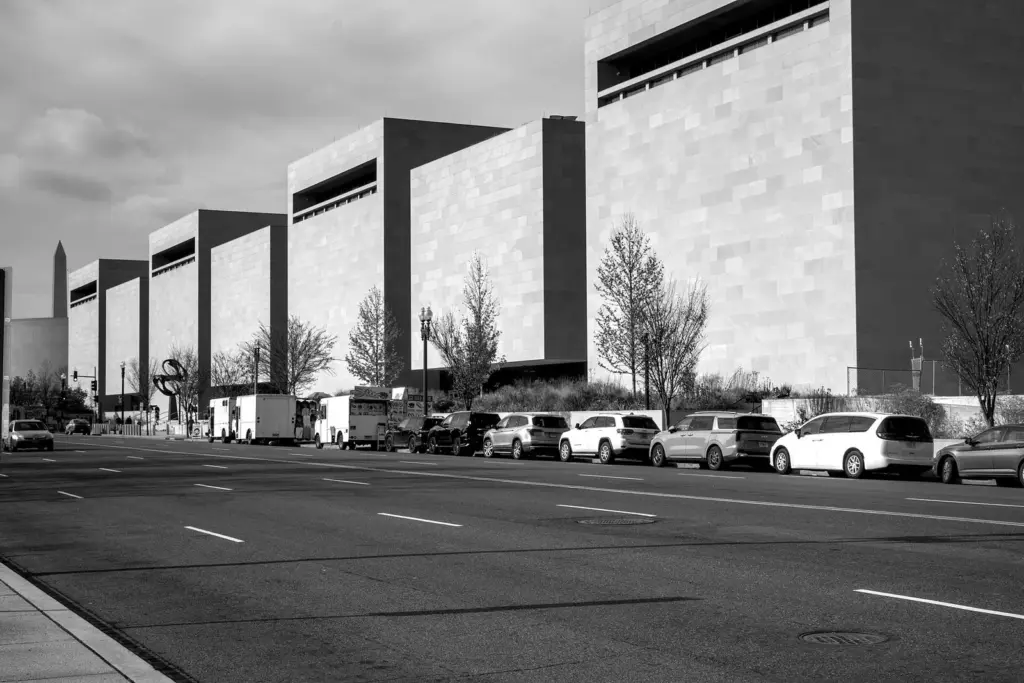
All visitors enter through the doors on Jefferson Drive, the Mall side of the building, at 650 Jefferson Drive SW. The Independence Avenue side, the one you see first coming from L’Enfant Plaza, isn’t an entrance, and it’s an easy mistake to walk its full length before realizing. From L’Enfant Plaza station (Blue, Orange, Silver, Green and Yellow lines), take the Maryland Avenue exit, walk up to Independence Avenue and around the end of the building to the Mall side; allow roughly 10 minutes. From Smithsonian station (Blue, Orange and Silver lines), walk east along the Mall for about the same time.
Every Smithsonian museum screens visitors much like an airport, though shoes and belts stay on. Bags, strollers and containers are checked by hand or X-ray. Knives of any kind are prohibited, pocket knives included, along with scissors, screwdrivers, pepper spray and firearms. Leave the multitool in your hotel room. Expect the screening line to be at its longest right at opening, when the first timed slots and school groups arrive together.
Inside, stop at the Welcome Center. Volunteer docents lead free guided tours, with the day’s times posted there, and a docent is the fastest way to get the story behind objects you’d otherwise walk past.
The Air and Space Museum’s highlights, and where to find them
Almost everything on display in the museum is the real thing, not a replica, which is the point of coming. These are the objects worth planning around, with the gallery where each one lives.
1. The 1903 Wright Flyer
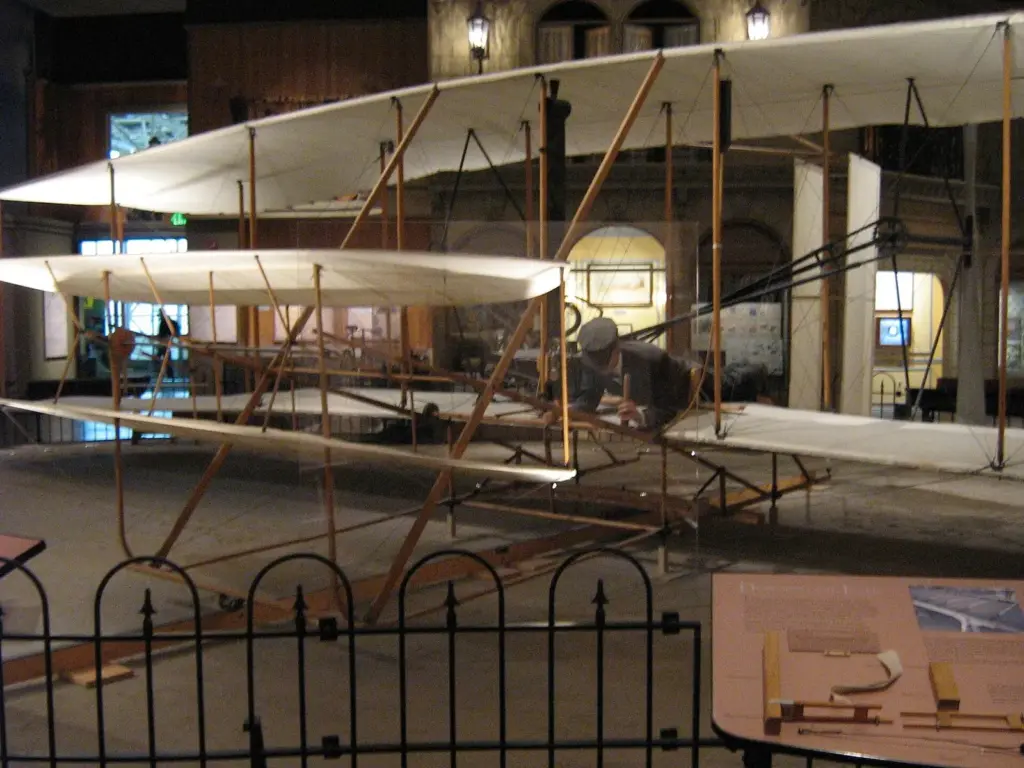
The first successful powered airplane, and the first thing to see. In December 1903 at Kitty Hawk, North Carolina, this spruce-and-muslin aircraft made the first powered, controlled, sustained flights, and here it is, smaller and more fragile than you expect. The gallery around it, The Wright Brothers & The Invention of the Aerial Age, explains how two bicycle makers from Dayton, Ohio solved the problem everyone else had missed: not lift or power, but control.
Plan it: The Wright Brothers & The Invention of the Aerial Age gallery; free with your timed pass. Allow 20 to 30 minutes. Best for: first-timers, history buffs, teens.
2. The Spirit of St. Louis
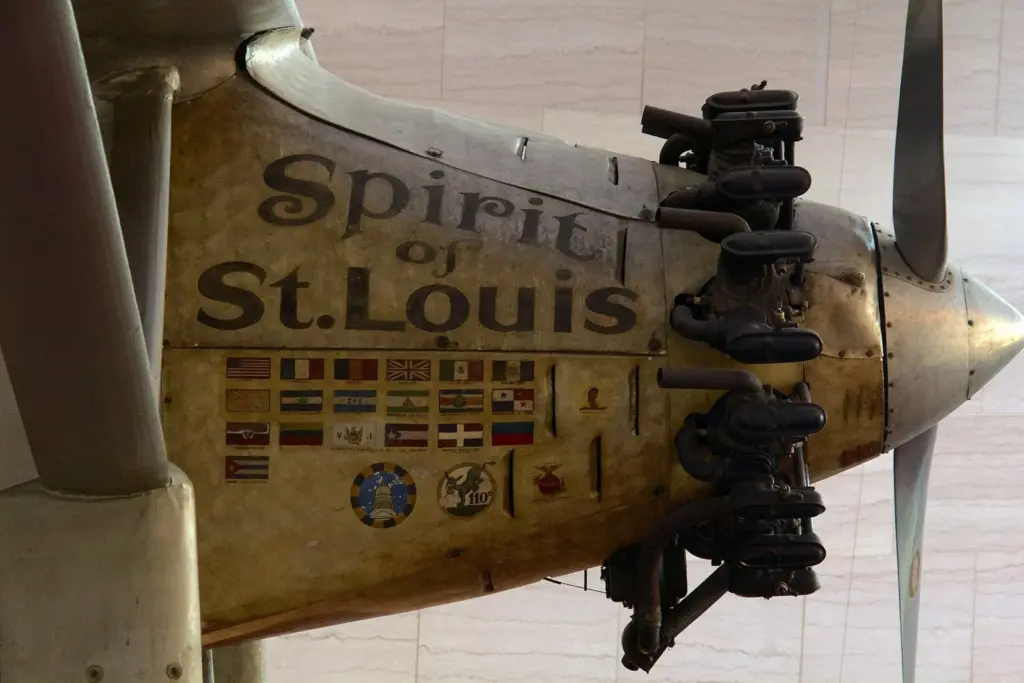
Lindbergh’s plane, hanging in the central hall. In May 1927 Charles Lindbergh flew this single-engine monoplane nonstop and alone from New York to Paris, and the world went briefly mad. Look for the detail most people miss: there’s no forward windshield. A fuel tank sits where it would be, and Lindbergh used a periscope to see ahead. The museum lists it among the landmark objects in the Boeing Milestones of Flight Hall.
Plan it: Boeing Milestones of Flight Hall, the central hall; free with your timed pass. Allow 10 minutes. Best for: first-timers, couples, history buffs.
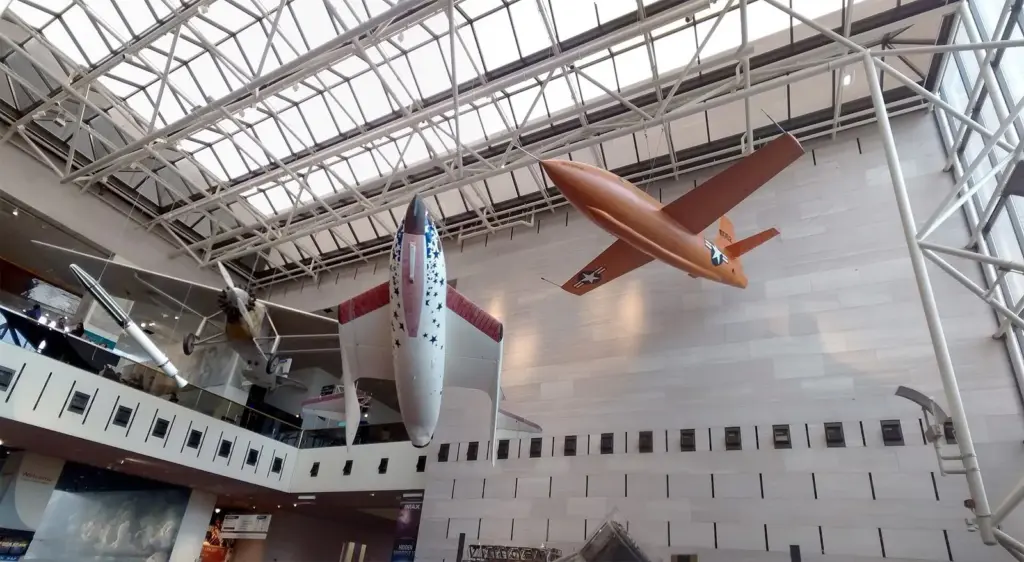
3. The Bell X-1 and SpaceShipOne
Two records, 57 years apart, hanging side by side. The bright orange Bell X-1, which Chuck Yeager named Glamorous Glennis after his wife, broke the sound barrier in October 1947. SpaceShipOne, the white, stubby craft nearby, became the first privately built crewed spacecraft to reach space, in 2004. Hanging together in the Milestones hall, they tell the story of how flight went from a military test program to a startup’s project in one lifetime.
Plan it: Boeing Milestones of Flight Hall; free with your timed pass. Allow 10 minutes, and look up. Best for: teens, first-timers.
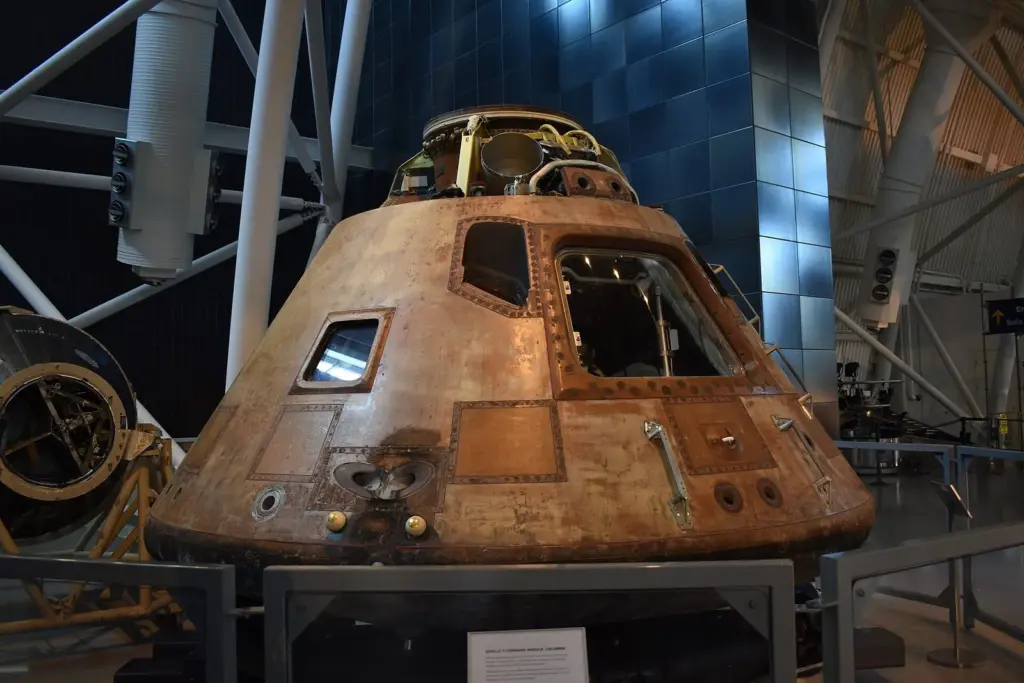
4. Apollo 11’s command module, Columbia
The capsule that carried Armstrong, Aldrin and Collins to the Moon and back. Columbia is the only part of the Apollo 11 spacecraft that returned to Earth in July 1969, and it looks the part: scorched, pitted and tiny for three grown men over eight days. After a spell at the Udvar-Hazy Center, it’s back on display on the Mall, and it’s the object that most often stops adults in their tracks. Look for the scorched, streaked heat shield side: that’s the evidence of reentry.
Plan it: on display in the Mall building (ask at the Welcome Center or check the museum map for its gallery); free with your timed pass. Allow 15 minutes. Best for: first-timers, families, space fans.
5. Amelia Earhart’s Lockheed Vega 5B
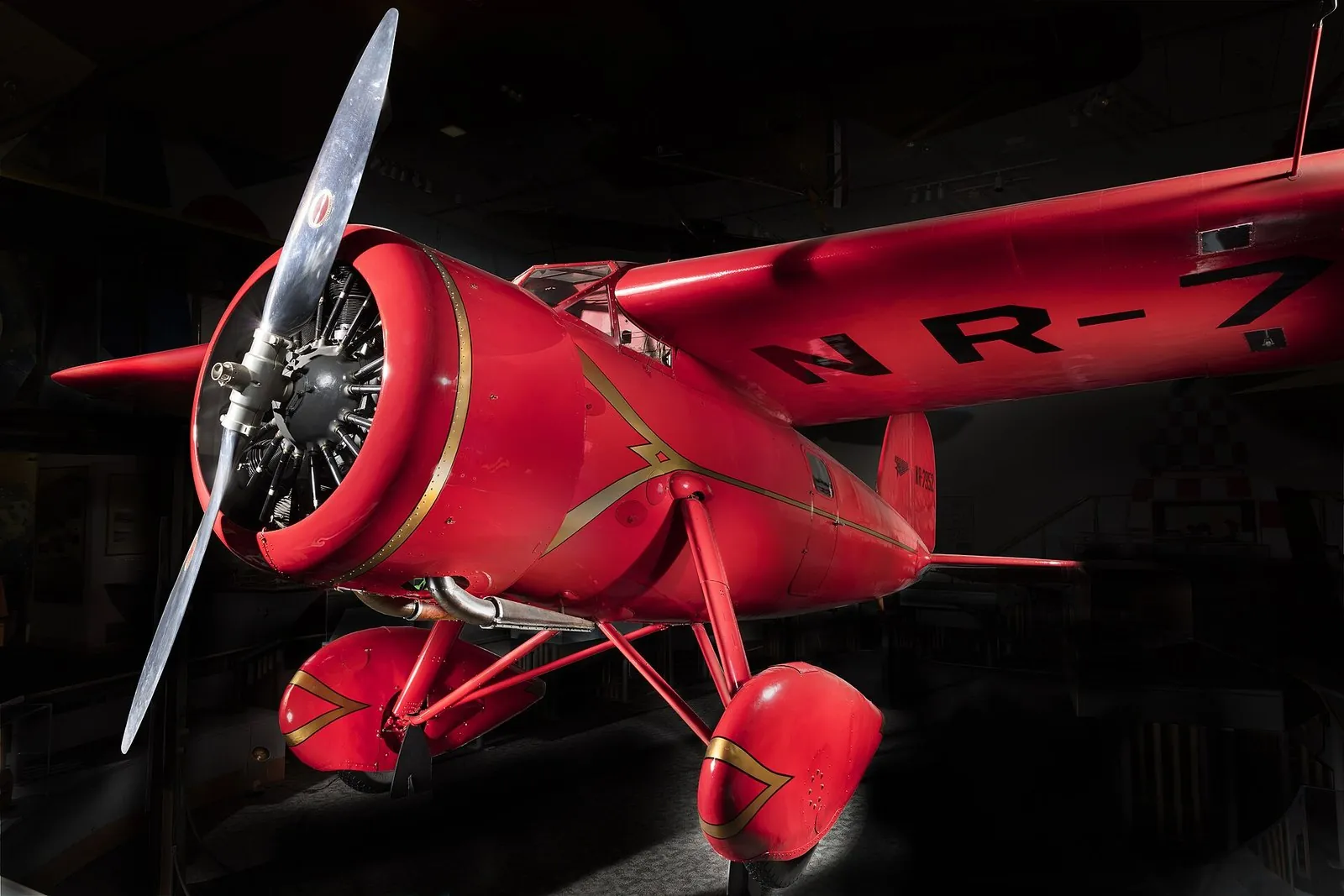
The red plane in the hero photo, and one of the best stories in the building. In May 1932 Amelia Earhart flew this Vega alone across the Atlantic, the first woman to do it. Its traditional home is Barron Hilton Pioneers of Flight, one of the galleries that reopened in July 2025, alongside other aircraft from the era when pilots were celebrities and air races drew crowds.
Plan it: Barron Hilton Pioneers of Flight is the place to look; free with your timed pass. Allow 15 to 20 minutes for the gallery. Best for: families, couples, history buffs.
6. John Glenn’s Friendship 7
A capsule barely bigger than its pilot. In February 1962, John Glenn became the first American to orbit the Earth, three times, in this Mercury capsule. The museum lists it among the objects on display. Stand next to it and consider that the whole spacecraft is roughly the size of a phone booth, which may need explaining to anyone under 25.
Plan it: on display in the Mall building; free with your timed pass. Allow 10 minutes. Best for: first-timers, space fans.
7. How Things Fly
The hands-on gallery, and the one children remember. TEXTRON How Things Fly, reopened as part of the July 2026 openings, is where the museum stops asking you to look and starts asking you to touch: forces, lift, drag and the physics behind everything else in the building. If you’re with kids, schedule it after the big objects, as a reward, rather than first, when they’ll refuse to leave.
Plan it: TEXTRON How Things Fly gallery; free with your timed pass. Allow 30 to 45 minutes with children. Best for: families, kids 6 to 14, rainy days.
Planetarium and IMAX: the parts that cost money
The galleries are free; the two theaters aren’t.
The Northrop Grumman Planetarium runs daily ticketed shows about the night sky and the universe, plus several free shows each month. Tickets are sold only at the museum, not online, and members pay less. The museum doesn’t publish standard planetarium prices on its website, so ask at the box office when you arrive and buy early in the day if a particular show matters to you.
The Lockheed Martin IMAX Theater shows documentaries about flight and space during the day and Hollywood films in the evening. Daytime tickets are sold at the museum; after-hours screenings can also be booked online. For the museum’s 50th Anniversary Film Series in 2026, tickets were $13 for adults and $10 for children, seniors and members. Check the theater page for current films and prices, since the series has its own pricing.
Are they worth it? On a short visit, no: 45 minutes in a theater is 45 minutes not spent with the Wright Flyer. On a rainy afternoon with tired children, or on a second visit, a planetarium show is a good way to sit down and still feel you’re doing something.
How long to spend, and a route through the museum
Two hours gets you the highlights above without rushing. Three to four hours covers most of the galleries. Beyond that, museum fatigue sets in for almost everyone; Air and Space is a big building, and the objects start to blur after the third hall of aircraft.
A good two-hour route:
- Enter on Jefferson Drive and pick up a map and the docent tour times at the Welcome Center.
- Start in the Boeing Milestones of Flight Hall: the Spirit of St. Louis, the Bell X-1 and SpaceShipOne.
- Go to The Wright Brothers & The Invention of the Aerial Age for the 1903 Flyer.
- Find Columbia and Friendship 7, using the map.
- Finish in Barron Hilton Pioneers of Flight with Earhart’s Vega, or in How Things Fly if you have children.
Only have an hour? Do the Milestones hall, the Wright Flyer and Columbia, in that order, and leave everything else for another trip. Those three stops are the reason the museum is famous, and you can see them properly in 60 minutes if you don’t get pulled into the galleries in between. Skip the theaters, skip the café, and go straight from security to the central hall.
For a longer visit, add World War II in the Air, Futures in Space, and At Home in Space once it opens. Take a break at Mars Café between halves; your pass lets you stay as long as you like, and a 15-minute rest makes the second half better.
Visiting the Air and Space Museum with kids
This is the Smithsonian museum most children ask for by name, and it mostly delivers. The hands-on How Things Fly gallery is the centerpiece for ages 6 to 14, and discovery stations and hands-on activities appear in several other galleries, so check with the Welcome Center for what’s running that day. Younger children tend to like objects they can recognize (a space capsule, a bright red plane) more than historical context, so let them lead.
A few practical points. Every child needs a timed pass, babies included. Strollers go through security screening with everything else. And plan the visit for two hours, not four; a family that leaves wanting more has had a better day than one that finishes at closing. For the rest of a family trip, including the zoo, playgrounds and other museums that work for small children, see our guide to things to do in DC with kids.
Food: Mars Café and next door
The museum’s own option is Mars Café, which the museum describes as the place for a snack, a drink or a meal. It’s convenient, and on a busy day that counts for a lot.
The better lunch is next door. The National Museum of the American Indian, immediately east of Air and Space on the Mall, runs the Mitsitam Native Foods Cafe, open 10 a.m. to 5 p.m. as of September 2026, with food drawn from Native culinary traditions across the Americas. It’s a short walk, it’s a far more interesting meal than standard museum fare, and pairing the two museums makes an easy day. Eat there before your timed slot or after you’ve finished, rather than in the middle: once you leave Air and Space, you can’t re-enter the same day without a new pass. If you bring snacks, the museum’s rule is that food stays in sealed containers and isn’t eaten in the museum.
What to pair with Air and Space nearby
Air and Space sits on the south side of the Mall between 4th and 7th Streets, which puts several good follow-ups within five minutes’ walk. As of September 2026:
- National Museum of the American Indian, immediately east. Worth it for lunch at Mitsitam alone, and its galleries are walk-in, with no timed pass.
- Hirshhorn Museum and Sculpture Garden, immediately west, in the round building. Its sunken Sculpture Garden on the Mall side reopens on Saturday, October 31, 2026, after a redesign by the artist Hiroshi Sugimoto, with about 60 sculptures and some 30,000 plants, and a free opening weekend on October 31 and November 1.
- National Gallery of Art, across the Mall to the north. It’s free and open 10 a.m. to 5 p.m. daily, and its East Building of modern art is the natural pairing for a teenager who has had enough aircraft.
- The Smithsonian Castle, further west. Skip it for now: it reopened temporarily from May 22 to September 7, 2026, and has closed again for its long renovation.
A sensible Mall day on this side: Air and Space from 10 a.m., lunch at Mitsitam, then the National Gallery or the Hirshhorn garden in the afternoon. That’s two museums and a garden, which is about the limit before everything blurs.
When to go
The museum keeps the standard Smithsonian hours of 10 a.m. to 5:30 p.m. daily, closing only on December 25. The busiest stretches are spring weekdays, when school groups fill the halls from March through May, summer weekends and holiday weeks. The quietest are weekday afternoons in fall and winter, after the morning groups have left.
If you can only come on a busy day, take the first timed slot at 10 a.m. and head straight to the objects on your list before the crowds catch up, or come after 3 p.m. and accept a shorter visit in emptier galleries.
One thing no amount of planning fixes: a federal government shutdown closes the museum. During the 2025 shutdown the Smithsonian’s museums closed from October 12, and Air and Space reopened on November 14, 2025. As of September 2026, a stopgap funds the government through December 11, 2026. If you’re visiting after that date, check the museum’s homepage before you go.
Air and Space on the Mall, or the Udvar-Hazy Center?
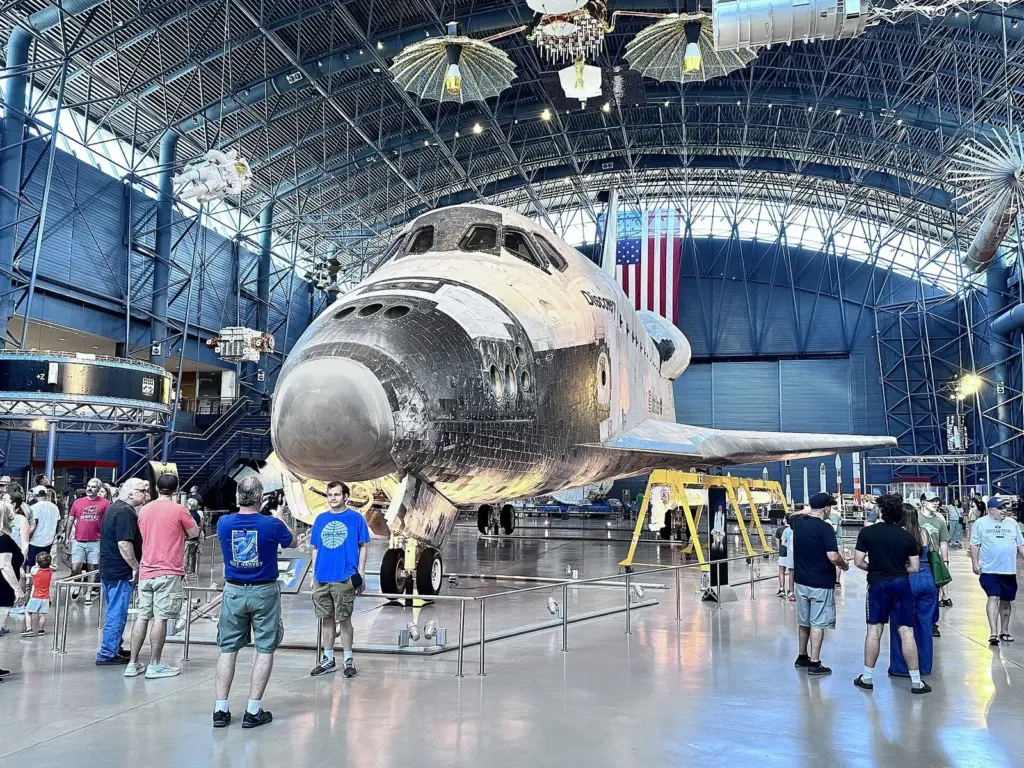
The National Air and Space Museum has two buildings. The one on the Mall holds the most famous objects in the smallest space. The Steven F. Udvar-Hazy Center, near Dulles Airport in Chantilly, Virginia, is a pair of enormous hangars holding the aircraft and spacecraft too big for the Mall, including Space Shuttle Discovery, which was still there as of early 2026 after a plan to move it to Houston stalled.
The practical differences, as of September 2026:
| On the Mall | Udvar-Hazy Center | |
|---|---|---|
| Hours | 10 a.m. to 5:30 p.m. | 10 a.m. to 5:30 p.m. |
| Admission | Free, timed pass required | Free, no pass needed |
| Getting there | Metro to L’Enfant Plaza or Smithsonian | Silver Line to Innovation Center, then Fairfax Connector bus 983; or drive |
| Parking | No museum parking; street spaces are scarce | $15 per car |
| Best for | The Wright Flyer, Spirit of St. Louis, Columbia | Space Shuttle Discovery and very large aircraft |
Choose the Mall if you’re on foot, short on time or on a first visit. Choose Udvar-Hazy if you have a car, love big aircraft, or have already seen the Mall building. The Fairfax Connector 983 runs about every 25 minutes at peak times and hourly off-peak and on weekends, so without a car it’s a half-day trip; don’t try to squeeze it into a morning. Doing both in one day is possible with a car and an early start, but most people are happier splitting them.
What’s changed, and what to skip
If your last visit was before the renovation, these are the changes that matter:
- Timed passes are required for every visitor, as of September 2026.
- There is one entrance, on Jefferson Drive.
- The galleries are new. Favorite objects have moved, so use the museum map rather than memory.
- The Enterprise model is off display until late fall 2026.
- The last two galleries open October 30 and November 11, 2026.
What we’d skip:
- The IMAX on a first, short visit. Spend the time with the real objects.
- Air and Space, Natural History and American History in one day. Two big Smithsonian museums a day is plenty; three is a blur.
- Driving to the Mall. Street parking near the museum is scarce and time-limited; take the Metro.
- The Independence Avenue side. It isn’t an entrance. Walk straight to Jefferson Drive.
For how Air and Space fits alongside Natural History, American History and the rest, our guide to the Smithsonian’s free museums covers every one of them, with the pass rules and hours side by side.
Air and Space Museum FAQ
Is the Air and Space Museum free?
Yes. The National Air and Space Museum charges no admission, as of September 2026, but every visitor needs a free timed-entry pass, regardless of age, booked on the museum’s website. Only the planetarium shows and IMAX films cost money, with tickets sold at the museum. The Udvar-Hazy Center in Virginia is also free and needs no pass.
Do you need tickets for the Air and Space Museum?
You need a free timed-entry pass for each visitor, babies included, and one reservation covers up to nine people. Passes are released on the first of each month at noon Eastern, two months ahead, with hourly entry slots from 10 a.m. to 4 p.m. The pass sets your entry time, not how long you stay.
Is the Air and Space Museum fully open?
Almost. As of September 2026, 18 of the 20 renovated galleries are open, including Boeing Milestones of Flight Hall and the Wright brothers gallery. At Home in Space opens on October 30, 2026, and Modern Military Aviation on November 11, 2026, completing a renovation that began in 2018.
How long do you need at the Air and Space Museum?
Plan two hours for the highlights: the Wright Flyer, the Spirit of St. Louis, the Bell X-1, Columbia and Earhart’s Vega. Three to four hours covers most galleries. With children, two hours is usually the right length, with time in the hands-on How Things Fly gallery at the end.
Which entrance do you use at the Air and Space Museum?
All visitors enter through the doors on Jefferson Drive, at 650 Jefferson Drive SW, on the National Mall side of the building. The Independence Avenue side is not an entrance. From L’Enfant Plaza Metro, walk up to Independence Avenue and around the end of the building to the Mall side.
What is the difference between the Air and Space Museum and the Udvar-Hazy Center?
They’re two sites of the same museum. The Mall building holds the most famous objects, like the Wright Flyer and Apollo 11’s Columbia, and needs a timed pass. The Udvar-Hazy Center near Dulles Airport holds larger aircraft and Space Shuttle Discovery, needs no pass, and charges $15 to park.
How much does the planetarium cost at the Air and Space Museum?
The museum doesn’t list standard planetarium prices online; tickets are sold only at the museum, members get reduced rates, and several free shows run each month. For IMAX, the museum’s 2026 50th Anniversary Film Series charged $13 for adults and $10 for children, seniors and members.
Related Washington DC Guides
- Smithsonian Museums in Washington DC: every free Smithsonian museum, with passes, hours and which to prioritize.
- Things to Do in DC with Kids: the full family plan, from the zoo to rainy-day backups.
Sources and How We Checked
Every hour, pass rule, gallery date and price on this page was checked on September 30, 2026 against the official sites below; the page was compiled from those sources, and we don’t claim first-hand visits.
- National Air and Space Museum: visit the museum in DC
- National Air and Space Museum: visitor FAQ and pass rules
- National Air and Space Museum: Boeing Milestones of Flight Hall
- National Air and Space Museum: IMAX theaters and planetarium
- National Air and Space Museum: entry and guidelines
- Smithsonian Institution: visitor guidelines
We also used the Udvar-Hazy Center’s visitor information, WMATA and Fairfax Connector schedules, the American Indian museum’s cafe hours, and NPR’s reporting on the 2025 shutdown reopenings.
Washington DC Tourism Guide is an independent publication. We are not affiliated with Destination DC, the National Park Service, the Smithsonian Institution or any attraction listed here, and no one paid to be included.
Photo Credits
- Amelia Earhart's Lockheed Vega 5B: photo by Simthsonian Institute, via Wikimedia Commons (CC0)
- The museum from Independence Avenue: photo by Marc Merlin, via Wikimedia Commons (CC BY-SA 4.0)
- The 1903 Wright Flyer: photo by dave_7 from Lethbridge, Canada, via Wikimedia Commons (CC BY-SA 2.0)
- The Spirit of St. Louis: photo by Photograph by Mike Peel (www.mikepeel.net)., via Wikimedia Commons (CC BY-SA 4.0)
- Bell X-1 and SpaceShipOne: photo by Gunnar Klack, via Wikimedia Commons (CC BY-SA 4.0)
- Apollo 11 command module Columbia: photo by Northern-Virginia-Photographer, via Wikimedia Commons (CC0)
- Space Shuttle Discovery at the Udvar-Hazy Center: photo by APK, via Wikimedia Commons (CC BY 4.0)