The monuments tell you what Washington wants to remember. The historic sites in Washington DC show you where things actually happened: the box where Lincoln was shot, the boarding house where his killers met, the church where every president since Madison has prayed, the hotel room where Martin Luther King Jr. polished a speech, the office complex that gave its name to every scandal since. Most are free or cheap, many are hiding in plain sight on streets you’d walk past, and a surprising number are run by the National Park Service with rangers who know them intimately. This guide collects 50 of them, grouped by era and theme, with what each one is, why it matters and how to visit.
Quick answer: Start with Ford’s Theatre and the Petersen House, President Lincoln’s Cottage, the Frederick Douglass National Historic Site, the Washington National Cathedral and Decatur House’s free Monday tours. Add the Capitol and the White House, which need advance booking. Many smaller sites open only a few days a week, so check hours before you plan a day around them.
Last updated September 24, 2026. Hours, prices and booking rules were checked that day against the sites’ and the National Park Service’s own websites. Several small sites keep limited or changing hours; check before you go.
- Free: most of these 50 sites, including the Park Service’s historic houses, Anderson House, Congressional Cemetery and Decatur House’s Monday tours.
- Book ahead: the White House, the Capitol, Ford’s Theatre, President Lincoln’s Cottage and the Frederick Douglass house.
- Short weeks: the Bethune and Woodson houses open Thursday to Saturday; the Octagon Thursday to Saturday; Belmont-Paul Wednesday to Sunday.
- Closed: the Old Post Office Tower has been closed since October 1, 2025, with no reopening date.
On this page: At a glance | Planning | A short history | The founding city | Civil War and Lincoln | Power, protest and scandal | Black history | Sacred places | Grand houses | Haunted history | By day | Map | Themed days | What’s changed | FAQ
The essential historic sites in Washington DC at a glance
| Site | Cost (September 2026) | Booking | Nearest Metro |
|---|---|---|---|
| Ford’s Theatre and Petersen House | Free same-day; $5 fee online | Same-day tickets or advance online | Metro Center |
| President Lincoln’s Cottage | Paid guided tours | Book tours online | Georgia Ave-Petworth, then a short ride |
| Frederick Douglass NHS | Free plus $1 fee | Recreation.gov, up to six months ahead | Anacostia |
| Washington National Cathedral | $15 adults | Tickets online; worship free | Tenleytown, then bus or walk |
| Decatur House | Free | Monday tours via Eventbrite | Farragut West |
| U.S. Capitol | Free | Reservations recommended | Capitol South |
| The White House | Free | Through Congress or your embassy | McPherson Square |
| Congressional Cemetery | Free | None | Potomac Ave |
| Basilica of the National Shrine | Free | None | Brookland-CUA |
| Anderson House | Free, with guided tour | None | Dupont Circle |
How to plan a visit to historic sites in Washington DC
The biggest mistake with DC’s historic sites is assuming they keep museum hours. The Smithsonian opens every day; many of these places don’t. The Park Service’s Bethune and Woodson houses open Thursday to Saturday, Decatur House’s public tours run only on Mondays, and the Octagon opens three days a week. Build your days around the fixed ones first, then fill in with sites that are always open, like Congressional Cemetery, Lafayette Square and the churches.
Group sites by area. Lafayette Square alone has St. John’s Church, Decatur House, Blair House and, a few blocks away, the Octagon. Penn Quarter has Ford’s Theatre, the Petersen House, the Surratt boarding house, Clara Barton’s office and the old Patent Office. Capitol Hill has the Capitol, the Library of Congress, the Supreme Court, Belmont-Paul, Lincoln Park and Congressional Cemetery. Anacostia, Brookland and upper Northwest each make a good half day on their own.
And book the few that need it early. The White House needs a request through your Member of Congress or embassy at least 21 days ahead, the Frederick Douglass house releases tours up to six months out, and Ford’s Theatre’s free same-day tickets can be gone by 9am in spring. For the memorials on the Mall, which are a different kind of history, see our guide to Washington DC monuments.
A short history of Washington DC
Washington was built to order. In 1790 Congress chose a site on the Potomac, and George Washington picked the exact spot, a 10-mile square carved from Maryland and Virginia that took in the existing ports of Georgetown and Alexandria. Pierre L’Enfant drew the plan of grand avenues and circles in 1791, Andrew Ellicott and Benjamin Banneker surveyed the boundaries, and the government moved in from Philadelphia in 1800, to a half-built capital of muddy streets.
The British burned the Capitol and the White House in August 1814, and the city was rebuilt. For its first half century, Washington was also a center of the slave trade, with pens within sight of the Capitol, until Congress banned the trade in the District in 1850. Alexandria, fearing that ban, had already been returned to Virginia in 1846.
The Civil War transformed the city. Washington became a fortified camp ringed by dozens of forts, its public buildings turned into hospitals, and tens of thousands of people escaping slavery arrived. On April 16, 1862, Congress freed the enslaved people of the District, nine months before the Emancipation Proclamation, a date the city still marks as DC Emancipation Day. Three years later Lincoln was assassinated a few blocks from the White House.
The monumental Washington you see today came later. The McMillan Plan of 1901 and 1902 cleared the Mall of railroad tracks and sheds and laid out the grand vista from the Capitol to the Lincoln Memorial. In the 20th century the city became a center of Black life and the civil rights movement, and in April 1968, after Martin Luther King Jr.’s assassination, unrest burned stretches of 14th Street, U Street and H Street, which took decades to rebuild. Congress granted the city limited self-government in 1973, and DC residents still have no voting representation in Congress, a fact printed on local license plates.
The founding city, 1790s to 1850s
The oldest sites cluster around two poles, the Capitol and the White House, which L’Enfant linked with Pennsylvania Avenue. Most of the houses on this list were built by people who wanted to live close to power.
1. The U.S. Capitol
Free, reservations recommended. The building where Congress has met since 1800, burned by the British in 1814 and crowned with its cast-iron dome during the Civil War. The guided tour covers the Crypt, the Rotunda and National Statuary Hall; look up in the Rotunda for Constantino Brumidi’s fresco The Apotheosis of Washington, painted in the eye of the dome. Our White House tour guide covers how to book it alongside the other free official tours.
Plan it: Capitol Visitor Center Monday to Saturday 8:30am to 4:30pm, last tour 3:20pm, closed Sundays (as of September 2026); reserve at tours.visitthecapitol.gov. Metro: Capitol South (Blue, Orange, Silver lines). Allow 1.5 hours.
2. The White House
Free, request months ahead. Every president since John Adams has lived here. Public tours are self-guided and must be requested through a Member of Congress or, for foreign visitors, an embassy. Since the East Wing was demolished in October 2025, the tour follows a shorter route.
Plan it: tours Tuesday to Thursday 7:30am to 11:30am and Friday and Saturday 7:30am to 1:30pm; request 21 days to 3 months ahead (as of September 2026). Metro: McPherson Square or Farragut West. Allow 1 hour plus security.
3. Lafayette Square
Free. The park facing the White House’s north side is ringed by history. Its center holds Andrew Jackson on horseback, the first equestrian statue cast in the United States, and its corners hold four foreign heroes of the Revolution: Lafayette, Rochambeau, von Steuben and Kosciuszko. The houses around it have sheltered presidents, cabinet secretaries and diplomats for two centuries.
Plan it: free; access can be restricted for security, so check when you arrive. Metro: McPherson Square or Farragut West. Allow 30 minutes.
4. St. John’s Church, Lafayette Square
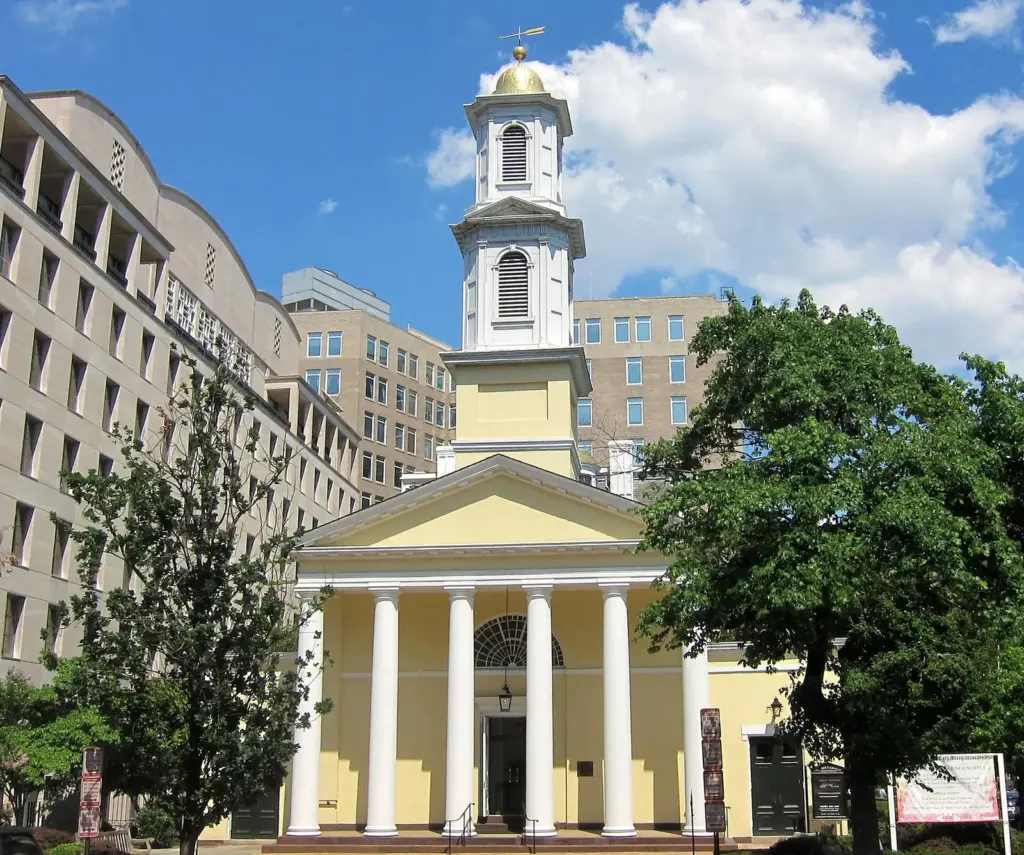
Free; an active church. Designed by Benjamin Latrobe and opened in 1816, the yellow church across from the White House is known as the Church of the Presidents: every president since James Madison has attended at least one service here. Look for Pew 54, set aside for presidents.
Plan it: free; visitors welcome outside services. Metro: McPherson Square or Farragut West. Allow 20 minutes.
5. Decatur House
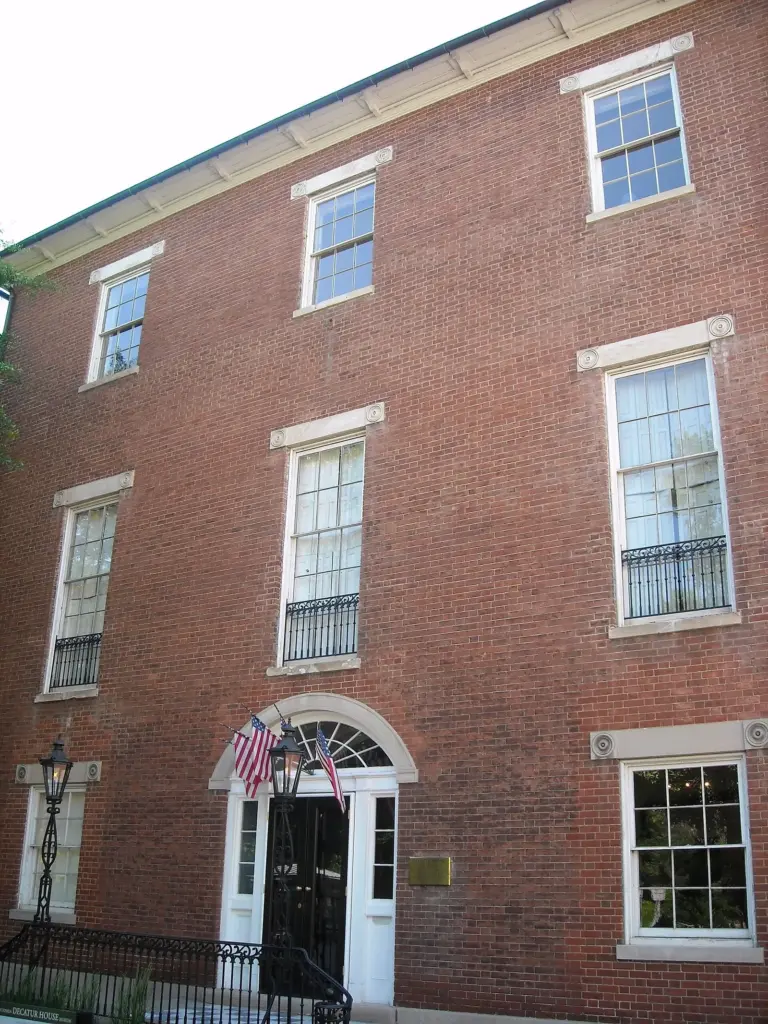
Free Monday tours. Built in 1818 for the naval hero Stephen Decatur, who was killed in a duel just over a year later, this Latrobe-designed house was the first private home on Lafayette Square. It also preserves the quarters of the enslaved people who worked there, a rare survival in the city. It’s now run by the White House Historical Association.
Plan it: free public tours every Monday, except federal holidays and the Monday after Thanksgiving, at 10:30am and 1pm, about an hour, reserved through Eventbrite (per the White House Historical Association in September 2026). 1610 H St NW. Metro: Farragut West. Allow 1 hour.
6. Blair House
Exterior only. The President’s Guest House, where visiting heads of state stay, sits across Pennsylvania Avenue from the White House. Harry Truman lived here while the White House was gutted and rebuilt, and on November 1, 1950, two gunmen tried to storm it to assassinate him; a White House police officer, Leslie Coffelt, was killed defending the house. A plaque on the fence remembers him.
Plan it: view from the sidewalk. Metro: Farragut West. Allow 10 minutes.
7. The Octagon
Paid. This unusual six-sided house, finished in 1800, sheltered James and Dolley Madison after the British burned the White House in 1814, and Madison ratified the Treaty of Ghent, ending the War of 1812, in its upstairs parlor. It’s also one of the city’s most famous haunted houses. It has recently reopened as a museum of architecture and history.
Plan it: Thursday to Saturday 11am to 4pm; $10 adults, $5 under 18, free under 5, with free guided tours at 11am and 3pm (as of September 2026). 1799 New York Ave NW. Metro: Farragut West. Allow 45 minutes.
8. The National Archives
Free. The Declaration of Independence, the Constitution and the Bill of Rights are displayed in the Rotunda, and a 1297 Magna Carta is on view. It’s more museum than historic site, but standing in front of those documents is hard to beat.
Plan it: daily 10am to 5:30pm; reservations optional (as of September 2026). Metro: Archives-Navy Memorial-Penn Quarter. Allow 1 hour.
9. The Library of Congress
Free, timed tickets. The Thomas Jefferson Building, finished in 1897, is the grandest interior in the city, and the library itself grew from Jefferson’s personal collection, which Congress bought after the British burned the original in 1814.
Plan it: Tuesday to Saturday 10am to 5pm, Thursdays to 8pm; free timed tickets released 30 days ahead (as listed on loc.gov in September 2026). Metro: Capitol South. Allow 1 to 1.5 hours.
10. The Supreme Court
Free. The Court only moved into its marble building in 1935, after meeting in the Capitol for well over a century. On days the Court isn’t sitting, you can hear a lecture in the courtroom itself; its 2026-27 term runs from October 5, 2026.
Plan it: Monday to Friday 9am to 3pm, closed weekends and federal holidays; courtroom lectures on non-sitting days (as of September 2026). Metro: Capitol South or Union Station. Allow 1 hour.
11. Congressional Cemetery
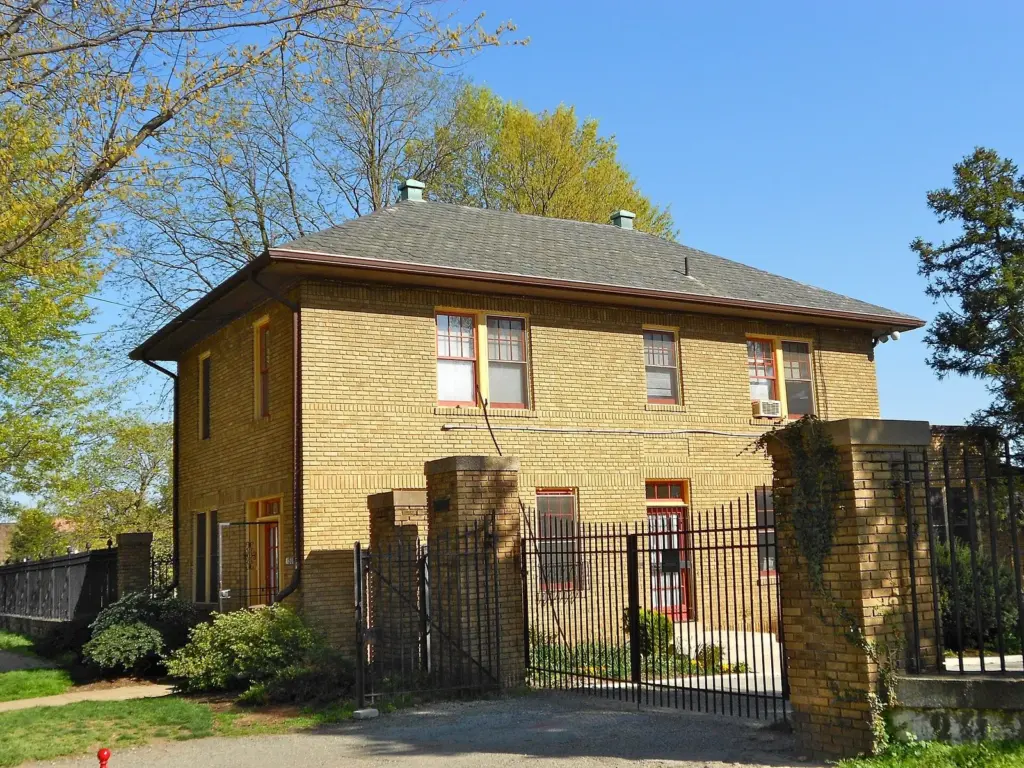
Free. Founded in 1807, this riverside cemetery on Capitol Hill holds J. Edgar Hoover, John Philip Sousa, the photographer Mathew Brady and rows of squat stone cenotaphs designed by Latrobe to honor members of Congress. It’s also a working neighborhood park, famous for its dog-walking members, and one of the most atmospheric places in the city.
Plan it: grounds open daily 7am to 7pm, free, with guided introductory tours offered (as of September 2026; hours can change in winter). 1801 E St SE. Metro: Potomac Ave (Blue, Orange, Silver lines), about 10 minutes’ walk. Allow 1 hour.
12. The DC boundary stones
Free. In 1791 and 1792, Andrew Ellicott and the astronomer Benjamin Banneker surveyed the original 10-mile square of the District, marking it with 40 stones placed a mile apart. Most still survive, tucked into front yards, park edges and road shoulders around the city’s border. Finding a few is a quiet, satisfying history hunt.
Plan it: free; many sit on or near private property, so view from public land. Allow as long as you like.
13. St. Paul’s Church and Rock Creek Cemetery
Free. St. Paul’s, whose congregation dates to the early 1700s and whose church was built in 1775, is often called the oldest church in the District. The cemetery around it holds the Adams Memorial, Augustus Saint-Gaudens’s haunting hooded bronze figure, commissioned by Henry Adams for his wife’s grave and one of the great American sculptures.
Plan it: free; best reached by car or rideshare in Northwest DC. Allow 45 minutes.
14. The Old Stone House
Free. Built in 1765 on Georgetown’s M Street, it’s the oldest structure in Washington still standing on its original foundation, and the Park Service keeps its garden open to all. Georgetown’s other historic houses, including Tudor Place and Dumbarton Oaks, are covered in our Georgetown guide.
Plan it: garden open daily, sunrise to sunset; interior hours aren’t posted. 3051 M St NW. Metro: Foggy Bottom-GWU, about 15 minutes’ walk. Allow 20 minutes.
The Civil War and Lincoln
During the war, Washington was a frontline city, and Lincoln’s life and death here left a trail of sites you can still walk in a single morning.
15. Ford’s Theatre
Free same-day tickets. On April 14, 1865, John Wilkes Booth shot Abraham Lincoln in the presidential box here, five days after Lee’s surrender. The restored theater, still a working playhouse, has the box, a museum of the assassination below, and the story of the manhunt that followed. The museum displays the small Deringer pistol Booth used, and the presidential box is decorated as it was that night.
Plan it: free same-day tickets from the box office from 8:30am, up to four per person; advance tickets online carry a $5 fee each; from March to June same-day tickets often run out by 9am (as listed on fords.org in September 2026). 511 10th St NW. Metro: Metro Center. Allow 1.5 hours.
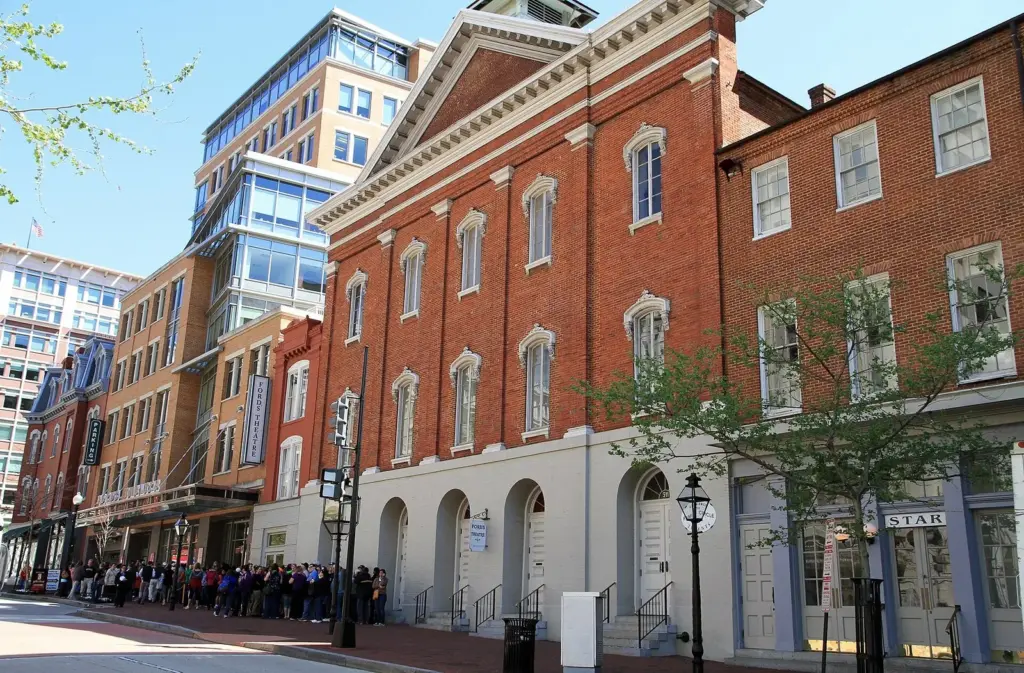
16. The Petersen House
Included with Ford’s. Across the street, the wounded president was carried to a boarding-house bedroom, where he died the next morning. The small room is recreated, and the visit continues into a center on Lincoln’s legacy.
Plan it: visited as part of the Ford’s Theatre ticket. 516 10th St NW. Allow 30 minutes.
17. President Lincoln’s Cottage
Paid guided tours. Lincoln spent a quarter of his presidency living in this cottage on the grounds of the Soldiers’ Home, and he worked on the Emancipation Proclamation here. The family lived here from early summer to late fall in 1862, 1863 and 1864, and Lincoln commuted about 3 miles to the White House most days. The tours focus on the ideas he wrestled with, and they’re among the best in the city.
Plan it: daily 9:30am to 4:30pm, with hourly tours from 10am to 3pm booked online; enter at the Eagle Gate with photo ID (as of September 2026). Metro: Georgia Ave-Petworth, then a short rideshare. Allow 1.5 hours.
18. Fort Stevens
Free. In July 1864, Confederate troops under Jubal Early reached the northern edge of Washington, and at this earthen fort Lincoln came under fire while watching the fighting, one of the very few times a sitting president has faced enemy fire. Part of the fort has been reconstructed.
Plan it: open sunrise to sunset, free. 13th and Quackenbos Streets NW; best reached by bus or car. Allow 30 minutes.
19. The Surratt boarding house
Exterior only. Mary Surratt’s boarding house, where Booth and his co-conspirators met to plan the assassination, still stands in Chinatown. It has housed restaurants in recent decades, so there’s little to see beyond the facade. Surratt was hanged for her role, the first woman executed by the federal government.
Plan it: view from the street. 604 H St NW. Metro: Gallery Place-Chinatown. Allow 5 minutes.
20. Clara Barton’s Missing Soldiers Office
Small museum. After the war, Clara Barton, who later founded the American Red Cross, ran an office from these rooms that helped identify missing soldiers. The space was forgotten for over a century until a government worker found it in 1997, full of her papers and signs.
Plan it: Thursday to Saturday 11am to 5pm for walk-ins (as of September 2026). 437 7th St NW. Metro: Gallery Place-Chinatown. Allow 45 minutes.
21. Lincoln Park
Free. This Capitol Hill park holds the Emancipation Memorial of 1876, paid for largely by formerly enslaved people, and, facing it across the lawn, the 1974 memorial to the educator Mary McLeod Bethune, the first statue of a Black woman on public land in DC. The two statues, and the debates around the older one, make it one of the city’s most thought-provoking places.
Plan it: free; open daily. East Capitol and 11th Streets. Metro: Eastern Market, about 15 minutes’ walk. Allow 20 minutes.
22. The African American Civil War Memorial
Free. At the U Street Metro exit, the Spirit of Freedom sculpture honors the more than 200,000 soldiers and sailors of the U.S. Colored Troops, whose names are listed on the curved walls around it.
Plan it: free; open daily. Vermont Avenue and U Street NW. Metro: U Street (Green line). Allow 20 minutes.
23. The old Patent Office Building
Free. During the Civil War this Greek Revival building served as a hospital, where Walt Whitman read to wounded soldiers, and in March 1865 it hosted Lincoln’s second inaugural ball. Today it houses the National Portrait Gallery and the Smithsonian American Art Museum, both covered in our guide to museums in Washington DC.
Plan it: 11:30am to 7pm daily, free (as of September 2026). Metro: Gallery Place-Chinatown. Allow 1.5 hours.
24. The Pension Building
Great Hall free. Built in the 1880s to house the bureau paying pensions to Civil War veterans, its brick exterior carries a sculpted frieze of Union soldiers that runs the length of the building. Inside is the vast Great Hall, now the National Building Museum, where inaugural balls are still held.
Plan it: Thursday to Monday 10am to 5pm; the Great Hall is free, exhibitions $10 (as of September 2026). Metro: Judiciary Square. Allow 30 minutes to 1 hour.
Power, protest and scandal
A capital collects stories of ambition, violence and reform, and these sites mark some of the most famous, from assassination attempts to the fight for women’s votes.
25. The Woodrow Wilson House
Paid guided tours. Wilson retired to this Kalorama townhouse in 1921 and died here in 1924; it’s the only presidential museum in the capital, kept as he left it. He’s also the only president buried in Washington, in the National Cathedral.
Plan it: guided tours, reserved in advance, with general house tours on Saturdays and specialty tours during the week; check current hours and prices. 2340 S St NW. Metro: Dupont Circle, about 15 minutes’ walk. Allow 1 hour.
26. The Willard
Free to walk in. Lincoln stayed here before his 1861 inauguration, Julia Ward Howe wrote the Battle Hymn of the Republic in her room, and Martin Luther King Jr. finished work on his “I Have a Dream” speech here in 1963. The lobby is open, and it’s still one of the city’s grand hotels, freshly restored for the nation’s 250th anniversary.
Plan it: walk through the lobby, or have a drink at the bar. 1401 Pennsylvania Ave NW. Metro: Metro Center. Allow 20 minutes.
27. The Watergate
Exterior only. The curving 1960s complex by the river gave its name to the 1972 break-in at the Democratic National Committee’s offices, the scandal that brought down Richard Nixon, and to every “-gate” since. It still holds offices, apartments and the Watergate Hotel.
Plan it: view from outside, or visit the hotel’s public spaces. Metro: Foggy Bottom-GWU. Allow 15 minutes.
28. The Washington Hilton
Exterior only. On March 30, 1981, John Hinckley Jr. shot President Ronald Reagan outside a side entrance of this hotel on Connecticut Avenue. The entrance has since been rebuilt with more security.
Plan it: view from outside. Metro: Dupont Circle, about 10 minutes’ walk. Allow 10 minutes.
29. The Garfield assassination site
Now a museum. President James Garfield was shot on July 2, 1881 in the Baltimore and Potomac Railroad station on the Mall, and died that September. The station is long gone; the site is now under the National Gallery of Art’s West Building, a strange piece of trivia to carry through its galleries.
Plan it: the National Gallery is free, 10am to 5pm daily (as of September 2026). Metro: Archives-Navy Memorial-Penn Quarter. Allow as long as you like.
30. The Old Post Office Tower
Closed. The 1899 Romanesque building on Pennsylvania Avenue, now a hotel, has a clock tower whose free observation deck was one of DC’s best-kept secrets. The tower has been closed to the public since October 1, 2025, and there’s no reopening date.
Plan it: admire it from the street; the tower is closed. Metro: Federal Triangle. Allow 5 minutes.
31. Union Station
Free. Daniel Burnham’s grand station, opened in 1907, was designed to be the monumental gateway to the capital, with a barrel-vaulted main hall modeled on Roman baths. It’s in the middle of a major federal renovation but still works as a station.
Plan it: free; open for travelers daily. Metro: Union Station (Red line). Allow 20 minutes.
32. Belmont-Paul Women’s Equality National Monument
Free. For decades this Capitol Hill house was the headquarters of the National Woman’s Party, from which Alice Paul led the campaign for the 19th Amendment and then the Equal Rights Amendment. Its rooms and collection tell the story of the suffrage fight, including the women jailed for picketing the White House.
Plan it: Wednesday to Sunday 9am to 5pm, closed Thanksgiving and Christmas (as of September 2026). 144 Constitution Ave NE. Metro: Union Station or Capitol South. Allow 45 minutes.
Black history in the capital
Washington’s Black history runs through every era of the city, from the enslaved people who helped build it to the neighborhoods that became centers of Black intellectual and cultural life. The Park Service now protects several of its most important places.
33. Frederick Douglass National Historic Site
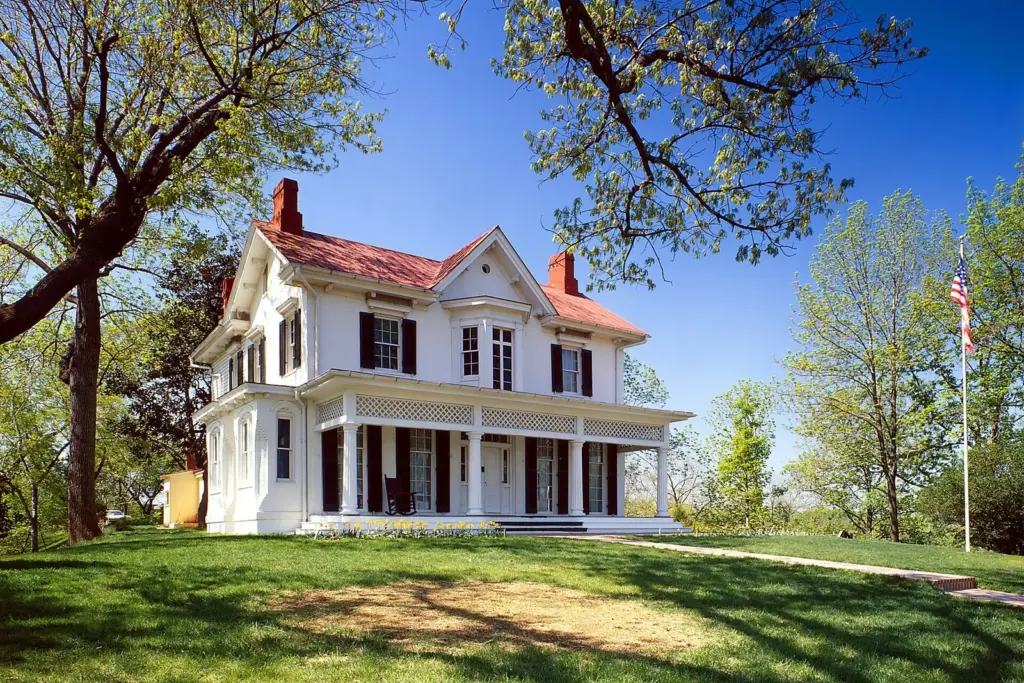
Free, $1 reservation fee. Cedar Hill, in Anacostia, was Frederick Douglass’s home for the last 17 years of his life, and it’s kept much as he left it, with his books and belongings, on a hilltop looking back at the Capitol. His library, his desk and the small stone study he called the Growlery, since reconstructed, give a sense of the man at work. It’s one of the most moving historic sites in the city.
Plan it: the house is seen by ranger-led tour only; book on Recreation.gov, free plus a $1 fee, up to six months ahead (as of September 2026). 1411 W St SE. Metro: Anacostia (Green line), about 15 minutes’ walk. Allow 1.5 hours.
34. Mary McLeod Bethune Council House
Free. The townhouse where the educator and presidential adviser Mary McLeod Bethune founded the National Council of Negro Women, and the council’s first headquarters. It’s small, and the ranger-led tours are the way to see it.
Plan it: Thursday to Saturday 9am to 5pm, with tours every hour except noon (as of September 2026); check for temporary closures before you go. 1318 Vermont Ave NW. Metro: McPherson Square or U Street. Allow 45 minutes.
35. Carter G. Woodson Home
Free. The Shaw rowhouse where the historian Carter G. Woodson lived and worked, and from which he launched Negro History Week in 1926, which grew into Black History Month. It’s a National Historic Site, restored and open for tours.
Plan it: guided tours Thursday to Saturday 9am to 5pm, every hour except noon (as of September 2026). 1538 9th St NW. Metro: Shaw-Howard U (Green line). Allow 45 minutes.
36. U Street’s Black Broadway
Free to walk. In the early 20th century, U Street was the center of Black cultural life in Washington. The Howard Theatre opened in 1910 and the Lincoln Theatre in 1922, and both still host shows. The True Reformer Building, with its famous Duke Ellington mural, was built in 1903 by an African American fraternal organization, designed, financed and built by Black Washingtonians.
Plan it: free to walk; the theaters are open for shows. Metro: U Street (Green line). Allow 1 hour.
37. Howard University
Free to walk the campus. Founded in 1867, Howard is one of the country’s most important historically Black universities, the alma mater of Thurgood Marshall, Toni Morrison and Kamala Harris. The main quad, the Yard, and Founders Library are the heart of the campus.
Plan it: it’s a working campus, so be respectful. Metro: Shaw-Howard U (Green line). Allow 45 minutes.
38. Metropolitan AME Church
An active church. This red-brick Gothic church, completed in 1886, has been a center of Black religious and political life for generations. Frederick Douglass’s funeral was held here in 1895, and Rosa Parks’s memorial service in 2005.
Plan it: visitors welcome outside services; check the church’s schedule. 1518 M St NW. Metro: Farragut North or McPherson Square. Allow 20 minutes.
39. Historic Anacostia and the Anacostia Community Museum
Free. One of Washington’s first suburbs, Anacostia’s historic district sits across the river from Navy Yard. The Smithsonian’s Anacostia Community Museum, which reopened on May 30, 2026, tells the city’s own stories rather than the nation’s.
Plan it: museum 10am to 5pm, free (as of September 2026). Metro: Anacostia (Green line), then a bus or short ride to the museum. Allow half a day with Cedar Hill.
40. Benjamin Banneker Park
Free. A small overlook at the end of L’Enfant Promenade honors Benjamin Banneker, the self-taught Black astronomer and mathematician who helped survey the District’s boundaries in 1791. A staircase now links it with the Wharf below.
Plan it: free; open daily. Metro: L’Enfant Plaza, about 10 minutes’ walk. Allow 15 minutes.
41. The Lincoln Memorial steps
Free, open 24 hours. Two of the most important moments in the civil rights movement happened on these steps: Marian Anderson’s Easter concert in 1939, after she was barred from Constitution Hall, and Martin Luther King Jr.’s “I Have a Dream” speech in 1963. An engraved marker shows where King stood. Our monuments guide covers the memorial itself.
Plan it: open 24 hours; rangers on duty 9:30am to 10pm. Metro: Foggy Bottom-GWU, about 20 minutes’ walk. Allow 20 minutes.
Sacred places
Washington’s houses of worship include some of its finest buildings, and several are bound up with national events, from presidential funerals to civil rights sermons. All welcome respectful visitors outside services.
42. Washington National Cathedral
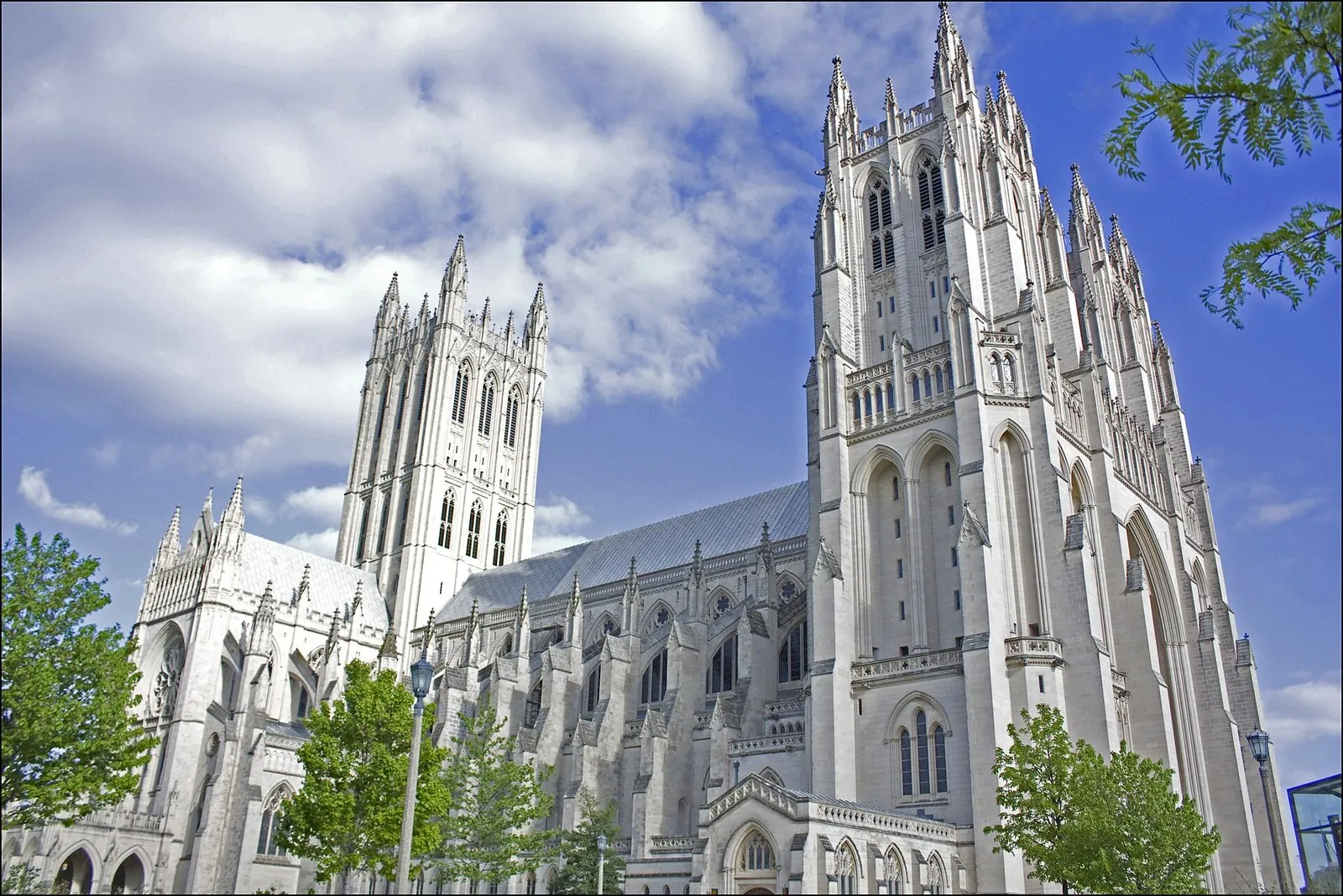
Paid; worship free. The country’s second-largest cathedral took 83 years to build, largely with medieval methods, in stone laid by masons without a steel frame, and it’s full of surprises: Woodrow Wilson’s tomb, Helen Keller’s resting place, a moon rock set in the Space Window and a Darth Vader gargoyle high on the northwest tower. Martin Luther King Jr. preached his last Sunday sermon here in 1968.
Plan it: $15 adults, $10 youth, seniors, students and military; worship is free; tower climbs from $35 for ages 11 and up; hours vary (as of September 2026). Metro: Tenleytown, then a bus or a 20- to 25-minute walk. Allow 1.5 hours.
43. Basilica of the National Shrine of the Immaculate Conception
Free. The largest Catholic church in North America, a vast Byzantine-Romanesque building with dozens of mosaic-covered chapels, each dedicated by a different community of Catholic Americans. Even if you aren’t religious, the scale and craftsmanship are worth the trip to Brookland.
Plan it: daily 7am to 6pm, free (as of September 2026). Metro: Brookland-CUA (Red line), a 5- to 10-minute walk. Allow 1 hour.
44. Franciscan Monastery of the Holy Land
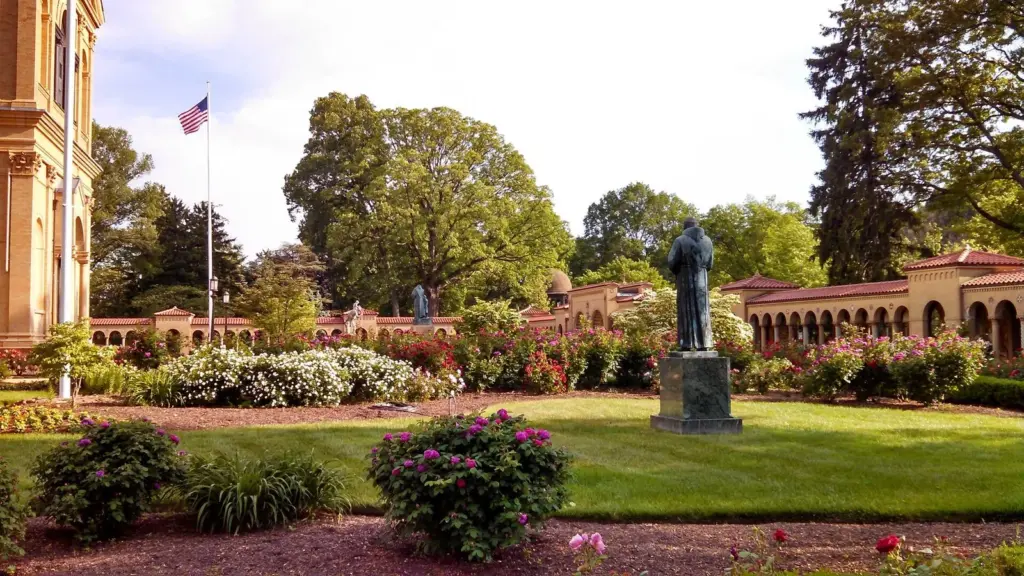
Free tours. About 15 minutes’ walk from the Basilica, this monastery has replicas of Holy Land shrines, catacombs beneath the church and gardens full of roses in season. The catacombs can only be seen on the free guided tours.
Plan it: church 9am to 4pm, gardens to 4:45pm; free guided tours Monday to Saturday at 10am, 11am, 1pm, 2pm and 3pm and Sunday at 1pm, 2pm and 3pm (as of September 2026). 1400 Quincy St NE. Metro: Brookland-CUA. Allow 1 hour.
45. St. Matthew’s Cathedral
Free; an active cathedral. The seat of Washington’s Catholic archbishop, with a lavish interior under a green dome. John F. Kennedy’s funeral Mass was held here in November 1963, and a marble inlay marks where his casket rested.
Plan it: free; visitors welcome outside Masses. Rhode Island Avenue NW near Connecticut Avenue. Metro: Farragut North or Dupont Circle. Allow 20 minutes.
46. Islamic Center of Washington
Free; an active mosque. Opened in 1957 on Embassy Row, it was one of the first major mosques in the United States, with a minaret and a richly tiled interior. Visitors are generally welcome outside prayer times; dress modestly, and women should bring a head covering.
Plan it: free; check visiting times before you go. 2551 Massachusetts Ave NW. Metro: Dupont Circle, about 20 minutes’ walk. Allow 20 minutes.
47. Sixth & I Historic Synagogue
Events venue. Built in 1908, this domed synagogue in Chinatown was later a church, then was restored in the 2000s and reborn as a cultural center, hosting talks, concerts and services. It’s the best way to see it, since it opens for events rather than regular visiting hours.
Plan it: check its events calendar. 600 I St NW. Metro: Gallery Place-Chinatown. Allow an evening for an event.
Grand houses and hidden corners
48. Heurich House Museum
Paid tours. The Brewmaster’s Castle near Dupont Circle was built in the 1890s by the German immigrant brewer Christian Heurich, and its lavish interiors survive nearly intact. The garden, with a seasonal beer garden, is free to visit.
Plan it: house tours $15 since April 9, 2026, reservations required; the garden is free on weekdays 10am to 5pm (as of September 2026). 1307 New Hampshire Ave NW. Metro: Dupont Circle. Allow 1 hour.
49. Anderson House
Free, guided tour included. A 1905 Beaux-Arts mansion on Embassy Row, now the headquarters of the Society of the Cincinnati, founded by officers of the Continental Army. The rooms are opulent, the Revolutionary War collection is excellent, and the free tours are a bargain.
Plan it: March 16 to December 31, Tuesday to Saturday 10am to 4pm and Sunday noon to 4pm; tours at 15 minutes past each hour (as of September 2026). 2118 Massachusetts Ave NW. Metro: Dupont Circle. Allow 1 hour.
50. Peirce Mill
Free. A restored 1820s stone gristmill in Rock Creek Park, one of the last reminders of the mills that once lined the creek. When it’s running, volunteers grind grain the old way.
Plan it: normally open weekends 10am to 4pm; the mill stopped grinding because of a broken pump, with repairs targeted for spring 2026, so check whether it’s operating before you go. Tilden Street and Beach Drive NW. Allow 30 minutes.
Just across the river, Arlington House, the Custis and Lee family home, and the Tomb of the Unknown Soldier are covered in our guide to Arlington National Cemetery.
Historic neighborhoods to walk
Some of the best history in Washington isn’t in a single building but in whole streets. Capitol Hill has blocks of 19th-century rowhouses behind the Capitol, and Lincoln Park and Congressional Cemetery at its edges. LeDroit Park, beside Howard University, was built as a whites-only suburb in the 1870s and became one of the most important Black neighborhoods in the country, home at various times to the activist Mary Church Terrell and the poet Paul Laurence Dunbar. Shaw and U Street hold the Woodson Home and the theaters of Black Broadway. Kalorama, north of Dupont Circle, is a neighborhood of embassies and former presidents’ homes, including the Woodrow Wilson House. Anacostia‘s historic district climbs the hill toward Cedar Hill. And Georgetown, older than the city itself, has its own guide.
Haunted history
A city this old and this political has its share of ghost stories, and several of the sites above star in them. The Octagon is said to be haunted by the daughters of its builder, Decatur House by the dueling commodore himself, and the Capitol by a legendary “Demon Cat” said to appear before national tragedies. Lafayette Square’s houses have their own tales, and the Surratt boarding house and Ford’s Theatre attract the inevitable Lincoln legends. None of this is history in the strict sense, but it’s a fun way into the real history, and the city’s evening ghost walks cover most of these sites.
Which sites open on which days
Because so many of these sites keep short weeks, it helps to plan by day. As of September 2026:
| Day | Good choices |
|---|---|
| Monday | Decatur House’s free tours; the National Archives; the churches; Lafayette Square and Congressional Cemetery |
| Tuesday and Wednesday | Anderson House, the Capitol, the Supreme Court, the Library of Congress; Belmont-Paul from Wednesday |
| Thursday to Saturday | The Bethune Council House, the Carter G. Woodson Home, the Octagon and Clara Barton’s office, all open these days |
| Sunday | The National Cathedral, the Basilica, Anderson House in the afternoon, Belmont-Paul, and Peirce Mill if it’s running |
| Any day | Ford’s Theatre, the Frederick Douglass house, President Lincoln’s Cottage, Fort Stevens and the Lincoln Memorial steps |
Map of downtown historic sites
The densest cluster of historic sites is downtown. The map below covers Lafayette Square and the Octagon at the left, Penn Quarter’s Lincoln sites in the middle, and Capitol Hill and Belmont-Paul at the right.
Historic DC by theme: four days that work
Lincoln’s Washington. Ford’s Theatre and the Petersen House in the morning, the Surratt boarding house and Clara Barton’s office nearby, then the old Patent Office, where Lincoln’s second inaugural ball was held. In the afternoon, President Lincoln’s Cottage, and at dusk, the Lincoln Memorial.
Black history. The Carter G. Woodson Home and the Bethune Council House (both Thursday to Saturday), U Street and Howard University, then Anacostia for Cedar Hill and the Anacostia Community Museum. End at the Lincoln Memorial steps where Marian Anderson sang and King spoke.
Lafayette Square and the presidents. Decatur House’s Monday tour, St. John’s Church, Blair House and the Octagon, then the Willard’s lobby and, for the ambitious, the Woodrow Wilson House.
Sacred Washington. The National Cathedral in the morning, the Islamic Center and St. Matthew’s on the way back down Massachusetts Avenue, and Brookland’s Basilica and Franciscan Monastery in the afternoon.
Sites you need to book
| Site | How to book (as of September 2026) | How far ahead |
|---|---|---|
| White House | Member of Congress or embassy | 21 days to 3 months |
| U.S. Capitol | tours.visitthecapitol.gov | As early as possible; walk-ups by 2:30pm |
| Ford’s Theatre | Online ($5 fee) or free same-day at the box office | Book ahead from March to June |
| President Lincoln’s Cottage | Online | A few days to weeks |
| Frederick Douglass NHS | Recreation.gov | Up to six months |
| Decatur House | Eventbrite | For the Monday tours |
| Heurich House | Online | Reservations required |
| Woodrow Wilson House | Online | Reserve a tour time |
What’s changed at DC’s historic sites
- The White House’s East Wing was demolished in October 2025, and public tours have followed a shorter route since December 2, 2025.
- The Old Post Office Tower closed on October 1, 2025, with no reopening date.
- The Octagon has reopened as a museum, open Thursday to Saturday.
- The Anacostia Community Museum reopened on May 30, 2026.
- Black Lives Matter Plaza’s painted mural near Lafayette Square was removed starting in March 2025, and the street was repaved.
- The Kennedy Center‘s main building closed after a board vote on September 15, 2026, so don’t plan around a show there without checking.
- The Smithsonian Castle reopened only for a summer run in 2026 and is closed again for its long renovation.
Practical tips for historic sites
Historic houses were built long before accessibility rules, so many have steep stairs, narrow doorways and upper floors that are hard or impossible to reach with a wheelchair or stroller; call ahead if access matters to you. Several small museums limit group sizes, so arrive a few minutes early for tours. Churches, synagogues and mosques are places of worship first: dress modestly, keep your voice down, and don’t photograph services. The federal sites, the Capitol, the White House, the Supreme Court, the Library of Congress and the National Archives, all have airport-style security, so carry as little as possible. And at the Park Service’s houses, ask the rangers questions; they’re the best-informed guides in the city, and they’re free.
What to skip, and honest advice
Don’t try to see all 50. Pick a theme or a neighborhood and go deep. The best history visits are the ones with time to read and ask questions.
Don’t assume small sites are open. The Park Service’s houses and several private museums open only a few days a week. Check before you go, every time.
Skip the Old Post Office Tower until it reopens, whatever older guides say.
Don’t skip the rangers. At the Park Service sites, the ranger-led tours are the whole point, and they’re free.
Historic Sites in Washington DC FAQ
What are the most important historic sites in Washington DC?
For most visitors: the U.S. Capitol, the White House, Ford’s Theatre and the Petersen House, President Lincoln’s Cottage, the National Archives, the Frederick Douglass National Historic Site and the Lincoln Memorial steps, where Martin Luther King Jr. gave his “I Have a Dream” speech. Add the National Cathedral for sacred history.
What historic sites in DC are free?
Most of them. The Capitol, the White House, the Library of Congress, the Supreme Court, the National Archives, the Park Service’s historic houses, Congressional Cemetery, Anderson House, the Basilica, the Franciscan Monastery and Decatur House’s Monday tours are all free. Ford’s Theatre has free same-day tickets.
What are the best Black history sites in DC?
Frederick Douglass’s home at Cedar Hill, the Mary McLeod Bethune Council House, the Carter G. Woodson Home, U Street’s Howard and Lincoln theaters, Howard University, Metropolitan AME Church, the African American Civil War Memorial, Lincoln Park and the Lincoln Memorial steps. The Bethune and Woodson houses open Thursday to Saturday only.
What are the most historic hotels in DC?
The Willard, near the White House, is the most storied: Lincoln stayed there before his inauguration, Julia Ward Howe wrote the Battle Hymn of the Republic there, and Martin Luther King Jr. worked on his “I Have a Dream” speech there. The Watergate Hotel carries the scandal’s name.
Where did Lincoln die?
Lincoln was shot at Ford’s Theatre on April 14, 1865, and carried across 10th Street to the Petersen House, a boarding house, where he died the next morning. Both are open to visitors on the same Ford’s Theatre ticket, with free same-day tickets available at the box office from 8:30am.
What is the oldest building in Washington DC?
The Old Stone House on M Street in Georgetown, built in 1765, is the oldest structure in Washington still standing on its original foundation. It’s run by the National Park Service, and its garden is open daily from sunrise to sunset.
Which DC historic sites need reservations?
The White House, requested through Congress or an embassy 21 days to 3 months ahead, the Capitol, the Frederick Douglass house on Recreation.gov, President Lincoln’s Cottage, Ford’s Theatre in busy seasons, Decatur House’s Monday tours, Heurich House and the Woodrow Wilson House. Most other sites are walk-in.
Is the Old Post Office Tower open?
No. The Old Post Office Tower on Pennsylvania Avenue, whose free observation deck was a local favorite, has been closed to the public since October 1, 2025, and there’s no announced reopening date. You can still admire the 1899 building from the street.
Related Washington DC Guides
- Washington DC Monuments: the memorials on the Mall, from Lincoln to MLK.
- White House Tour: how to book the White House, the Capitol and other free official tours.
- Arlington National Cemetery: Arlington House, the Tomb of the Unknown Soldier and the Kennedy graves.
- Museums in Washington DC: 40 museums ranked, including the history museums.
Sources and How We Checked
We checked the hours, prices and booking rules on this page on September 24, 2026 against the official websites below, and compiled the page from them. We don’t claim first-hand visits.
- National Park Service: Frederick Douglass National Historic Site
- National Park Service: Belmont-Paul Women’s Equality National Monument
- National Park Service: Carter G. Woodson Home
- White House Historical Association: Decatur House tours
- Architects Foundation: Visiting the Octagon
- Franciscan Monastery: Visit
- Society of the Cincinnati: Anderson House
We also checked Ford’s Theatre, President Lincoln’s Cottage, the Mary McLeod Bethune Council House, Fort Stevens, the Washington National Cathedral, the Basilica of the National Shrine, Congressional Cemetery, the Clara Barton Missing Soldiers Office Museum, Heurich House, the Woodrow Wilson House, Peirce Mill, the Capitol Visitor Center, the Supreme Court and the National Archives.
Washington DC Tourism Guide is an independent publication. We are not affiliated with Destination DC, the National Park Service, the Smithsonian Institution or any site listed here, and no one paid to be included.
Photo Credits
- Washington National Cathedral: photo by Siubo11A, via Wikimedia Commons (CC BY-SA 3.0)
- St. John's Church, Lafayette Square: photo by AgnosticPreachersKid, via Wikimedia Commons (CC BY-SA 3.0)
- Decatur House: photo by AgnosticPreachersKid, via Wikimedia Commons (CC BY-SA 3.0)
- Congressional Cemetery gatehouse: photo by Smallbones, via Wikimedia Commons (CC0)
- Ford's Theatre: photo by Ingfbruno, via Wikimedia Commons (CC BY-SA 3.0)
- Cedar Hill, Frederick Douglass's home, 1977: photo by Walter Smalling for the Historic American Buildings Survey, via Wikimedia Commons (Public domain)
- Franciscan Monastery gardens: photo by Loslazos, via Wikimedia Commons (CC BY-SA 4.0)