Most visitors see Washington as a mile of marble between the Capitol and the Lincoln Memorial, and then go home. That’s a shame, because the city’s real personality lives in its Washington DC neighborhoods: the rowhouse streets of Capitol Hill, the jazz history of U Street, the embassies of Massachusetts Avenue, the river piers of the Wharf. Most are a short Metro ride from the Mall, and each gives you a different city, with its own food, streets and stories. This guide covers the 15 areas most worth a visitor’s time, what each is like, what to do there, how to get there, and which ones make the best base for a trip.
Quick answer: For a first visit, spend time in Capitol Hill, Penn Quarter, Georgetown and Dupont Circle, which are all close to the sights. Add the Wharf for the waterfront, U Street and Shaw for history and nightlife, and Adams Morgan for international food. Most are on the Metro; U Street, Shaw, the Wharf and Navy Yard are on the Green line only.
Last updated September 24, 2026. Transit details, hours and prices were checked that day against WMATA’s, the National Park Service’s and the attractions’ own websites.
- Metro: Yellow line trains end at Mt Vernon Square, so U Street, Shaw-Howard, Columbia Heights, the Waterfront and Navy Yard-Ballpark are on the Green line only.
- Gone: the DC Streetcar on H Street stopped running on March 31, 2026, and the Black Lives Matter Plaza mural was removed in 2025.
- New: Ben’s Chili Bowl on U Street reopened on May 1, 2026 after repairs, and the Anacostia Community Museum reopened on May 30, 2026.
- Coming, slowly: the 11th Street Bridge Park, linking Navy Yard with Anacostia, isn’t expected until mid-2029.
On this page: At a glance | How DC is laid out | The 15 neighborhoods | What to eat | A day in the neighborhoods | More neighborhoods | Map | Best for you | Where to stay | Getting around | With kids | Safety | What’s changed | FAQ
Washington DC neighborhoods at a glance
| Neighborhood | What it’s like | Nearest Metro | Best for |
|---|---|---|---|
| Capitol Hill | Rowhouses, the Capitol, Eastern Market | Capitol South, Eastern Market (Blue, Orange, Silver) | History, a local feel |
| Penn Quarter and Chinatown | Downtown museums, arena, restaurants | Gallery Place-Chinatown (Red, Green, Yellow) | First-timers, a central base |
| Georgetown | Oldest neighborhood, shopping, canal | None; Foggy Bottom about 15 minutes’ walk | Strolling, shopping |
| Dupont Circle | Circle, mansions, cafes, embassies | Dupont Circle (Red) | Walkers, art lovers |
| The Wharf | Waterfront piers, concerts, seafood | Waterfront (Green) or L’Enfant Plaza | Evenings, river views |
| Navy Yard | Ballpark, riverfront park, new towers | Navy Yard-Ballpark (Green) | Baseball, families |
| U Street | Black Broadway, music venues, late nights | U Street (Green) | Music, history, nightlife |
| Shaw | Howard University, alleys of restaurants | Shaw-Howard U (Green) | Food, history |
| Logan Circle and 14th Street | Victorian mansions, restaurant row | McPherson Square or U Street, 10-15 minutes’ walk | Dining, theater |
| Adams Morgan | 18th Street’s bars and global food | Woodley Park (Red), 15 minutes’ walk | Nightlife, cheap eats |
| Embassy Row and Kalorama | Embassies and Gilded Age mansions | Dupont Circle (Red) | Architecture walks |
| H Street NE | Bars, theater, a younger crowd | Union Station (Red), 10-15 minutes’ walk | Nightlife |
| NoMa and Union Market | Food hall, galleries, new apartments | NoMa-Gallaudet U (Red) | Food lovers |
| Anacostia | Historic district, Frederick Douglass’s home | Anacostia (Green) | History, repeat visitors |
| Cleveland Park and Woodley Park | The National Zoo, leafy streets | Cleveland Park or Woodley Park (Red) | Families, the zoo |
How Washington’s neighborhoods fit together
DC is a small city, about 68 square miles, divided into four quadrants that meet at the Capitol: Northwest, Northeast, Southwest and Southeast. Every address carries its quadrant, and it matters, since 1st Street NW and 1st Street SE are miles apart. Almost everything visitors want is in Northwest, around the Mall, or on Capitol Hill, which straddles Northeast and Southeast.
The neighborhoods tend to cluster. Downtown and Penn Quarter sit just north of the Mall. Capitol Hill spreads east of the Capitol. Dupont Circle, Logan Circle, U Street, Shaw and Adams Morgan form a ring of lively, walkable neighborhoods north of downtown, and you can walk between them. The waterfront neighborhoods, the Wharf and Navy Yard, line the rivers to the south. Georgetown sits apart in the west, and Anacostia lies across the Anacostia River to the southeast.
The best way to use this is to pair a neighborhood with the sights nearby: Capitol Hill after the Capitol, Penn Quarter after the museums, Dupont Circle after the Phillips Collection, the Wharf after the Tidal Basin. You’ll see more of the real city without adding travel time.
The 15 Washington DC neighborhoods worth exploring
1. Capitol Hill
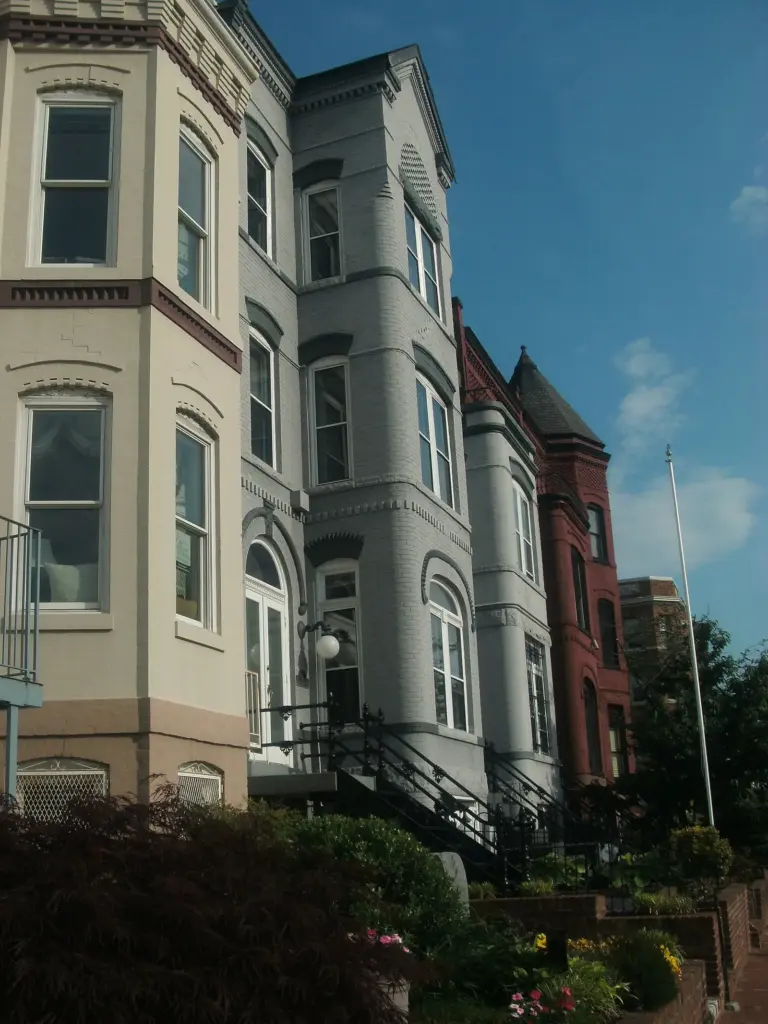
The best neighborhood for a first visit. Behind the Capitol and the Supreme Court lies one of the country’s largest historic residential districts, with blocks of 19th-century rowhouses, tree-lined streets and corner cafes. The Library of Congress and the Folger Shakespeare Library are here, and Eastern Market, the 19th-century market hall at 7th and C Streets SE, is the neighborhood’s heart, with food stalls inside and a flea market on weekends. Barracks Row, along 8th Street SE, has a long string of restaurants and bars near the Marine Barracks, whose Friday Evening Parade in summer needs a free reservation. Walk east along East Capitol Street to Lincoln Park, where the Emancipation Memorial and a statue of Mary McLeod Bethune face each other across the lawn. On a weekend morning, the market, the flea market and brunch on Barracks Row add up to one of the best local mornings in the city.
Plan it: Eastern Market’s South Hall is open Tuesday to Sunday and closed Monday, with the weekend flea market Saturday and Sunday from 9am to 4pm (as of September 2026). Metro: Capitol South or Eastern Market (Blue, Orange, Silver lines), or Union Station (Red). Allow half a day. Best for: first-timers, history buffs, a local weekend morning.
2. Penn Quarter and Chinatown
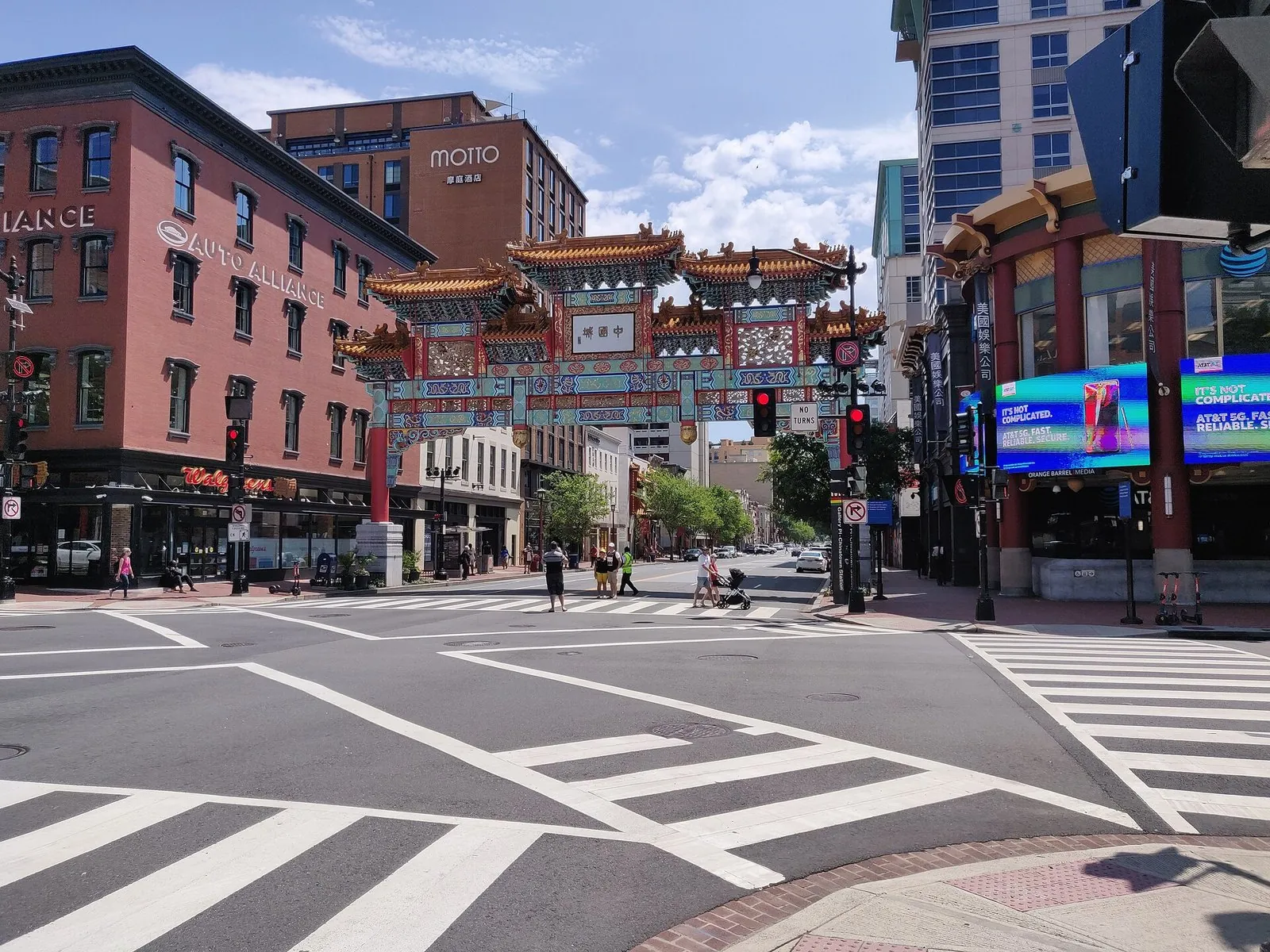
The busy center. Just north of the Mall, Penn Quarter packs in the National Portrait Gallery and American Art Museum, which stay open until 7pm, the National Archives, Ford’s Theatre and a dense grid of restaurants and theaters. Chinatown, marked by the Friendship Archway over H Street, has shrunk to a few blocks of Chinese restaurants among national chains, but the neighborhood buzzes on game and concert nights at Capital One Arena, which is in the middle of an $800 million renovation that continues while events go on. Beyond the museums, this is DC’s theater district, with the Shakespeare Theatre Company and Woolly Mammoth among the stages within a few blocks, and it’s the easiest place in the city to eat well before or after a show. Ford’s Theatre, where Lincoln was shot, and the Petersen House opposite, where he died, are on 10th Street.
Plan it: Metro: Gallery Place-Chinatown (Red, Green, Yellow lines) or Archives-Navy Memorial-Penn Quarter (Green, Yellow). Allow a few hours, or base yourself here. Best for: first-timers, museum days, an easy central base.
3. Georgetown
The oldest, and the most beautiful. Founded in 1751, before the capital existed, Georgetown has cobbled side streets, Federal-era rowhouses, the C&O Canal, a riverside park and the city’s best-known shopping on M Street and Wisconsin Avenue. It has no Metro station, which keeps it slightly apart. Our Georgetown DC guide covers it in full, from Dumbarton Oaks to the Exorcist Steps. Spend most of your time off M Street, on the side streets, the canal towpath and the waterfront park, and save the shopping for a weekday.
Plan it: walk about 15 minutes from Foggy Bottom-GWU (Blue, Orange, Silver lines), or cross Key Bridge from Rosslyn. Allow half a day to a full day. Best for: strollers, shoppers, couples.
4. Dupont Circle
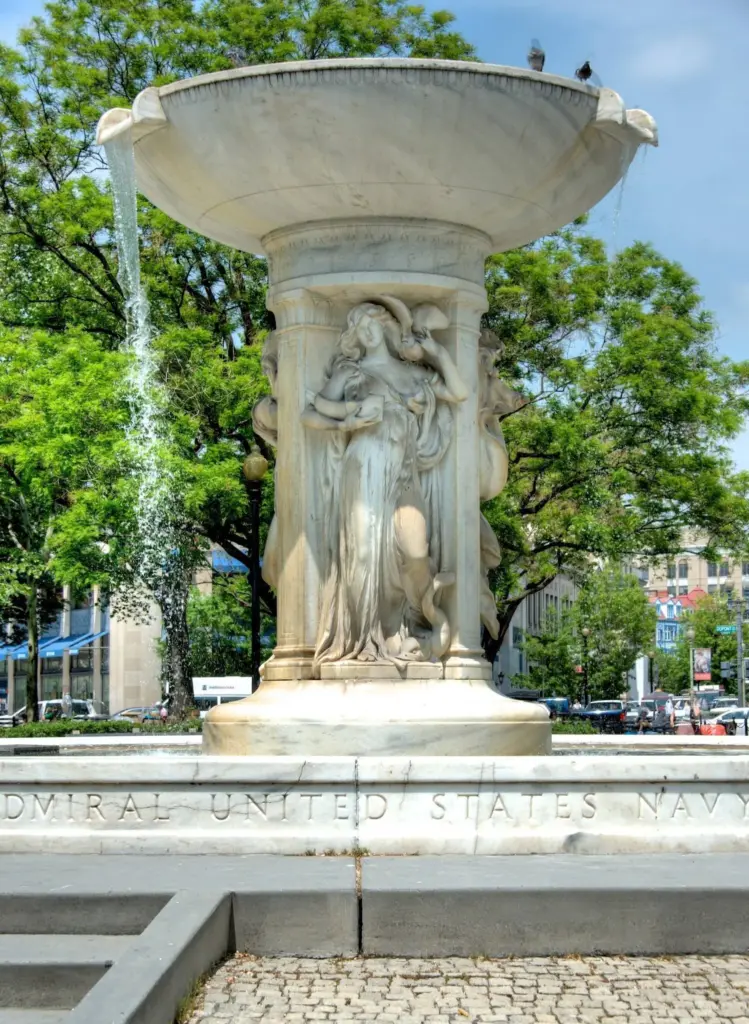
The classic city neighborhood. The traffic circle and its marble fountain anchor a neighborhood of Gilded Age mansions, bookstores, cafes and restaurants, and for decades Dupont has been the center of DC’s LGBTQ community. The Phillips Collection, America’s first museum of modern art, is a few blocks away, and Embassy Row begins at the circle. On Sunday mornings, the FRESHFARM farmers’ market fills a street by the circle year-round. Connecticut Avenue running north from the circle has the neighborhood’s cafes and bookshops, and the grand houses along Massachusetts Avenue and the side streets now hold embassies, museums and private clubs, so a Dupont morning flows naturally into an architecture walk.
Plan it: FRESHFARM Dupont runs Sundays 8:30am to 1:30pm, year-round (as of September 2026). Metro: Dupont Circle (Red line). Allow half a day with the Phillips. Best for: walkers, art lovers, brunch.
5. The Wharf and Southwest Waterfront
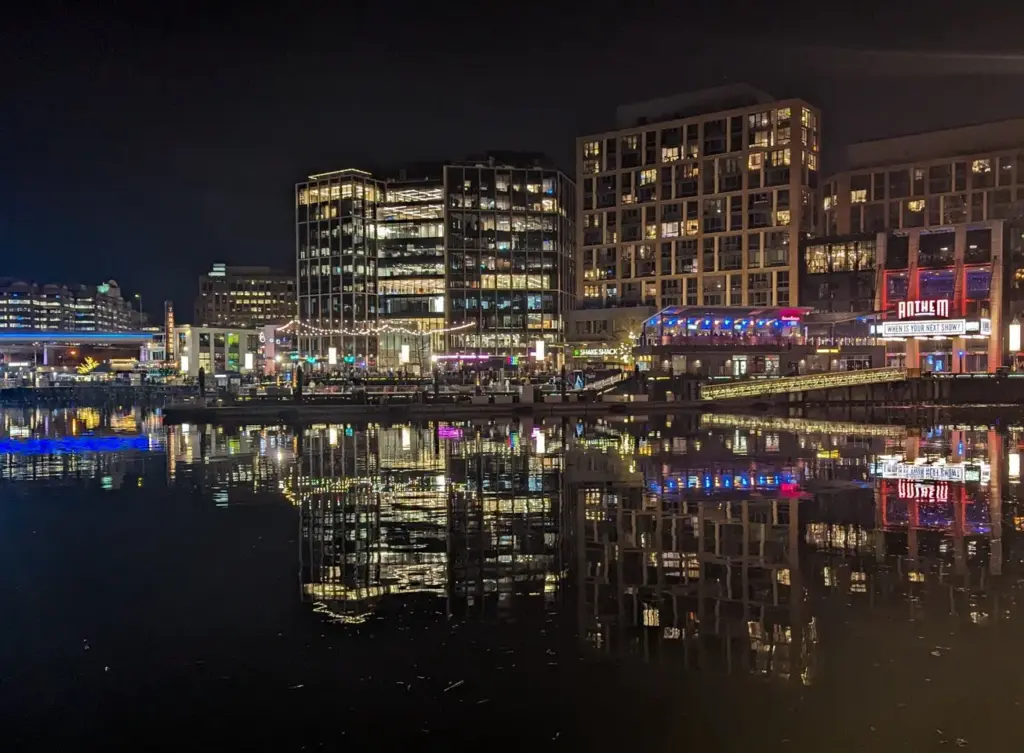
The best evening waterfront. A mile of piers, promenades, restaurants and music venues along the Washington Channel, redeveloped over the last decade. The Anthem books big-name concerts, the Municipal Fish Market, trading here since 1805, sells steamed crabs and oysters, and in summer there are free Friday evening concerts at the Transit Pier. The Potomac Water Taxi leaves from here for Georgetown, Old Town Alexandria and National Harbor, and Arena Stage, one of the country’s leading regional theaters, is a short walk away. Come in the evening, when the piers light up: walk out on the Recreation Pier, with its swings and fire pits facing the water, and eat at the fish market’s counters for the cheapest seafood on the waterfront.
Plan it: open all day; the water taxi costs about $22 one way, March to December (as of September 2026). Metro: Waterfront (Green line only) or L’Enfant Plaza, about 10 minutes’ walk. Allow an evening. Best for: couples, concerts, seafood, sunsets.
6. Navy Yard and Capitol Riverfront
Baseball and the river. A former industrial riverfront turned into one of the fastest-growing parts of the city, around Nationals Park. The Yards Park has a riverside boardwalk and a shallow water feature kids splash in all summer, and the neighborhood is full of breweries and restaurants. Audi Field, home of D.C. United, is nearby at Buzzard Point. On April 3, 2027, the Cherry Blossom Festival’s Petalpalooza street party fills the neighborhood. Outside baseball season it’s a relaxed riverside neighborhood, and the Anacostia Riverwalk Trail runs along the water in both directions for walks and bike rides.
Plan it: Nationals Park bans backpacks, allowing clear bags up to 16 by 16 by 8 inches (as of September 2026). Metro: Navy Yard-Ballpark (Green line only). Allow an afternoon, or a game. Best for: sports fans, families, summer evenings.
7. U Street
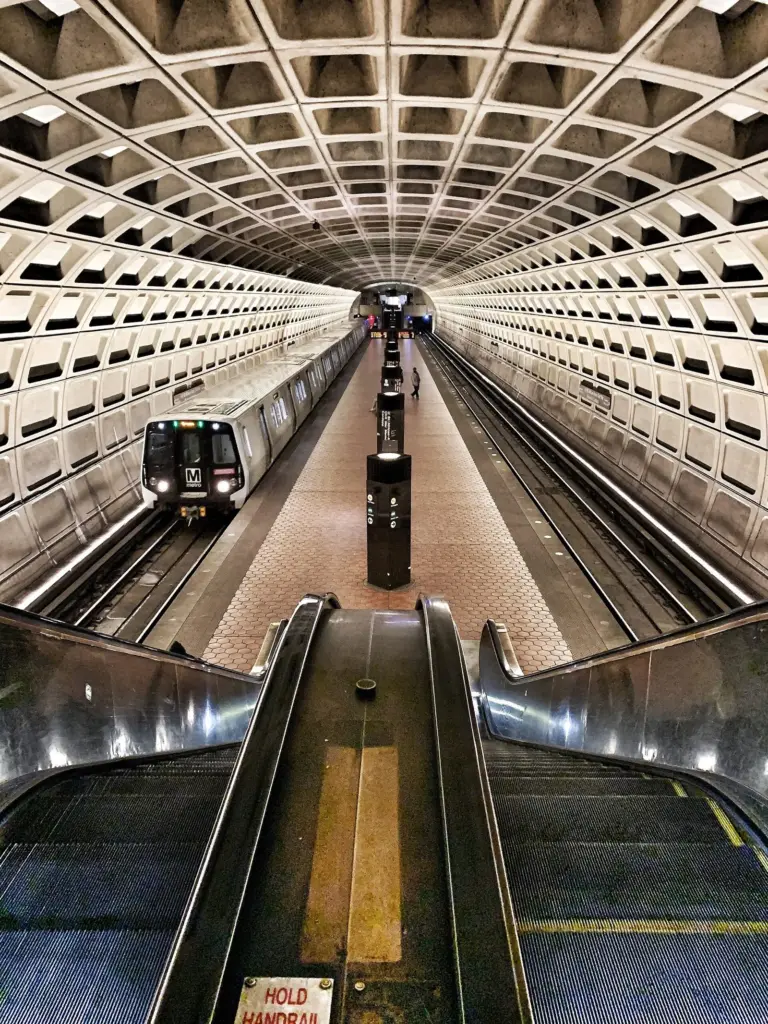
History, music and late nights. In the first half of the 20th century, U Street was known as Black Broadway, the center of Black cultural life in Washington, and Duke Ellington grew up nearby. The Lincoln Theatre and the Howard Theatre still stand, and the 9:30 Club is one of the country’s best-known rock venues. Ben’s Chili Bowl, a U Street institution since 1958, reopened on May 1, 2026 after a long closure for repairs. The African American Civil War Memorial stands by the Metro exit at Vermont Avenue. Walk the blocks of 9th Street toward Shaw for the city’s cluster of Ethiopian restaurants, and look up at the murals honoring Ellington and other U Street figures.
Plan it: Metro: U Street (Green line only; the Yellow line no longer runs here). Allow an evening, or a history walk by day. Best for: music fans, history buffs, nightlife.
8. Shaw
The food neighborhood. Next to U Street, Shaw is home to Howard University, founded in 1867 and one of the country’s most influential historically Black universities, and it has become one of DC’s best places to eat. Hidden alleys like Blagden Alley and Naylor Court are lined with restaurants, bars and murals, and the main streets have some of the city’s most talked-about dining rooms. The neighborhood is rich in Black history too: Carter G. Woodson, the historian who founded what became Black History Month, lived and worked here, and his home is now a National Historic Site. For the best of them across the city, see our guide to the best restaurants in Washington DC.
Plan it: Metro: Shaw-Howard U (Green line only) or Mt Vernon Square (Green, Yellow). Allow an evening. Best for: food lovers, history buffs.
9. Logan Circle and 14th Street
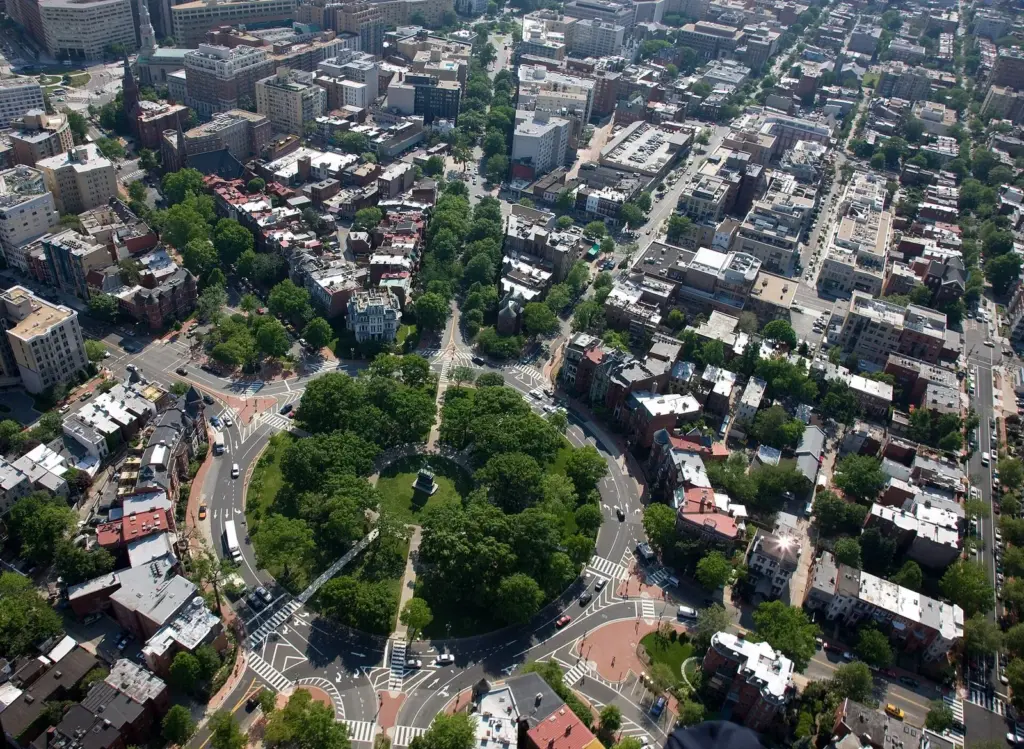
Restaurant row. Logan Circle itself is ringed by grand Victorian mansions, one of the best-preserved circles in the city, and the blocks of 14th Street running north from it are packed with restaurants, bars, boutiques and theaters, including the Studio Theatre. It’s where many locals go out to dinner, and it connects on foot with Dupont Circle, U Street and Shaw. Walk the circle itself for the houses, most built in the late 19th century, then head up 14th Street for dinner.
Plan it: no Metro right there; McPherson Square (Blue, Orange, Silver) or U Street (Green) are each 10 to 15 minutes’ walk. Allow an evening. Best for: dinner, theater, architecture.
10. Adams Morgan
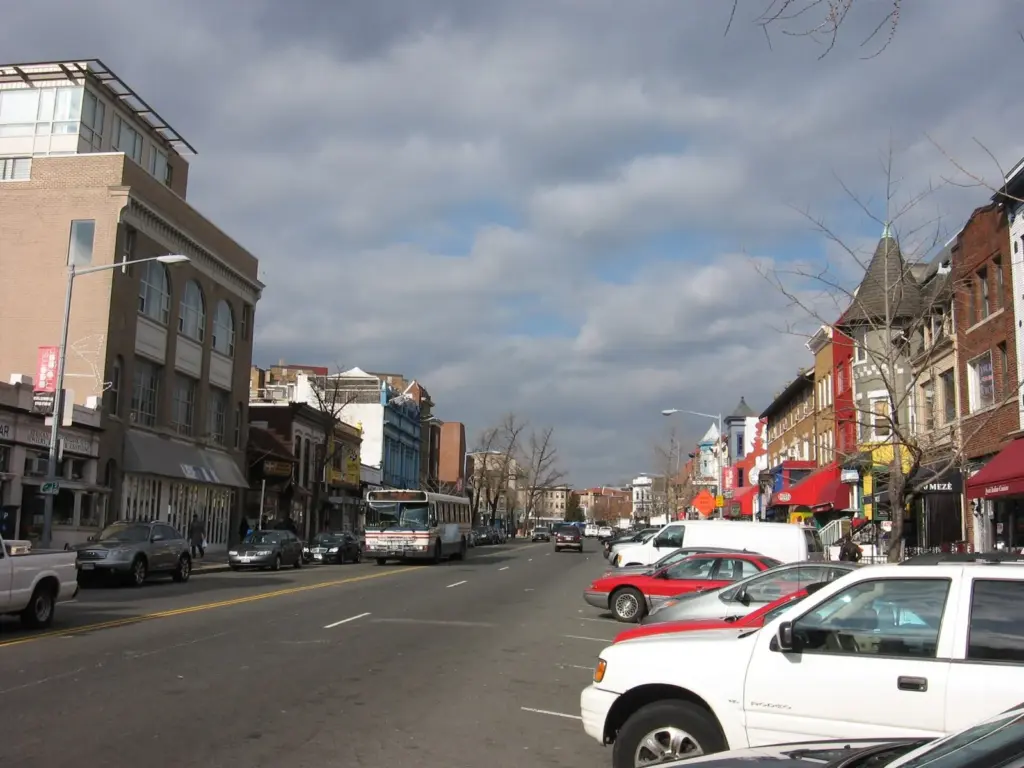
Global food and a party street. Adams Morgan’s 18th Street is lined with small restaurants serving food from around the world, from Ethiopian and Latin American to Middle Eastern, and after dark it’s one of DC’s busiest bar strips. The neighborhood keeps adding serious restaurants: Michelin’s September 17, 2026 update added two here, Rye Bunny and Maison Bar a Vins, to its Recommended list. Meridian Hill Park, with its cascading fountain, is a short walk east, and its Sunday afternoon drum circle in warm weather is a local institution. The neighborhood’s late-night tradition is the jumbo slice, pizza sold by the enormous slice to the bar crowds.
Plan it: Metro: Woodley Park (Red line), then a 15-minute walk across the Duke Ellington Bridge; or Columbia Heights (Green), about the same. Allow an evening. Best for: cheap eats, nightlife, groups.
11. Embassy Row and Kalorama
The architecture walk. Massachusetts Avenue northwest of Dupont Circle is lined with embassies, many in grand Beaux-Arts mansions, flying their national flags. Walk it from Dupont Circle to the Islamic Center of Washington and on toward the Naval Observatory, the vice president’s residence. The side streets of Kalorama, one of the city’s wealthiest neighborhoods, hold more mansions and former presidents’ homes. The Washington National Cathedral is a longer walk or a short bus ride farther up. Look for the statues outside some embassies: Winston Churchill stands outside the British Embassy with one foot on embassy ground and one on American soil, and Mahatma Gandhi strides near the Indian Embassy.
Plan it: free to walk; embassies are generally closed to the public except for special events. The National Cathedral charged $15 for adults and $10 for youth, seniors, students and military in September 2026. Metro: Dupont Circle (Red line). Allow 1.5 to 2 hours. Best for: architecture fans, walkers.
12. H Street NE
The nightlife corridor. A long commercial strip east of Union Station with bars, restaurants, live music and the Atlas Performing Arts Center, popular with a younger local crowd. It’s rougher around the edges than Dupont or Georgetown, and that’s part of the appeal. Note that the DC Streetcar, which many guides still recommend for getting here, stopped running on March 31, 2026. The Atlas’s stages host theater, dance and music, the bars range from dives to rooftops, and in late summer the H Street Festival usually takes over the street for a day.
Plan it: walk about 10 to 15 minutes from Union Station (Red line), or take a Metrobus such as the D20 along the corridor. Allow an evening. Best for: bar-hopping, live music, locals’ nights out.
13. NoMa and Union Market
For food lovers. North of Union Station, NoMa (North of Massachusetts Avenue) is a district of new apartment towers, and just beyond it, Union Market’s food hall anchors a warehouse neighborhood of restaurants, galleries and weekend events. Michelin added Union Market’s Elcielo Bistro to its Recommended list in September 2026. Gallaudet University, the world’s leading university for deaf and hard of hearing students, is next door. In warm weather, the streets around Union Market fill with outdoor dining and pop-up events, and NoMa’s small parks and murals make an easy walk from Union Station.
Plan it: Union Market is at 1309 5th St NE. Metro: NoMa-Gallaudet U (Red line), about 10 minutes’ walk. Allow 2 hours. Best for: food lovers, a casual lunch.
14. Anacostia
History across the river. Historic Anacostia, one of Washington’s first suburbs, sits across the Anacostia River from Navy Yard, and it’s where Frederick Douglass spent his last years at Cedar Hill, now a National Historic Site with ranger-led tours and a sweeping view back toward the Capitol. The Smithsonian’s Anacostia Community Museum reopened on May 30, 2026, and the neighborhood’s landmark Big Chair, a giant wooden chair on Martin Luther King Jr. Avenue, is a local landmark. The planned 11th Street Bridge Park, an elevated park linking the two sides of the river, isn’t expected until mid-2029. Anacostia Park, along the river, has trails and a roller-skating pavilion, and the Anacostia Arts Center shows local artists’ work.
Plan it: book Frederick Douglass house tours on Recreation.gov (free plus a $1 fee); the Anacostia Community Museum is free, 10am to 5pm (as of September 2026). Metro: Anacostia (Green line). Allow half a day. Best for: history buffs, repeat visitors.
15. Cleveland Park and Woodley Park
The zoo neighborhoods. These leafy residential neighborhoods along Connecticut Avenue are home to the Smithsonian’s National Zoo, where giant pandas have been back on view since January 2025, and to a strip of neighborhood restaurants. Rock Creek Park’s woods are right behind them. It’s a pleasant, quieter side of the city, and the Art Deco facade of Cleveland Park’s old Uptown Theater is a local landmark worth a look on the way to the zoo.
Plan it: the zoo is free but needs a free entry pass for everyone, released 30 days ahead; from September 15 to March 14 its grounds open 8am to 4pm (as of September 2026). Metro: Cleveland Park (Red line), which leaves you a downhill walk to the zoo, rather than Woodley Park, whose walk is uphill. Allow half a day. Best for: families, animal lovers.
What to eat in each neighborhood
Each neighborhood has a food identity, and eating your way through them is one of the best ways to see the city:
- U Street and Shaw: a half-smoke, DC’s own spicy sausage, at Ben’s Chili Bowl, and Ethiopian food on and around 9th Street.
- The Wharf: steamed crabs, oysters and fried fish at the Municipal Fish Market’s counters, eaten by the water.
- Capitol Hill: the food stalls inside Eastern Market, and brunch or dinner on Barracks Row.
- Union Market: the food hall’s counters, from tacos to dumplings, under one roof.
- Adams Morgan: global small restaurants, and a jumbo slice after midnight.
- Penn Quarter and 14th Street: the city’s densest cluster of sit-down restaurants, many of them among DC’s best.
For the standout tables across all of these, and the Michelin-starred and recommended restaurants, see our guide to the best restaurants in DC.
The right neighborhood for the time of day
Morning: Capitol Hill, with Eastern Market and coffee on the rowhouse streets, or Dupont Circle for its Sunday market. Georgetown’s canal towpath is quiet early, too.
Afternoon: Georgetown, Embassy Row or Anacostia, when the museums and historic houses are open and the walks are pleasant.
Evening: the Wharf at sunset, Shaw and 14th Street for dinner, or Penn Quarter before a show or a game.
Late night: U Street for music, Adams Morgan and H Street for bars. Plan your ride home before you go, since Metro service winds down late at night and the walk back can be long.
A day in the neighborhoods
If you’ve done the Mall and want a day of the real city, this route strings four neighborhoods together with little backtracking.
Morning, Capitol Hill. Start at Eastern Market (Blue, Orange or Silver line), browse the stalls, then walk the rowhouse streets north to Lincoln Park and back.
Late morning, Penn Quarter. Metro from Eastern Market to Archives, and spend an hour in the National Portrait Gallery, which opens at 11:30am.
Afternoon, Dupont Circle and Embassy Row. Red line from Gallery Place to Dupont Circle, walk the circle, then out along Massachusetts Avenue past the embassies, with the Phillips Collection as an option if it’s open.
Evening, 14th Street and U Street. Walk east through the side streets to Logan Circle, up 14th Street for dinner, and on to U Street for a show at the 9:30 Club or the Lincoln Theatre. Take the Green line home.
Neighborhood events through the year
Some of the best times to see DC’s neighborhoods are their festivals. In spring, the Cherry Blossom Festival’s Petalpalooza party fills Navy Yard, on April 3 in 2027. Summer brings free Friday concerts on the Wharf’s Transit Pier, baseball at Nationals Park and Pride events around Dupont Circle in June. In late summer and early fall, Adams Morgan Day and the H Street Festival usually take over their main streets for a day of food, music and crowds. Eastern Market’s weekend flea market runs year-round, as does Dupont’s Sunday farmers’ market. Check each event’s date before you plan around it, since they move from year to year.
More neighborhoods worth a look
Columbia Heights and Mount Pleasant, north of Adams Morgan, are two of the city’s most diverse neighborhoods, with Latino heritage, a lively main street in Mount Pleasant and, as of September 2026, a Michelin-recommended newcomer, Bar Del Monte. Brookland, in Northeast, is home to the Basilica of the National Shrine of the Immaculate Conception, free and open daily from 7am to 6pm, about a 5- to 10-minute walk from Brookland-CUA station. Foggy Bottom, near the State Department and George Washington University, used to be the gateway to the Kennedy Center, but the center’s main building closed after a board vote on September 15, 2026, so check before planning around it. And downtown, around Farragut Square and the White House, is mostly offices, busy on weekdays and quiet at night.
Map of Washington DC neighborhoods
The map covers central Washington: Georgetown at the far left, Dupont Circle, Adams Morgan and U Street across the top, the Mall and downtown in the middle, Capitol Hill and H Street to the right, and the Wharf, Navy Yard and Anacostia along the rivers at the bottom.
The best neighborhoods for each kind of traveler
| You want | Go to |
|---|---|
| A first taste of the real city | Capitol Hill, then Eastern Market |
| Walking and history | Georgetown, Capitol Hill, Anacostia |
| Dinner | Shaw, 14th Street, Penn Quarter, Union Market |
| Bars and late nights | U Street, Adams Morgan, H Street |
| Live music | U Street and the 9:30 Club, the Wharf’s Anthem |
| Families | Navy Yard, Cleveland Park for the zoo, the Wharf |
| Architecture | Embassy Row, Logan Circle, Dupont Circle |
| Waterfront | The Wharf, Navy Yard, Georgetown’s riverfront park |
| A quiet morning | Dupont’s Sunday market, Cleveland Park, Capitol Hill’s side streets |
Three neighborhood walks you can do in an afternoon
Dupont to U Street. Start at Dupont Circle, walk up Connecticut Avenue and east along R Street or through the side streets to Logan Circle, then north on 14th Street to U Street for an early dinner. About 2 miles, through four neighborhoods.
Capitol Hill. From the Capitol, walk east along East Capitol Street to Lincoln Park, loop down to Eastern Market, and finish on Barracks Row for dinner. About 2.5 miles, all rowhouse streets and small shops.
The waterfront. From the Wharf, follow the river east past Fort McNair and Buzzard Point to Navy Yard and the Yards Park. It’s a longer walk, about 2 miles, best on a summer evening with a game at Nationals Park at the end.
Which neighborhood should you stay in?
For a first trip, stay somewhere central and close to a Metro station: Penn Quarter and downtown put you within walking distance of the Mall, Capitol Hill is quieter and more residential, Dupont Circle and Logan Circle put restaurants on your doorstep, and the Wharf and Navy Yard offer newer hotels by the water. Georgetown is lovely but has no Metro. Across the river, Arlington’s Rosslyn and Crystal City, and Old Town Alexandria, are a short Metro ride away and often cheaper. Our guide to where to stay in Washington DC compares each area and the hotels in it.
Getting between neighborhoods
The Metro connects most of these neighborhoods, but the network isn’t a grid, so a short distance can mean a long ride. Rail fares were $2.25 to $6.75 on weekdays before 9:30pm and $2.25 to $2.50 at other times as of September 2026, and a one-day pass cost $13.50; you can tap a contactless card or phone at the gates. Remember that the Yellow line now ends at Mt Vernon Square, so for U Street, Shaw, the Waterfront and Navy Yard, take the Green line.
Metrobus is often more direct between neighborhoods than the Metro. The bus network was redesigned in June 2025, with new route names, so older route numbers you find online won’t match. Capital Bikeshare is excellent for hopping between Dupont, Logan Circle, U Street and Adams Morgan, which are close together but not linked by a single Metro line. And for the ring of neighborhoods north of downtown, walking is usually the best option of all.
| Metro line | Neighborhood stops |
|---|---|
| Red | Union Station (Capitol Hill, H Street), NoMa-Gallaudet U (Union Market), Gallery Place-Chinatown, Dupont Circle, Woodley Park, Cleveland Park |
| Green | Navy Yard-Ballpark, Waterfront (the Wharf), Anacostia, Gallery Place-Chinatown, Shaw-Howard U, U Street, Columbia Heights |
| Blue, Orange, Silver | Capitol South and Eastern Market (Capitol Hill), Smithsonian (the Mall), McPherson Square (near Logan Circle), Foggy Bottom-GWU (walk to Georgetown) |
| Yellow | Gallery Place-Chinatown, Archives, L’Enfant Plaza (near the Wharf), then south to Arlington and Old Town Alexandria; ends at Mt Vernon Square in the north |
Two older options are gone: the DC Circulator bus ended in December 2024, and the DC Streetcar on H Street stopped on March 31, 2026.
DC neighborhoods with kids
Some neighborhoods are far better with children than others. Navy Yard wins in summer, with the Yards Park’s shallow water feature, the riverwalk and a ballgame at Nationals Park. Cleveland Park and Woodley Park have the National Zoo, free with an entry pass. The Wharf’s Recreation Pier has swings, and the waterfront is good for boat-watching. Capitol Hill has Eastern Market, playgrounds and quiet streets for a stroll, and Georgetown’s waterfront park has a fountain kids run through in warm weather. Anacostia Park’s roller-skating pavilion is a local favorite. The late-night strips, U Street, Adams Morgan and H Street, are best left for another trip.
Neighborhood etiquette and practical tips
Many of DC’s most attractive neighborhoods are residential, so walk them as a guest. Keep your voice down on quiet streets, don’t sit on people’s steps, and don’t photograph through windows. Around embassies, admire the architecture but don’t photograph the security guards or try the gates. On the Metro escalators, stand on the right and walk on the left; locals notice. If you drive, street parking meters cost about $2.30 an hour in most areas and about $3.75 in premium zones near the White House and Dupont Circle, with most meters enforced Monday to Saturday, as listed by the city’s transportation department in 2026. Garages are easier in the busiest neighborhoods, and the Metro is easier still.
Are DC neighborhoods safe for visitors?
The neighborhoods covered here are the ones visitors use most, and they’re busy, well lit and generally comfortable to walk, day and evening. Crime in DC is concentrated in particular areas, and visitors rarely have a reason to be on quiet residential streets far from the sights late at night. The usual city precautions apply everywhere: watch phones and bags on the Metro and in busy nightlife areas, don’t leave anything visible in a parked car, and take a rideshare rather than walking long, empty stretches after midnight.
You’ll also see a visible federal presence. National Guard troops have been deployed in DC since August 2025, a deployment extended in July 2026 to run through Inauguration Day in January 2029, and they patrol in tourist areas.
What’s changed in DC’s neighborhoods
- The DC Streetcar on H Street NE ended service on March 31, 2026. Use Metrobus or walk from Union Station.
- Black Lives Matter Plaza’s painted mural, on 16th Street near the White House, was removed starting March 10, 2025, and the street was repaved.
- Ben’s Chili Bowl reopened on May 1, 2026 after closing in July 2025 for repairs.
- The Anacostia Community Museum reopened on May 30, 2026.
- Capital One Arena is mid-renovation, with a new main entrance at 7th and F Streets due in fall 2026.
- The Kennedy Center‘s main building in Foggy Bottom closed after its board voted on September 15, 2026.
- The 11th Street Bridge Park between Navy Yard and Anacostia is now expected in mid-2029, not 2026 as older articles say.
What to skip
Skip downtown after dark. The office blocks around Farragut Square and K Street empty out in the evening. Eat in Penn Quarter, Shaw or Dupont instead.
Skip Adams Morgan on a Saturday night if you’re looking for a quiet dinner. It’s a party strip by 11pm. Go earlier in the evening, or on a weeknight.
Skip trying to see five neighborhoods in a day. Pick two that sit close together, such as Dupont and Logan Circle, or Capitol Hill and H Street, and give them time.
Don’t rely on old transit tips. The Circulator and the streetcar are gone, and the Yellow line no longer reaches U Street or Navy Yard.
Washington DC Neighborhoods FAQ
What are the best neighborhoods to visit in DC?
For a first trip, Capitol Hill, Penn Quarter, Georgetown and Dupont Circle, which are all close to the major sights. Add the Wharf for the waterfront, U Street and Shaw for history, music and food, Adams Morgan for international restaurants and nightlife, and Anacostia for Frederick Douglass’s home.
Which DC neighborhood is best to stay in for tourists?
Penn Quarter and downtown are the most convenient, within walking distance of the Mall and the museums. Capitol Hill is quieter, Dupont Circle and Logan Circle have the best restaurants on your doorstep, and the Wharf and Navy Yard offer newer waterfront hotels. Stay near a Metro station, whichever you choose.
What neighborhood is the National Mall in?
The National Mall isn’t really in a residential neighborhood. It’s federal parkland run by the National Park Service, stretching from the Capitol to the Lincoln Memorial. Penn Quarter and downtown sit just to the north, Capitol Hill to the east, and the Southwest Waterfront and the Wharf to the south.
Are DC neighborhoods safe for tourists?
The neighborhoods visitors use most, such as Capitol Hill, Georgetown, Dupont Circle, Penn Quarter and the Wharf, are busy and generally comfortable day and evening. Crime is concentrated in particular areas, so stick to busy, lit streets, watch phones on the Metro and in nightlife areas, and take a rideshare late at night.
Which DC neighborhoods are on the Metro?
Most of them. Capitol Hill, Penn Quarter, Dupont Circle, U Street, Shaw, Navy Yard, the Wharf, NoMa, Anacostia, Cleveland Park and Woodley Park all have stations. Georgetown, Logan Circle, Adams Morgan and H Street don’t, but each is 10 to 15 minutes’ walk from one. U Street, Shaw, the Waterfront and Navy Yard are Green line only.
What happened to the DC Streetcar?
The DC Streetcar, which ran along H Street NE and Benning Road from Union Station, stopped running on March 31, 2026, a year earlier than planned, after the DC Council cut its funding. Metrobus routes, including the D20, now serve the corridor, and the city has said an electric bus will replace it by about 2029.
What is the best neighborhood in DC for nightlife?
U Street and the neighboring Shaw and 14th Street corridors have the most varied nightlife, from jazz and rock venues to cocktail bars. Adams Morgan’s 18th Street is the rowdiest bar strip, H Street NE draws a younger local crowd, and the Wharf is best for waterfront drinks and big concerts at the Anthem.
Is Georgetown worth visiting?
Yes. It’s DC’s oldest neighborhood, with cobbled streets, Federal-era houses, the C&O Canal, a riverside park, historic estates and the city’s best-known shopping. There’s no Metro station, so walk about 15 minutes from Foggy Bottom-GWU or cross Key Bridge from Rosslyn. Allow at least half a day.
Related Washington DC Guides
- Georgetown DC: the city’s oldest neighborhood, in full.
- Where to Stay in Washington DC: every neighborhood compared as a base.
- Best Restaurants in Washington DC: where to eat across the neighborhoods.
Sources and How We Checked
We checked the transit details, hours and prices on this page on September 24, 2026 against the official websites below, and compiled the page from them. We don’t claim first-hand visits.
- DDOT: DC Streetcar end of service
- WMATA: Metro and Metrobus
- National Park Service: Frederick Douglass National Historic Site
- Smithsonian’s National Zoo
- Eastern Market
- FRESHFARM markets
We also checked the Anacostia Community Museum, Nationals Park, the Washington National Cathedral, the Basilica of the National Shrine, Union Market, the Potomac Water Taxi, Capital One Arena’s renovation updates, the Michelin Guide’s September 2026 update, and reporting on Ben’s Chili Bowl, the 11th Street Bridge Park and the National Guard deployment.
Washington DC Tourism Guide is an independent publication. We are not affiliated with Destination DC, the National Park Service, the Smithsonian Institution or any business listed here, and no one paid to be included.
Photo Credits
- Friendship Archway, Chinatown: photo by Kurt Kaiser, via Wikimedia Commons (CC0)
- Capitol Hill rowhouses: photo by self, via Wikimedia Commons (CC BY 3.0)
- Dupont Circle fountain: photo by Bestbudbrian, via Wikimedia Commons (CC BY-SA 4.0)
- The Wharf at night: photo by TimBray, via Wikimedia Commons (CC BY 4.0)
- U Street Metro station: photo by Keizers, via Wikimedia Commons (CC BY-SA 4.0)
- Logan Circle from the air, 2008: photo by Carol M. Highsmith, via Wikimedia Commons (Public domain)
- 18th Street, Adams Morgan: photo by Michiel1972, via Wikimedia Commons (CC BY-SA 3.0)